China’s People’s Liberation Army Navy (PLAN) says it’s preparing a major presence at the upcoming 16th China International Aviation & Aerospace Exhibition in Zhuhai, with warships, carrier-based aircraft, advanced weapons systems, and uncrewed platforms set to feature prominently. The expanded naval component will include a new maritime equipment exhibition area at Gaolan Port, located just on the other side of the bay, marking the first time the PLAN has established such a dedicated display at the event.
Zhuhai has become one of the most important events on the international defence and aerospace calendar, serving as China’s principal public showcase for its rapidly developing aviation and military industries. First held in 1996, the biennial China International Aviation & Aerospace Exhibition, commonly known as Airshow China, provides an unusual opportunity to see some of the country’s most advanced military hardware, including aircraft and systems that are rarely shown in such detail elsewhere. While the event also serves as a major platform for China’s aerospace industry to promote its products to potential international customers, it has increasingly become an important venue for revealing new military capabilities and offering glimpses of programs that are otherwise difficult to assess.
Previous editions have produced some particularly significant developments. The 2016 show saw the J-20 stealth fighter make its first public flying appearance, while the 2018 edition provided an unusually revealing look at the aircraft, including a demonstration of its internal weapons bays, loaded with air-to-air missiles. The 2022 exhibition featured the J-20 on static display for the first time at Zhuhai, alongside the Y-20 heavy transport aircraft, Z-20 helicopter, and YY-20 aerial refueling tanker, which made its first flying demonstration at the event. More recently, the 2024 exhibition was particularly notable for the public debut of the J-35A stealth fighter and the appearance of the catapult-capable J-15T carrier-based fighter.
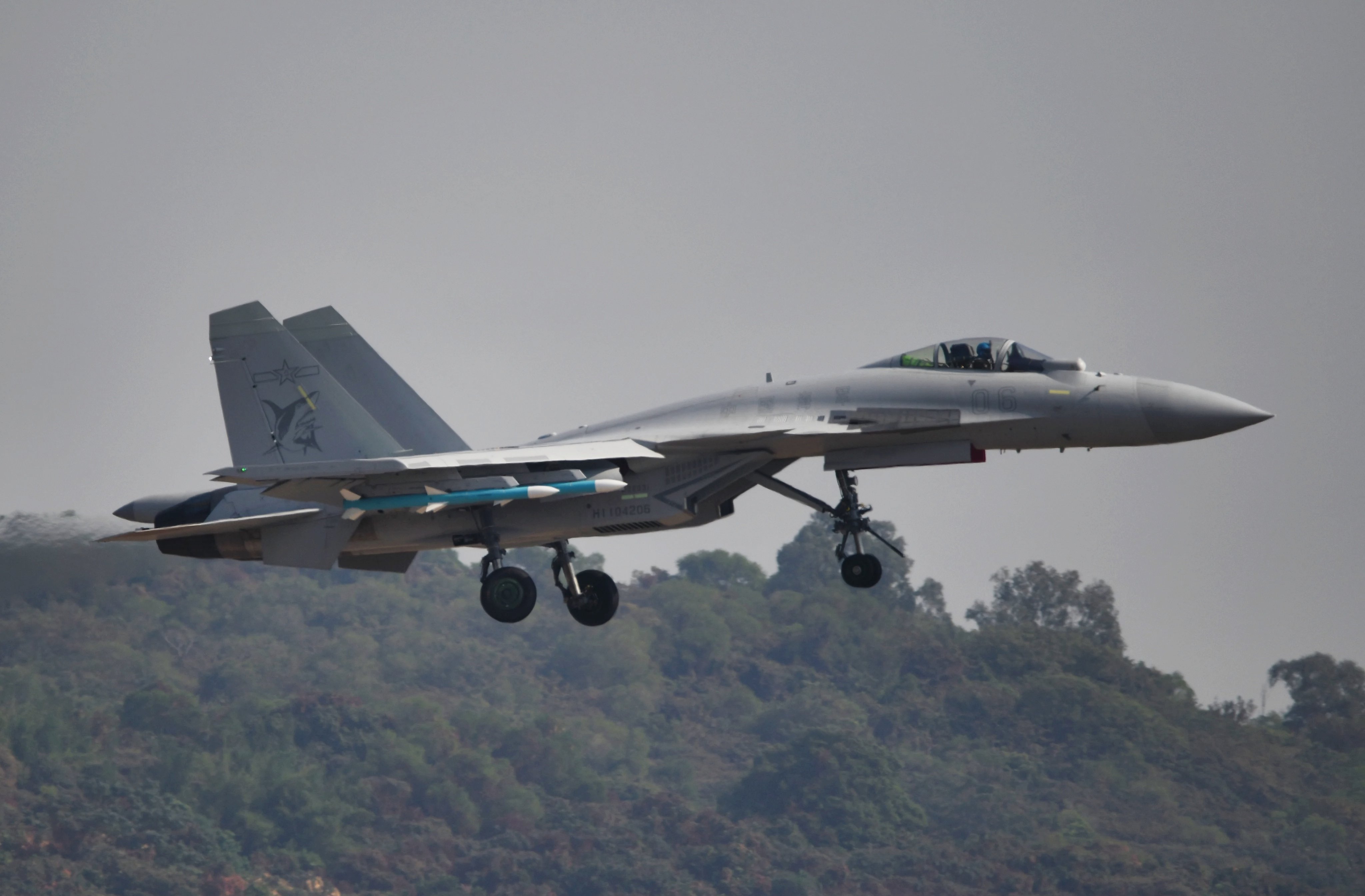
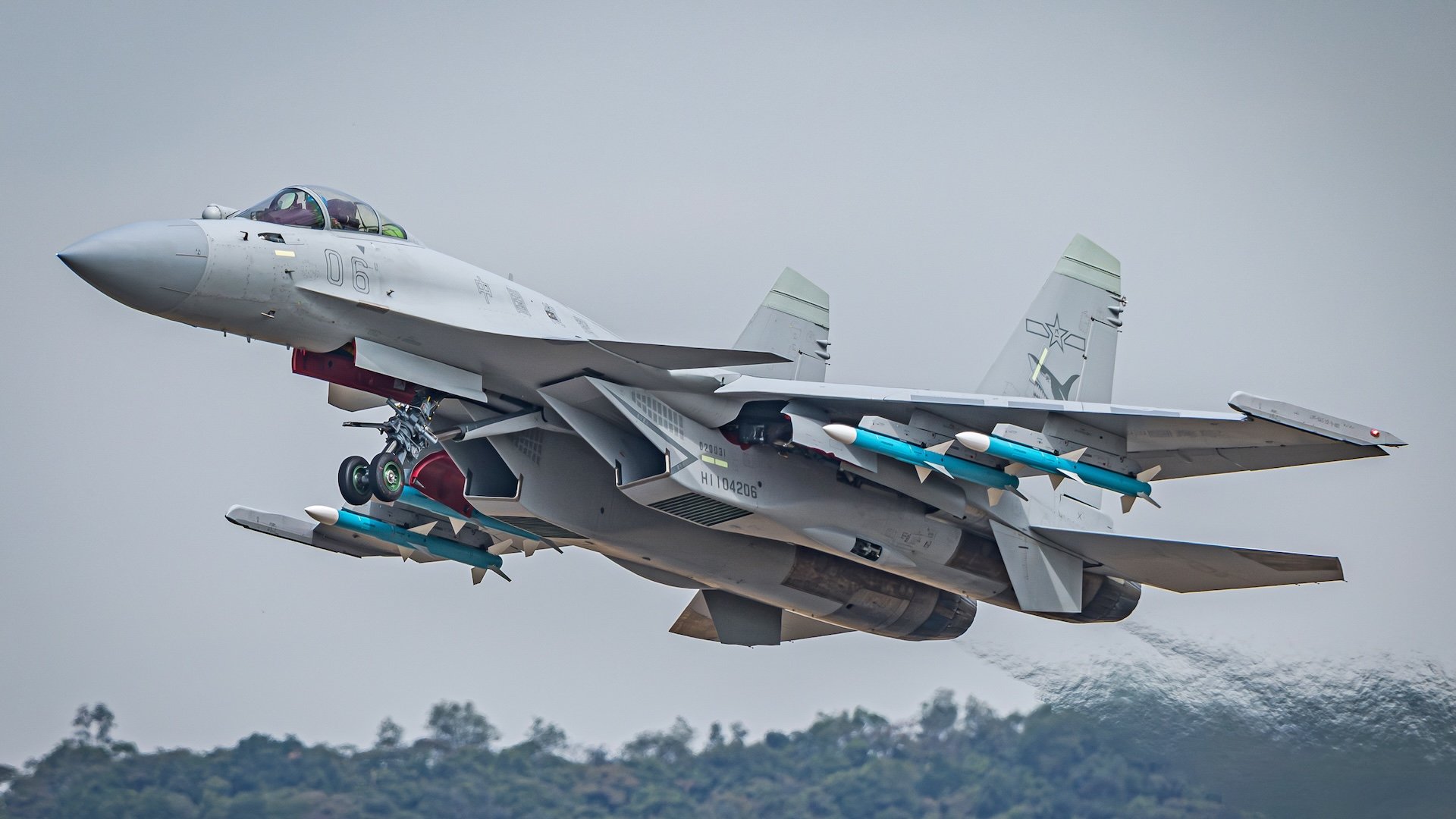
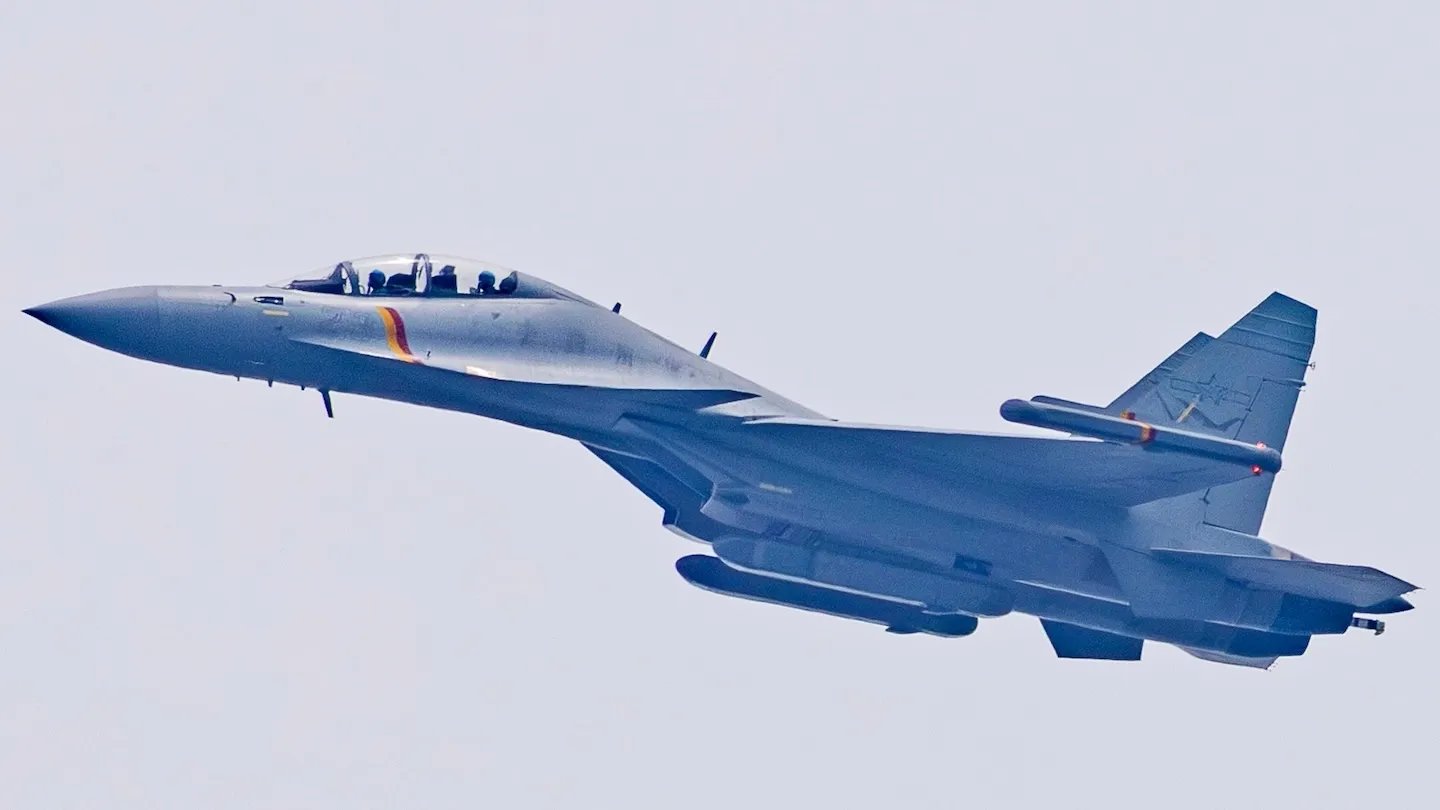
This year’s exhibition, scheduled to take place from December 7 to 13, will showcase, among others, a broad range of the PLAN’s capabilities, with a particularly notable emphasis on the rapid evolution of its carrier aviation capabilities, something we have addressed in detail in the past. Among the most noteworthy aircraft expected to feature are the J-15T carrier-based fighter, the operational J-35 stealth fighter, the KJ-600 carrier-based airborne early warning and control (AEW&C) aircraft, several naval variants of the Z-20 helicopter, and, perhaps most significantly, the new JL-15 carrier-capable trainer, a development of the land-based JL-10.
While we have seen the J-15T at Zhuhai before, the aircraft will be of particular interest if it is shown with the indigenous WS-10H2 engine. Such a configuration would offer a closer look at the latest evolution of China’s carrier-based Flanker derivative and its ongoing transition toward a more domestically supported carrier aviation ecosystem.
The appearance of the J-35 would be another major highlight. The aircraft represents a significant step in the PLAN’s carrier aviation ambitions, bringing a fifth-generation stealth fighter capability into the carrier air wing. Its presence would provide another opportunity to examine the progress of China’s next-generation naval fighter program. Back in 2014, Zhuhai saw the public debut of the FC-31 fighter demonstrator. At the time, it was still a land-based concept, and export was the main talking point, although there was already speculation about a naval variant, today’s J-35.
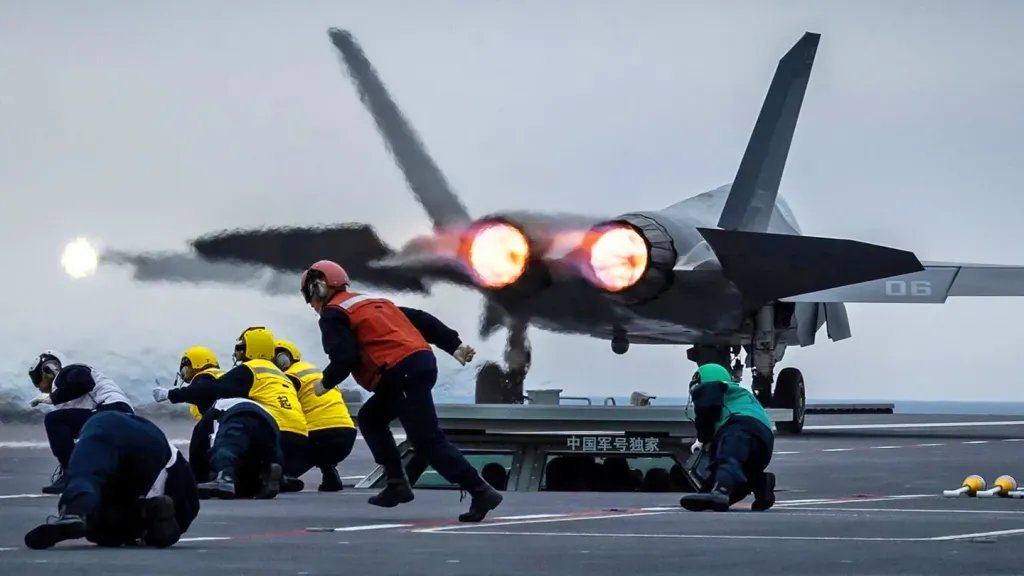
Meanwhile, the KJ-600 is arguably one of the most important developments in the PLAN’s carrier aviation ecosystem. The twin-engine turboprop aircraft is designed to provide airborne early warning and battle management capabilities, something that would transform the situational awareness and coordination available to China’s carrier strike groups.
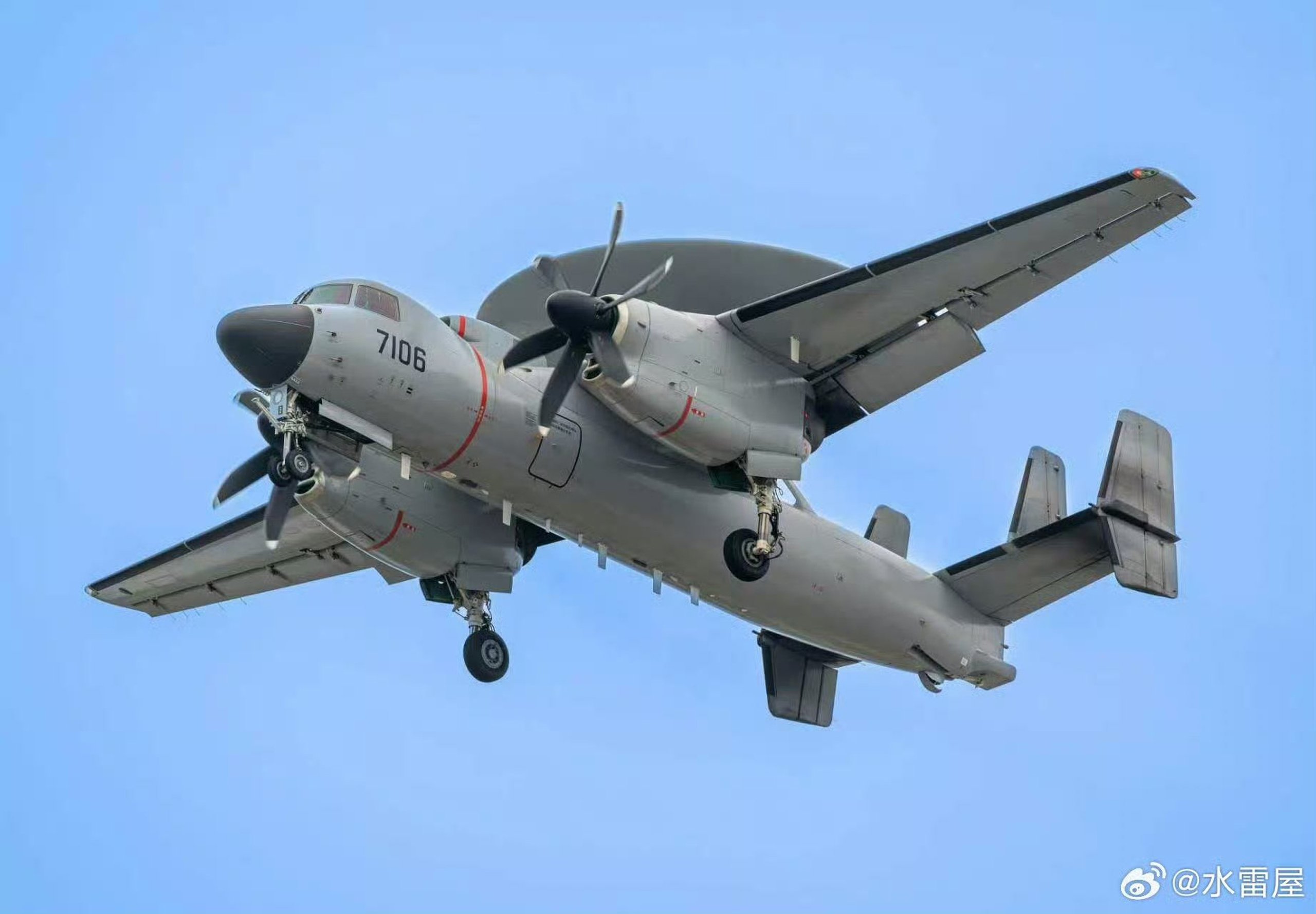
Several variants of the Z-20 family are also expected to feature, reflecting the growing importance of helicopters in carrier operations, including airborne anti-submarine warfare, utility, and other maritime support missions. You can read more about the Z-20 family and other Chinese rotary-wing developments in this previous TWZ deep-dive on the topic.
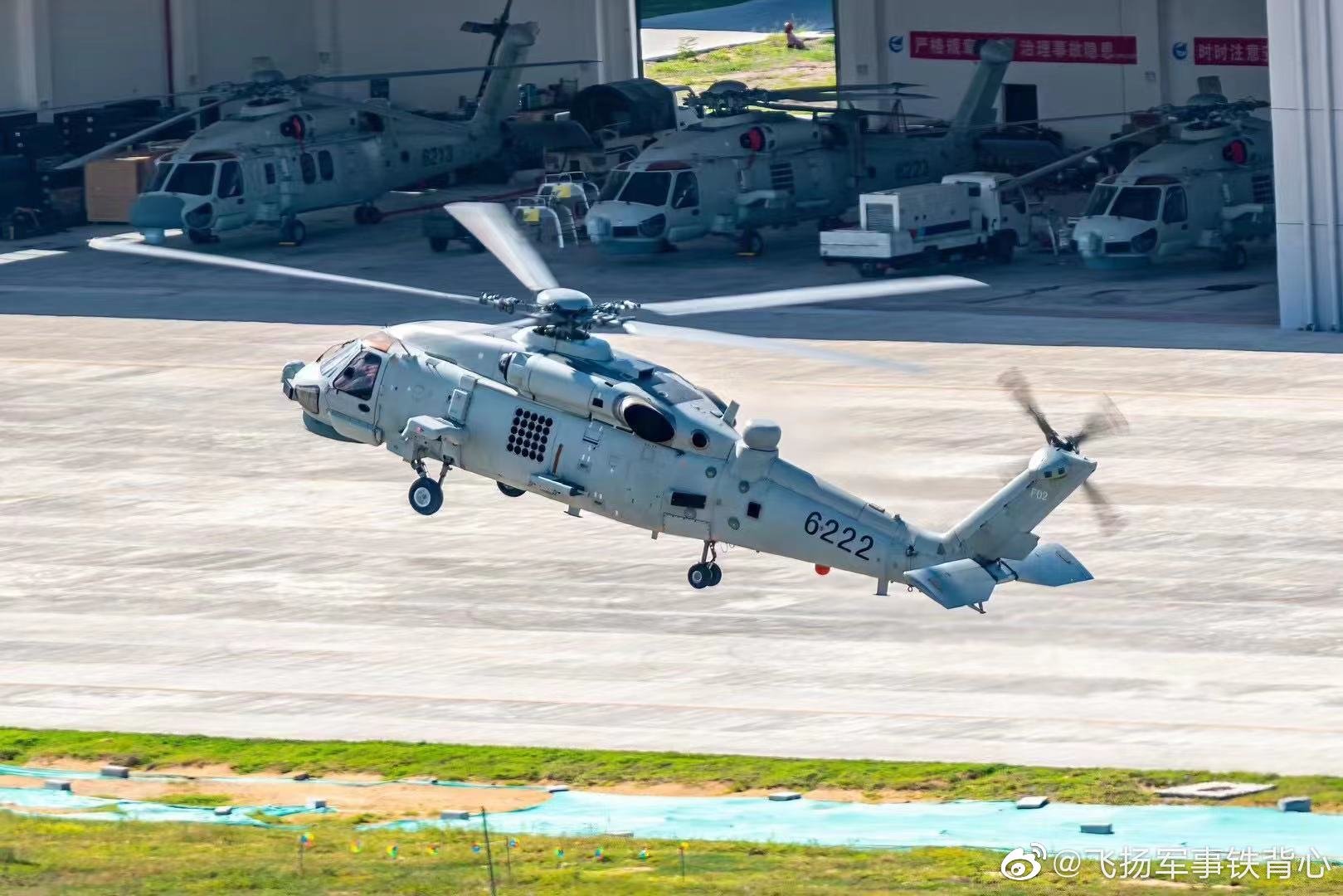
Perhaps the most intriguing aircraft on the list, however, is the JL-15.
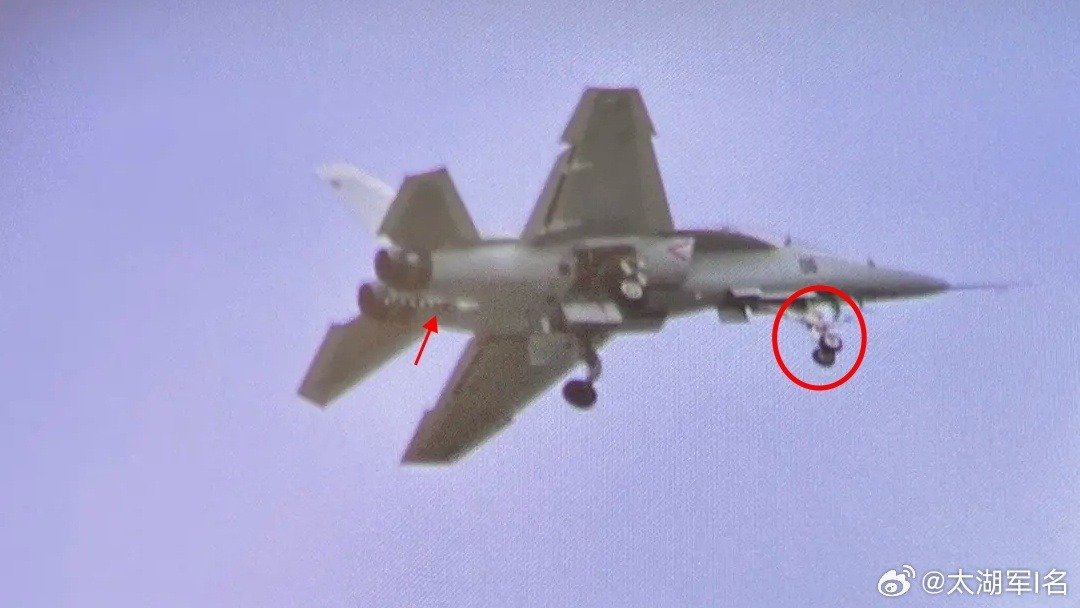
The JL-15 is derived from the Hongdu JL-10, also exported as the L-15 Falcon, a twin-engine advanced jet trainer and lead-in fighter trainer. The navalized development was initially reported to be designated JL-10J, but is now confirmed as being the JL-15. A tailhook-equipped mockup was spotted alongside the aircraft carrier Fujian in 2024. However, its operational status remains unclear, and China is known to have encountered difficulties with its earlier JL-9G naval trainer, whose tailhook was reportedly deleted following structural problems.
Its appearance would provide a particularly interesting indication of how China is thinking about training its next generation of carrier-based pilots. A carrier-capable development of the JL-10 would be an important addition to the emerging carrier aviation ecosystem, bridging the gap between conventional jet training and the demanding requirements of operating from an aircraft carrier.
The JL-15 also makes an interesting comparison with the U.S. Navy’s somewhat stuttering efforts to introduce a new training jet for its carrier pilots.
The U.S. Navy’s Undergraduate Jet Training System (UJTS) program is intended to replace its aging fleet of T-45 Goshawk trainers, but the acquisition effort has encountered considerable difficulties. Earlier this month, we described how Sierra Nevada Corporation (SNC) withdrew its proposed clean-sheet Freedom Jet from the competition, citing concerns over the Navy’s insistence on firm-fixed-price production commitments before the aircraft’s design had sufficiently matured. This leaves the Beechcraft M-346N, based on Leonardo’s established M-346 Master, as the only publicly known remaining contender. The program has also experienced schedule slippage, with the initial contract award now expected in the fourth quarter of Fiscal Year 2027.
Perhaps more significant is the difference in the two services’ approaches to carrier aviation training. The U.S. Navy has removed the requirement for its next-generation jet trainer to be capable of operating from an actual aircraft carrier, including carrier qualification and simulated carrier touch-and-goes at land-based facilities. Instead, it increasingly relies on advanced simulation, virtualized training, and assisted carrier landing technologies to prepare pilots for the demands of carrier operations. The JL-15, by contrast, is intended to support carrier-based pilot training. A dedicated carrier-capable trainer could offer China a more direct pathway for preparing pilots for operations aboard its increasingly sophisticated — and expanding — carrier fleet.
Taken together, the PLAN aircraft being lined up for Zhuhai this year illustrate the increasingly sophisticated and integrated nature of China’s carrier aviation ambitions. As well as the aircraft carriers and their embarked aircraft, these ambitions also require other surface and subsurface vessels to operate effectively.
Uncrewed systems will form another important part of the display. The exhibition will include aerial drones, uncrewed underwater vehicles, and other autonomous platforms, reflecting the PLAN’s growing interest in the potential of uncrewed warfare. Chinese media reports suggest that the WZ-2 uncrewed helicopter will receive its public debut at Zhuhai, while the PLAN may well also want to capitalize on its recent announcement that it had successfully launched and recovered a GJ-21 stealthy flying-wing uncrewed combat air vehicle (UCAV) aboard the Type 076 amphibious assault ship Sichuan.
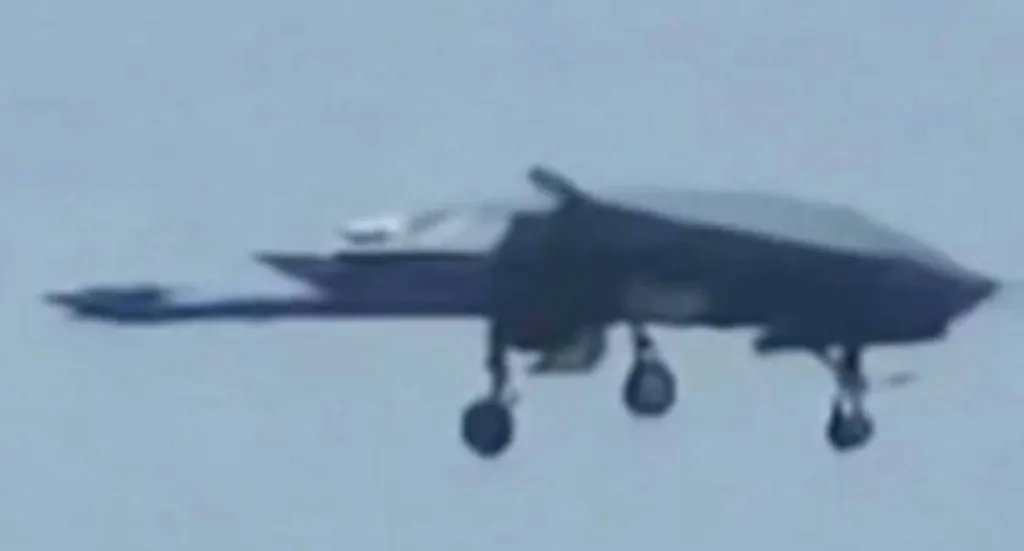
A chance to see the GJ-21 up close would be a huge deal, but there are many other naval drone options that could be revealed in more detail. There are likely to be more navalized collaborative combat aircraft (CCA) concepts and developments, especially since the adoption of the electromagnetic aircraft launch system (EMALS) catapult opens up a huge range of possibilities for uncrewed aircraft operating as part of a carrier air wing. Potentially, these could include the mysterious MQ-25-like drone that we recently discussed, the role of which remains unclear. On top of that, constant CCA testing at locations such as Malan suggests there could be much more to discuss than just the systems officially highlighted. Many other naval drones will surely be on display as well, including lower-end attritable concepts.
Beyond static displays, China’s navy plans to organize flight demonstrations, formation flights, and simulated operational exercises. Its stated aim is to highlight not only the capabilities of individual platforms but also their ability to operate together in complex maritime environments. Photos have emerged showing apparent rehearsals for the display, presenting examples of the J-15, J-35, and KJ-600 to represent Beijing’s broader carrier air wing ecosystem.
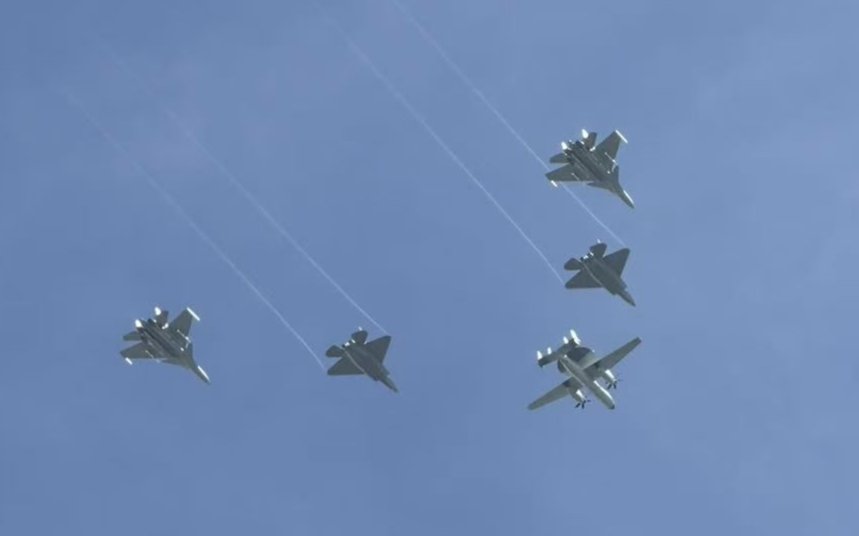
It is not immediately clear which versions of the J-15 are participating in this formation flight: they could be J-15Ts, but another possibility is the electronic warfare version, the J-15DT, that we have profiled in the past. Regardless, they highlight how China’s carrier aviation ambitions are increasingly focused on catapult-assisted takeoff but arrested recovery (CATOBAR) operations, which offer many advantages.
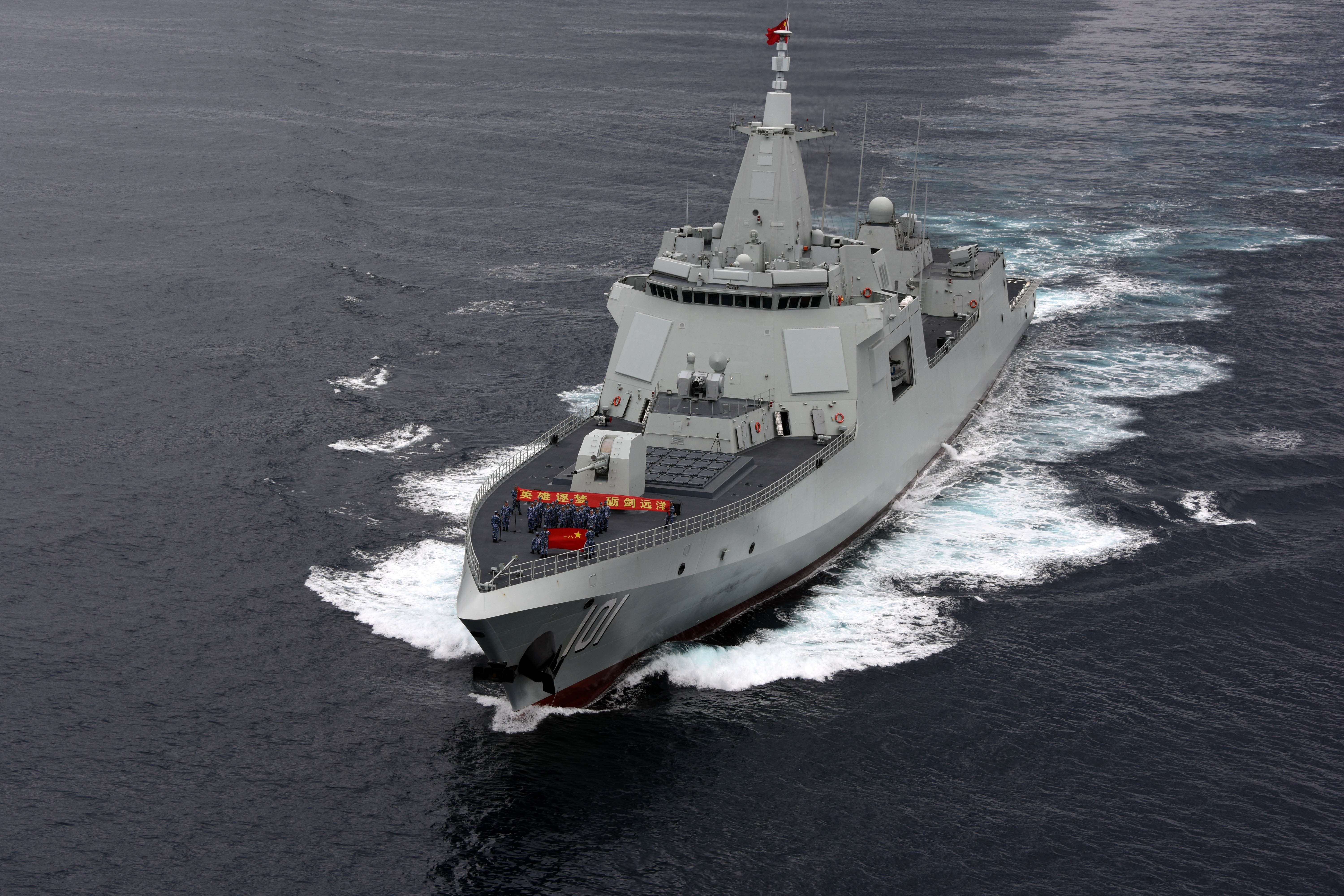
For the first time, the exhibition will also include a substantial surface fleet component, making use of the docks at the nearby Gaolan Port. Among the vessels expected to be featured are the Type 075 amphibious assault ship, the Type 055 guided-missile destroyer, and the Type 054A guided-missile frigate. Their presence will offer a public-facing showcase of China’s increasingly sophisticated surface fleet and its expanding range of maritime capabilities. It should also be recalled that it was at Gaolan Port where at least one Chinese uncrewed surface vessel, a distinctive trimaran craft, was first spotted.
The broader messaging surrounding the exhibition is also notable. According to the PLAN, this year’s displays will place greater emphasis on operational readiness and training, with active-duty equipment that regularly participates in exercises and maritime security missions taking precedence over purely exhibition-oriented displays. This should underscore how Beijing has rapidly spun up its naval capabilities, introducing new and more capable equipment that is increasingly capable of more sustained out-of-area operations.
The expanded naval presence at Zhuhai looks set to provide a substantial public showcase of China’s ongoing naval modernization. As well as the combination of the J-15T, J-35, KJ-600, and Z-20 variants, the JL-15 points to an increasingly comprehensive carrier aviation enterprise. And, judging by previous editions of the show, there will almost certainly be more novelties on display as well.
Contact the author: thomas@thewarzone.com
The post China’s Naval Developments Set For The Spotlight At Zhuhai Airshow appeared first on TWZ.