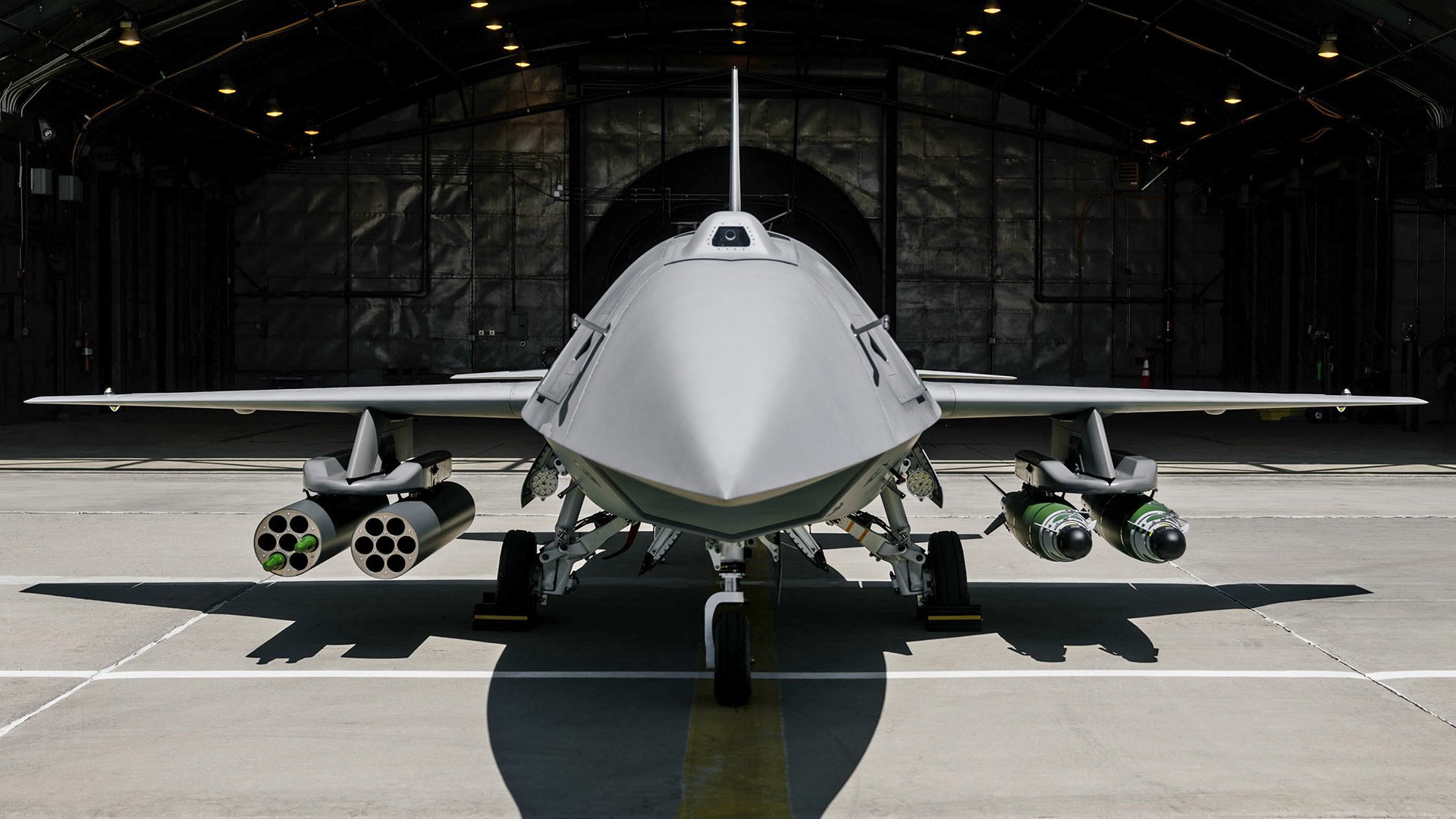
New imagery shared with TWZ by Anduril shows its YFQ-44A Fury Collaborative Combat Aircraft (CCA) configured with air-to-ground weapons, underscoring the fact that the CCA could take on an air-to-ground role in the future in addition to its current air-to-air focus. Yesterday, Anduril executives revealed that the company had begun integration and fit checks for a range of air-to-ground weapons, although they confirmed to us that those weapons had not yet been flight-tested aboard Fury.
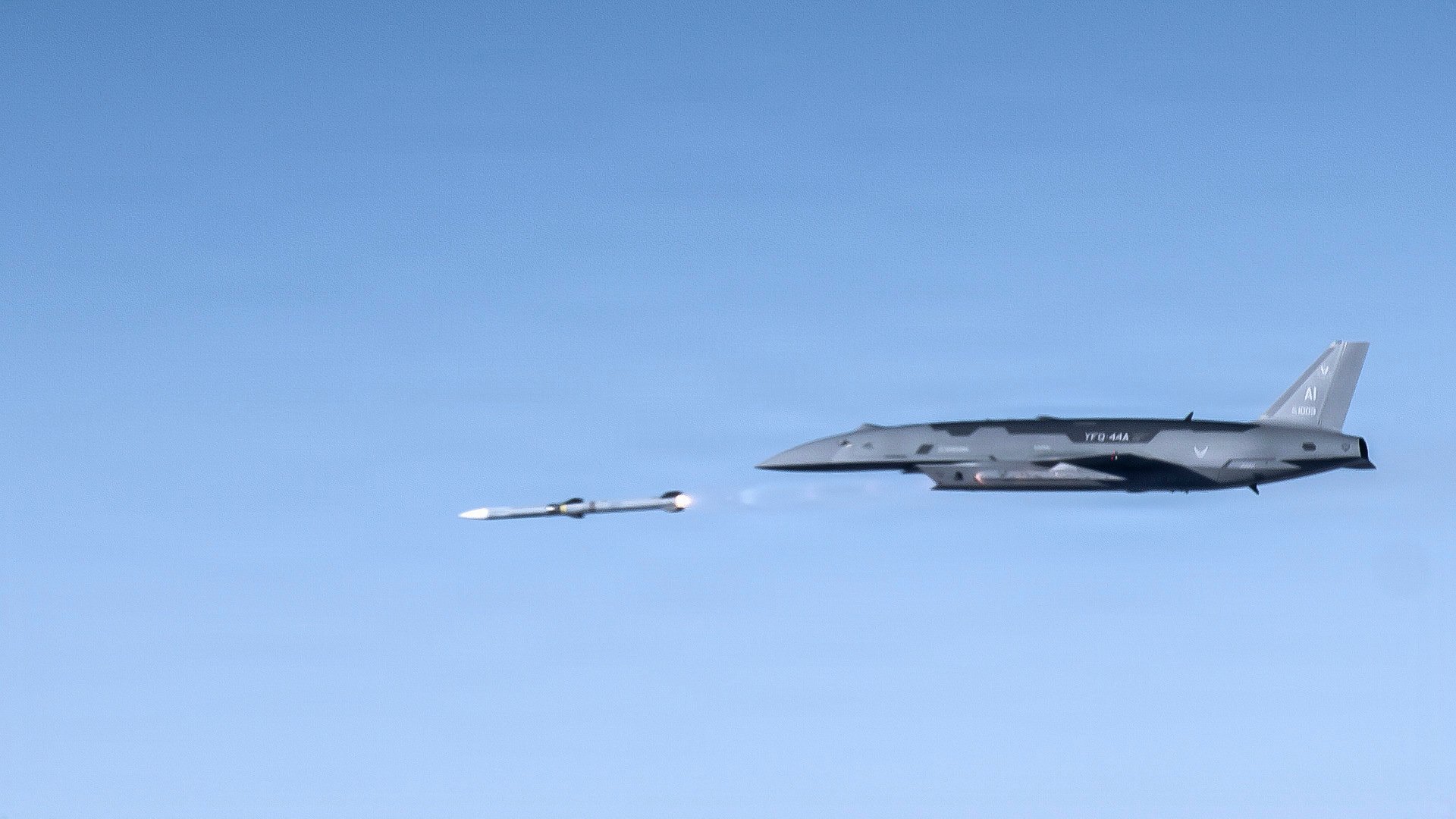
The YFQ-44A is one of two aircraft selected by the Air Force for its CCA Increment 1 program, alongside General Atomics’ YFQ-42A Vengeance. The service’s stated priority for the initial aircraft is air dominance, and Anduril says the production FQ-44 will have four external hardpoints capable of carrying four AIM-120 AMRAAM air-to-air missiles. The YFQ-44A, which currently has two underwing pylons for two AMRAAMs, has already conducted a live AIM-120 firing as part of testing with the Air Force’s Experimental Operations Unit.
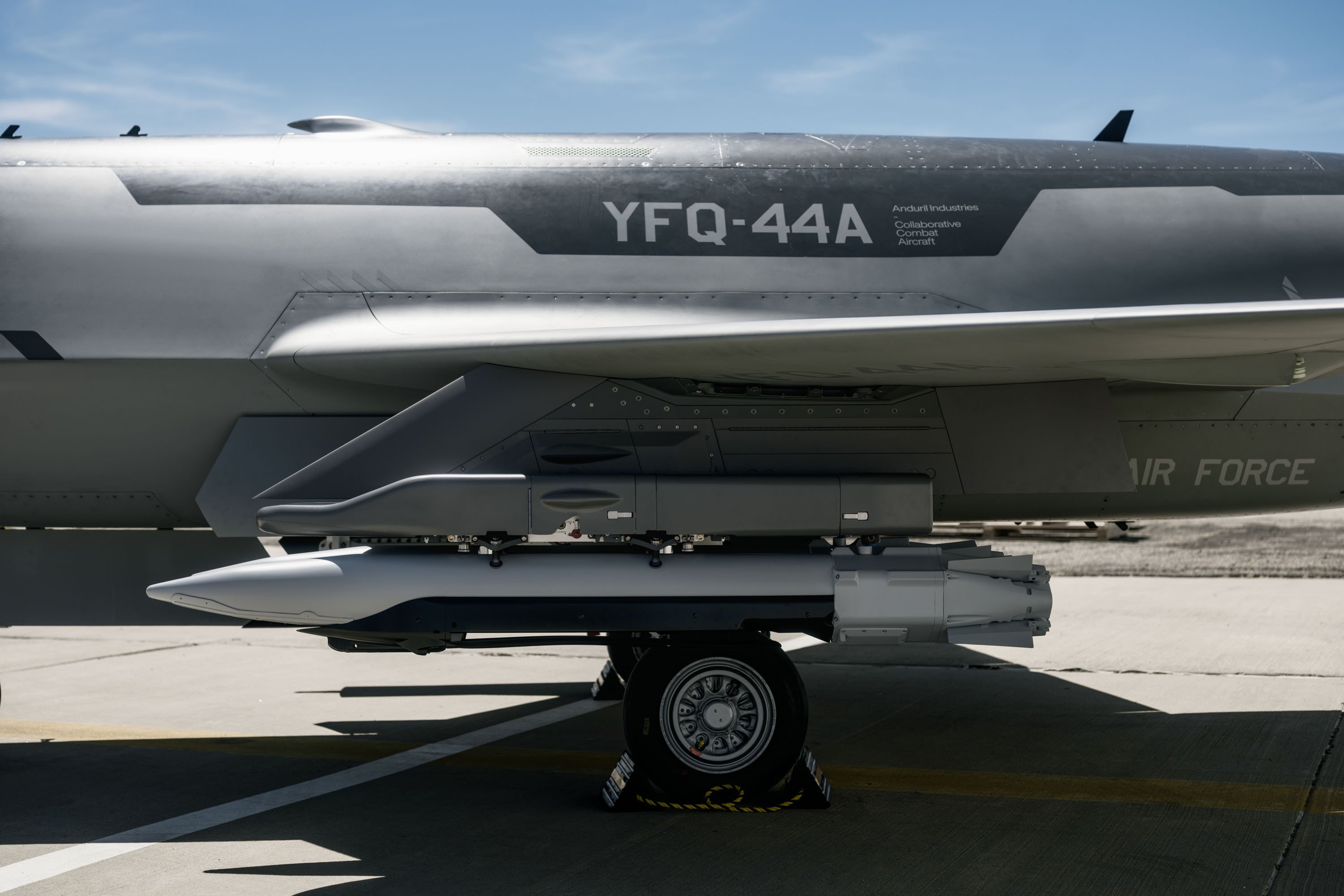
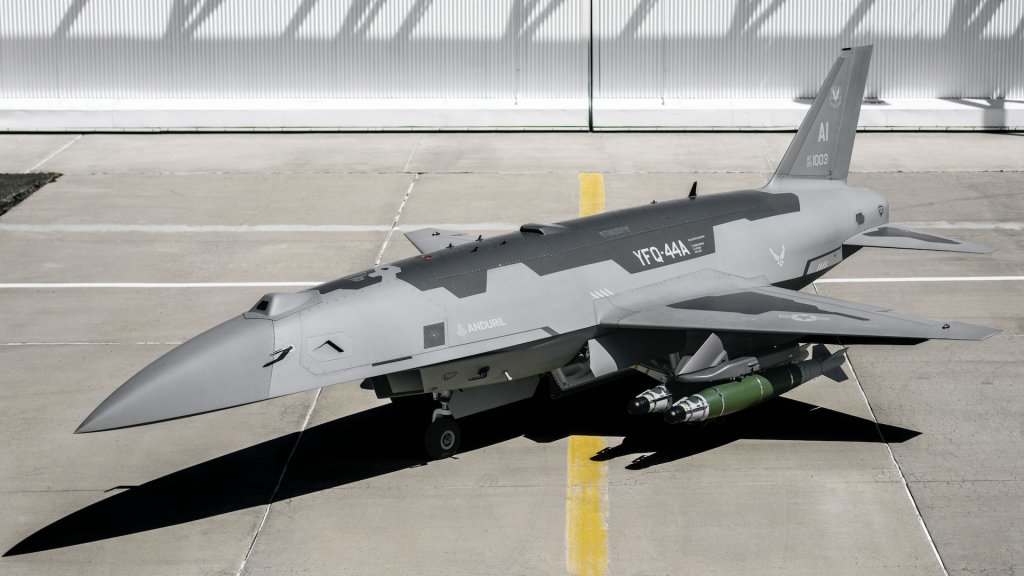
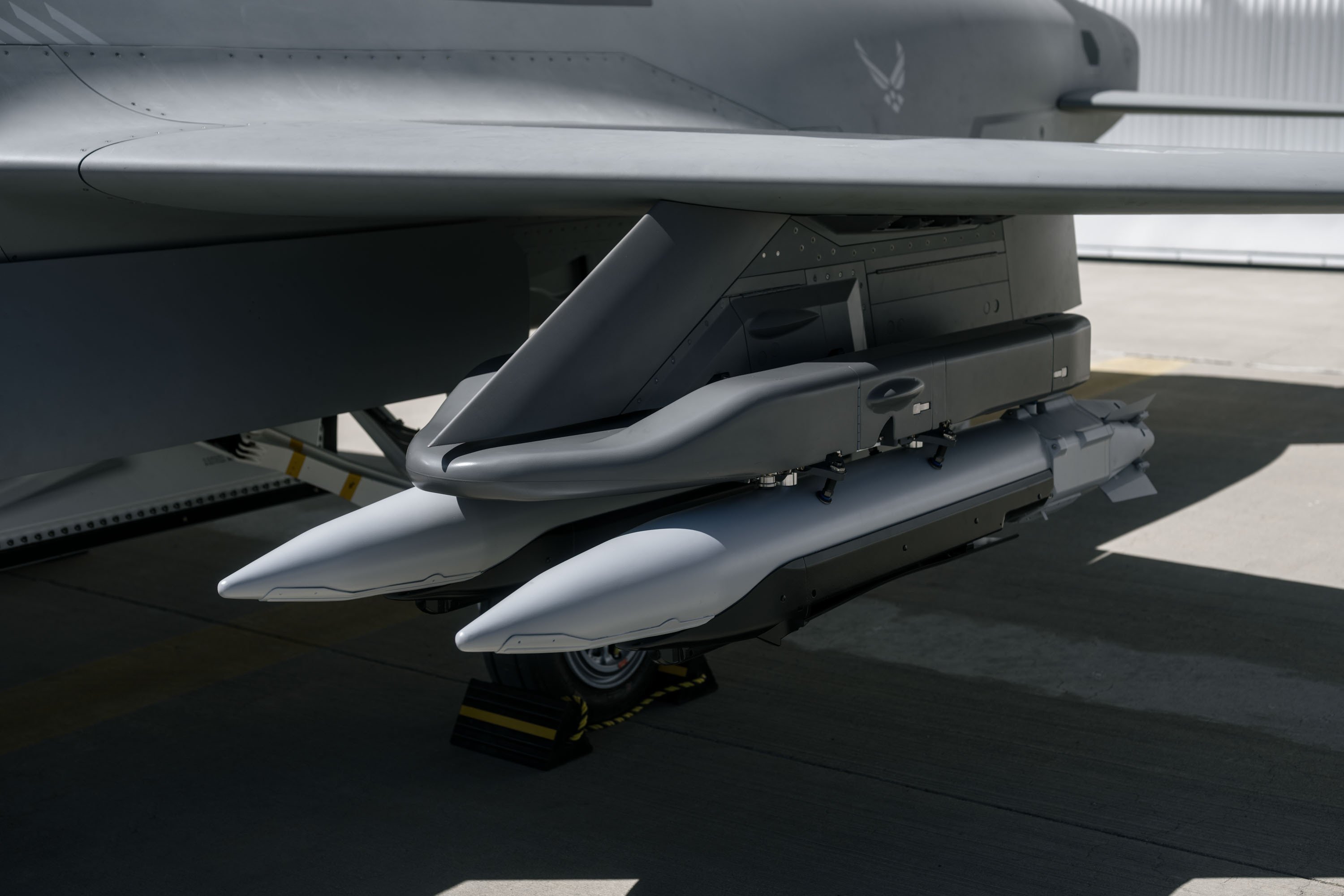
The new imagery, however, points toward a substantially broader weapons envelope, with the aircraft shown carrying different air-to-ground stores on its two external stations. The weapons are shown fitted to the aircraft during a ground-based fit check, an important step in the integration process before captive-carry and, ultimately, live-release testing, if Anduril and the USAF choose to go down that route.
During a recent roundtable with reporters yesterday at the Air & Space Forces Air, Space and Cyber Symposium that TWZ is attending, Anduril’s Jason Levin, senior vice president for Air Dominance and Strike, and Erin Simpson, vice president for Strategy for Air Dominance and Strike, said the company had already begun integration and fit checks of 500-pound Joint Direct Attack Munitions (JDAM), 250-pound Small Diameter Bombs (SDB), and low-cost cruise missiles. Pods for 2.75-inch guided or unguided rockets are also seen fitted to the aircraft. In each case, the stores are mounted on a twin adaptor rack.
Furthermore, Anduril’s plans extend to testing the Fury with other air-to-air weapons and targeting pods.
Importantly, the diversity of weapons will give Fury a range of potential missions beyond high-end air-to-air combat, including counter-UAS, counter-cruise-missile, and air-to-ground or air-to-surface strike missions.
“We’ve begun integration and fit checks of a lot of other munitions,” an Anduril executive said. “We’ve done 500-pound guided bombs. We’ve done Small Diameter Bombs.”
The company said it had also begun engineering work to integrate its Barracuda 500 offering for the Air Force’s emerging low-cost cruise-missile effort.
It should be noted that giving the YFQ-44— or YFQ-42A — the ability to deliver a JDAM or SDB against a predetermined fixed target is not particularly complex. This type of austere air-to-ground capability should be relatively straightforward to add, providing a useful secondary strike function without requiring the aircraft to take on the far more demanding requirements associated with dynamic targeting or more sophisticated air-to-ground missions. This could also allow for these increment one CCAs to be used independently as air-to-ground ‘weapons trucks’ if their air-to-air assistance isn’t needed.
When the production FQ-44 arrives, it will have four hardpoints, compared with the two currently fitted to the YFQ-44A. Anduril says loading all four stations with AIM-120s for the Air Force’s air-dominance mission would reduce the range of the aircraft but would not require a larger engine or otherwise push the aircraft outside its basic takeoff, landing, climb, and flight-envelope requirements.
While the Air Force’s initial CCA requirement is heavily focused on air dominance, the same aircraft could potentially be configured for different missions by changing its external stores and sensors. Anduril is already positioning Fury as something more than a single-purpose “missile truck.”
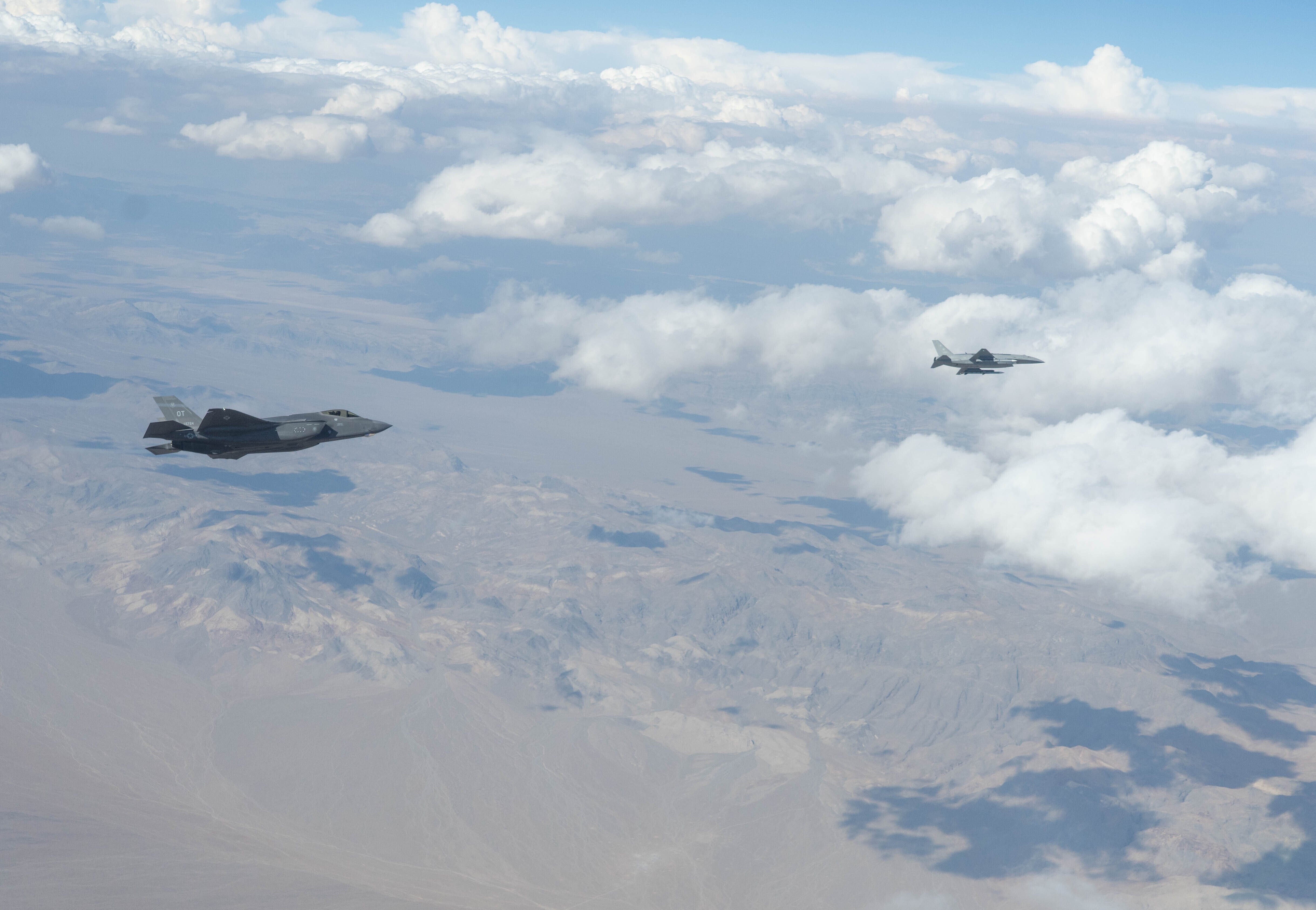
That flexibility could become increasingly important as the Air Force considers how CCAs will be employed alongside crewed fighters. During a July Experimental Operations Unit (EOU) exercise at Creech Air Force Base, Fury flew in the same airspace as crewed fighters and other CCAs while Air Force personnel operated its Mission Autonomy system. Anduril says the aircraft has also flown in formation alongside F-35s, although the fighters were not yet controlling Fury.
The company is now working toward what it calls “quarterback integration,” in which a crewed aircraft will direct autonomous aircraft as part of a larger combat formation. Anduril says that work has already progressed through hardware- and software-in-the-loop environments and onto the aircraft itself, with live testing expected in the near term.
A Fury operating under the direction of an F-35 could potentially carry air-to-air missiles for counter-air missions, while other aircraft in the formation could be configured for strike or other effects. Alternatively, the same autonomous aircraft could be reconfigured for a different mission before being dispersed to another operating location. Having four pylons would also give the production Fury greater scope to undertake “swing-role” missions, flexing between prosecuting air and surface targets as required.
The July EOU exercise also demonstrated a rapid “hot reload” capability, with two Air Force personnel replacing an AIM-120 on a running Fury and reducing the turnaround between sorties to single-digit minutes. The demonstration was intended to show how CCAs could be rearmed and returned to the fight without the large maintenance and ground-support footprint associated with traditional combat aircraft. This will be vital as the Air Force integrates CCAs into its Agile Combat Employment concept, in which the drones can be dispersed across multiple operating locations rather than relying on a single large ground footprint.
Also speaking yesterday at the Air & Space Forces’ Air, Space and Cyber Symposium was Air Force Chief of Staff Kenneth Wilsbach, who confirmed that the service hasn’t necessarily made any decisions on Increment 2 of the CCA program yet, but it could include air-to-ground capabilities.
“We’re going through some thought processes about what Increment 2 should be able to do. Increment 1 is air-to-air, so do we want air-to-ground? Maybe, maybe not. Do we want it to have more sensors? Do we want it to be a lot cheaper? Do we want it to be more attritable or expendable, or do we want it to be more exquisite? Do we want shorter range or longer range? Do we want something that can be dropped from another platform, or does it take off and land by itself?”
“These are all considerations,” Wilsbach continued. “It’s still a bit early to make any definitive decisions on that, especially before we really get our hands on the current Increment 1 aircraft and learn from them.”
It’s also important to note that export customers for Fury may demand an air-to-ground capability set, especially if they will only be buying a limited number of CCA types. Having this option ready to go is relevant to prospects beyond the U.S., which are certainly growing.
Fury’s air-to-ground weapons work is part of a broader effort to make the aircraft a flexible combat system rather than simply an uncrewed air-defense adjunct for crewed fighters. The Air Force’s immediate priority may be air dominance, but the weapons integration underway suggests that the same four hardpoints could eventually support a much wider range of missions. This weapons flexibility could ultimately be central to the broader CCA concept, especially as the Air Force works out what it wants Increment 2 to deliver.
Contact the author: thomas@thewarzone.com
The post YFQ-44A Fury Has Been Fit Checked With Air-To-Ground Munitions appeared first on TWZ.