
Engineers at NASA’s Langley Research Center test deployment of the Advanced Composite Solar Sail System’s solar sail, circa 2023. Now private companies are trying to enter the space industry by introducing ways to harness solar energy and send it back to Earth. (NASA)
Space-Based Power Has Sci-fi Appeal but May Never Be Feasible
Data shows that terrestrial solar power is much more effective than thousands of orbital mirrors could be.
Space-based power, the idea of delivering power from orbit, is older than the space age itself. But it has gained new prominence as companies propose to turn this old idea into a new reality. In July 2026, startup company Reflect Orbital received Federal Communications Commission (FCC) approval to launch a test satellite that could be the forerunner of a constellation of 50,000 satellites.
While there are environmental and safety objections to space-based power, the fundamental issue is whether space-based power is practical and can deliver real benefits relative to terrestrial power generation. Unfortunately, space-based power faces vast physical, technological, and financial obstacles.
What Are Space Mirrors?
Reflect Orbital may be the first space-based power company to launch a satellite, and its proposal illustrates how implausible space-based power can be. It plans to launch a test satellite soon and deploy 50,000 satellites by 2035 to assist power generation, agriculture, industry, and emergency response.
Reflect Orbital will use the simplest technology possible to deliver power to Earth—flat mirrors reflecting sunlight. Its Earendil-1 satellite will deploy a square Mylar mirror 60 feet (18 meters) on a side and will be brighter than the full moon, while production satellites will be 180 feet (54 meters) on a side.
Why Space Mirrors Lose the Efficiency Battle
While these large mirrors can reflect large quantities of sunlight, their beams diverge, so on Earth the light is cast over a huge area. From an orbit 390 miles (625 kilometers) above the Earth, the beam of light from a mirror is projected over a region at least 3.7 miles (6 kilometers) across. The resulting dilution of sunlight is a fundamental flaw.
The light from each mirror is being cast over a region roughly 100 times larger in length and 10,000 times larger in area than the mirrors themselves. This is critical, as the intensity of the beam is diluted by a factor of roughly 10,000. Or, to put it another way, roughly 10,000 satellites would be needed to provide the equivalent of the midday sun at just one location. This is comparable to the total number of operational satellites currently in orbit.
And this calculation is wildly optimistic. It assumes the mirrors are perfectly flat, perfectly reflective, and not tilted. It also assumes the satellites are at the minimum possible distance, whereas larger distances and more diluted beams are more realistic. However, it does have the advantage of being simple enough that it can be done on the back of a napkin. And perhaps should have been done on a napkin by those currently investing in Reflect Orbital.
While Reflect Orbital uses catchphrases like “from moon to full noon,” with 50,000 satellites distributed in orbits around the world, there will never be enough satellites above one location to deliver full noon.
With 50,000 satellites, Reflect Orbital could deliver 10 percent of the midday sun to no more than 50 locations simultaneously. And given its proposed charging of $5,000 per hour per satellite, 10 percent of the midday sun would cost at least $5 million per hour at each location.
Paying $5 million per hour for 10 percent of the midday sun doesn’t seem wise, given 100 percent of the midday sun is free at midday.
When Space Technology Can Be Successful—and When It Can’t
Space is a unique environment that does provide commercial and scientific opportunities. Satellite communication and navigation are everywhere, and Earth observation satellites have accelerated weather forecasting and disaster preparedness. The use of space has saved lives and generated economic opportunity.
But space presents a series of challenges. It is a harsh environment where maintenance is effectively impossible, so satellites need to be carefully (and expensively) engineered. Launch costs have fallen but are roughly $1,500 per kilogram($700 per pound). Satellites in low Earth orbit experience drag from the tenuous upper atmosphere, and their orbits decay without station-keeping burns. Starlink satellites are re-entering the Earth’s atmosphere after just five years of use.
Critically, for the generation of solar power, space is not particularly special. Much of the visible light that strikes the top of the atmosphere can reach the Earth’s surface on clear days. Solar power in space isn’t spectacularly better than solar power on Earth. Satellites in low Earth orbit can also experience day and night, so they can only directly deliver solar power near dawn and dusk across much of the globe.
Of course, satellites are above the Earth’s weather, but are they the best and cheapest solution for cloudy days? Reflect Orbital’s expensive beams of light are just as vulnerable to clouds as free sunlight. While there are proposals to generate electricity in space and then beam that power to Earth (for instance, using microwaves), this technology is completely unproven on the distances and scales required. And such technology is unlikely to have the efficiency of free natural sunlight traveling through the air.
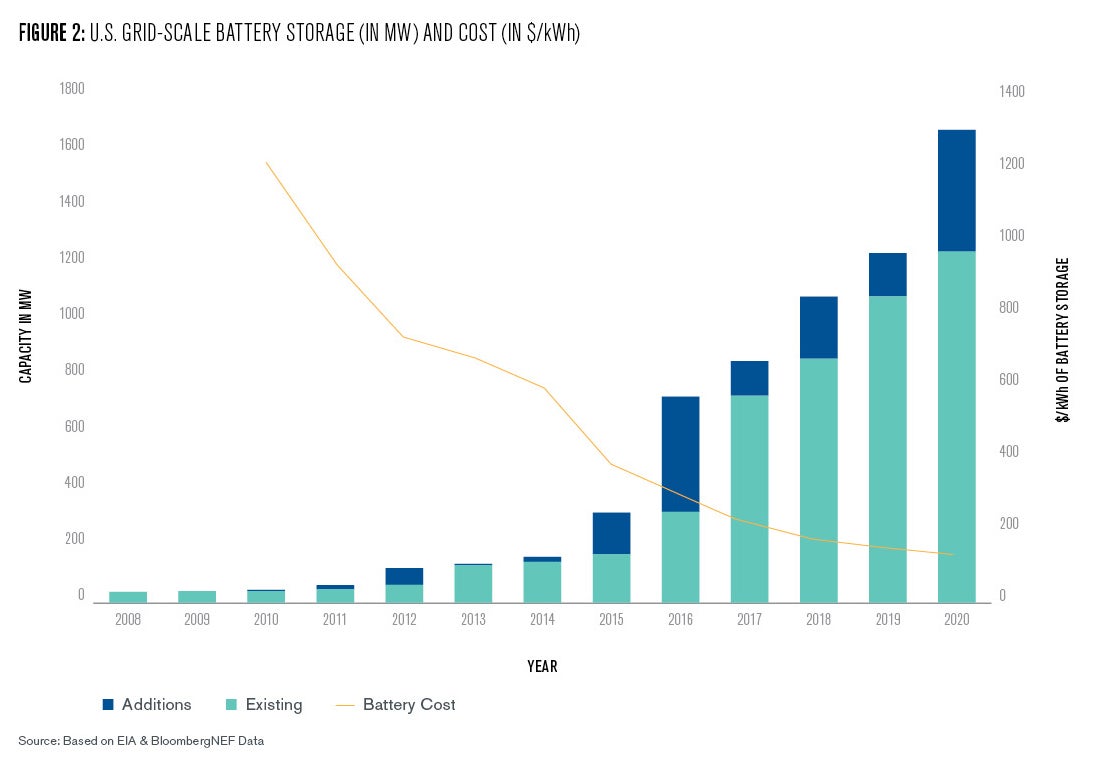
Renewable energy does need to mitigate the impact of weather, but there are more established approaches for doing this, including using a mix of power generation technologies, electricity grids, and batteries, which are falling in cost every year. Space-based power has sci-fi appeal, but its feasibility is not established; it is expensive, and it is decades behind existing terrestrial technologies. Paying millions per hour for space-based power just doesn’t make sense when sunlight is free.
About the Author: Michael Brown
Michael Brown is an observational astronomer at Monash University who studies the evolution of galaxies over cosmic time. Michael’s research team has found that the most massive galaxies grow relatively slowly, and that the relationship between stellar mass and dark matter mass evolves very little over billions of years. His 2014 atlas of galaxy spectral energy distributions is being used to improve estimates of cosmic distances, calibrate how rapidly galaxies form stars, and model the performance of NASA’s new James Webb Space Telescope.
The post Space-Based Power Has Sci-fi Appeal but May Never Be Feasible appeared first on The National Interest.