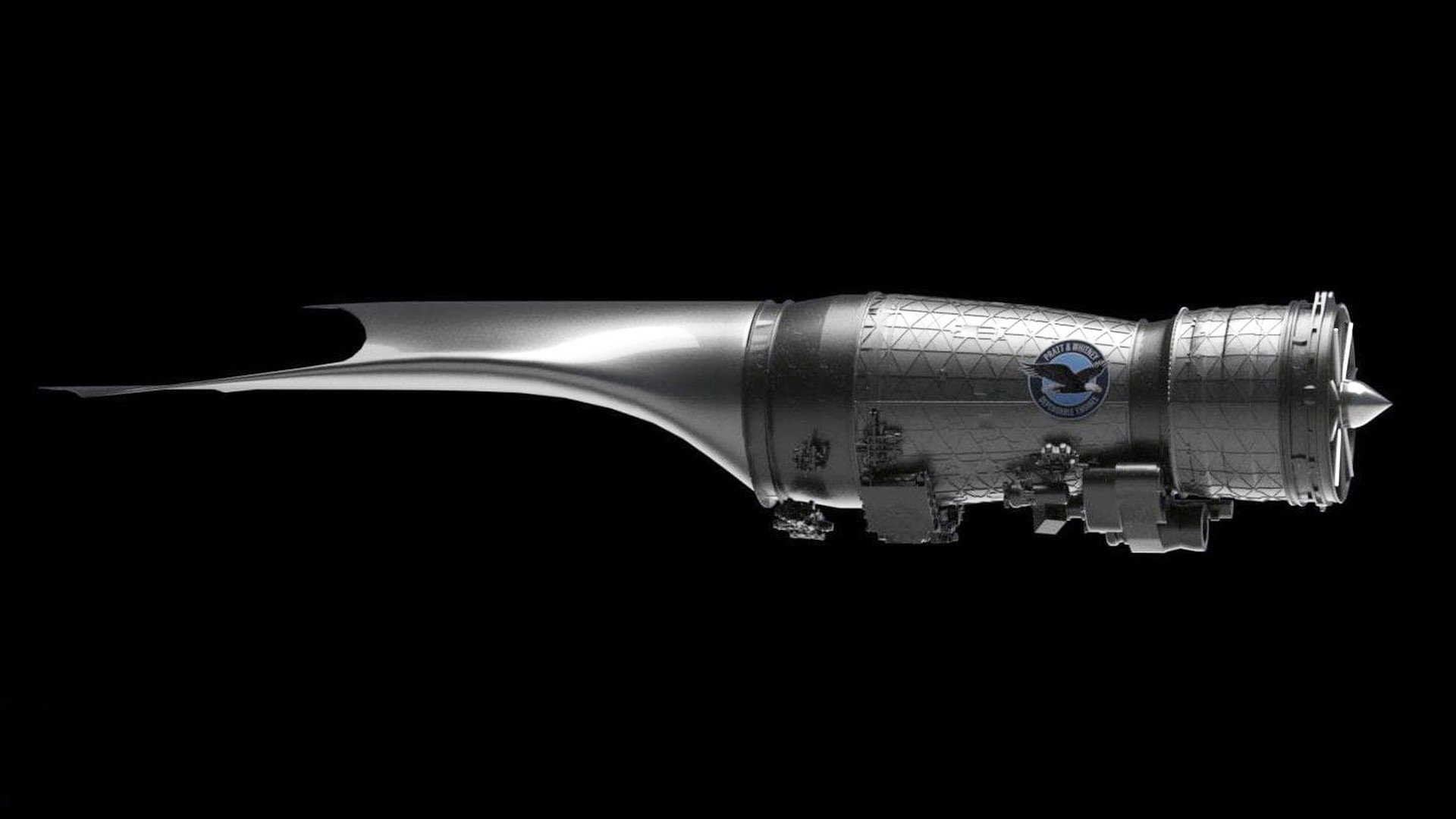
The U.S. Air Force says a prototype jet engine developed under the Next Generation Adaptive Propulsion (NGAP) program could be ready for integration onto an actual aircraft in 2030. The fruits of NGAP have long been expected to power the new F-47 fighter, and potentially other aircraft. The schedule here, however, raises the question of what engine will be used on the F-47, at least to start with, as that jet is expected to fly for the first time in 2028. Depending on how long full development lasts, the first operational F-47s might use different engines than the ones the design is ultimately expected to receive to unlock its full potential.

John Sneden, the Portfolio Acquisition Executive in charge of the Propulsion Directorate at the Air Force Life Cycle Management Center (AFLCMC), recently shared new details about the NGAP effort. Sneden provided the update on the next-generation engine program at the Life Cycle Industry Days conference in Dayton, Ohio, which opened yesterday. Dayton is home to Wright-Patterson Air Force Base, which is where the AFLCMC is headquartered.
The Air Force is “get[ting] ready for potential [NGAP] integration activities in the 2030 timeframe,” Sneden said, according to a report today from Breaking Defense. “What we’re doing right now is we’re building our system today, and we’re getting ready for the future.”
This is in line with the Air Force’s 2027 Fiscal year budget proposal, released earlier this year, which says NGAP’s “Prototype Fabrication & Engine Assessment” phase will run through at least September 2031. The budget documents also show a planned surge in NGAP spending over the next three years or so. The Air Force is asking for nearly $513.7 million for the program in the upcoming fiscal cycle, and then expects to request $905.7 million and $865 million in Fiscal Years 2028 and 2029, respectively. Projected annual funding then drops into the roughly $300 million range in Fiscal Years 2030 and 2031, which is as far out as the currently available outlay extends.
What is reflected in the budget outlay “is really about building engines, testing engines, and then we’ll be rolling through that competitively over the next few years,” Sneden said at the conference in Dayton, according to another report from Air & Space Forces Magazine.
“The Air Force is still evaluating its options,” Sneden added, per Breaking Defense, when asked about what aircraft might fly first with an NGAP engine. The F-47 “could” be one option, but the advanced nature of the technology might “open up” the door to other possibilities, he noted. The F-47 program is highly classified, which also limits what can be said about the jets and their expected capabilities, in general.
When it comes to where NGAP stands now, “initial hardware is procured, their design meets our standards, everything is clean from that end, and both vendors have been able to do that,” Sneden said, per Air & Space Forces Magazine.
The two vendors in question are General Electric and Pratt & Whitney, the latter of which is a subsidiary of Raytheon. Both firms announced they had completed assembly readiness reviews of their respective designs, known as the XA102 and XA103, in May. The two companies have already been working for years on their competing prototypes. Last year, they both saw the cost ceilings on their existing NGAP contracts rise to $3.5 billion. Those deals cover work through 2032.
NGAP has also been leveraging work done under an earlier Air Force effort called the Adaptive Engine Transition Program (AETP), which both General Electric and Pratt & Whitney also participated in. In 2023, the service canceled AETP, which was exploring options for a new engine for variants of the F-35 Joint Strike Fighter (JSF). Upgrades for the existing Pratt & Whitney F135 engine, which currently powers all versions of the F-35, are now in the works instead.
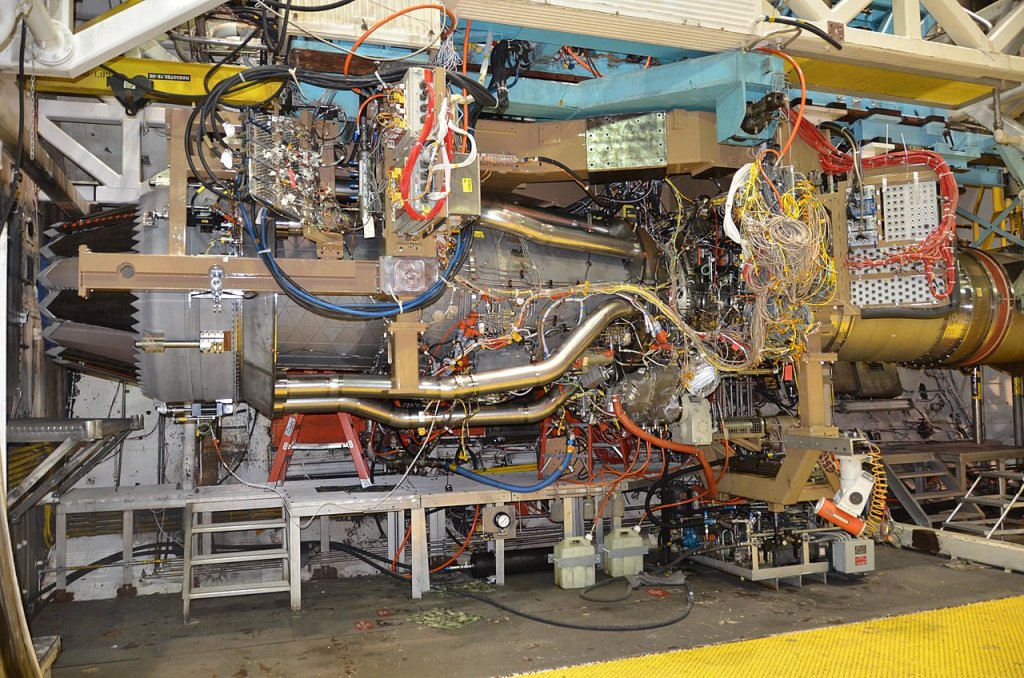
More specific details about the XA102 and XA103 continue to be limited, but both are known to be so-called adaptive cycle designs. In very broad terms, jet engines of this kind can perform like a turbofan when optimal and more like a turbojet when needed. This offers benefits in terms of fuel economy and power in the same engine. Being able to conserve fuel while transiting to and from an operating area would help extend range and increase loiter time. This could also help reduce demands on already strained tanker fleets and offer more general cost benefits.
To provide some additional context, General Electric has said in the past that the XA100 design it developed for AETP was around 25 percent more efficient than the F135. It was also said to offer between 10 and 20 percent more thrust than the Pratt & Whitney engine in certain flight profiles.
This is all seen as especially valuable for traditionally fuel-hungry tactical jets like the F-47. Extended range and loiter time, and reduced need for tankers, would also be of particular utility in any future high-end fight against China across the broad expanses of the Pacific. TWZ touched on all of this in our recent detailed feature on what is currently known (and unknown) about the F-47’s design, which you can find here.
As already mentioned, a big question now is what engines will be used on the F-47, at least to begin with. The Air Force has consistently said that it is targeting a first flight for the F-47 in 2028. Sneden, head of the Propulsion Directorate, has now said that the service is not expecting to have an NGAP engine ready for integration until 2030.
Air & Space Forces Magazine reported that Air Force Col. Timothy Helfrich, the Portfolio Acquisition Executive for Fighters and Advanced Aircraft, declined to speak to F-47 propulsion plans when asked separately at the conference in Dayton.
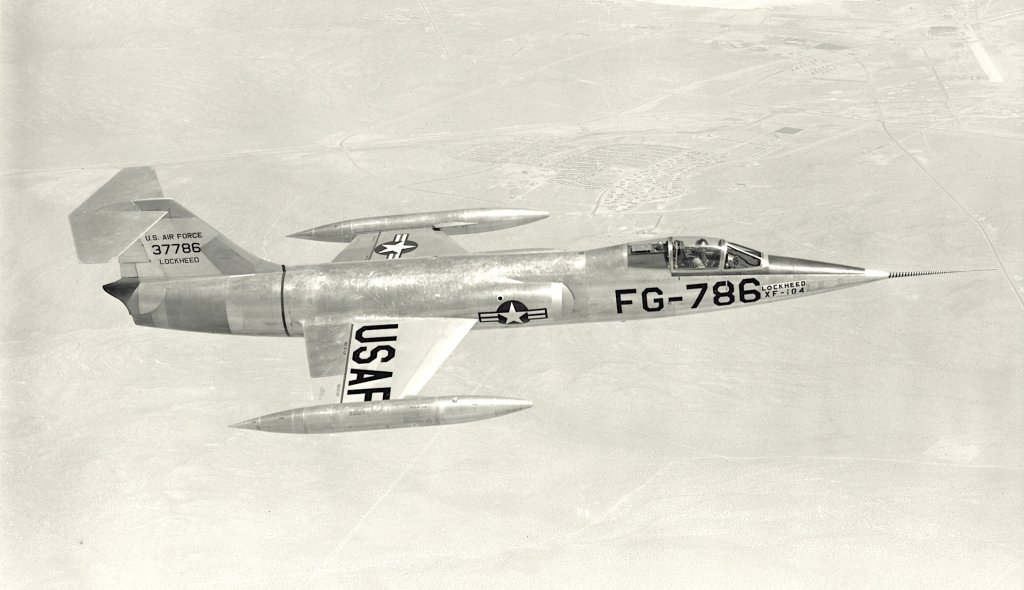
It is not entirely uncommon for new aircraft prototypes to use a different engine from the one planned for production examples. As one example, Lockheed’s Cold War-era F-104 Starfighter was developed around the General Electric J79 turbojet, but that engine was not ready for the start of flight testing. So early XF-104 prototypes used older and less powerful Wright J65 turbojets instead.
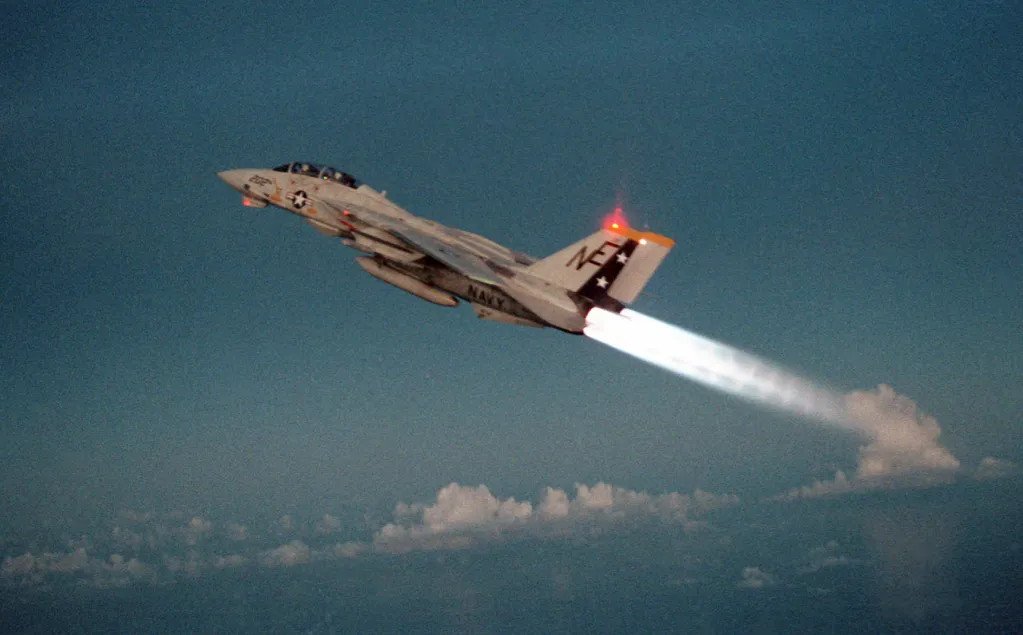
In some cases, the initial production batches of aircraft have even entered operational service with different engines than were originally expected due to various factors. Spiral developments can include new engines regardless of what the original might have been, too. For instance, Grumman originally planned to use Pratt & Whitney F401 turbofans on the F-14 Tomcat, but that engine program was cancelled. Pratt & Whitney TF30 turbofans were used instead on early F-14As. However, problems and limitations surrounding those engines led to General Electric F110 turbofans being integrated onto later examples of the Tomcat.
Similar spiral engine developments for combat aircraft have been seen outside the United States, too, including with China’s J-20 and Russia’s Su-57.
For the F-47, there are certainly existing in-production designs with relevant performance, such as the F135 and F100 from Pratt & Whitney, and the General Electric F110, which are used on various tactical jets today. Another possibility might be to use an otherwise available design like Pratt & Whitney’s F119 (currently only found on the F-22 Raptor), at least for initial flight testing. The F135 is based on the F119, but the latter is optimized for higher performance, including operations at higher altitudes and cruising at supersonic speeds (supercruise). The F119 is also out of production, at least as far as we know.
At the same time, the F-47 is a highly optimized and integrated platform with range and performance targets being key aspects of the design. The jet will likely have to be capable of supercruise and be able to fly at very high altitudes, pointing to a need for an F119-like or similar design.
The physical trade space on the F-47 allotted for any engine, as well as the fuel system, and any other associated components, will be largely static. There will be cooling and accessory power demands to factor in. There is then the matter of the jet’s intakes to consider, which is a critical aspect to consider for safe and reliable engine function. They also have to be optimized for the chosen engine and its airflow demands throughout the expected flight envelope. Furthermore, historically, stealthy inlets have been especially complicated to design in a way that blends seamlessly with the rest of the planform while still providing sufficient airflow.
Planning for a redesign of the F-47’s airframe down the line to accommodate an NGAP engine might well be a non-starter. The cost and complexity of integrating an AETP engine into the F-35, which might not have been feasible at all for the F-35B variant with its unique design constraints, directly factored into the cancellation of that program.
Again, this all depends on the F-47’s core design and to what degree the ability to accommodate new engines down the line has already been baked in.
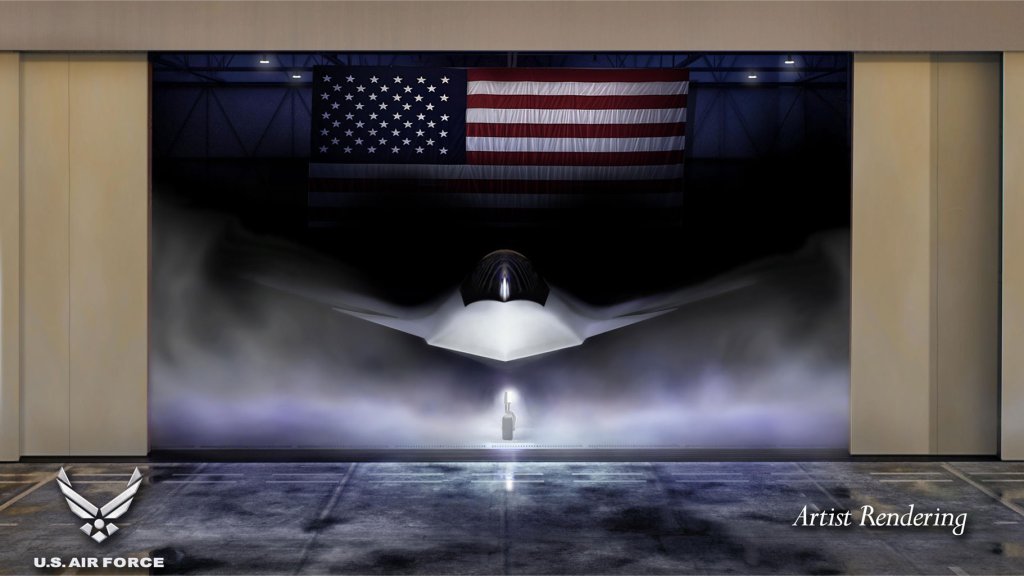
It is worth noting here that some existing type or types of engine have already been powering the flying demonstrators that helped give birth to the F-47. New engine types that have yet to be disclosed might have been used on those aircraft, though it seems less likely to have two similar programs unless there were very special requirements that we do not yet know about. Regardless, how reflective any of those designs might be of the expected production configuration of the F-47 is unclear.
The initial batch of production F-47s could enter operational service with a different engine than what is expected to be integrated onto future versions, if this is not already the plan. The Air Force has said it is hoping to start fielding these jets in the early 2030s. There have also been reports that the service might not reach a real operational capability with the type until the middle of the next decade.
As an aside, having multiple true alternative engine options for a single aircraft can also help guard against disruptions in the supply of one particular type across the life of the program. The decision to axe procurement of the General Electric/Rolls-Royce F136 as an alternative for the F-35 family, ostensibly as a cost-cutting measure, was notably controversial at the time. It has since come to be seen as somewhat short-sighted given issues with F135 production.
The F-47 is not the only potential application for NGAP engines or technology derived from them, either. In particular, whatever sixth-generation fighter design the U.S. Navy ultimately selects as the winner of its F/A-XX competition would also benefit from next-generation adaptive cycle propulsion. The Air Force also talked in the past about advances from the preceding ATEP effort filtering down to its F-15, F-16, and F-22 fleets, as well as the F-35.
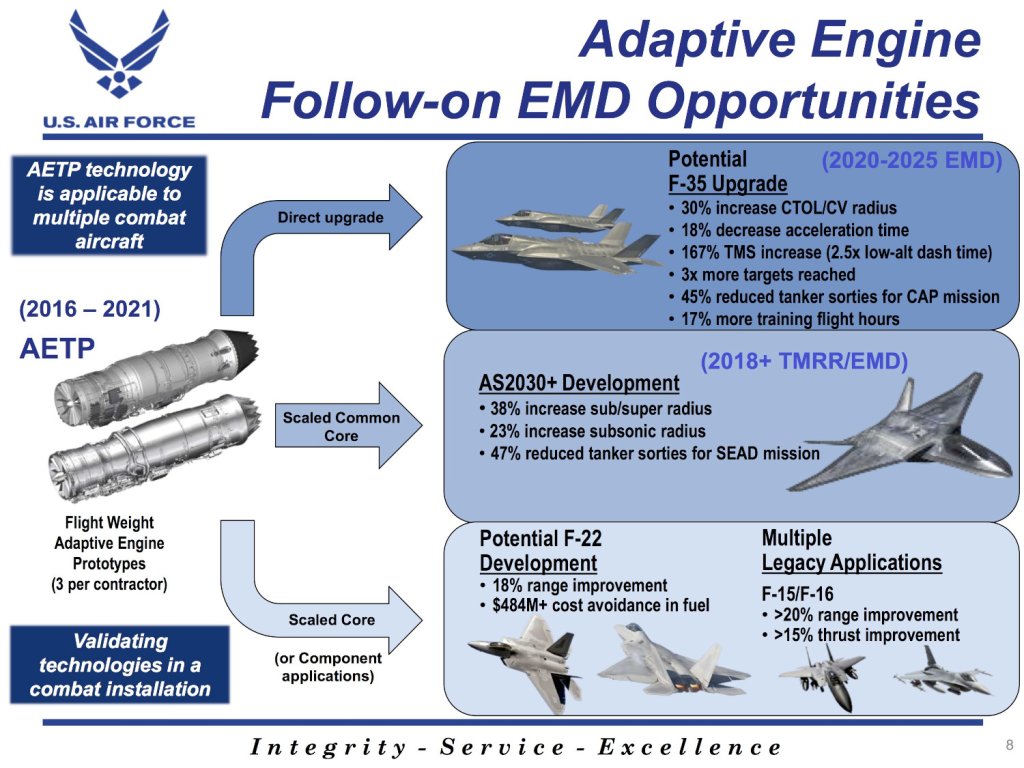
“We built NGAP as essentially an agnostic system,” Sneden said in Dayton, according to Air & Space Forces Magazine. “It was, build the system first, open up options for the future, and then when those options come to the forefront, we’ll be able to take advantage of it. You have to lean into propulsion technology first.”
“Not everything has to have an adaptive fan,” he added per that same outlet. “So we can actually take that backwards as well and incorporate it in some of our legacy platforms. So there is a great utilization for this type of tech.”
The Air Force is clearly very committed to NGAP, as underscored by the planning and budgeting around the program in the coming years. From what the service has disclosed to date, the work done already has been very fruitful and is now on track to result in at least one design being ready for flight testing in the next four years.
At the same time, the Air Force seems confident that an NGAP engine will not be available for integration before the F-47 is expected to make its maiden flight. There is also immense pressure to get the F-47 into service on an accelerated timetable, and for Boeing then to meet key milestones.
If the schedules hold for the two programs, this means that another propulsion option will have to be used on the F-47 at the start, no matter what happens with either program further down the line.
Contact the author: joe@twz.com
The post Will The F-47 Have To Fly Initially With Inferior Engines? appeared first on TWZ.