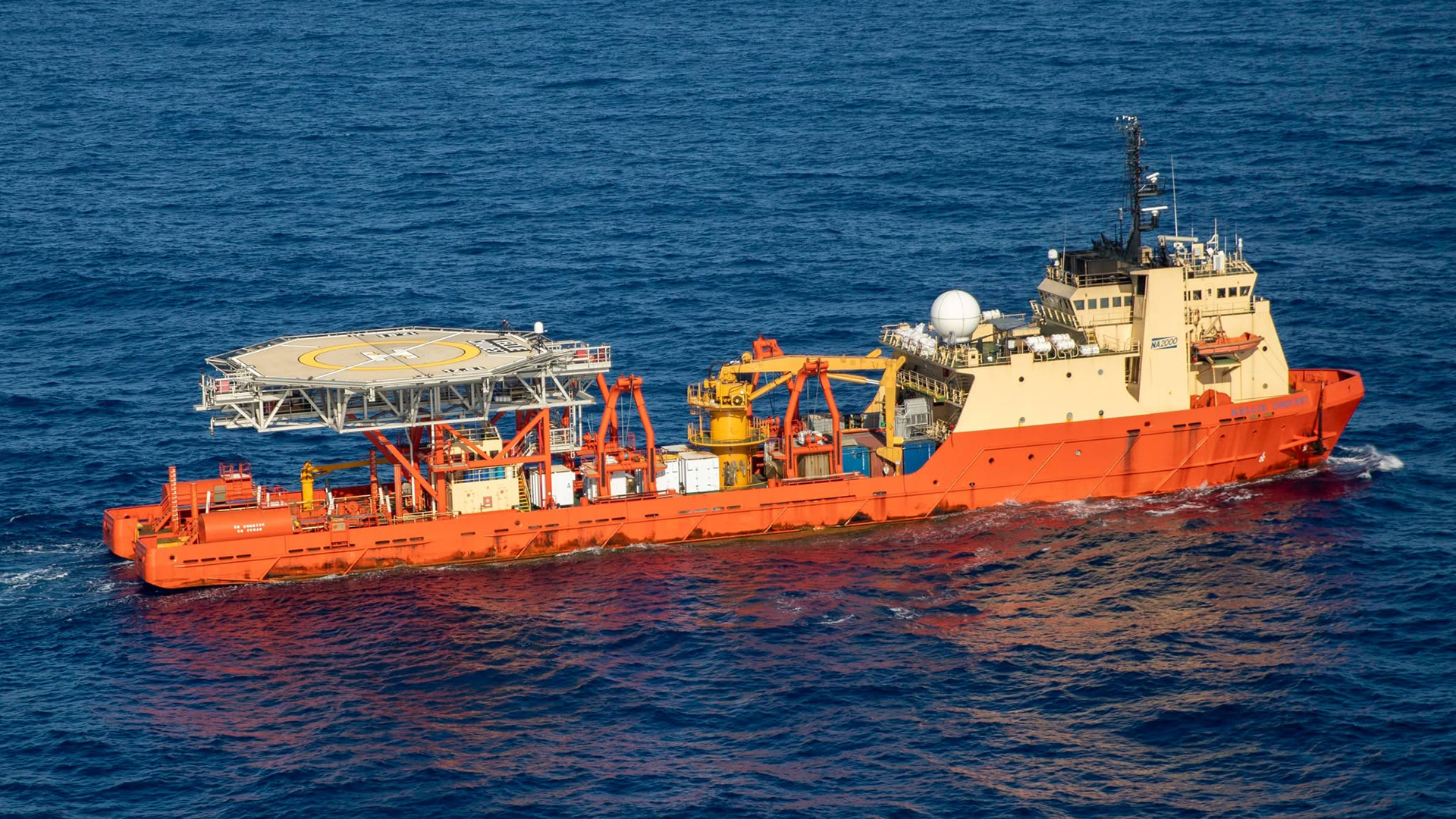
The U.S. Navy is seeking a multi-mission maritime security vessel to “launch, recover, and support a mix of manned and unmanned air and surface platforms,” a Navy spokesperson told us on Tuesday. The ship will “support the U.S. Southern Command’s (SOUTHCOM) enduring mission to collaborate with partner nations on maritime security operations in the Eastern Pacific and Southern Caribbean.”
“The Special Mission Vessel is envisioned as a versatile ‘mothership’ designed to significantly enhance maritime domain awareness and response capabilities,” the spokesperson added. “These operations are crucial for conducting command and control, surveillance, and interdiction missions across vast stretches of the open ocean.”
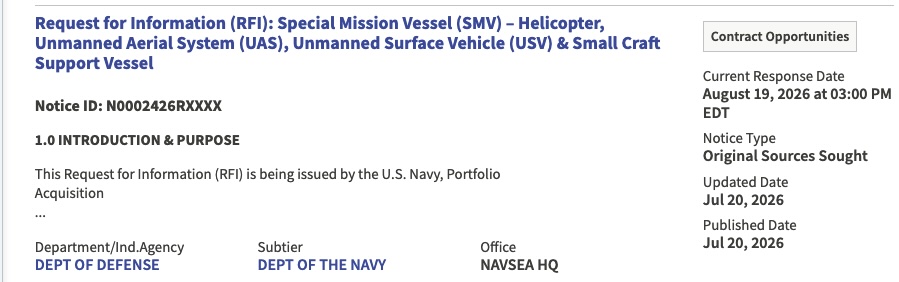
The Navy was responding to our questions about a request for information (RFI) about the ship that was published Monday on the government’s contracting website. The request comes as a contract for the ship currently performing this mission expires in 2028, which we will discuss in more detail later in this story.
The need for a vessel like this exists as U.S. forces continue a long battle with drug traffickers in the region, including ongoing strikes on boats claimed to be operated by smugglers. The strikes have generated a great deal of controversy, with claims they violate the rules of armed conflict and have been carried out without Congressional or judicial approval. The White House and Pentagon have pushed back on those claims.
You can see one of the most recent incidents in the following video.
To obtain this special mission ship, the Navy is looking for “both the design and new construction of a vessel, as well as the acquisition and necessary modification of an existing vessel,” the RFI explained. Interested parties should “seek to use existing, non-developmental platforms to the maximum extent possible.”
While the Navy is open to how the ship is ultimately developed, there are a number of requirements it must meet.
The Navy wants a steel monohull or catamaran that’s between 300 and 400 feet long and can travel at a 10-knot minimum sustained speed with a range of 9,600 nautical miles.
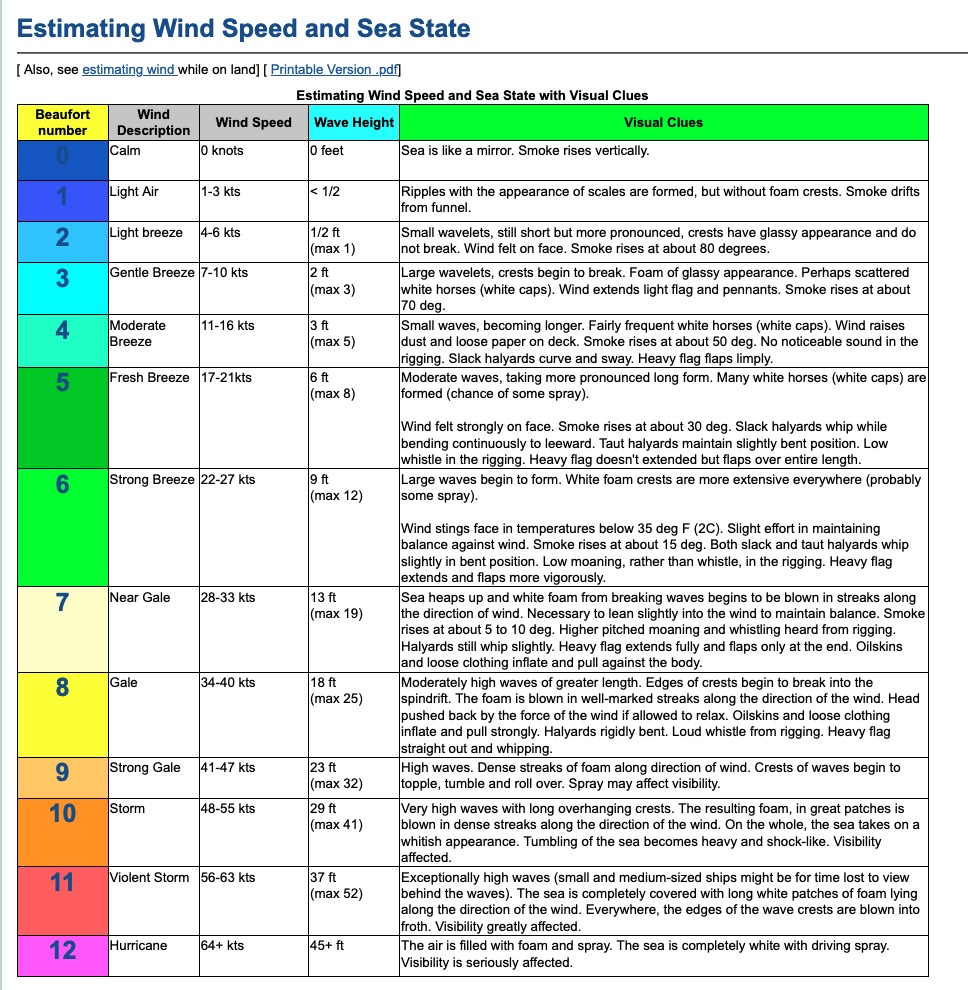
The ship should be capable of “conducting primary operations and surviving in a Beaufort Wind Scale 6 or greater” and be capable of “performing boat launch and recovery operations in Beaufort Wind Scale 4,” the RFI added.
Under the Beaufort system, Scale 6 refers to conditions with wind speeds of 22 to 27 knots and maximum wave heights of 12 feet. Scale 4 is wind speeds of 11 to 16 knots with maximum wave heights of five feet.
In addition, the ship should be able to stay at sea for “at least 30 days without underway replenishment or resupply for maximum number of personnel,” the RFI noted.
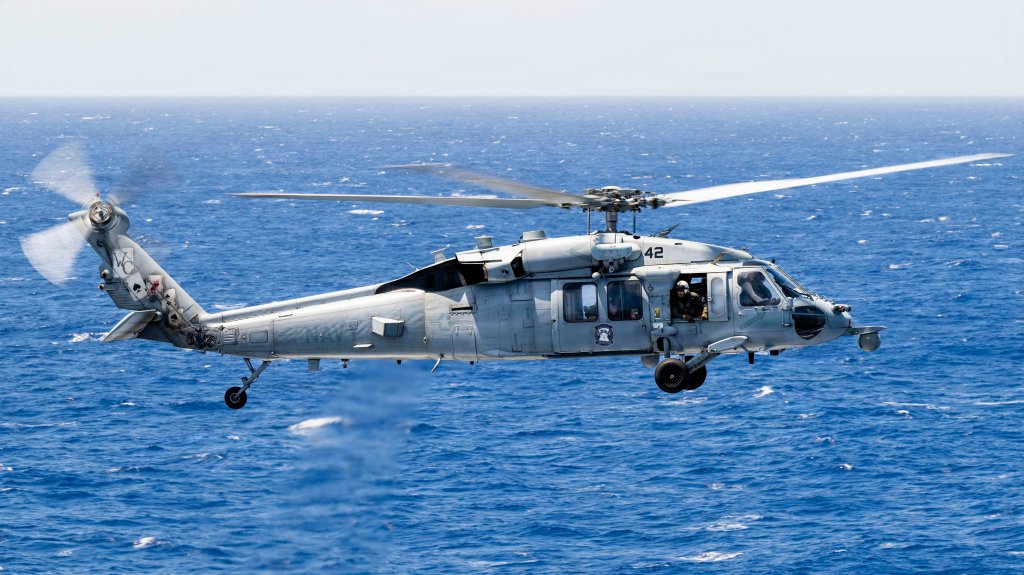
The ship’s flight deck/helicopter pad needs to be able to launch and recover Sikorsky SH-60, MH-60 Seahawk, MH-60T Jayhawk and MH-65 Dolphin helicopters. It should also be capable of “launching and recovering vertical take-off Class 2/3 UAS platforms” and have a minimum of “20×20 ft dedicated clear deck space for UAS recovery and storage” as well as “sockets for minimum of two [20-foot-equivalent] containers for UAS control and maintenance.”
When it comes to small boats, the ship is required to have a “non-deck-crane-based small boat launch and recovery system capable of supporting various boats between 24 ft and 44 ft in length and weighing up to 35,000 lbs,” according to the RFI. It also needs a “small crane (fixed/portable or ‘yellow gear’) for emergency recovery of UAS/USV or other watercraft.”
This ship has to serve as a floating gas station for a wide array of other craft.
“The vessel shall be capable of receiving and storing various grades of fuel for propulsion, ships auxiliaries and delivery to small boats and craft,” according to the RFI. “The vessel must be designated as a refueler vessel and meet U.S. Coast Guard requirements to ensure safe and effective refueling operations.”
When it comes to crew and passengers, the ship needs berthing for up to 69 people, with 20 to 25 civilian mariner staterooms, and open berthing for 29 to 44 embarked crew members. It also needs secure detainee space “with suitable AC/ventilation for 10 – 12 people.”
The mothership is not required to be heavily armed, but should support Anti-Terrorism/Force Protection .50 caliber machine gun mounts. It additionally must have a 160-square-foot armory for storing, maintaining and issuing military small arms and a 100-square-foot magazine for storing ammunition and ordnance.
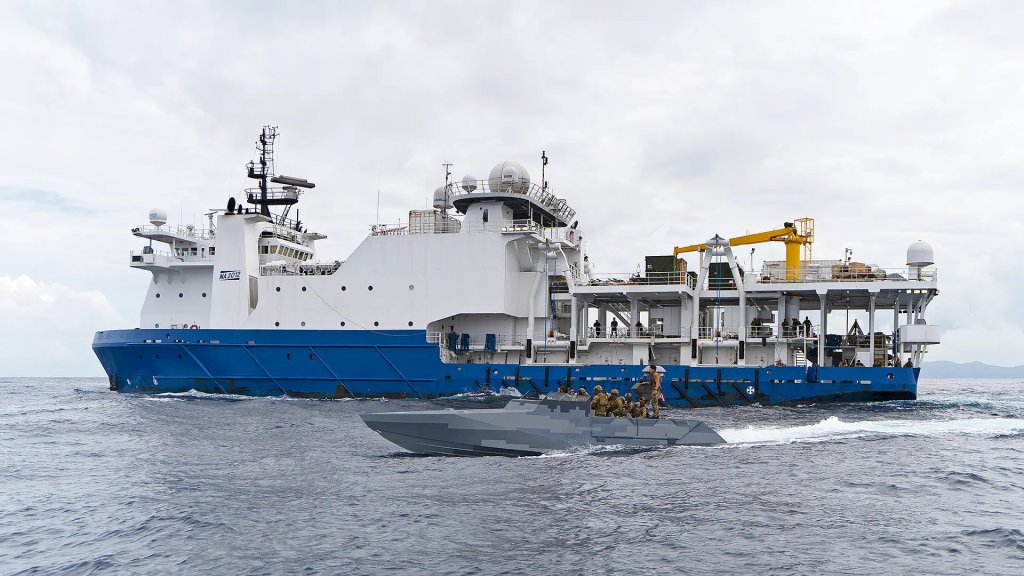
In a broad sense, many of the requirements the Navy is seeking match the Kellie Chouest, the vessel currently performing a similar mission for SOUTHCOM. It is a 310-foot ship that can travel at 13 knots, berths 53, has a helicopter pad, several 20-foot containers and cranes and winches for launching and recovering smaller ships. As we noted earlier in this story, the Kellie Chouest, which has been chartered for years by the Navy’s Military Sealift Command (MSC), is nearing the end of its latest four-year contract, set to expire on March 31, 2028, the command told us.
That timeline fits with the Navy’s plans for the ship described in the RFI.
“The Navy intends to issue a formal Request for Proposal upon receipt of FY27 appropriations,” the service’s spokesperson explained. “The RFI is a standard part of the federal acquisition process, allowing the U.S. Navy to conduct market research and understand the capabilities available in the industry. The proposed Special Mission Vessel is included in the President’s Fiscal Year 2027 budget. By issuing this RFI, the Navy is inviting industry partners to propose innovative concepts that meet the foundational requirements for a vessel designed for this critical mission set.”
It is possible that the Navy could decide to just renew a contract for the Kellie Chouest, or this new ship could be added alongside her if her contract is renewed. We’ve reached out to the Navy, MSC, and SOUTHCOM for more details. SOUTHCOM declined comment about the Kellie Chouest‘s current operations, or what kinds of drones it launches now, but in a previous interview after the command posted an image of the vessel, a SOUTHCOM official offered some insights into what the ship does.
“It provides support to get after cartels and illicit trafficking,” a SOUTHCOM official told us several months ago. “When we do an operation, it provides our partner nations a platform. They use the ship as a base of operations where they can get intelligence, get fuel, get life support.”
“The Ship Special Mission (SSM) Kellie Chouest is contributing to missions to disrupt cartel and narcotrafficking networks across the Eastern Pacific,” SOUTHCOM said in an April 28, 2026, post on X. “The ship…is serving as a forward operating base for partner nations across the Eastern Pacific — directly supporting counternarcotics operations alongside Panama, Costa Rica, Colombia, El Salvador, Guatemala, and Mexico.”
Four days earlier, in a post about the Colombian Navy’s seizure of 3.2 tons of marijuana in the South Pacific, valued at $3.4 million, the command explained that the Kellie Chouest “provided direct assistance to Colombian forces, demonstrating our longstanding and highly effective partnership in dismantling drug cartels and narcotrafficking networks throughout the region.”
The ship’s last reported position was off the coast of Guatemala 20 days ago, according to the MarineTraffic tracking site.
The Kellie Chouest is one of several converted vessels used by the U.S. military as special mission ships. The Carolyn Chouest, another ship built by the Edison Chouest Offshore conglomerate, is another example. Operated by MSC, it was converted into a sea base platform specially configured to support U.S. special operations forces in the Pacific region and is currently located near Indonesia, according to MarineTraffic. You can read more about it in our story here.
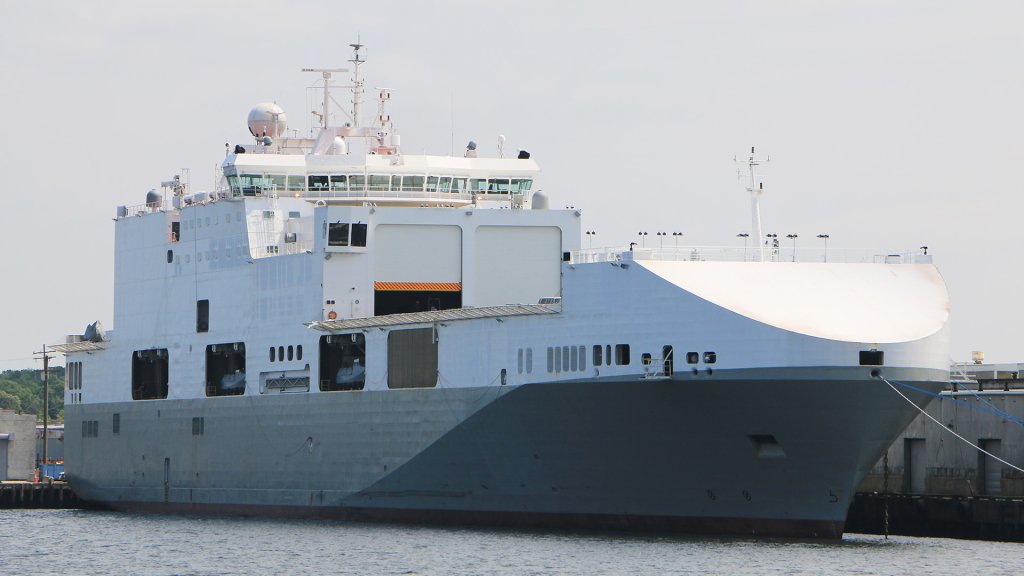
Another commercial ship that has been turned into a U.S. military sea base is the MV Ocean Trader – a roll-on/roll-off cargo vessel modified to carry special operators, their vehicles, and all their other gear. This ship is far larger and more advanced than the other vessels mentioned here, though. Given its ability to support special operations missions, including launching a variety of smaller boats, UAVs and multiple helicopters, Ocean Trader often appears in conflict zones around the globe. It was spotted in the Caribbean last year during the Trump administration’s pressure campaign on Venezuelan drug cartels that culminated with the capture of Nicolás Maduro. You can read more about Ocean Trader and its capabilities in our deep dive here.
The Navy could get a new vessel purposely built for this maritime security role, or one — like the Kellie Chouest — converted to it, or sign a new contract for that vessel. The service could also keep the contract in place for Kellie Chouest and add this new vessel to operate in addition to it. Considering the focus the Trump administration has put on Central and South America, this wouldn’t be surprising.
Contact the author: howard@twz.com
The post Mothership Sought By Navy For Southern Command Operations appeared first on TWZ.