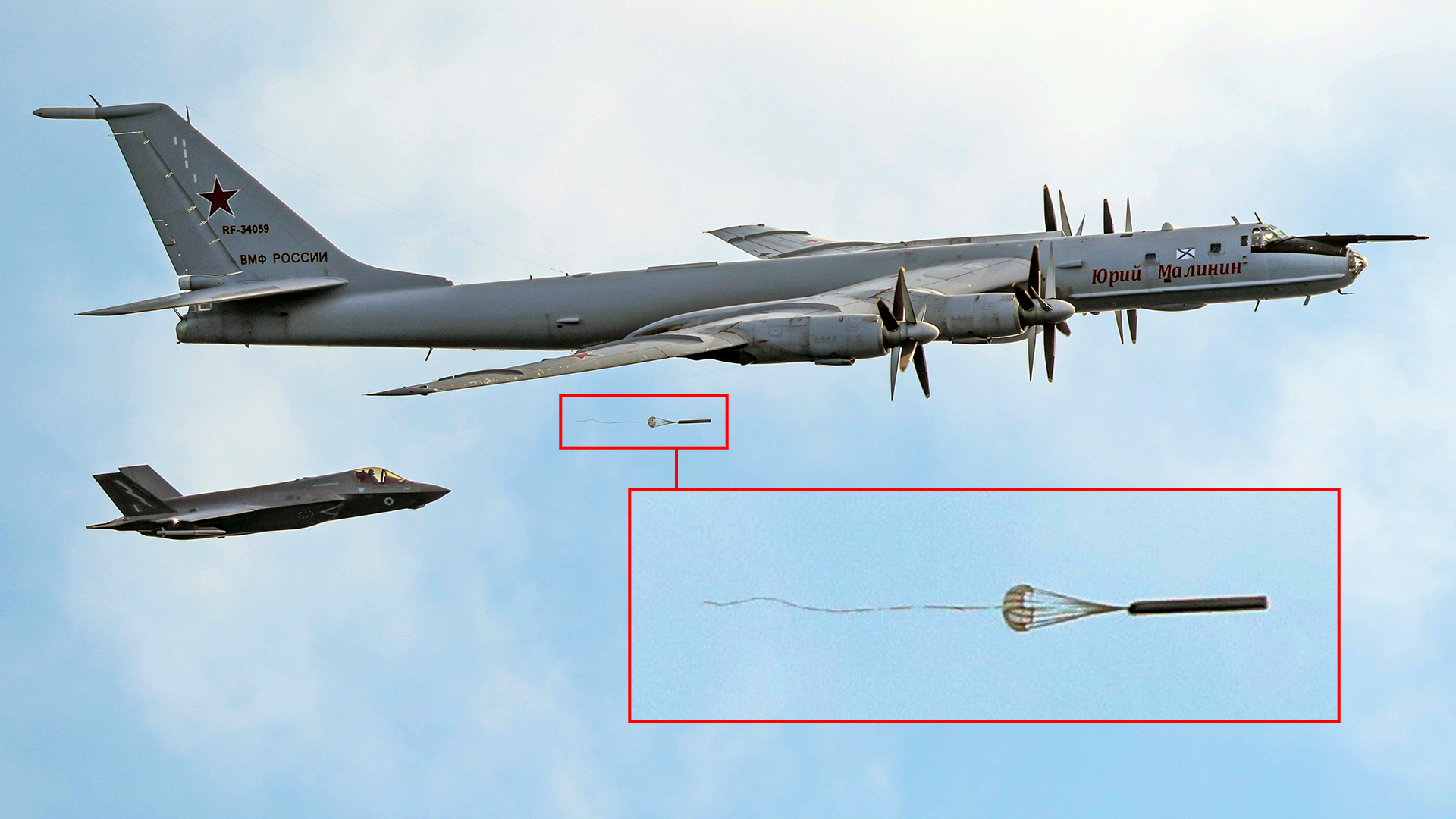
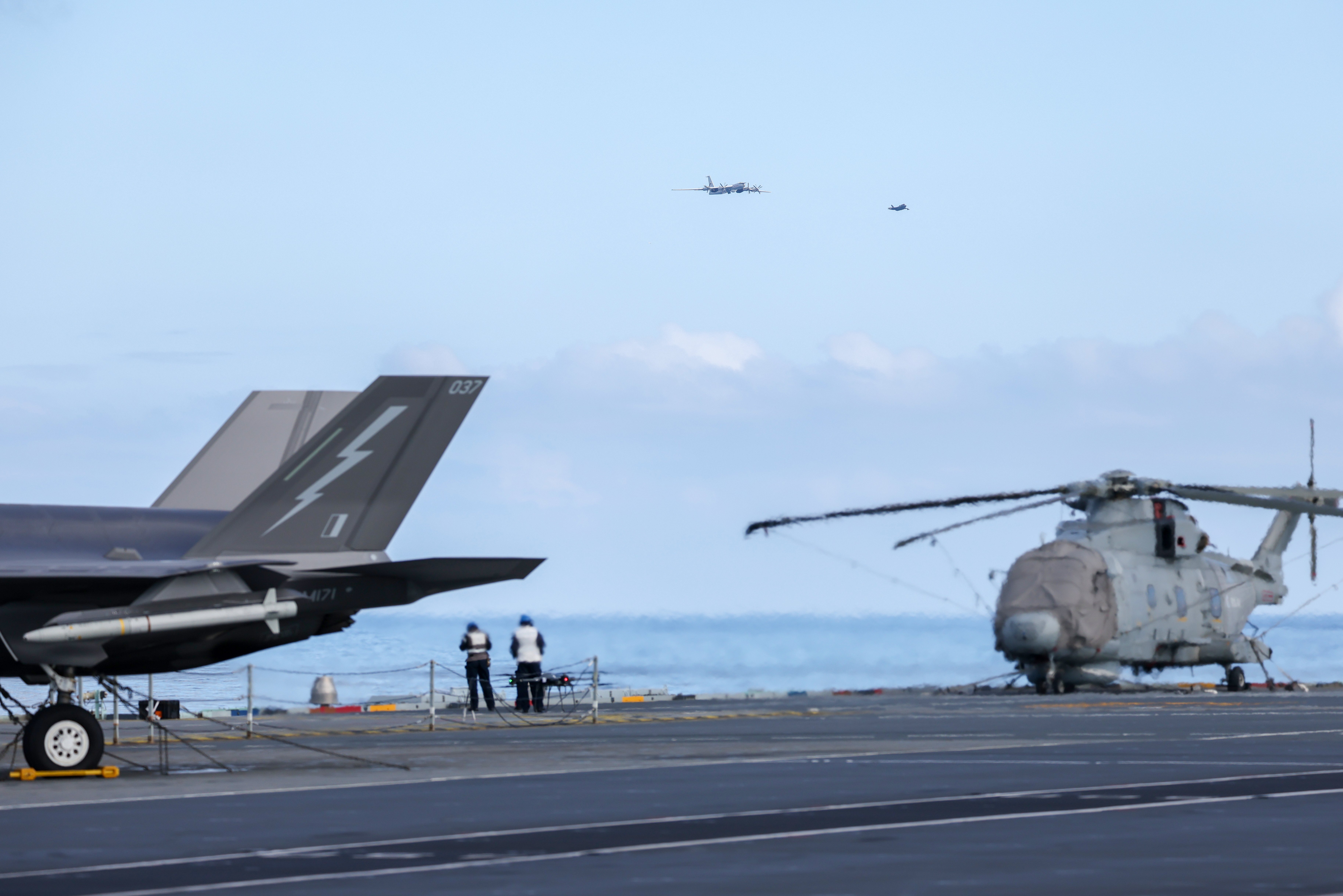
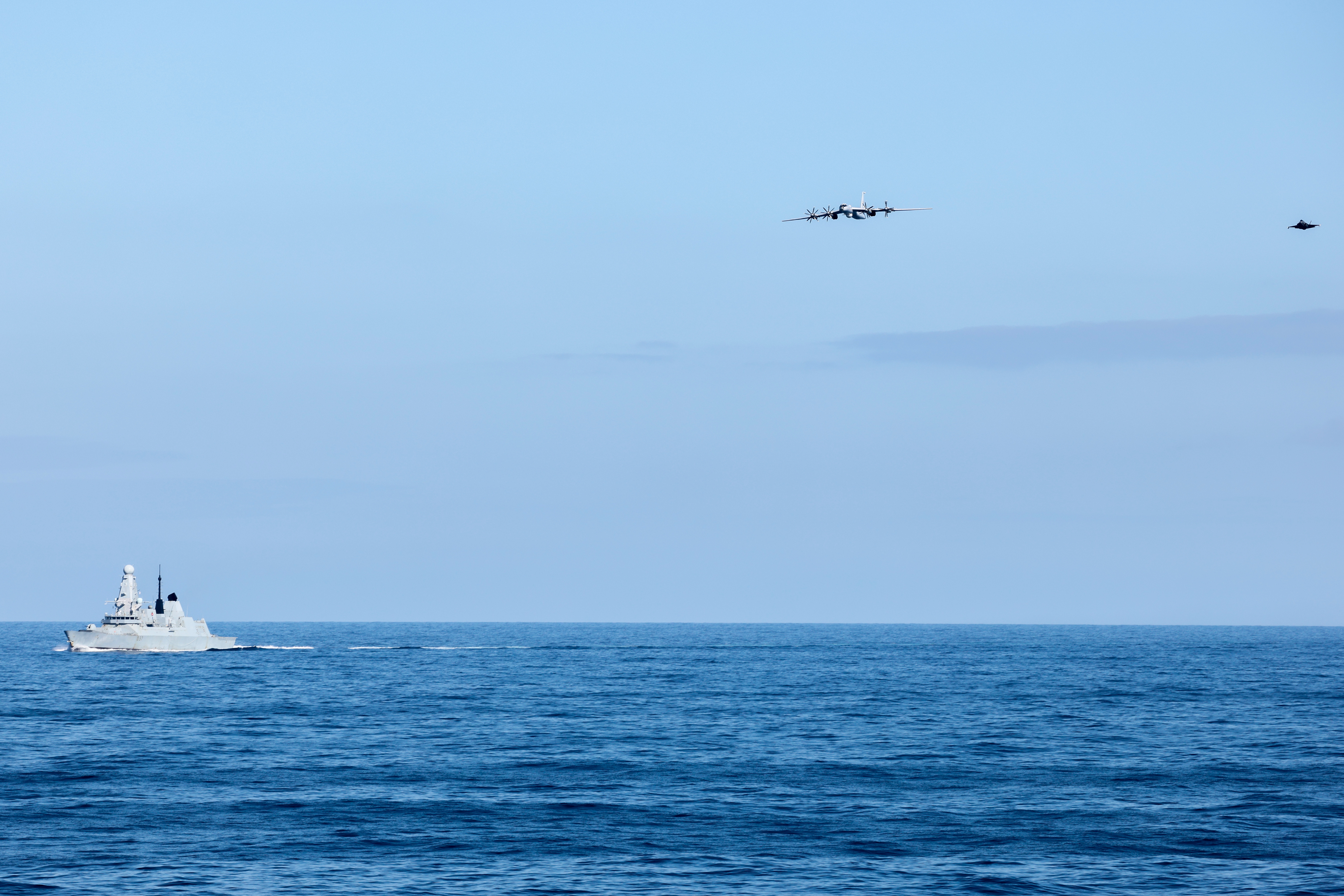
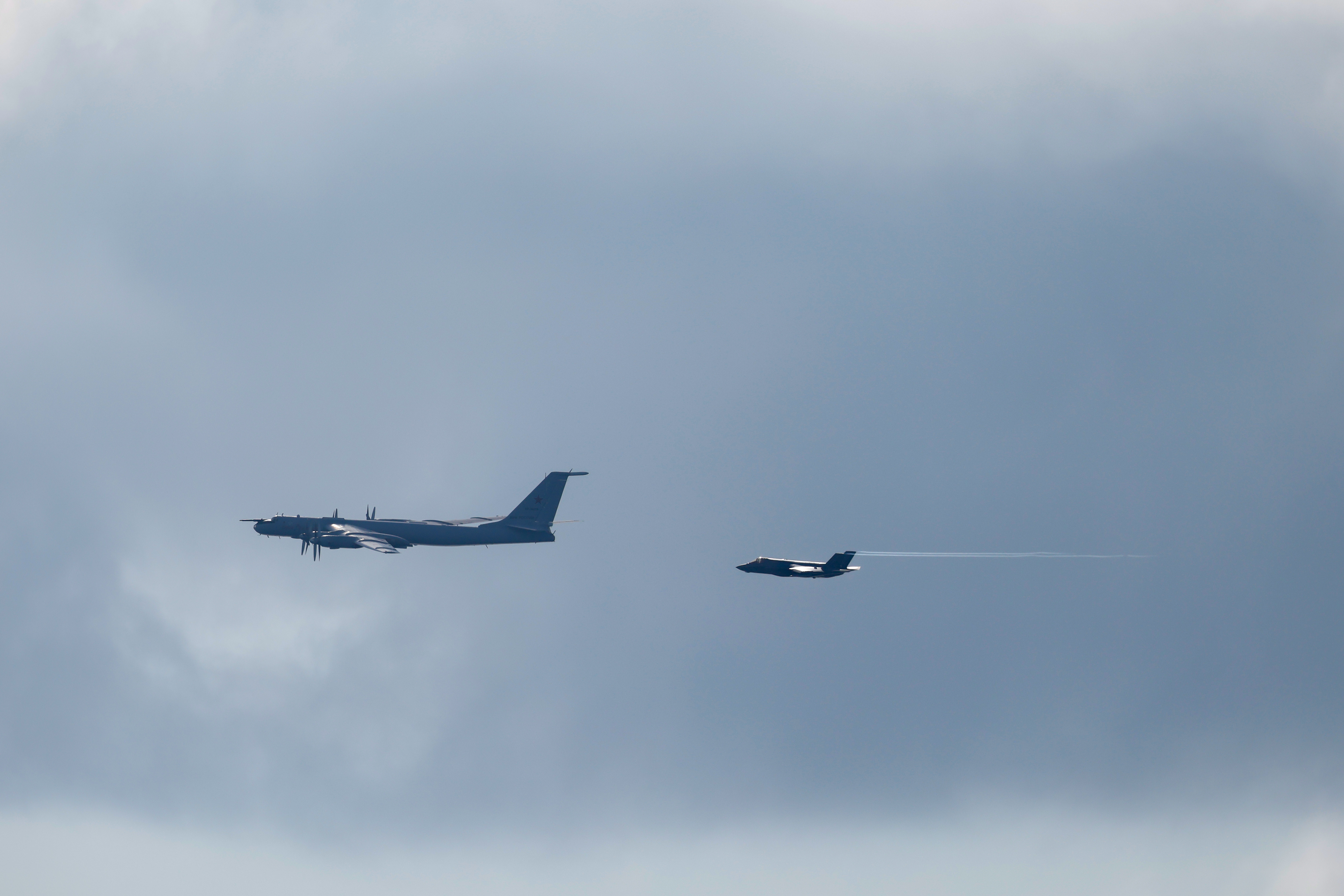
A Russian Tu-142 Bear-F maritime patrol aircraft “repeatedly approached” a U.K. Royal Navy carrier strike group in the Norwegian Sea and dropped multiple sonobuoys, the U.K. Ministry of Defense (MoD) said. British F-35B fighters from HMS Prince of Wales intercepted the Tu-142, which was flying “unsafe and unprofessional” maneuvers, according to the MoD. The incident occurred on July 2 but was only disclosed today.
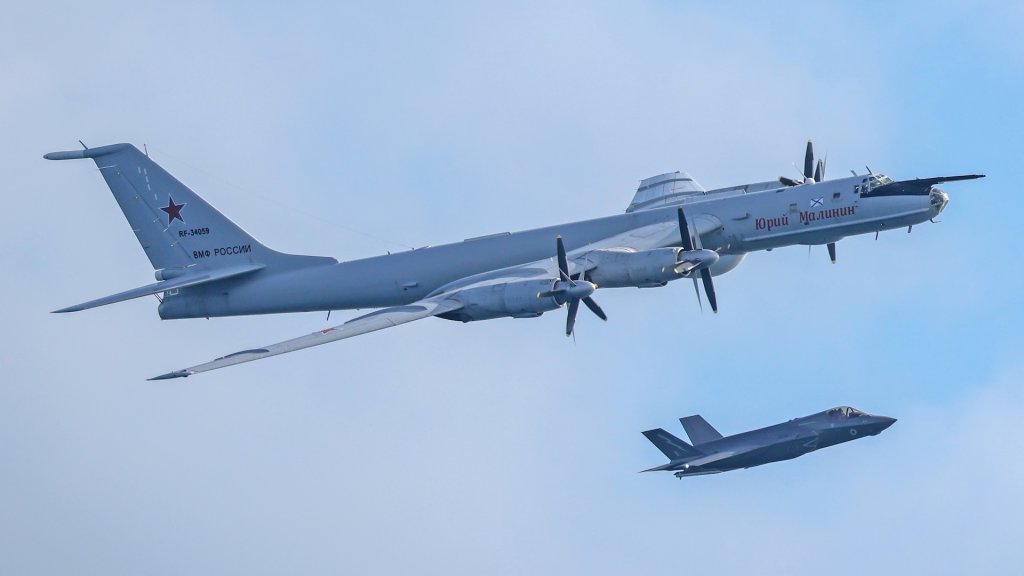
The Tu-142 passed at low altitude and “unnecessarily close” to HMS Prince of Wales, while the carrier was off the northwest coast of Norway, the MoD added. The Bear-F is understood to have dropped 10 sonobuoys “in close proximity to the carrier,” with at least one of these captured on camera, as seen in the photo at the top of this story.
Reportedly, the British forces attempted to contact the Russian aircraft on international frequencies, but it did not respond.
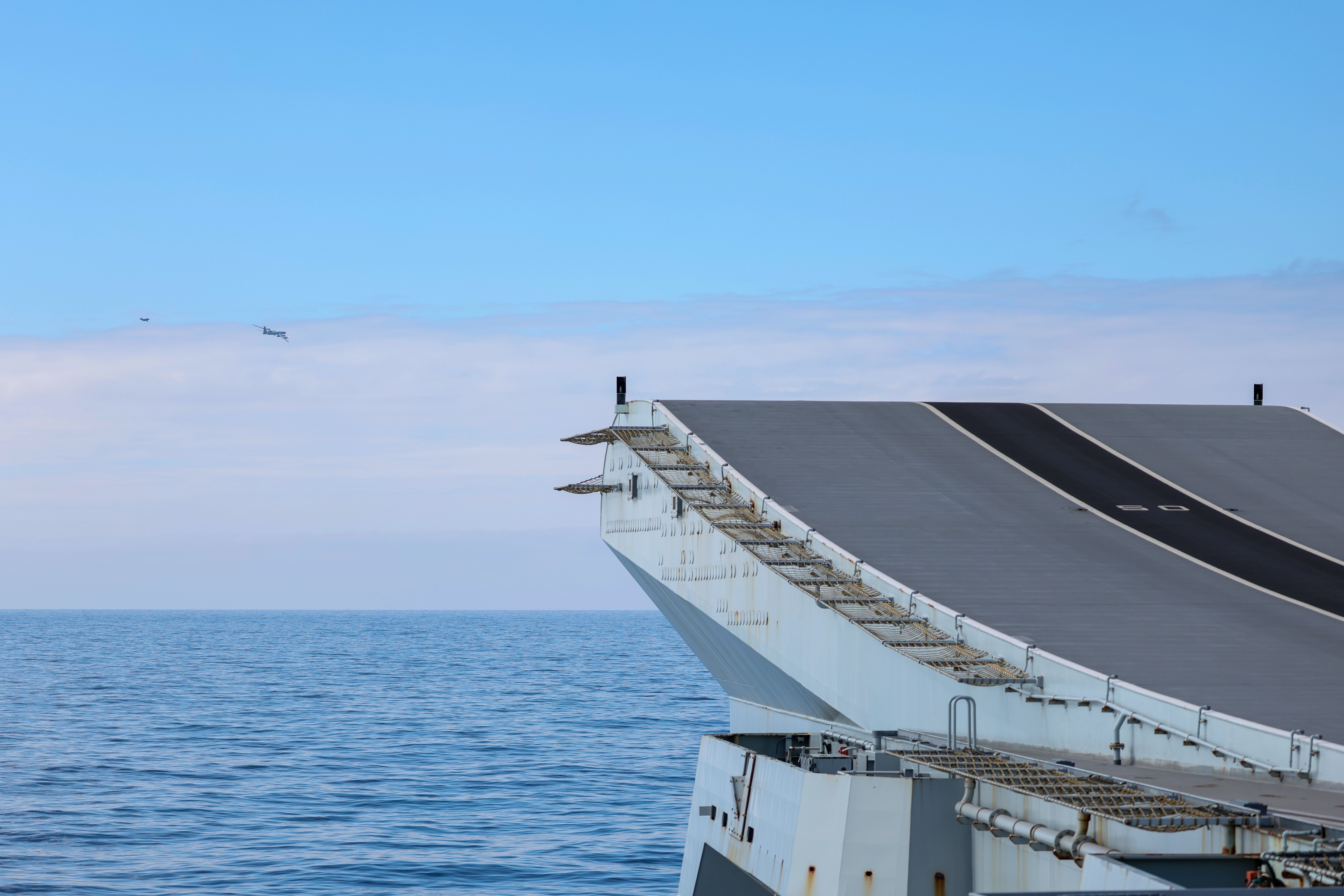
Two F-35Bs from 809 Naval Air Squadron were then launched from the Prince of Wales to escort the Bear-F away from the carrier strike group.
The F-35Bs aboard the Prince of Wales are, for the first time, involved in a NATO air policing operation from a European carrier, under Operation Firecrest.
The U.K. Carrier Strike Group is currently deployed off Iceland under NATO command. As well as HMS Prince of Wales, the force includes the Type 45 destroyer HMS Duncan, and is supported by RFA Tidespring, a replenishment tanker. Merlin and Wildcat helicopters are also embarked on the vessels. Meanwhile, other NATO allies are also operating in the same region as part of Arctic Sentry, designed to “reinforce security in the Arctic and North Atlantic.”
Typically, a U.K. carrier strike group would also be accompanied by a Royal Navy Astute class nuclear-powered attack submarine. While such information is rarely, if ever, disclosed, in this instance, however, any accompanying submarine would have to be provided by a NATO ally, since the Royal Navy currently has no Astute boat available for this task. Currently, all five of the hunter-killer boats are awaiting maintenance and repairs.
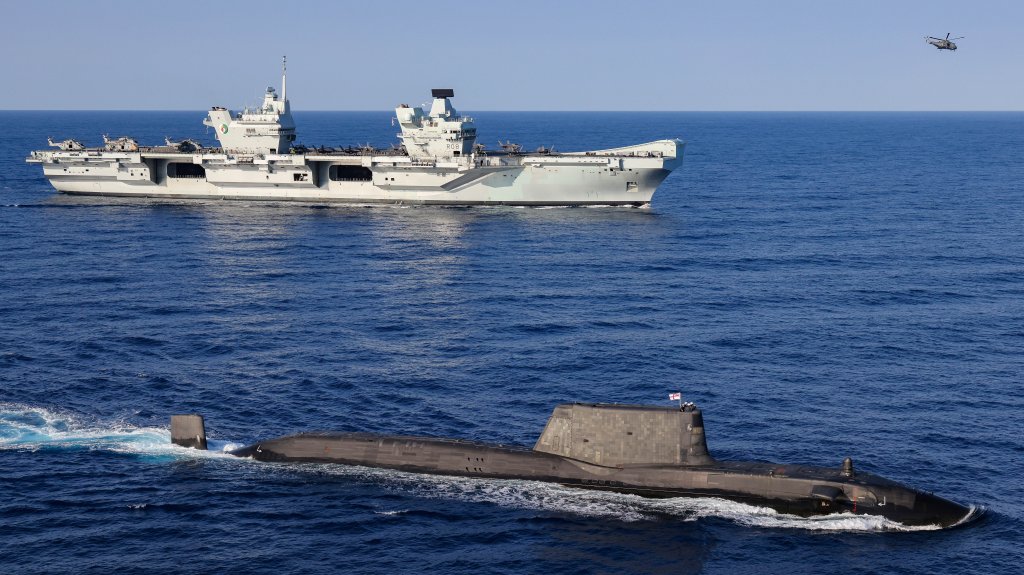
While the Tu-142’s decision to drop sonobuoys might suggest Russia was attempting to detect or track a hunter-killer submarine accompanying the force, having a sub operate in such close proximity to a carrier is less likely. These submarines typically provide the outer barrier of the defensive escorts, with the aim of hunting incoming enemy boats long before the carrier itself is ever threatened.
Sonobuoys come in a variety of types designed for different missions, but they generally fall into two main categories: active and passive. Active sonobuoys transmit acoustic pulses into the water and listen for echoes reflected from a submarine’s hull, while passive sonobuoys simply detect and monitor the sounds produced by submarines. Because they require additional transmitting and processing capabilities, active sonobuoys are typically more sophisticated — and significantly more expensive — than passive models. Despite their complexity, both types are expendable systems intended for one-time use. For a deeper look at how they differ and why active sonobuoys are playing an increasingly important role in modern anti-submarine warfare, see our previous feature on the subject.
A video showing a U.S. Navy P-3 Orion maritime patrol aircraft dropping sonobuoys:
The Tu-142 can carry a substantial sonobuoy load. A typical configuration includes 66 RGB-75, 44 RGB-15, 10 RGB-25, and 15 RGB-55 sonobuoys, along with three anti-submarine torpedoes housed in its two internal weapons bays.
At the same time, dropping sonobuoys can be a harassment tactic employed by maritime patrol aircraft and helicopters, which seems more likely on this occasion.
Soviet and later Russian Tu-142s and other maritime patrol aircraft have monitored NATO naval exercises for many decades, including flying surveillance sorties close to U.S. Navy carriers. However, the deliberate release of sonobuoys in such close proximity to a carrier appears to be relatively uncommon, in recent years, at least.
Last September, after a Russian surveillance plane flew within a few hundred meters of a German frigate in the Baltic Sea, Commodore Arjen Warnaar, Dutch commander of Standing NATO Maritime Group 1, said: “It’s not the first time that a NATO ship has been overflown. This has happened in the past, and it will not be the last time.”
“It happens regularly,” Warnaar added. “It is reported on every once in a while [but] this has happened continuously throughout the last years.”
Meanwhile, NATO also keeps a close eye on Russian movements, including through key areas, using its own maritime patrol aircraft.
Back in 2020, TWZ reported on the publication of a video showing a pair of Tu-142s flying at relatively low altitude over a site off the coast of northwest Alaska being used to support a U.S. Navy ICEX submarine exercise. On that occasion, they were intercepted by U.S. Air Force F-22 and Royal Canadian Air Force CF-18 fighters.
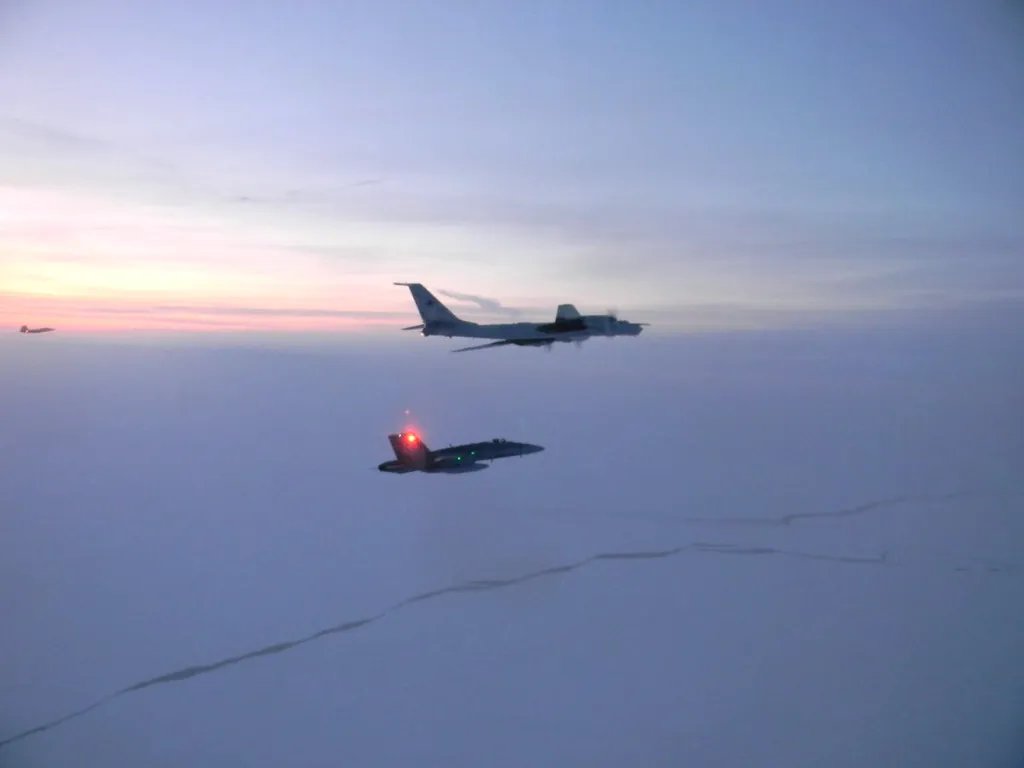
The same kind of scenario has been repeated more recently, too.
With an endurance exceeding 16 hours, the Tu-142 is well suited to these long-range surveillance missions, allowing it to gather valuable intelligence while also demonstrating a sustained military presence.
Today, the Russian Navy operates around 30 Bear-Fs, within two squadrons. Both Tu-142MK and more advanced Tu-142MZ variants are in service. The squadrons are based at Kipelovo-Fedotovo in the Vologda region of northwest Russia, and at Mongokhto, in the Far East, serving the Northern and Pacific Fleets respectively.
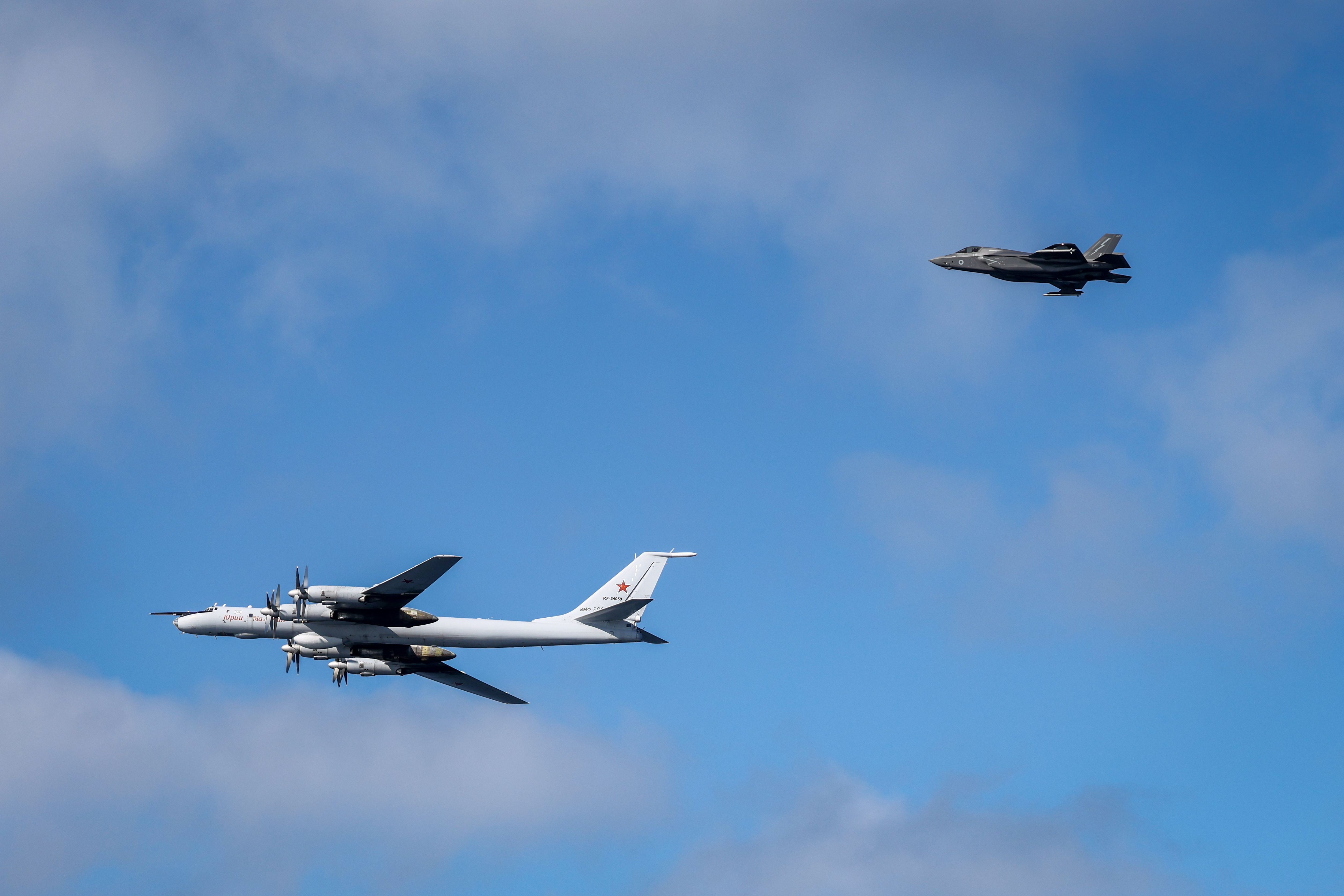
The latest encounter comes amid heightened tensions between Russia and NATO, and particularly between Moscow and London.
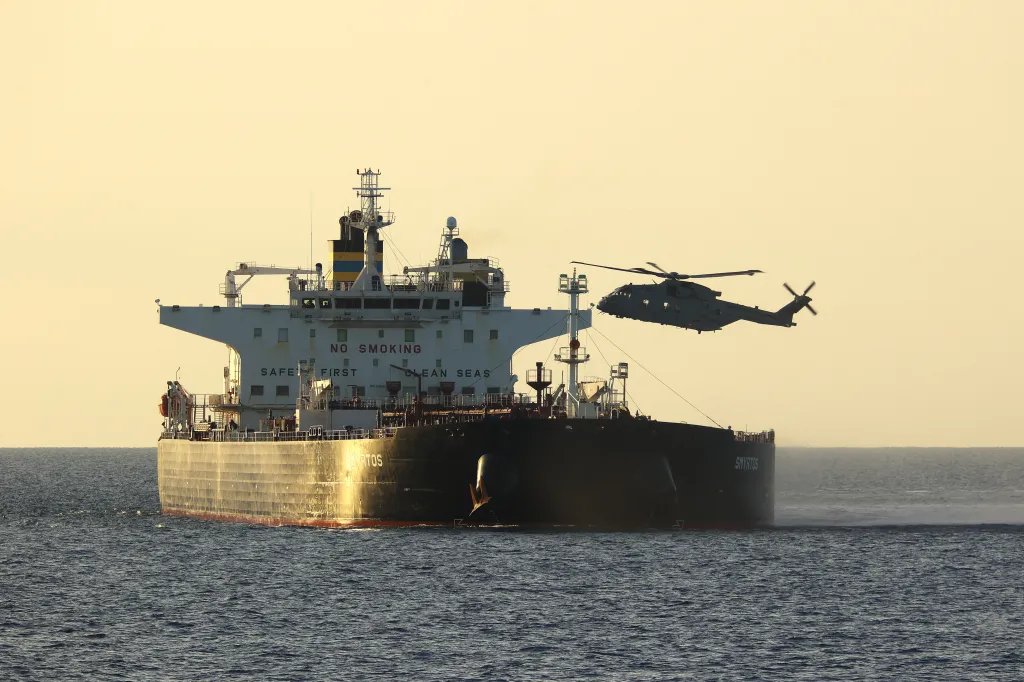
During a recent maritime security operation in the English Channel, British forces boarded a sanctioned oil tanker from Russia’s ‘shadow fleet,’ which was sailing under a false Cameroonian flag.
The boarding of the Smyrtos by Royal Marine Commandos and law enforcement officers on June 14 was the first U.K.-led operation of its kind. The six-hour military operation also involved Chinook, Merlin, and Wildcat helicopters, a Royal Air Force P-8 Poseidon maritime patrol aircraft, as well as the frigate HMS Sutherland and the mine countermeasures vessel HMS Ledbury.
Days later, the Russian Navy warship Admiral Grigorovich fired warning shots near a British-registered yacht in the English Channel, as you can read about here.
U.K. officials have repeatedly stressed how Russia’s actions around Europe mean that the country faces its greatest security threat since the Cold War.
Fittingly, U.K. Defense Secretary Dan Jarvis was making a visit to HMS Prince of Wales over the weekend when he again highlighted the risks posed by Russian militarism across all domains.
“We should be clear-eyed about the fact that the threat from Russia exists in every domain, under the water, on the water, on the land, in the sky, in space and in cyberspace as well,” Jarvis told Channel 4 News.
“We live in an increasingly dangerous and uncertain time, and it’s deployments like this, supported by allies and partners including Iceland, that improve our deterrence and defense as part of NATO,” Jarvis added.
Amid assessments from NATO officials that Russia could be ready to use military force against the alliance by 2030, U.K. Chief of the Defense Staff Sir Richard Knighton told the BBC last month that Moscow had been “probing, challenging, testing our defenses,” and was “raising the stakes and risks crossing a line.”
This new reality was also referenced in the U.K.’s long-delayed defense plan, published last week, and which includes an increase of $20 billion in military spending.
As the conflicts in Iran and Ukraine show, drones are reshaping warfare.
— Ministry of Defence
That’s why more than £5 billion is to be invested in drones over the next four years. This will drive a transformation, with new technology and infrastructure keeping us at the leading edge of innovation. pic.twitter.com/TSkAJg8vRh(@DefenceHQ) June 30, 2026
While dropping sonobuoys is part of the daily activity of Russian and NATO maritime aircraft, it is unusual to see it happen so close to a carrier. Whether the Tu-142 was genuinely attempting to detect NATO submarine activity or simply harassing the U.K. carrier strike group, the encounter serves as another reminder of the increasingly aggressive posture Russia is adopting around NATO’s northern flank.
The timing of the incident is likely to reinforce arguments from defense officials and some leading lawmakers that Britain must move faster, and invest even more heavily than currently planned, to rebuild the military capabilities needed to deter an increasingly assertive Moscow. Regardless, as Russian aircraft, warships, and submarines continue to probe NATO forces, encounters like this are becoming regular for the alliance as a whole.
Contact the author: thomas@thewarzone.com
The post Russian Tu-142 Bear Drops Sonobuoys During Close Encounter With British Carrier appeared first on TWZ.