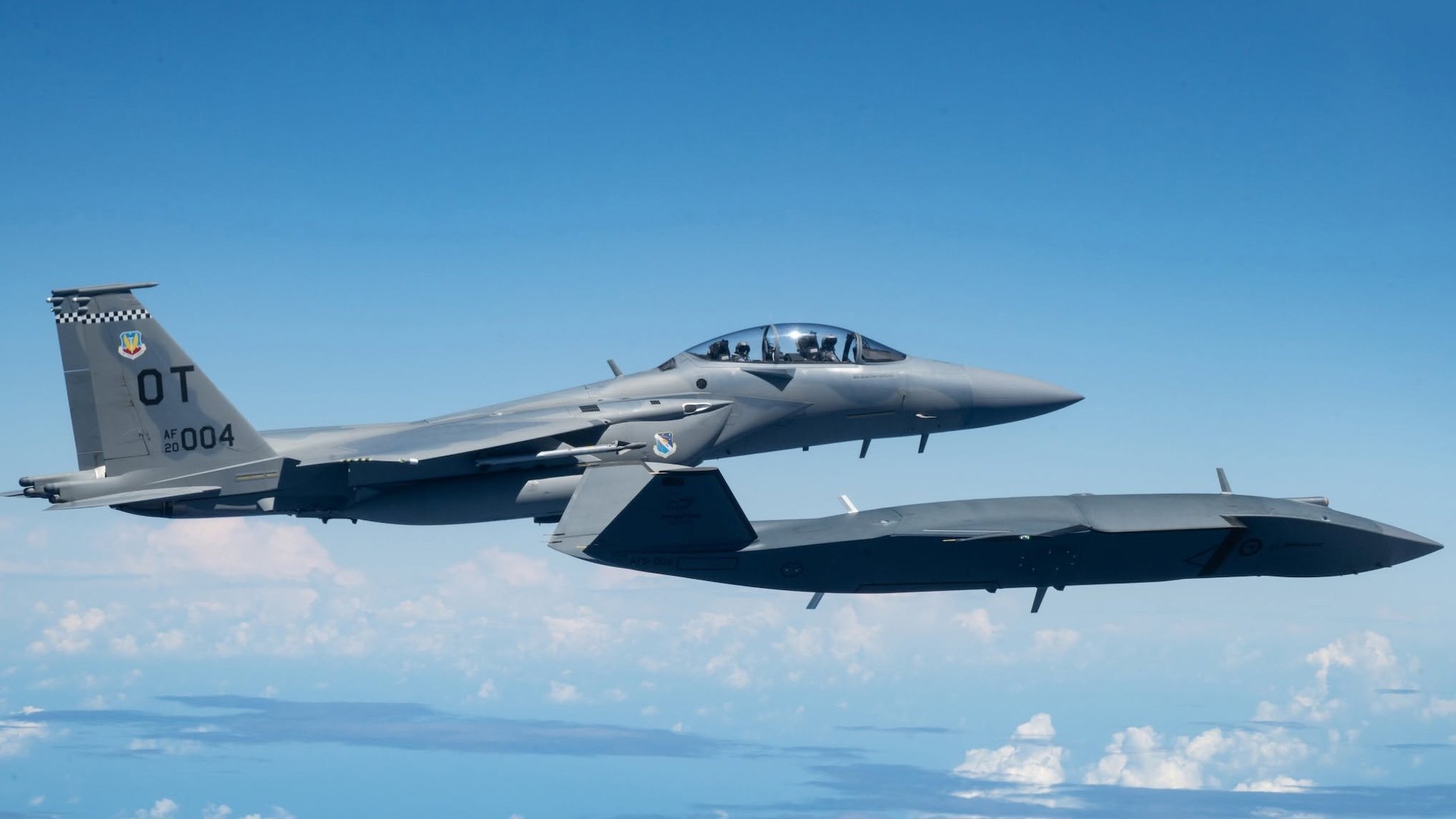
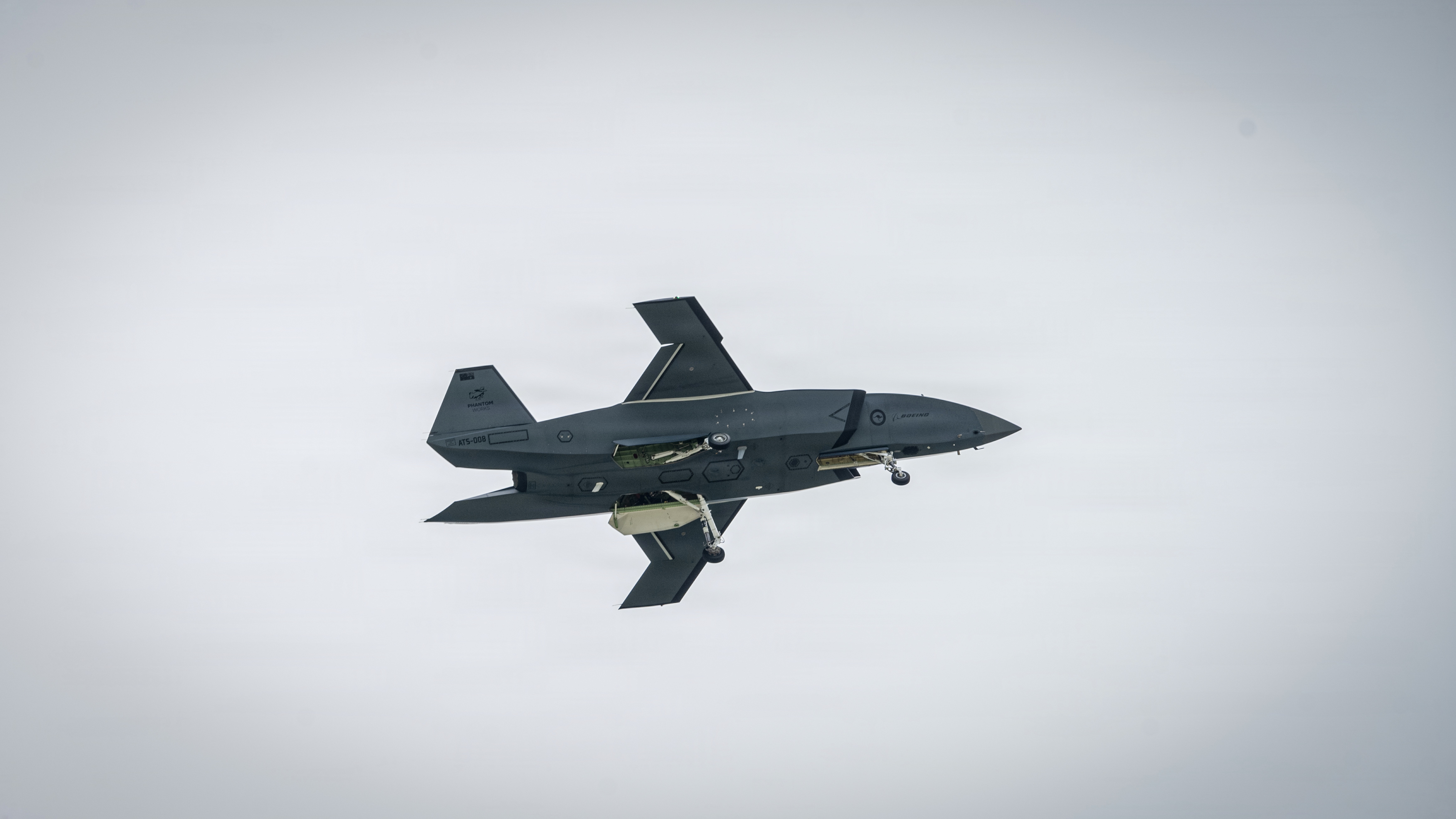
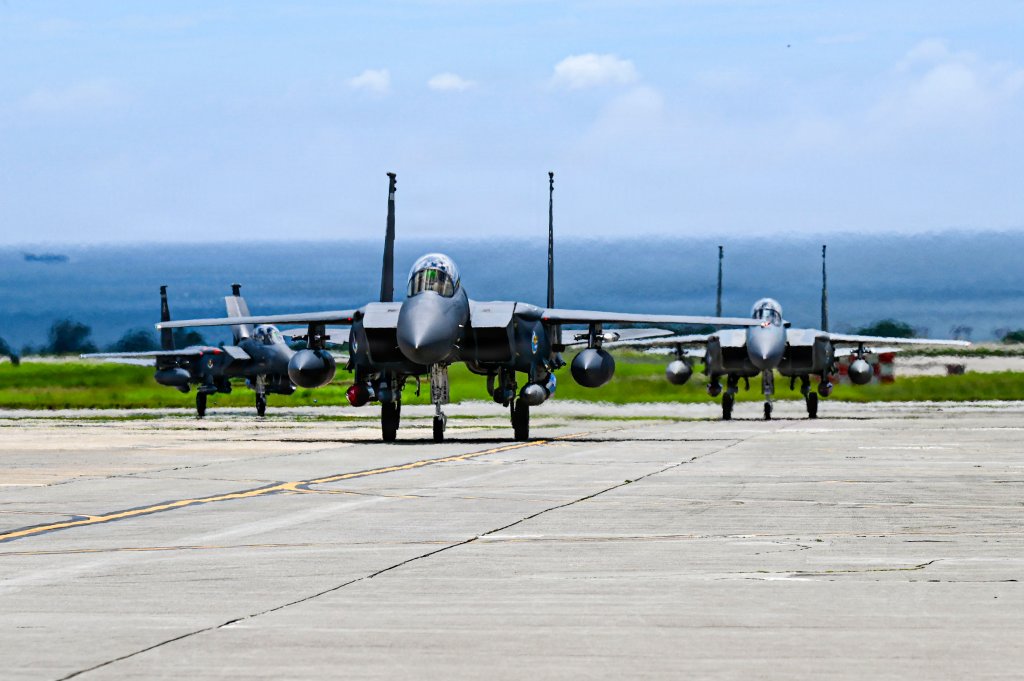
We have long discussed the compelling case for the U.S. Air Force’s new F-15EX Eagle II to serve as a ‘drone controller’ for the service’s forthcoming Collaborative Combat Aircraft (CCA). Now, we have a first chance to see what that might look like for real, with one of the fighters operating alongside an MQ-28 Ghost Bat drone during the U.S.-led Valiant Shield 26 military exercise currently spanning the Indo-Pacific region.
The first photos of this combination were published on the official Facebook page of U.S. Pacific Command (PACAF). Taken over the Philippine Sea, PACAF says they demonstrate “the future of human-machine teaming in the theater.” The command adds: “Uncrewed systems act as a force multiplier, extending the reach and effectiveness of human pilots.”
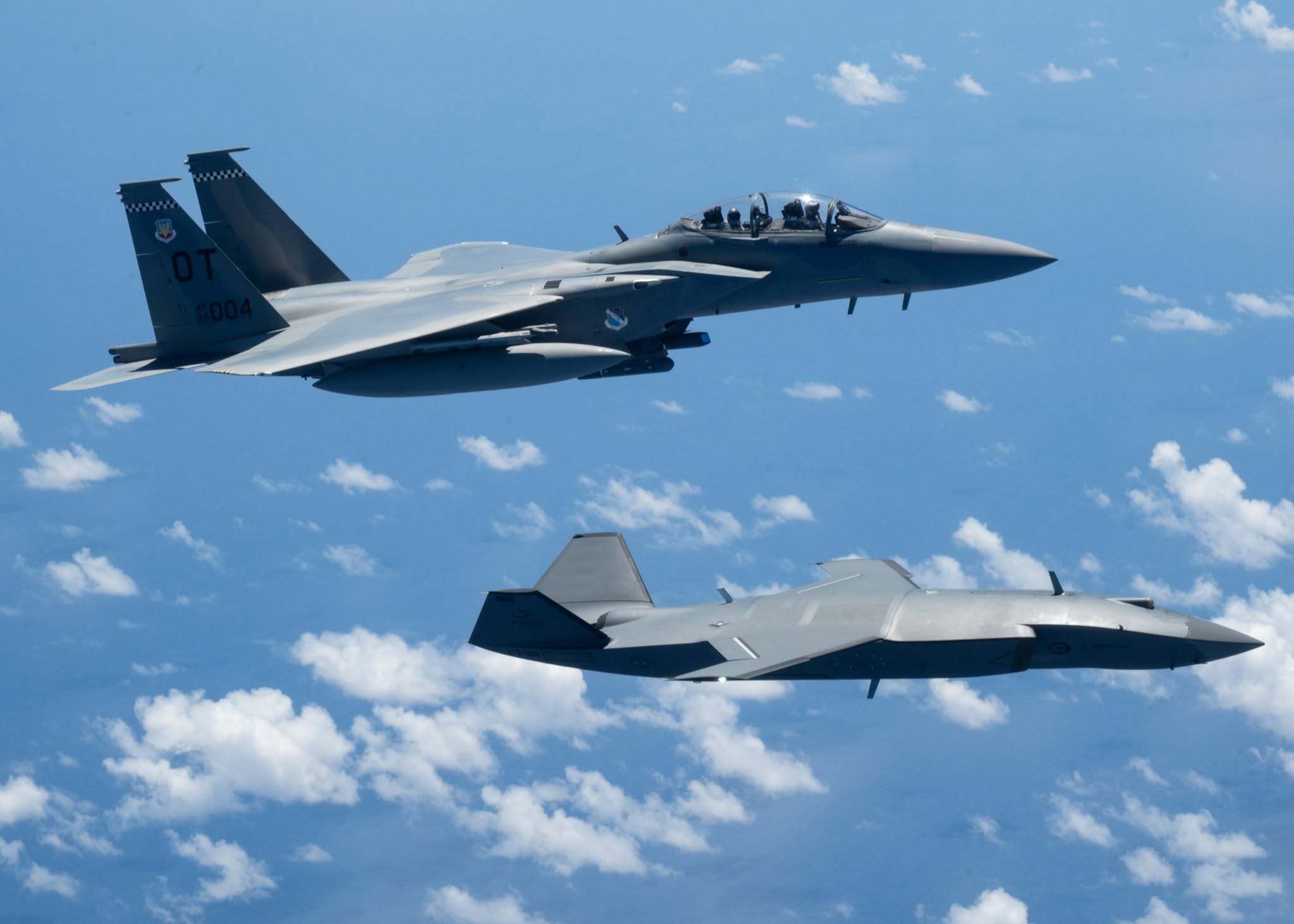
No further details of the extent of the integration have so far been provided, but we had already highlighted how the MQ-28’s involvement in its first multinational large-force exercise provides an opportunity for just this kind of activity, in a high-end coalition environment.
The pairing of the F-15EX and the MQ-28 — both Boeing products — has appeared regularly in the company’s renderings, suggesting that the Eagle II has been earmarked for working with CCAs.
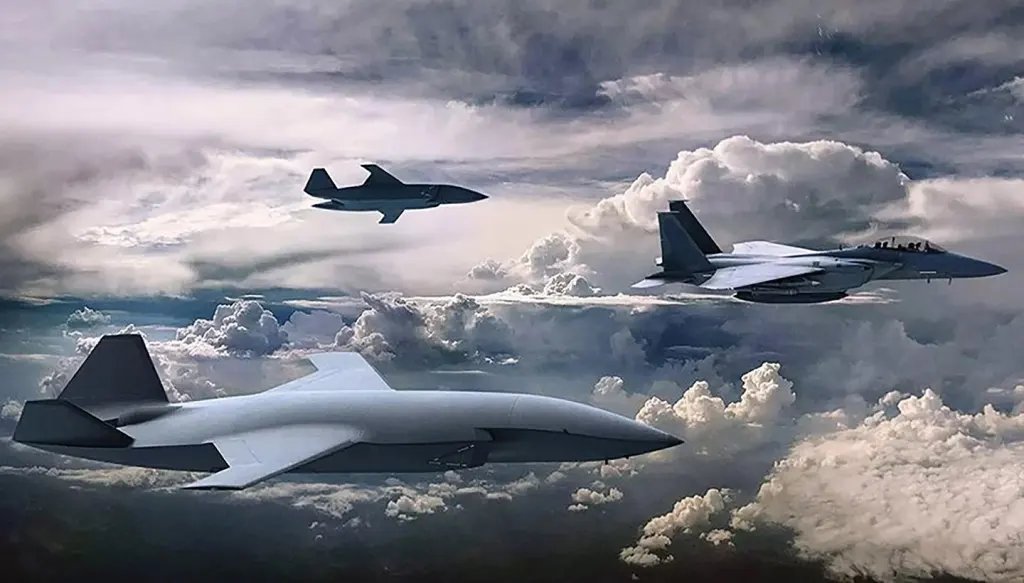
As long ago as our story that broke the news that the F-15EX was in the works, we laid out how it would be an ideal platform for drone control. Key factors in this respect include its two-person cockpit, generously proportioned cockpit displays, processing power, networking, easy adaptability, and long range.
Speaking to TWZ in 2024, Maj. Aaron “Kamikazze” Eshkenazi, an F-15EX pilot assigned to the 85th Test and Evaluation Squadron “Skulls” at Eglin Air Force Base, Florida, noted:
“There’s a lot of discussion about what potential applications we might have for the back seat [in the F-15EX]. Whether it’s the existing kind of weapon system operator [WSO] role, a cyber person, or an ABM [air battle manager]. All of those options are available, and it really depends upon those mission sets as we continue to expand into the future.”
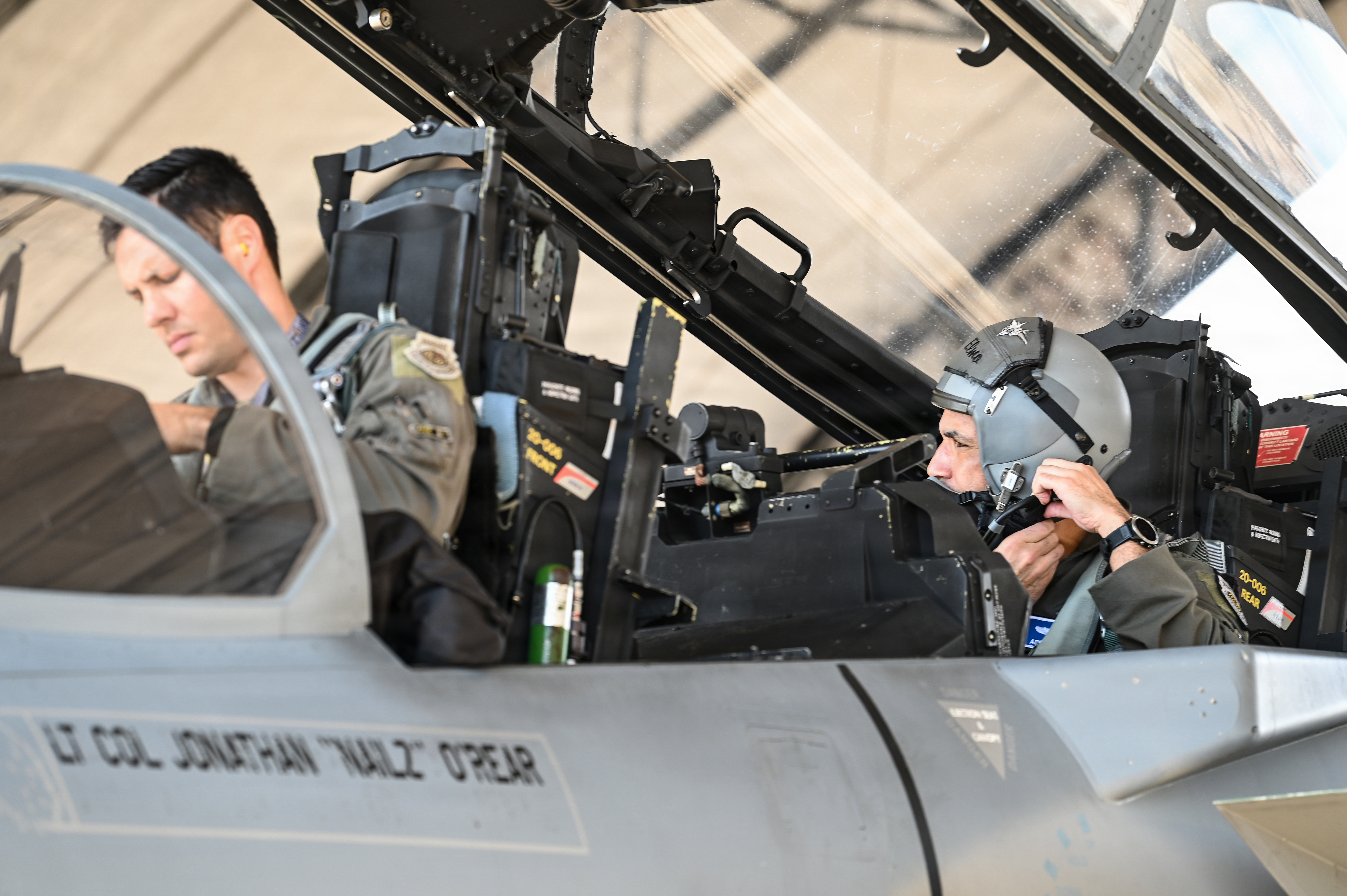
While the WSO’s main role is to manage the weapon systems, as it is in the previous F-15E Strike Eagle, “We are looking at the role of the back seat [in the F-15EX] in terms of helping dictate the battlespace,” added Maj. Joshua “Viper” Judy, a WSO assigned to the 40th Flight Test Squadron, in the course of the same interview.
“Does this involve a command and control [C2] role, is it battle management, maybe a combination of things depending on the mission set — we’re talking about flying unmanned fighters out there,” Maj. Judy continued. “The whole goal of this airplane is to optimize both the front seat and the rear cockpit for whatever mission sets we’re executing as we continue to expand these roles in the future.”
At that time, CCA testing with the F-15EX was yet to begin, but Maj. Judy stressed that “from a WSO perspective, having that large area display [LAD] and customizable screens makes for much easier data synthesis compared to the F-15E with its four screens with 1980s-era monochrome. Having that additional situational awareness from the LAD and being able to customize the information that is being displayed to me is helpful in pretty much every mission set that I can fly.”
There is also the specific relevance of the F-15EX as a drone controller in the Indo-Pacific theater.
The Air Force’s future CCAs will be especially needed in the Indo-Pacific, where the Chinese People’s Liberation Army Air Force is rapidly growing in both size and capabilities.
Gen. Kenneth Wilsbach, the commander of Air Combat Command who was then-head of PACAF, said that the Air Force was “absolutely” considering fielding CCA drones at Kadena Air Base in Japan, where they would be a perfect adjunct to the co-located F-15EX fleet.
Meanwhile, having CCAs based at other locations in the region, but potentially still controlled by F-15EX fighters, would “complicate the battlespace and create chaos for your adversary,” Wilsbach added.
The decision to establish a permanent F-15EX presence in Japan likewise reflected how the aircraft’s specific capabilities are seen as hugely relevant in a potential future conflict with China.
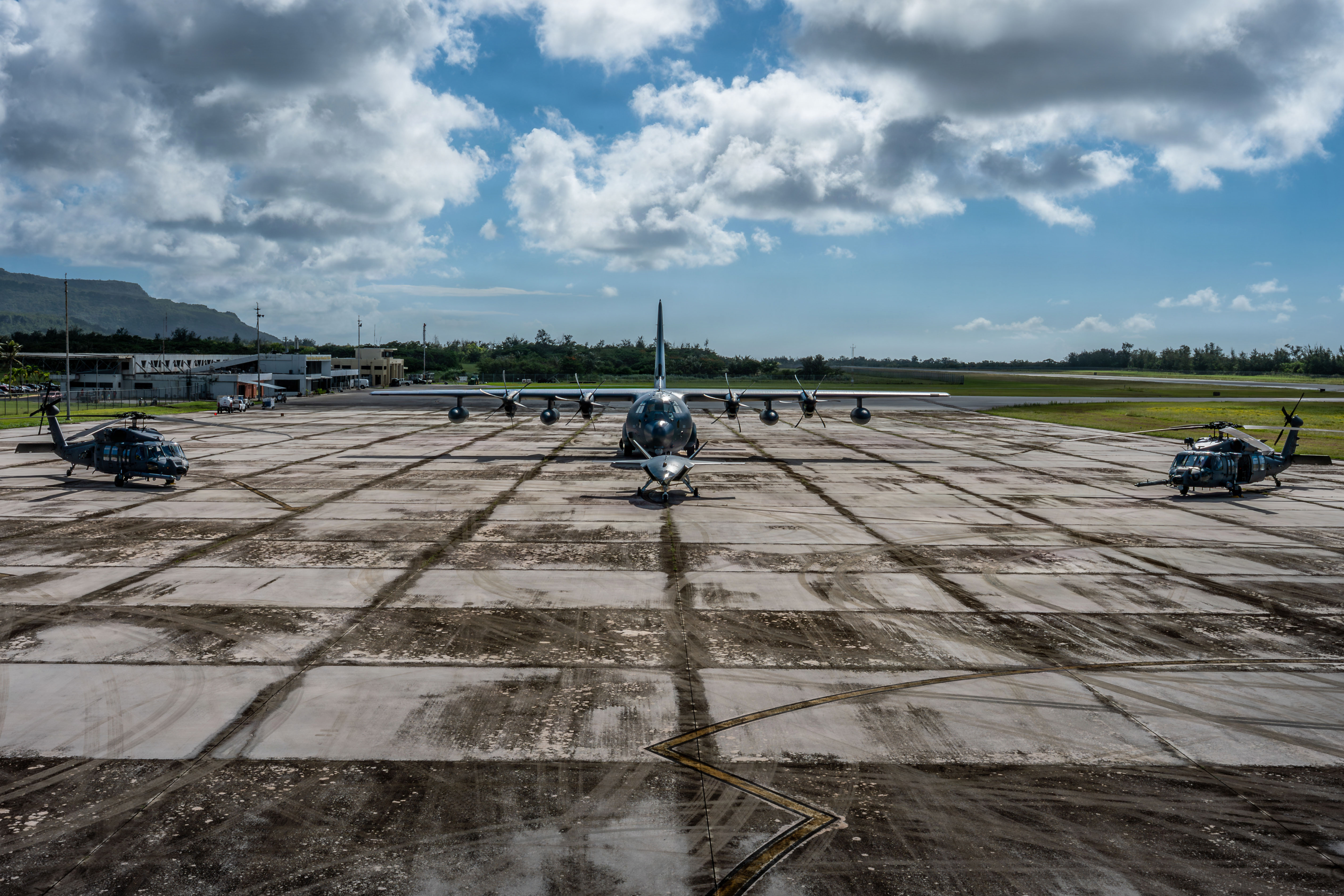
A war of that kind would also see the Air Force rely heavily upon operations from austere airfields. This will be conducted under the Agile Combat Employment (ACE) concept, something that is seen as fundamental to survival in a future conflict with China.
Reflecting this, Valiant Shield saw the MQ-28 involved in a proof-of-concept Forward Arming and Refueling Point (FARP) operation for CCAs at Rota, in the Northern Mariana Islands. Photos published by the Air Force showed the MQ-28 taking part alongside Air Force HC-130J Combat King II and HH-60W Jolly Green II combat search and rescue aircraft, members of the Royal Australian Air Force (RAAF), and the Nellis-based Experimental Operations Unit.
It should also be recalled that the Air Force’s new CCA drones are being developed from the ground up around concepts for distributed and disaggregated operations.
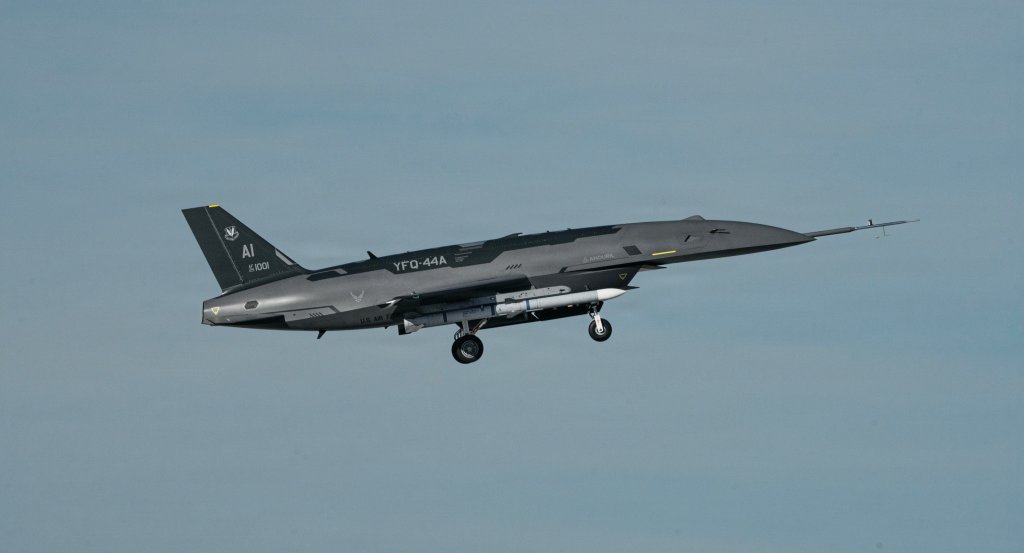
The Air Force has test units already set up to explore how to use CCAs operationally, including under the ACE concept of operation. These kinds of trials are now also involving the first two Air Force Increment 1 CCAs, with the YFQ-44 Fury ‘fighter drone’ prototype having been tested out of Edwards Air Force Base, California, helping to demonstrate how CCAs can be deployed and sustained in contested environments.
The new photos showing the F-15EX and MQ-28 operating together in a major multinational exercise are significant in that they provide a glimpse of how future Air Force operations will team crewed combat jets with CCA adjuncts.
There are still questions around it, however. We lack any information on whether the F-15EX was connected to the MQ-28 in Valiant Shield, and to what degree autonomous teaming software was being exercised. It could be they simply flew in formation for a photo op, or they could have been doing more extensive testing. After all, Valiant Shield is known for proof-of-concept trials of this kind.
We also don’t know whether any weapons-related missions were performed. At least one end-to-end weapons trial involving the MQ-28 has already taken place, with an AIM-120 Advanced Medium Range Air-to-Air Missile (AMRAAM) having been launched from one of the drones during Trial Kareela at RAAF Base Woomera, South Australia, late last year.
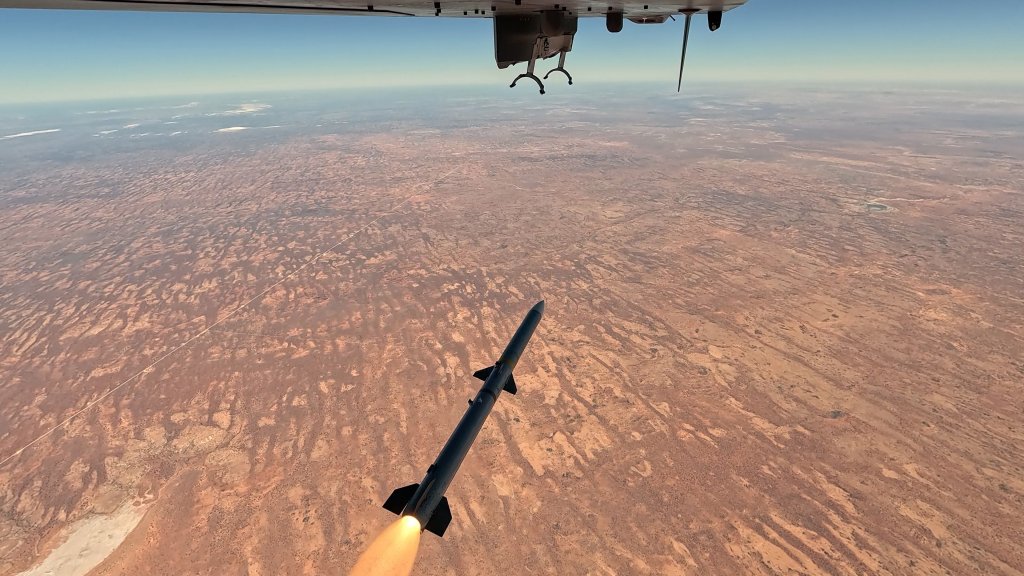
At the very least, this part of Valiant Shield represents an important step from the previous concept art of the F-15EX collaborating with the MQ-28 and toward operational experimentation.
The F-15EX is currently on something of a high, with the Air Force’s budget for the 2027 Fiscal Year outlining a massive boost for the program, with the planned buy now reportedly standing at 267 jets. This comes after the aircraft excelled in its Operational Test & Evaluation (DOT&E) program, as you can read about here.
As for the MQ-28, a CCA like this would be exactly the kind of system that could expand F-15EX’s sensor reach, weapons carriage, and tactical options, including via its infrared search and track (IRST) sensor, seen fitted during Valiant Shield. The drone has been flying in Australia since 2021, and the RAAF has received eight Ghost Bats in the pre-production Block 1 configuration.
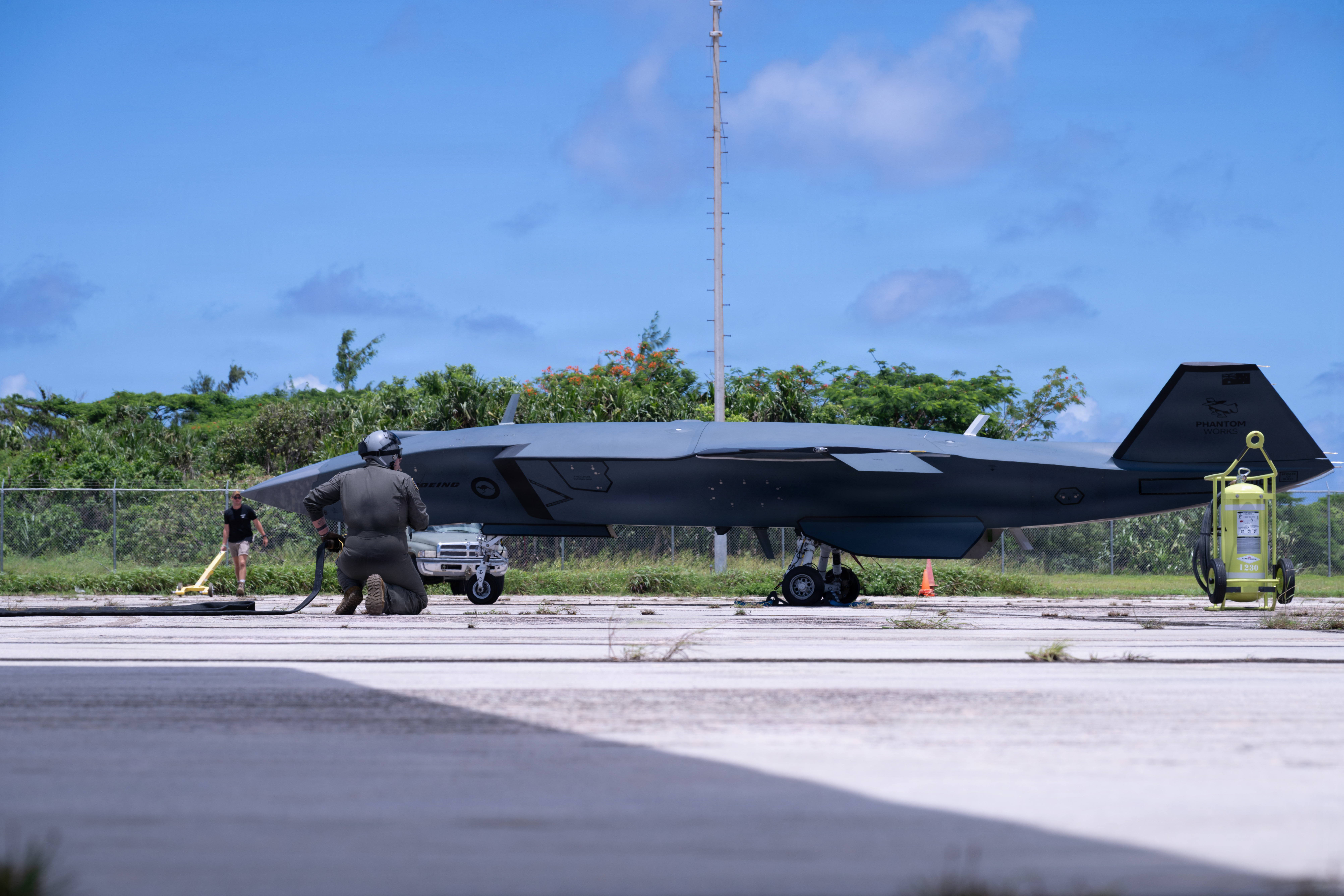
Boeing is now building the first of a batch of nine Block 2 drones for the RAAF, which will provide a stepping stone to the fully operational Block 3 version. The Block 3 aircraft will have increased wingspan and payload, among other features. It will also have an internal weapons bay that can accommodate a single AMRAAM, two GBU-39/B Small Diameter Bombs (SDB), or equivalently sized stores.
On the U.S. side of the program, test flights of the MQ-28 have been conducted off the coast of southern California from the U.S. Navy’s base in Point Mugu. Boeing is also actively exploring potential export sales, with the Indo-Pacific having been identified as a key market.
If future testing progresses as expected, among its various roles, the F-15EX could well become an airborne command node directing multiple autonomous CCAs, greatly increasing the combat capability of each crewed aircraft and the Air Force as a whole.
Contact the author: thomas@thewarzone.com
The post F-15EX And Ghost Bat Team Up Over Pacific During Valiant Shield appeared first on TWZ.