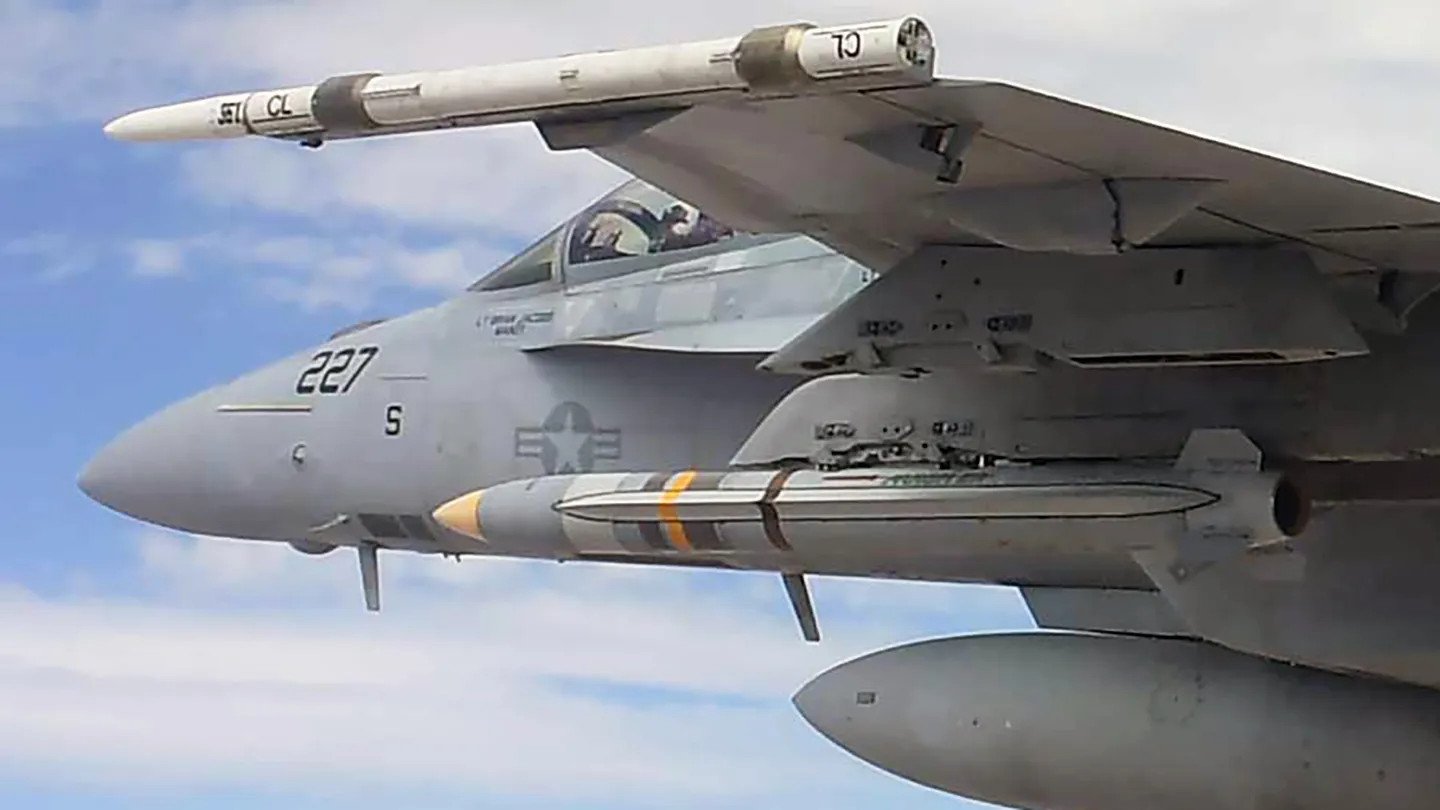
The U.S. Navy has now made it clear it is at least exploring an alternative to the still-in-development AGM-88G Advanced Anti-Radiation Guided Missile-Extended Range (AARGM-ER). When the Advanced Emission Suppression Missile (AESM) effort first emerged earlier this year, the stated requirements did sound curiously similar to what the service wants from the AGM-88G. There was also mention of an all-new need to be able to engage radio frequency-emitting targets in the air, as well as on the surface, but this is no longer being emphasized, at least publicly.
The new contracting notice raises questions about the future of the AARGM-ER program, which the Navy told TWZ in April was still on track to be fielded later this year. The service had also previously announced a “strategic pause” in purchases of AGM-88Gs, but only for the 2027 Fiscal Year. The AARGM-ER is a direct evolution of the existing AGM-88E Advanced Anti-Radiation Guided Missile (AARGM).
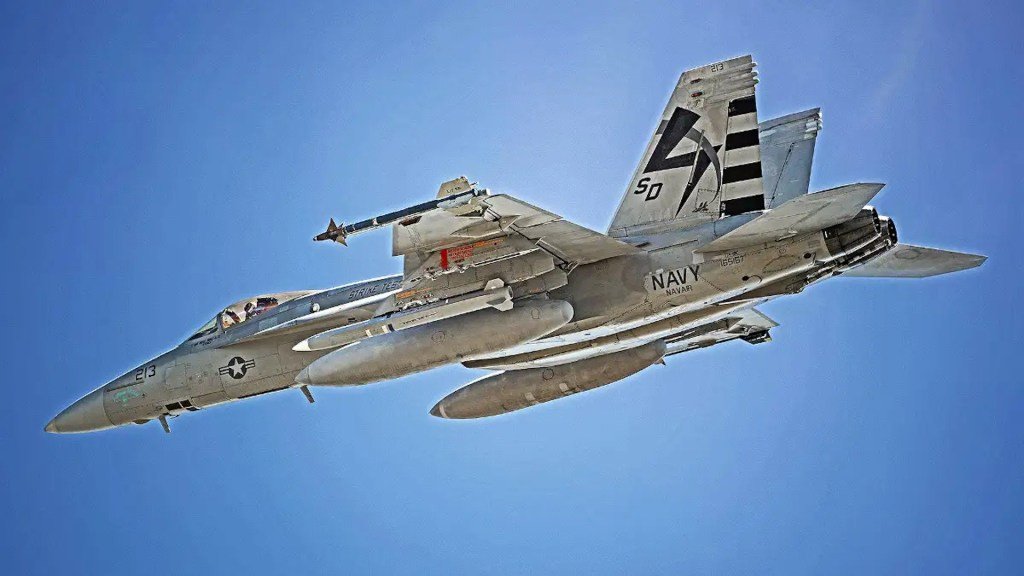
Naval Air Systems Command (NAVAIR) issued a new AESM request for information (RFI) yesterday. NAVAIR had previously put out a contract notice regarding this new missile back in February, but subsequently took it down.
NAVAIR is now looking “to conduct market research to identify potential sources capable of providing an AARGM-ER equivalent missile system,” according to the new RFI. This “consists of the All-Up-Round (AUR) missile to include hardware and software, as well as any unique logistics elements, trainers, AARGM-ER equivalent flyout model, and all system verification elements.”
“The purpose of this RFI is to conduct market research to identify potential sources capable of providing a mature design (TRL >6) missile system which consists of the All-Up-Round (AUR) missile to include hardware and software, as well as any unique logistics elements, trainers, flyout model, and all system verification elements,” the notice adds. “This AUR must be compatible with existing launch platforms.”
TRL here refers to the U.S. government’s Technology Readiness Level (TRL) scale, which is used to categorize the maturity of munitions and other systems. TRL 6 is defined as an effort that has produced a “representative model or prototype system” that has been “tested in a relevant environment.” The “relevant environment” here can include high-fidelity laboratory conditions or be otherwise simulated.
The latest desired requirements for AESM are very broad and fully in line with what the Navy has said for years that it expects to gain from the fielding of the AGM-88G.
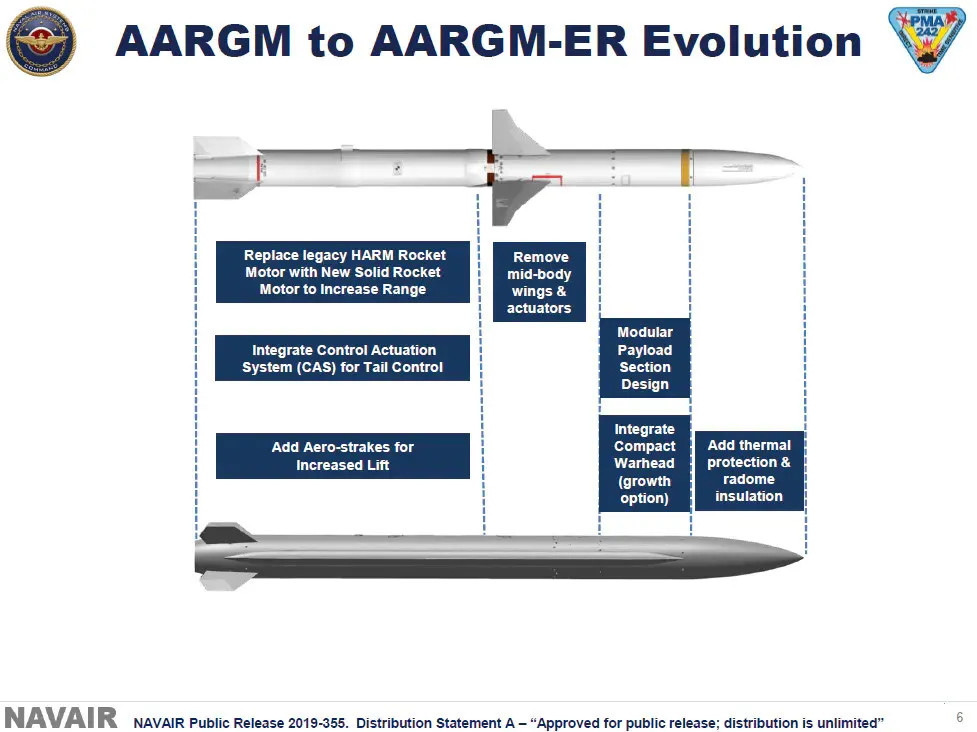
AESM needs to have “extended range,” allowing it to be “capable of engaging targets at significant standoff distances.” It has to include an “advanced anti-radiation seeker with broad frequency coverage” and the “ability to target modern and advanced radar systems.” In terms of “lethality,” the goal is to achieve a “high probability of kill against a wide range of targets.”
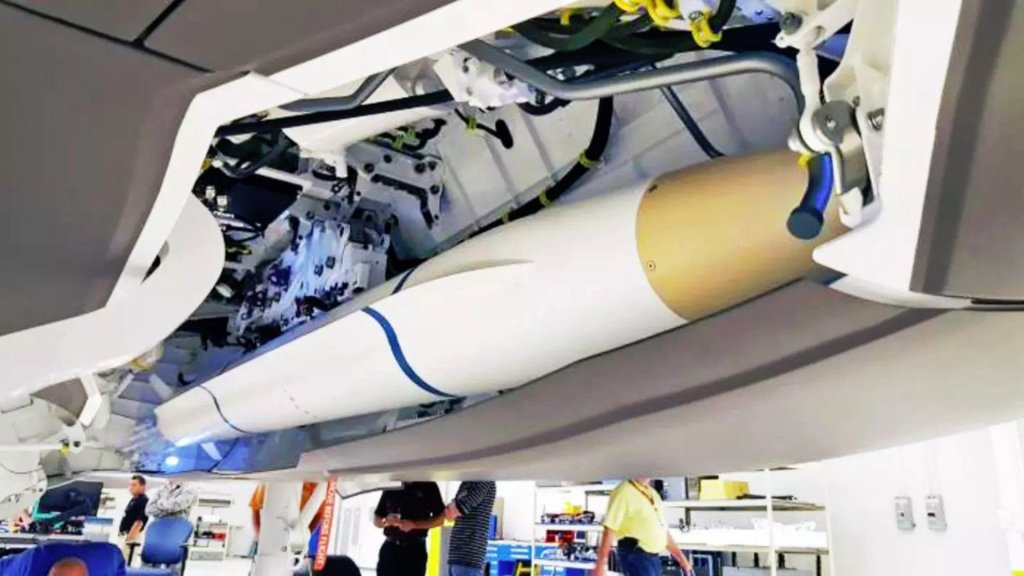
Like the AARGM-ER, AESM needs to be suitable for internal and external carriage on at least certain variants of the F-35 Joint Strike Fighter. F/A-18E/F Super Hornet fighters and EA-18G Growler electronic warfare jets are also listed as threshold launch platforms.
The original AESM RFI in February had laid out more specific requirements, which are absent in the new contracting notice. This includes an explicit call for prospective vendors to describe their proposed missile’s “ability to engage air-to-air and air-to-ground targets.”
There has been no mention in the past about an air-to-air engagement capability for the AGM-88G. It’s unclear whether this is still an area of interest for AESM. TWZ has reached out to the Navy for more information about the current state of AESM and how that factors into plans for AARGM-ER.
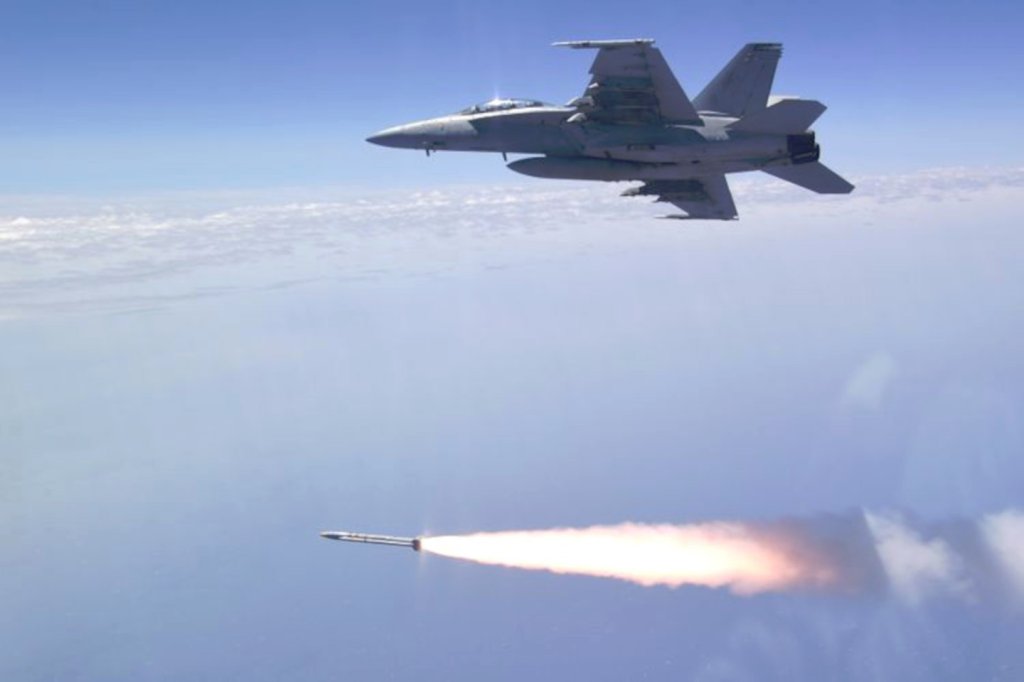
With added air-to-air engagement capability, AESM would open the door to new operational possibilities and could be more complementary to AARGM-ER. As we previously wrote after the first RFI was released:
“U.S. military interest in very-long-range air-to-air capable anti-radiation missiles traces all the way back to the Cold War, primarily as a means for engaging enemy airborne early warning and control (AEW&C) planes. Anti-air weapons designed around this role are often colloquially referred to as ‘AWACS killers,’ a reference to the U.S. E-3 Sentry Airborne Warning and Control System (AWACS) aircraft. A very-long-range air-to-air missile could be used against other aerial targets, as well.”
…
“All that being said, the value of an ‘AWACS killer’ missile is clear-cut. AEW&C are critical surveillance and battle management assets. Shooting them down deprives an opponent of those capabilities, inherently reducing their ability to effectively maneuver air assets and share important information, including with other nodes on the ground or at sea, as well as in the air. Knocking out these flying radar stations, which can be especially well-suited to spotting lower flying threats from their high perches, just hampers an enemy’s overall situational awareness.“
“The issue, of course, is that AEW&C planes typically orbit well behind the front edges of a conflict, creating additional challenges for targeting them. This is where something like AESM could come into play. A weapon of this type could engage other aerial targets by zeroing in on the radiofrequency emissions they pump out. This could include electronic warfare aircraft, and potentially other aerial targets. AESM might be able to take on a more general anti-air role with the addition of an active radar and/or imaging infrared seeker, as well as datalinks allowing for the use of networked targeting data. AARGM and AARGM-ER both feature an active millimeter-wave radar seeker to enable them to hit fleeing ground targets, but a similar concept could be adapted for air-to-air use.”
“For the Navy, as well as other branches of the U.S. military, this is all particularly relevant in the context of a potential future high-end fight with China, which has made major investments in its fleets of AEW&C and electronic warfare planes. The Chinese People’s Liberation Army (PLA) has also been pursuing ever-longer-ranged anti-air missiles, including types that could be used to target American AEW&C platforms, as well as other key support aircraft.”
AESM would also still have the ability to be employed in an air-to-surface mode like the AGM-88G and its predecessors. Having a single missile with hybrid anti-air/anti-radiation capabilities would offer very useful added flexibility, especially for addressing threats that might suddenly appear during a sortie. This would also offer magazine depth benefits, since a launch aircraft loaded with AESMs would inherently have more engagement opportunities against a wider target set than one carrying a mixture of AARGM-ERs and traditional air-to-air missiles.
This could slot in well with the rest of the Navy’s planned future air-launched missile ecosystem, which at least currently includes the AGM-88G, as well as the AIM-174B air-launched version of the multi-purpose Standard Missile-6 (SM-6) and the AIM-260 advanced air-to-air missile. These missiles fit into ever-expanding ‘kill web’ architectures made up of deeply integrated networks of sensors and other assets from across the services, spread across the air, land, sea, space, and even cyberspace domains. TWZ previously explored all of this in a detailed feature you can find here.
It’s also worth remembering that the U.S. Air Force has worked with the Navy on similar hybrid anti-air/anti-radiation missile efforts in the past. The Air Force also just recently put out its own call for information about a prospective common missile with a range of at least 1,000 miles, that could come in air-to-air and air-to-surface versions. AESM might further emerge as a joint-service effort and/or one that involves foreign participation.
At the same time, the downplaying of more specific capabilities in the rebooted AESM RFI can only prompt questions about the future of the AGM-88G. The Navy has been actively pursuing AARGM-ER since 2018. The missile’s increased speed and range are viewed as vital for future conflicts, especially when it comes to ensuring survivability and effectiveness of non-stealthy launch platforms as adversary anti-access and area denial (A2/AD) bubbles continue to expand in scale and scope.
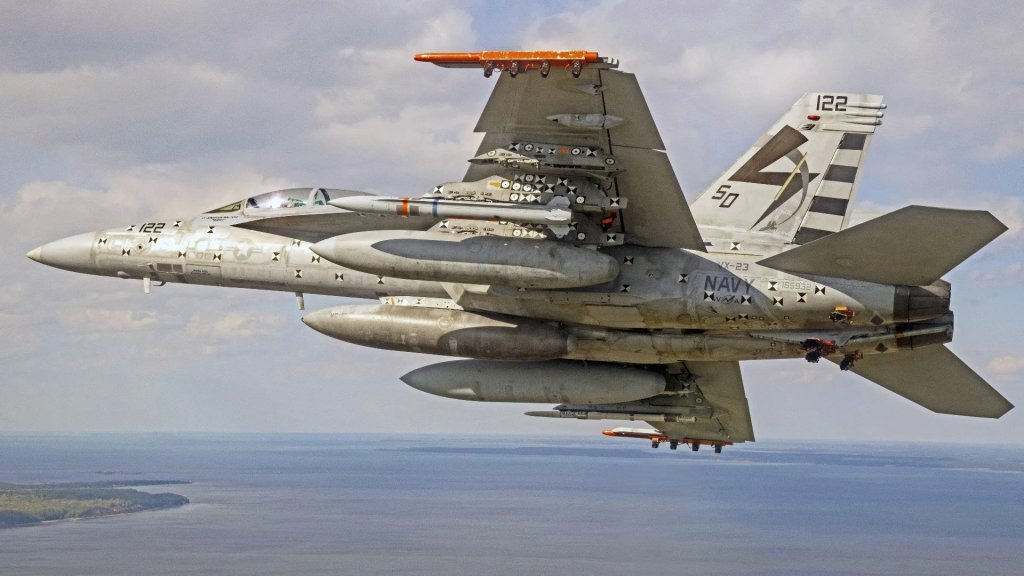
However, the AARGM-ER program has encountered technical issues in development and suffered significant delays. The original goal was for the missile to reach initial operational capability (IOC) on the F/A-18E/F and EA-18G in 2023. The Navy is now aiming to hit that milestone by September of this year. There are foreign customers also still in line to receive AARGM-ERs, and Italy is notably a full partner in the missile’s development. The Air Force is pursuing a derivative, called the Stand-in Attack Weapon (SiAW) and reportedly designated the AGM-88J, intended to provide a more general strike capability.
“U.S. procurements for the AARGM-ER program are planned to resume once the system has successfully completed all necessary testing and software updates. Our immediate priority is ensuring the weapon passes these rigorous testing milestones to achieve Initial Operational Capability (IOC) in September 2026,” a Navy spokesperson told TWZ back in February when about the status of the program and the aforementioned strategic pause. “After validating the software and testing, the plan would be to ramp up production to clear a backlog of over 150 missiles, with U.S. procurements officially restarting in FY28 [Fiscal year 2028]. In the interim, FY27 production will be allocated to Foreign Military Sales to fulfill our commitments to five signed international cases.”
It is worth noting here that the Navy seeking a functional equivalent to the AGM-88G does not automatically mean it is considering supplanting that missile entirely. Diversification of the supply chains, especially by leveraging new and non-traditional vendors, has become a top priority across the U.S. military in recent years. Efforts to broaden the defense industrial base, with an explicit emphasis on less reliance on traditional prime contractors, have surged further since President Donald Trump started his second term. More industrial base diversity offers benefits for scaling up production of subcomponents and complete systems. Another key aspect of these initiatives has been avoiding getting locked into a single vendor for key programs, helping to foster competition that can drive down costs.
Having an alternative source of missiles that are even just roughly similar to the AARGM-ER capability-wise could be very valuable for bolstering stockpiles now and ensuring they can be replenished in the future, especially in the midst of a sustained high-end fight. The lead time for the acquisition of exquisite munitions is often measured in months, if not years. Concerns about the sufficiency of U.S. stockpiles of key missiles have already been growing in recent years due to a succession of global crises, something TWZ has regularly called attention to. This has become an even more pressing topic given the expenditures of critical munitions during the latest conflict with Iran. The Pentagon has signed several new deals with various companies in the past year or so to expand and accelerate production of existing and new missiles, underscoring just how significant the demand signal has become. Still, it will take time for those contracts to bear fruit, reinforcing the value of having additional streams of relevant munitions.
Much remains to be learned about the Navy’s exact intentions with AESM and how it fits in with the current plans for AARGM-ER. What we do know now is that the service is actively looking at options for a new missile that offers at least equivalent capability to the AGM-88G.
Contact the author: joe@twz.com
The post Navy Already Looking For Alternatives To Its Brand New AARGM-ER Radar Busting Missile appeared first on TWZ.