© ITER Organization
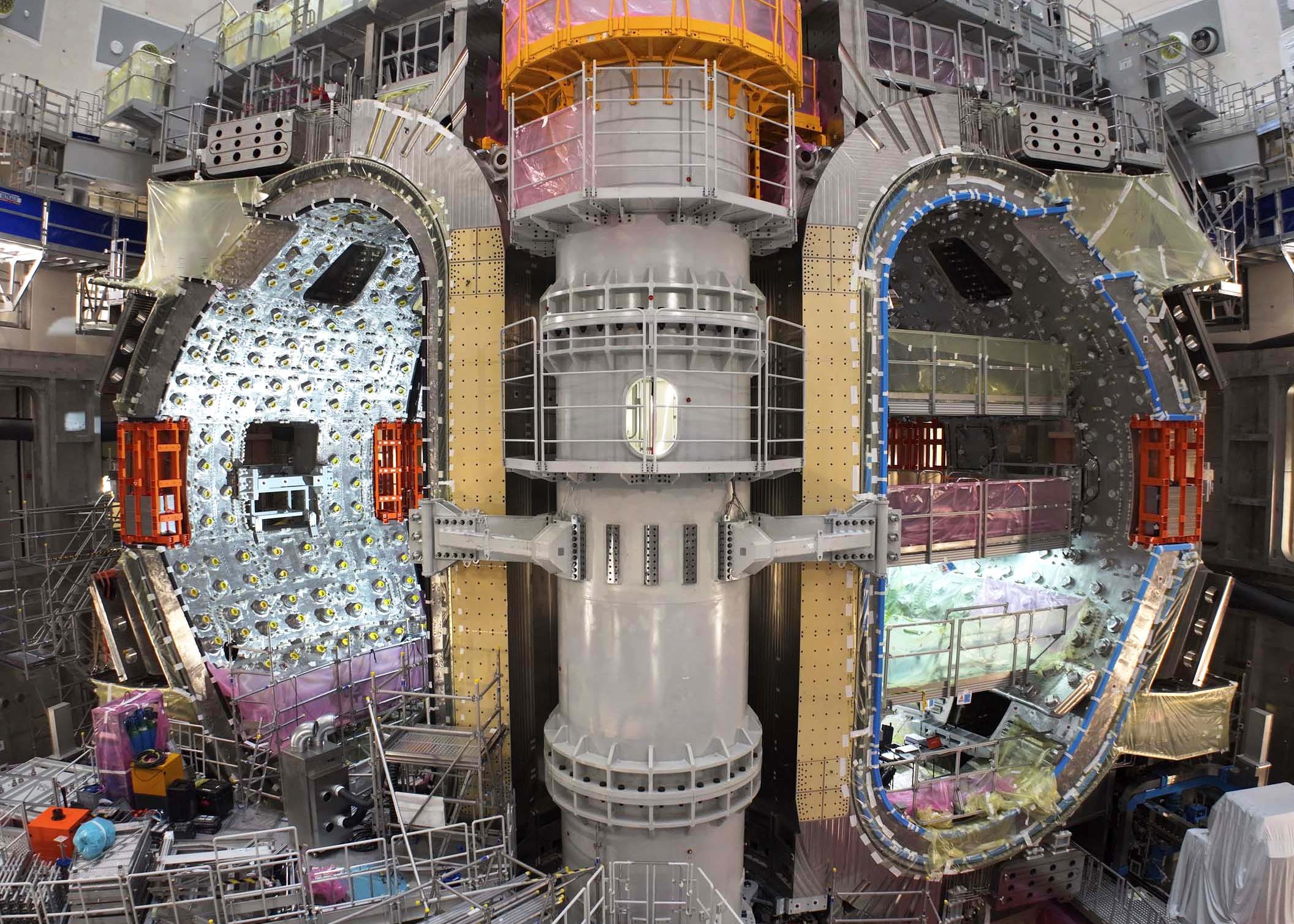
Four massive vacuum-vessel modules sit in place around the central solenoid coil of the ITER tokamak (a type of fusion reactor) in April 2026. Each of the nine wedge-shaped modules stands 13 meters (42.65 feet) tall and weighs approximately 1,200 tons. They are designed to contain a huge volume of intensely-hot plasma inside a torus-shaped vacuum vessel, confined by powerful magnetic fields.
Science Photo Library / Reuters
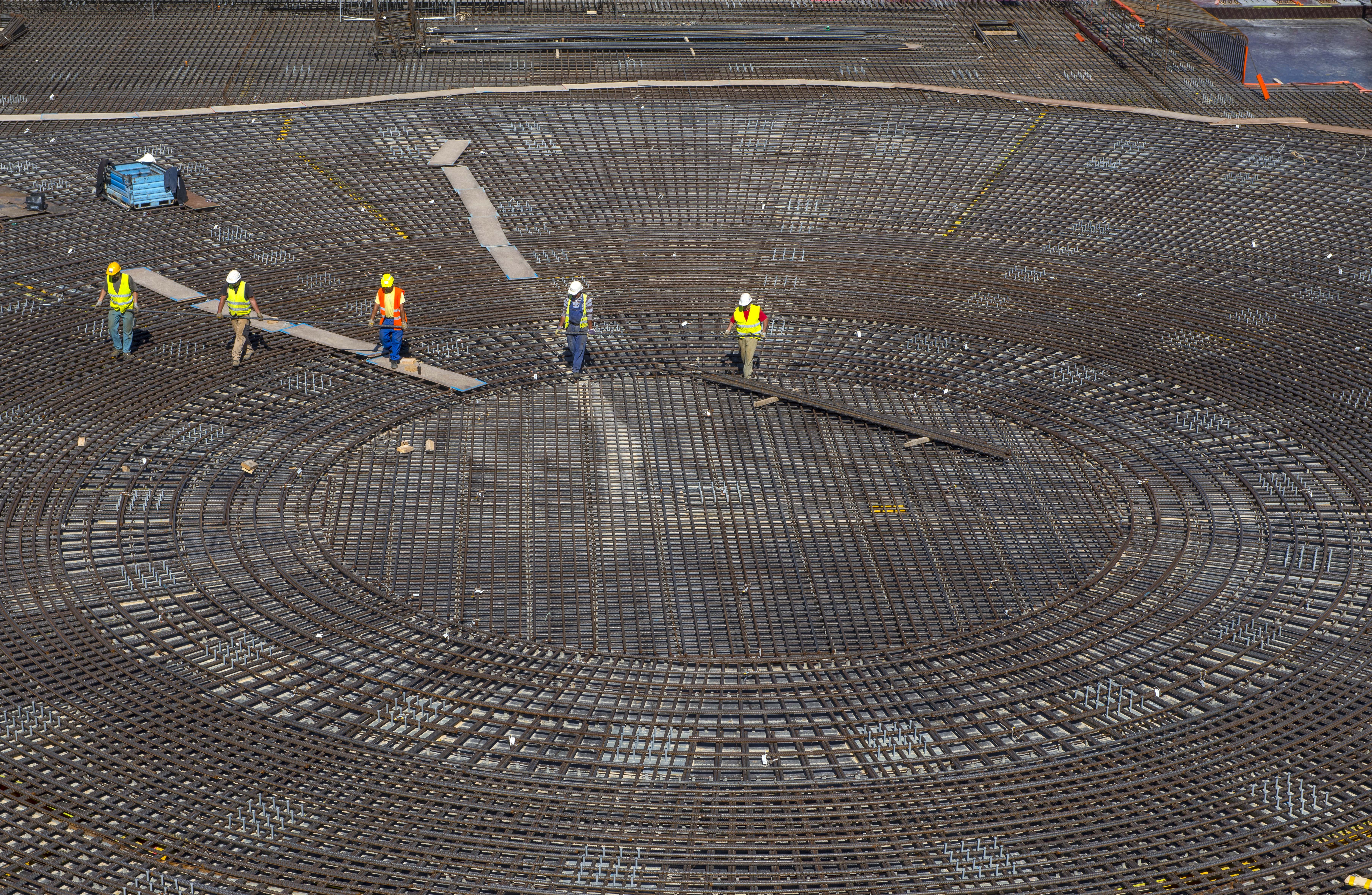
Reinforcing bars are laid in place across the facility’s foundation, before a 1.5-meter-thick concrete foundation slab will be poured over. The building will house the tokamak of the ITER experimental fusion reactor. The acronym ITER is also a word in Latin, meaning “journey,” or “path.”

Science Photo Library / Reuters
The 300,000-ton tokamak complex will rest on top of 493 anti-seismic bearings that are mounted on concrete plinths rising up from the foundation.
© ITER Organization / EJF Riche
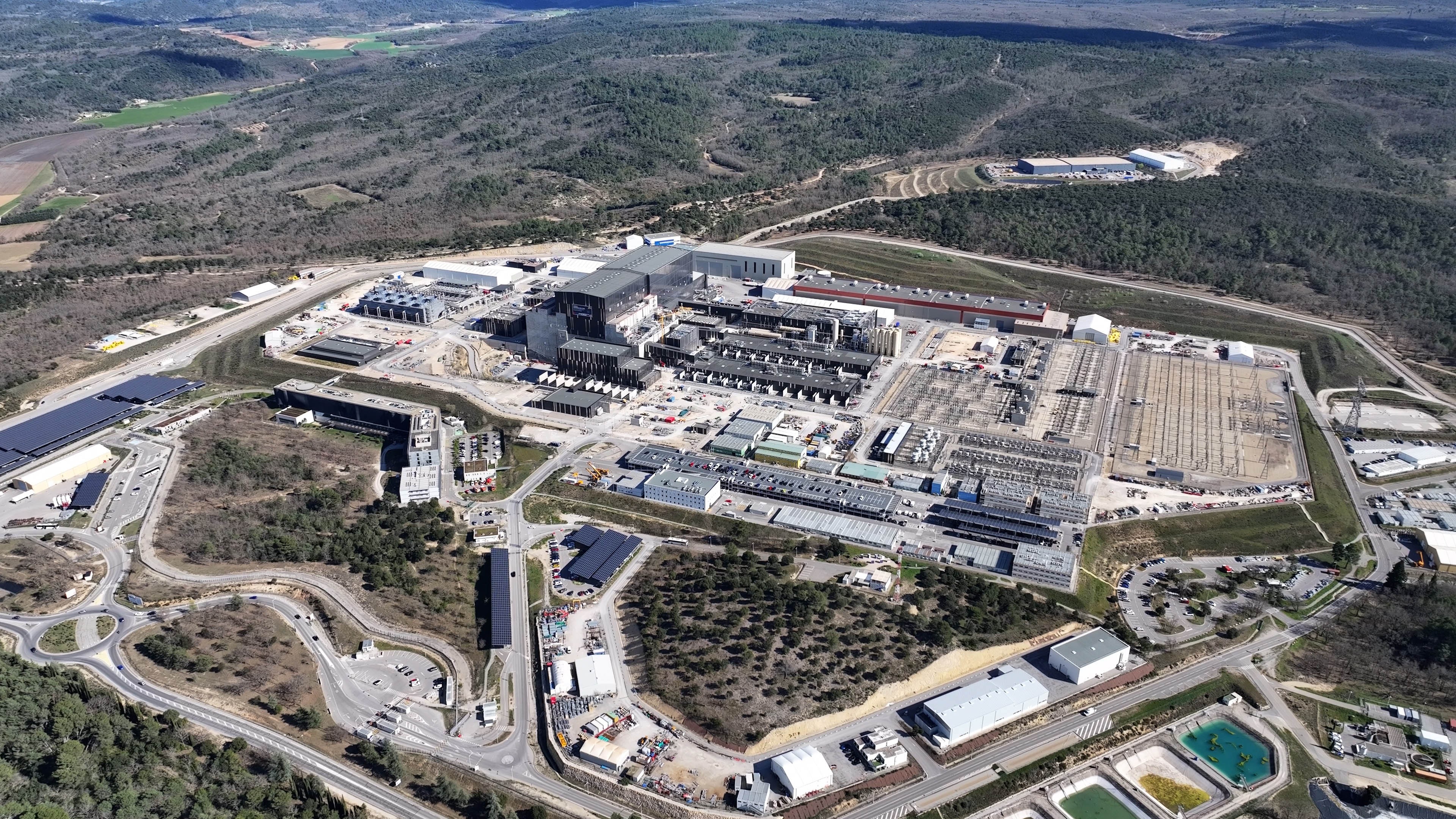
An aerial view of the 100-acre central platform of the ITER Complex, seen in early 2026 in Saint-Paul-lès-Durance, France. The largest buildings, seen at the center, are the Tokamak Complex and its assembly building. Surrounding it are more than 35 support buildings that house workshops, diagnostic centers, heating, cooling, power handling, and more. Construction continues, with a target date of 2033 for its first successful generation of plasma.
© ITER Organization
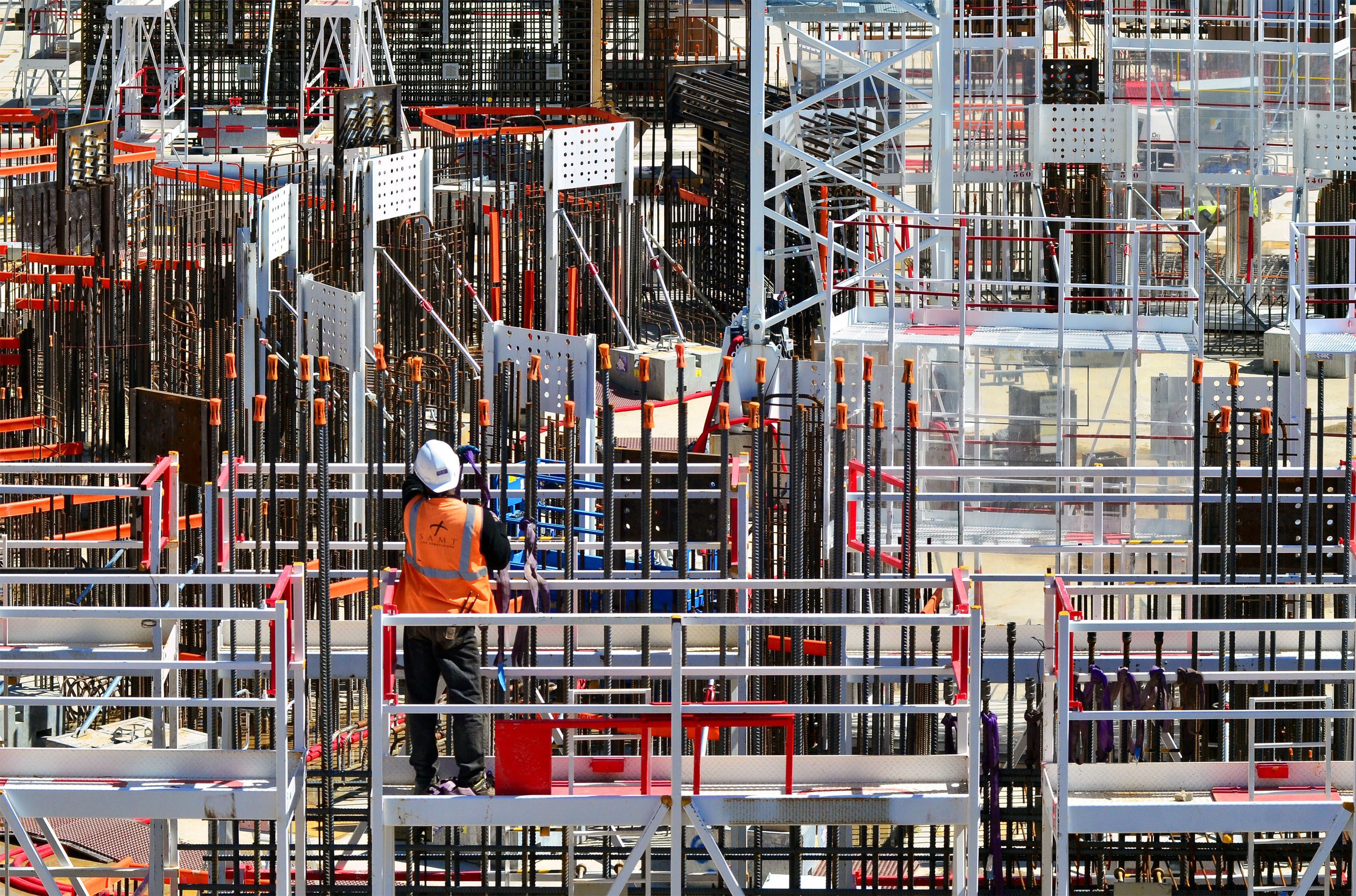
A snapshot of construction progress on the assembly building and the Tokamak Complex, seen on April 7, 2025
© ITER Organization
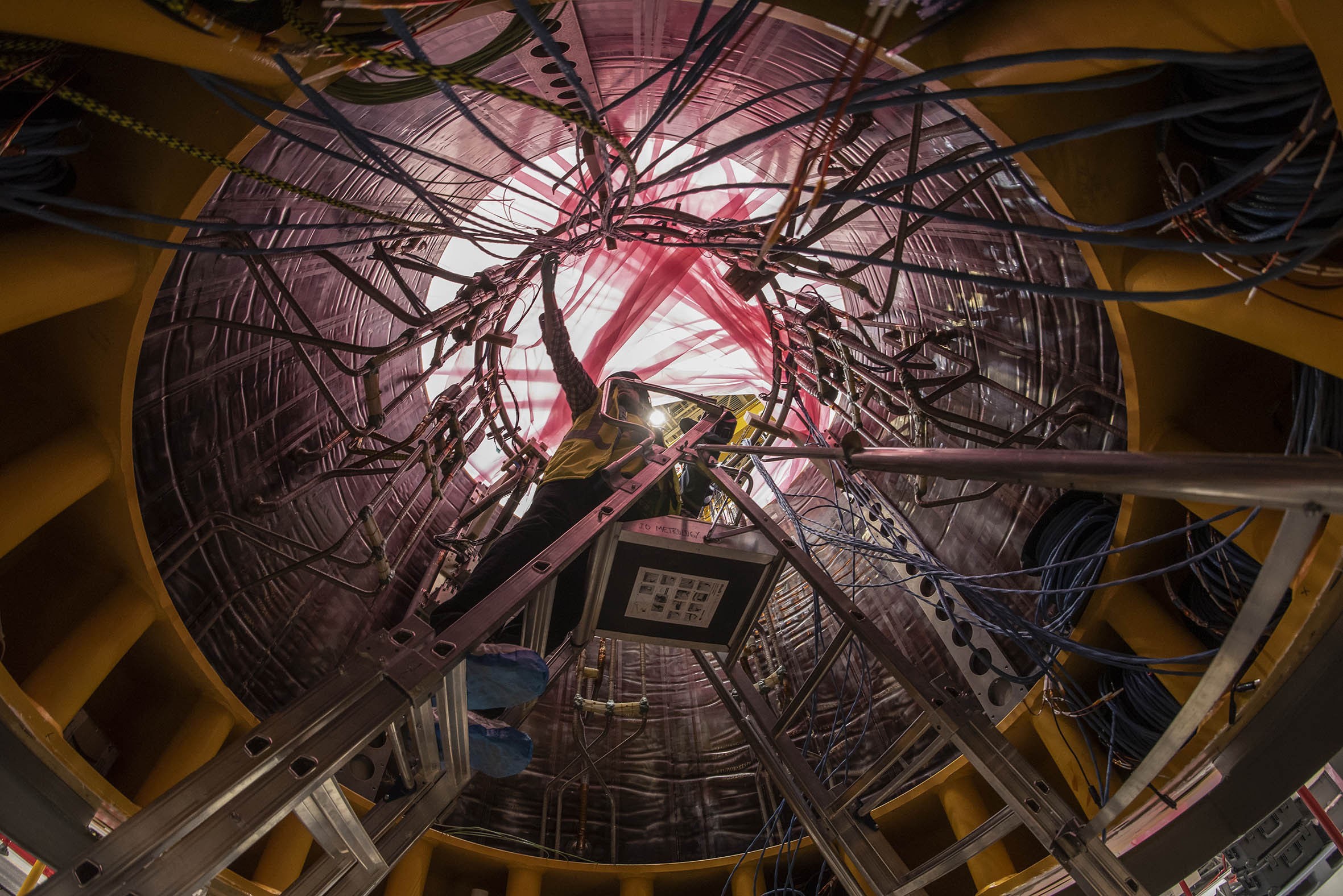
The first 110-ton module of the central solenoid, seen from below on December 6, 2023. When complete, the central solenoid will form an 18-meter-tall column at the heart of the tokamak, acting as an incredibly powerful superconducting magnet, driving current into the plasma. Teams from the United States fabricated the central solenoid, then shipped the modules to France. Thirty-five nations around the world are collaborating on the ITER project, building and contributing “in-kind” components and sharing the costs of construction and operation.
Science Photo Library / Reuters
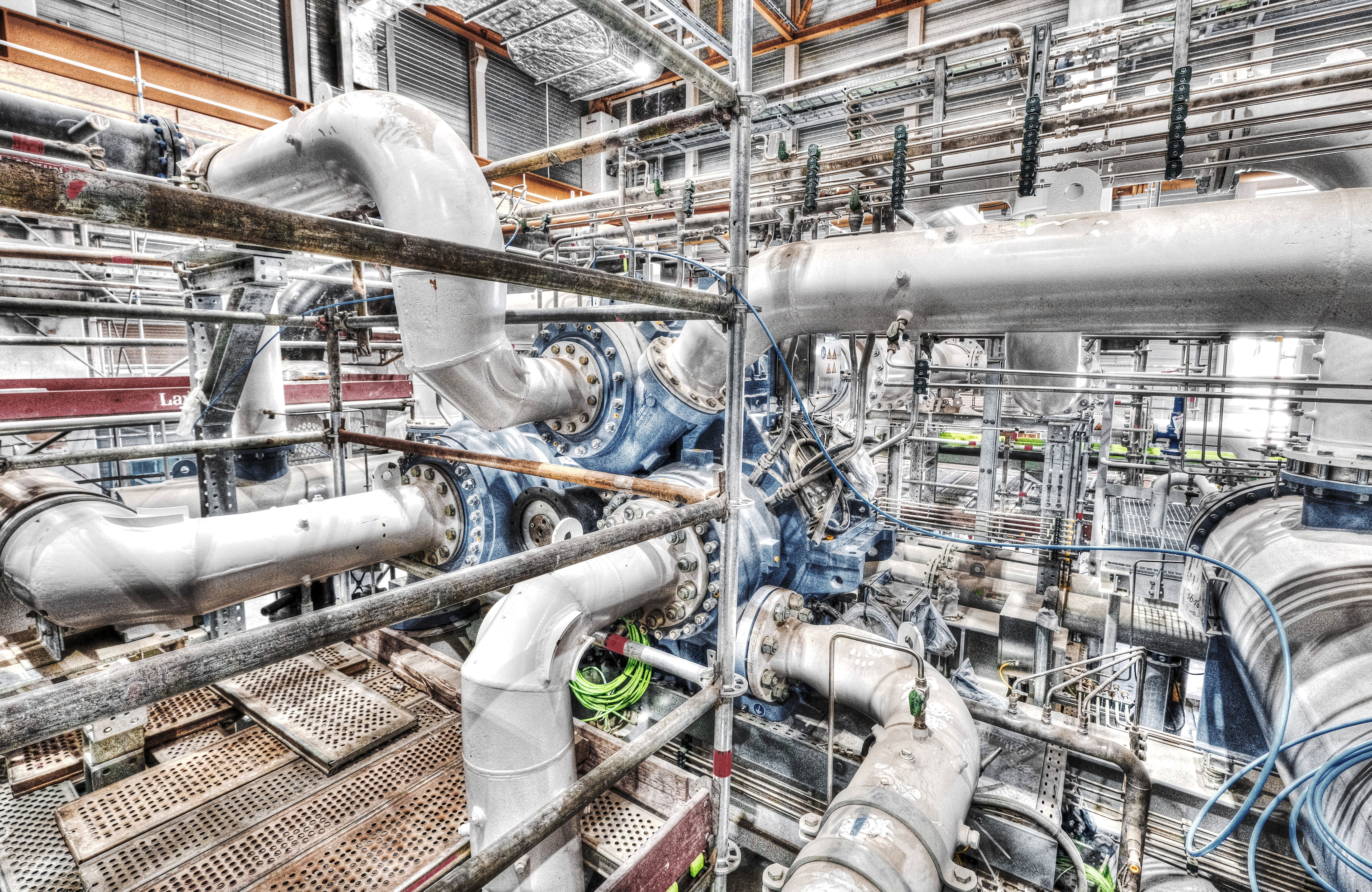
Construction is underway inside the liquid nitrogen plant, part of ITER’s massive cryoplant, which will produce and circulate liquid nitrogen and liquid helium to the shielding and electromagnets of the tokamak.
© ITER Organization
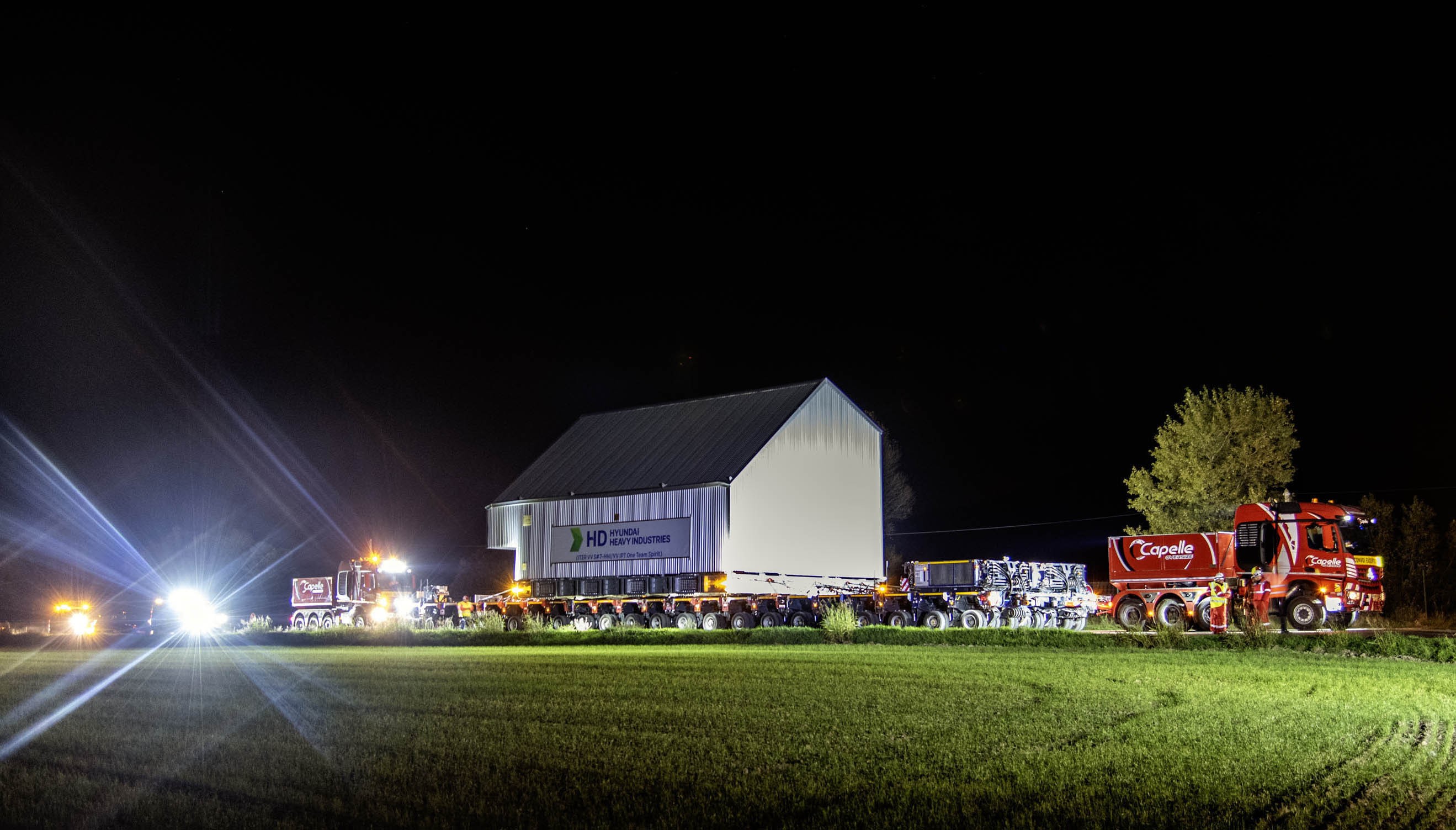
The fourth and last vacuum-vessel sector from Korea is ready to leave the staging area and travel the last leg of its journey to France from the Hyundai Heavy Industries shipyard in Ulsan, South Korea, in 2024. Each of the 440-ton components was packed in metal cabin-like shipping containers for the long ocean journey.
© ITER Organization
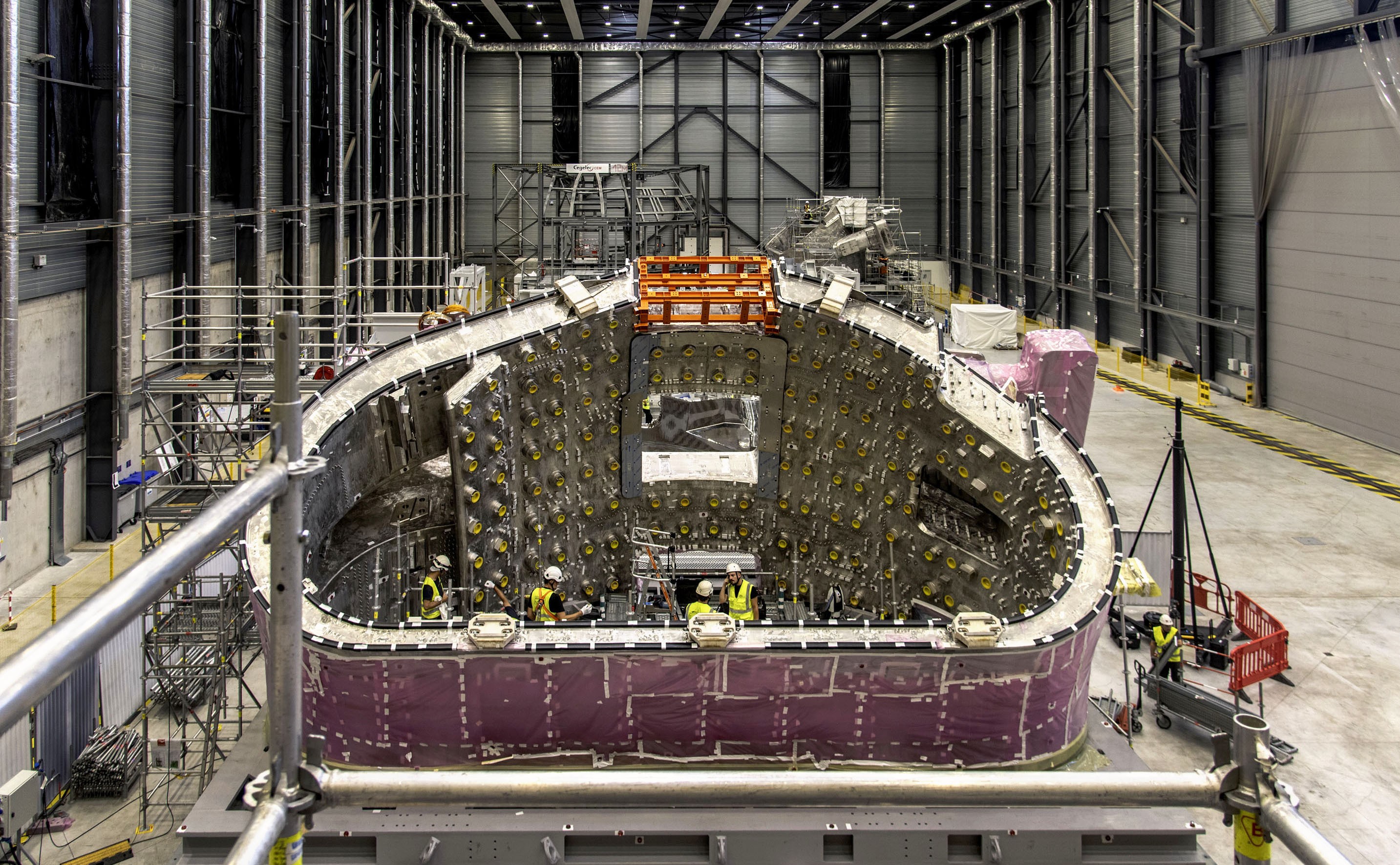
A view of one of the vacuum-vessel sectors lying on its side inside the former Cryostat Workshop, which is now used for assembly-related activities
© ITER Organization
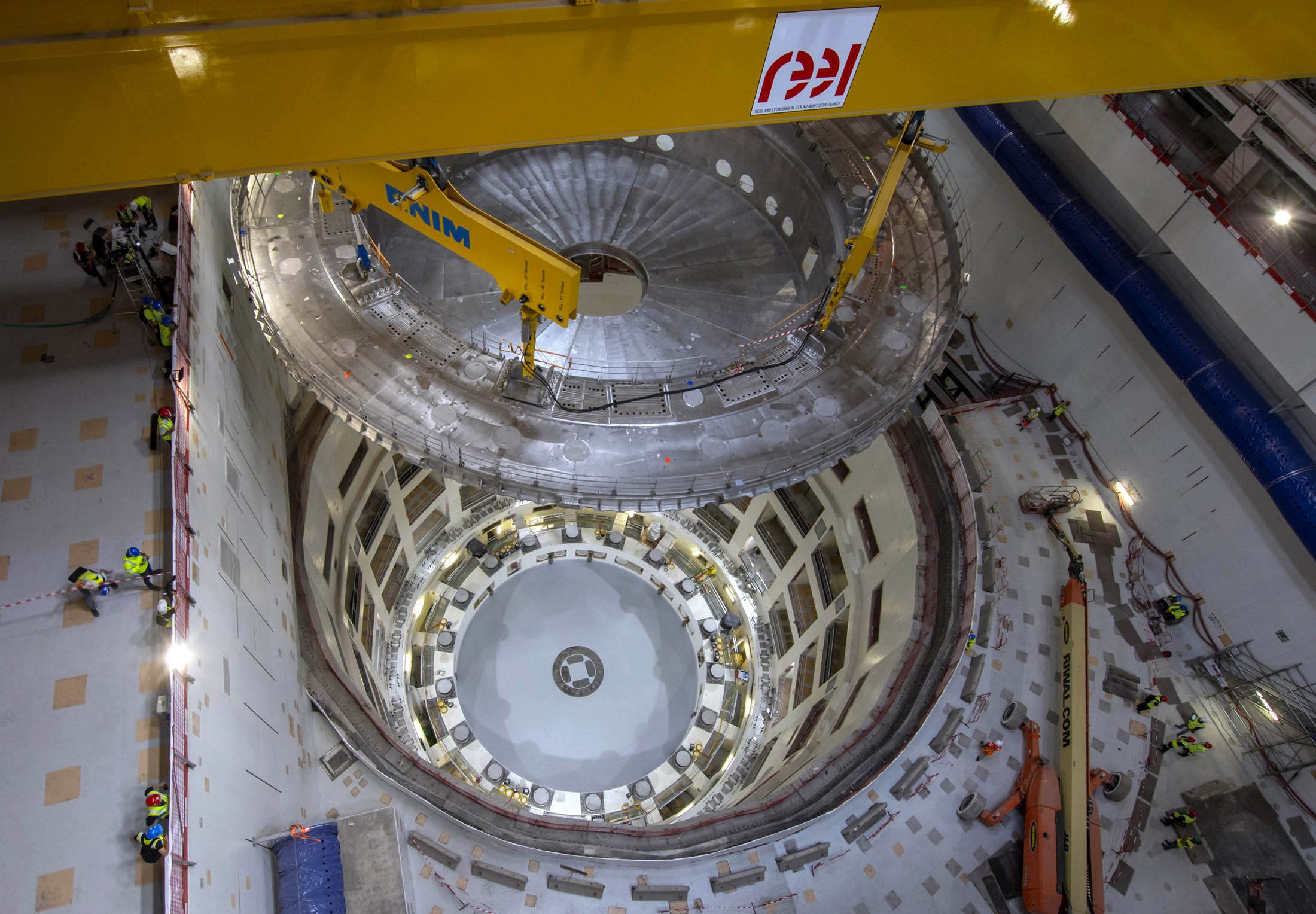
The cryostat base hangs above the opening of the 30-meter-deep tokamak assembly pit, before being slowly lowered to the bottom. When complete, the ITER cryostat will become the largest stainless-steel high-vacuum pressure chamber ever built, containing the vacuum vessel and its powerful magnets.
© ITER Organization
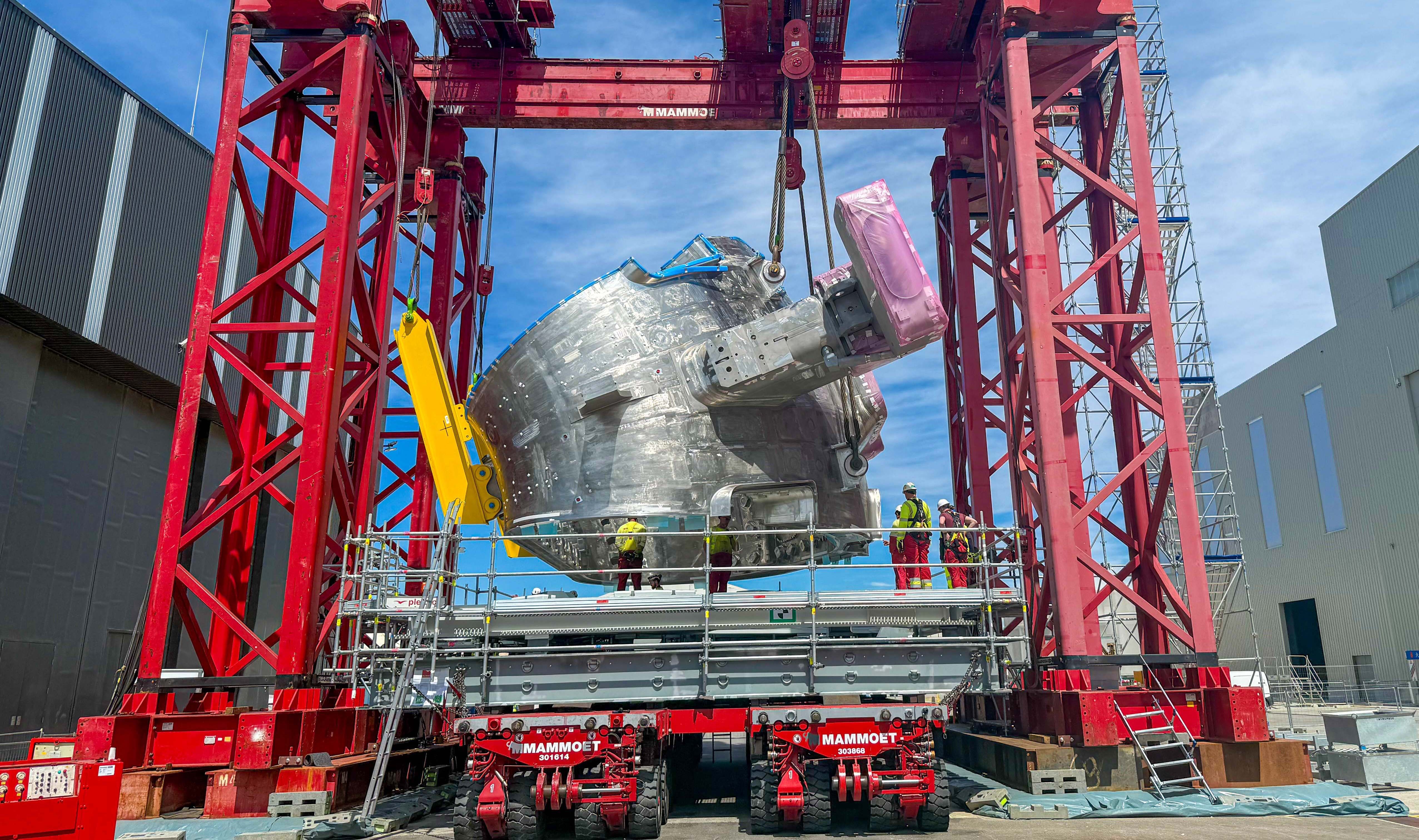
Vacuum-vessel sector #3 has been positioned under a gantry crane for an outdoor “flip” operation that will expose its second side, in May 2026.
.© ITER Organization
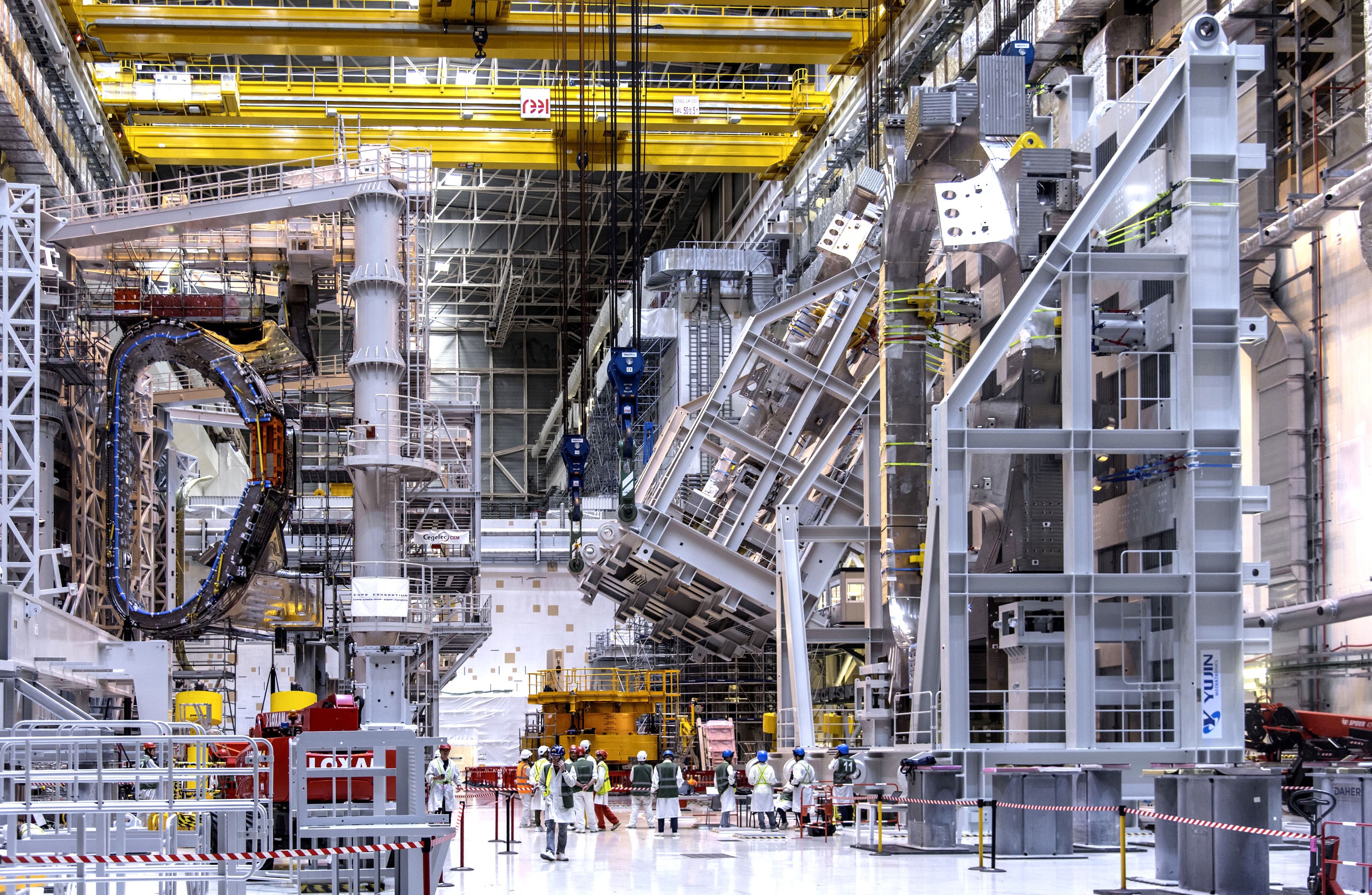
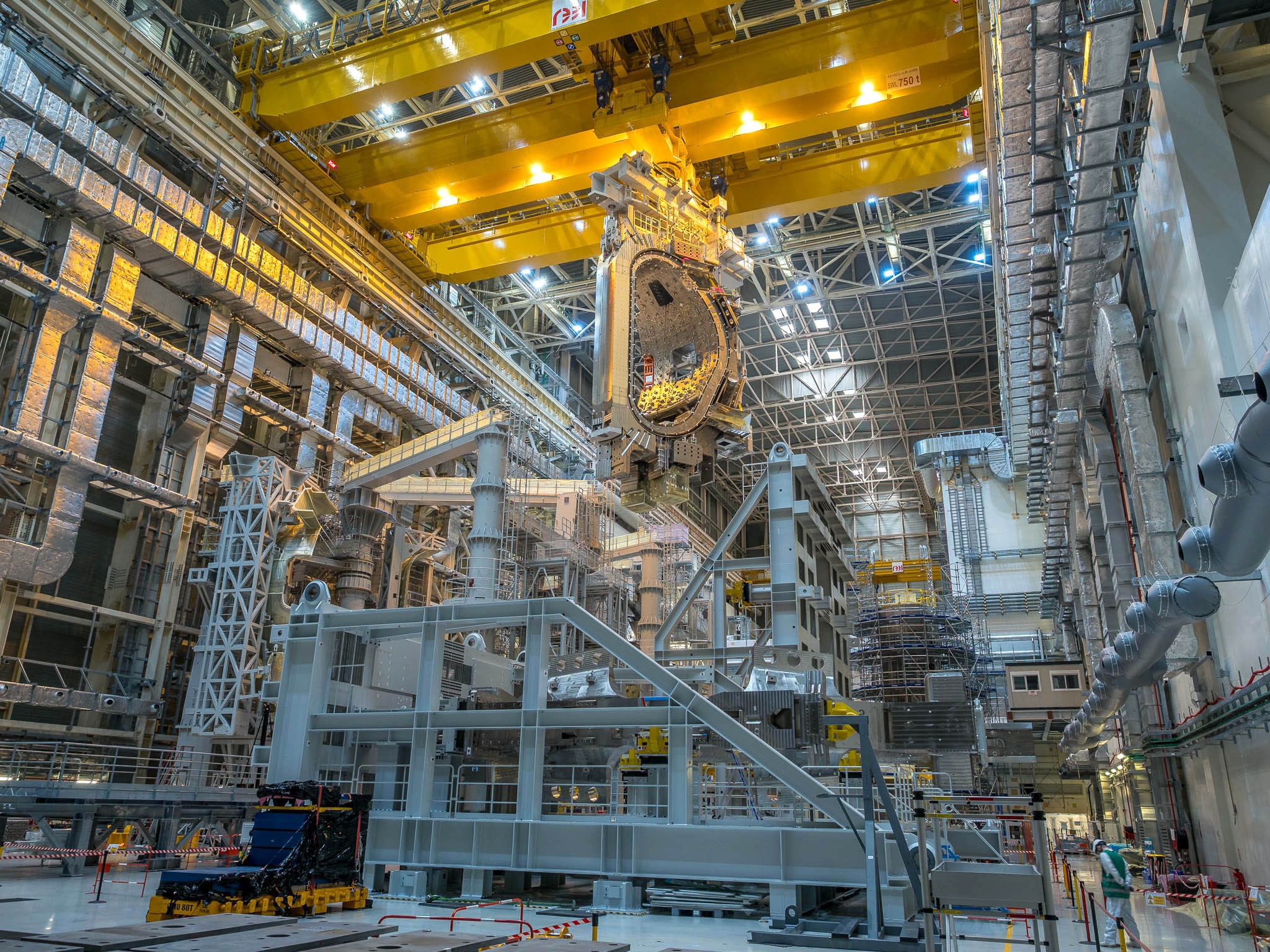
To the right, a 330-ton toroidal field coil (a powerful superconducting magnet) is being tilted up, raised from horizontal to vertical prior to its transfer into the arms of the sub-assembly tool, to the left, where it will be paired with a vacuum-vessel sector, in July 2025.
© ITER Organization
A vacuum-vessel module (top) was installed in the ITER tokamak pit during an overnight operation from May 26 to 27, 2026.
© ITER Organization
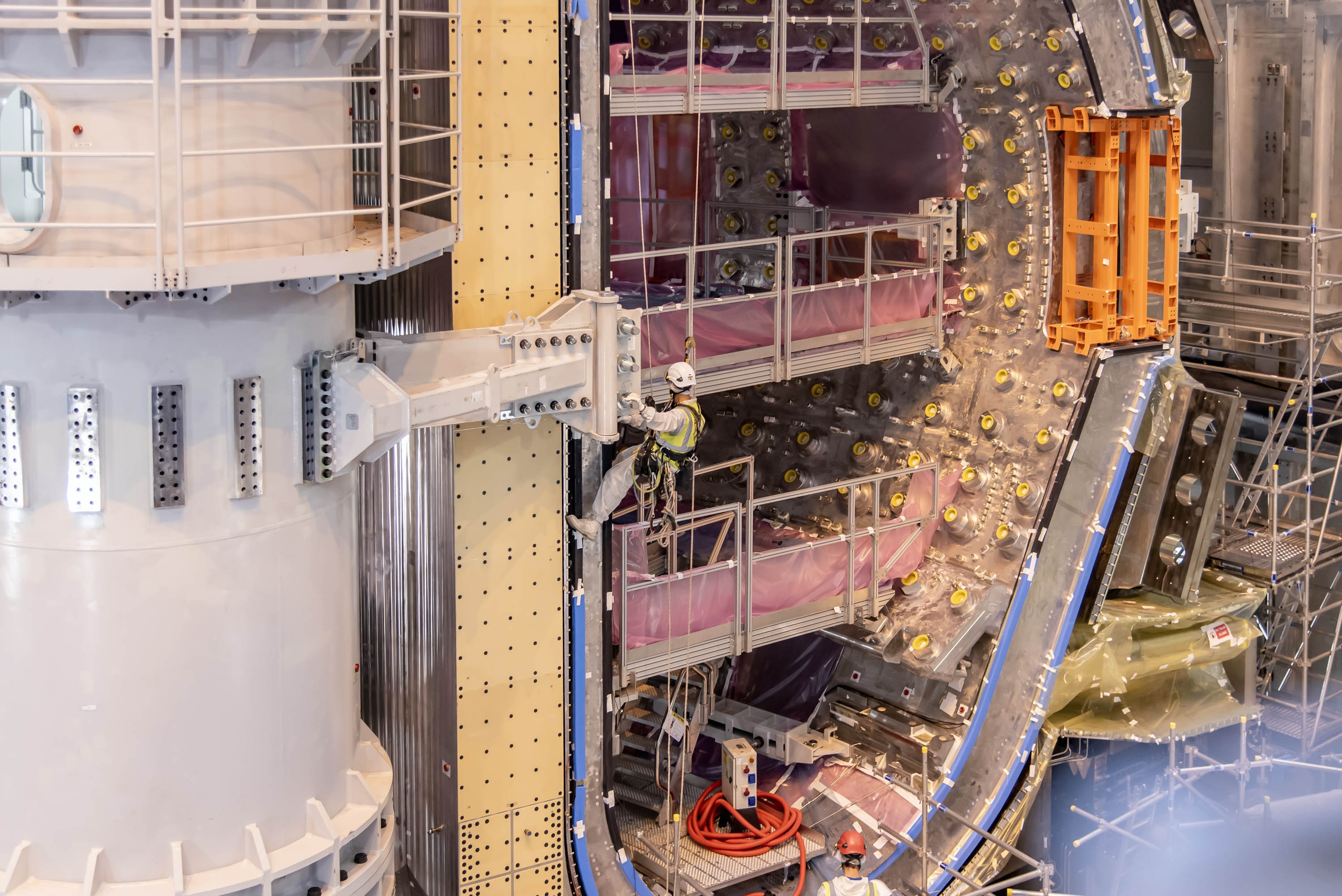
A worker from the CNPE Consortium engineering group rappels down one of the massive vacuum-vessel sectors in the pit, past interior staging that has been installed to give teams access to every corner.
Gilles Bader / Le Pictorium / Reuters
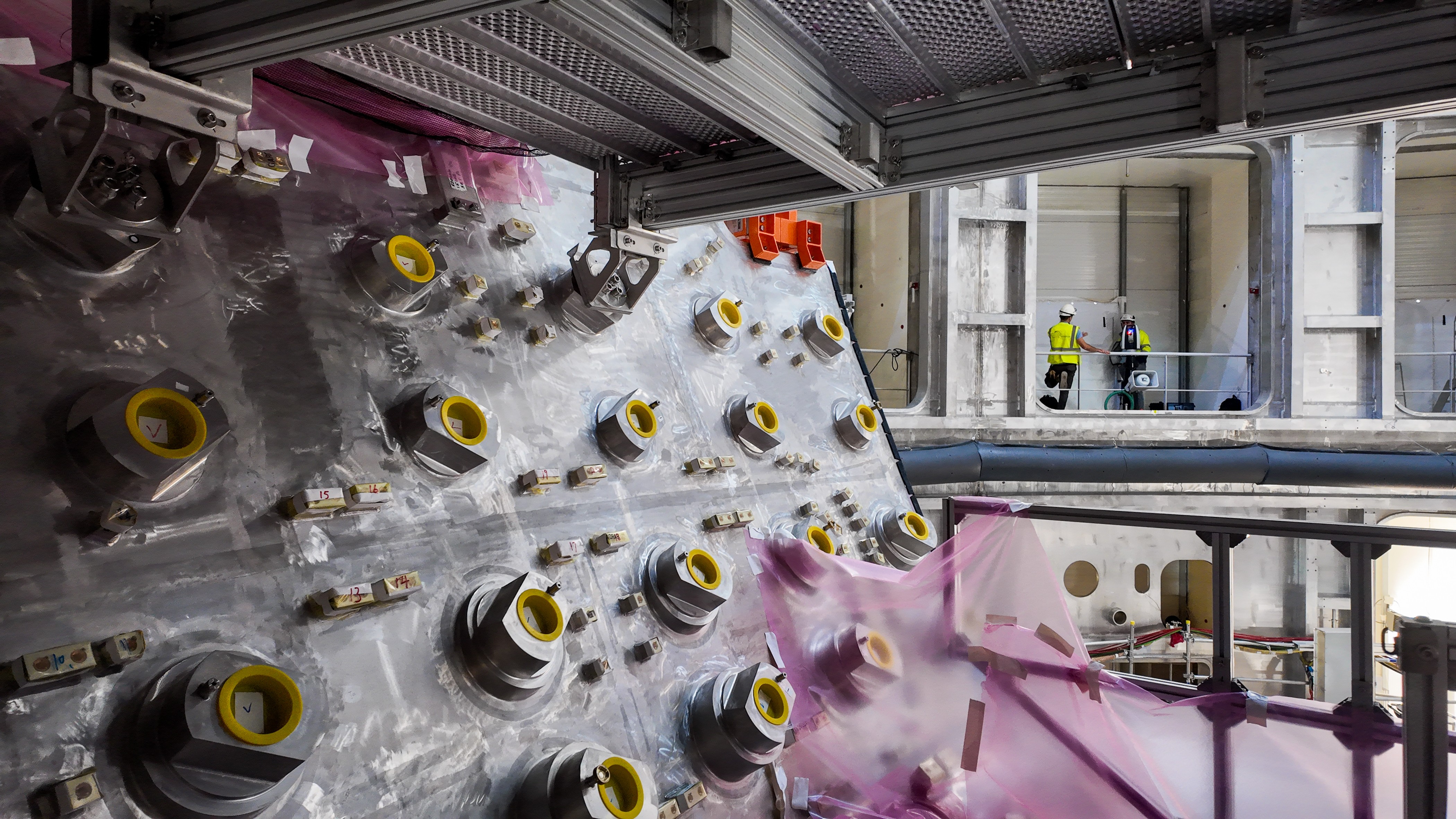
A view from inside the heart of the Tokamak reactor, showing mounting points for diagnostic sensors and interior blanket shielding, seen on November 17, 2025
© ITER Organization
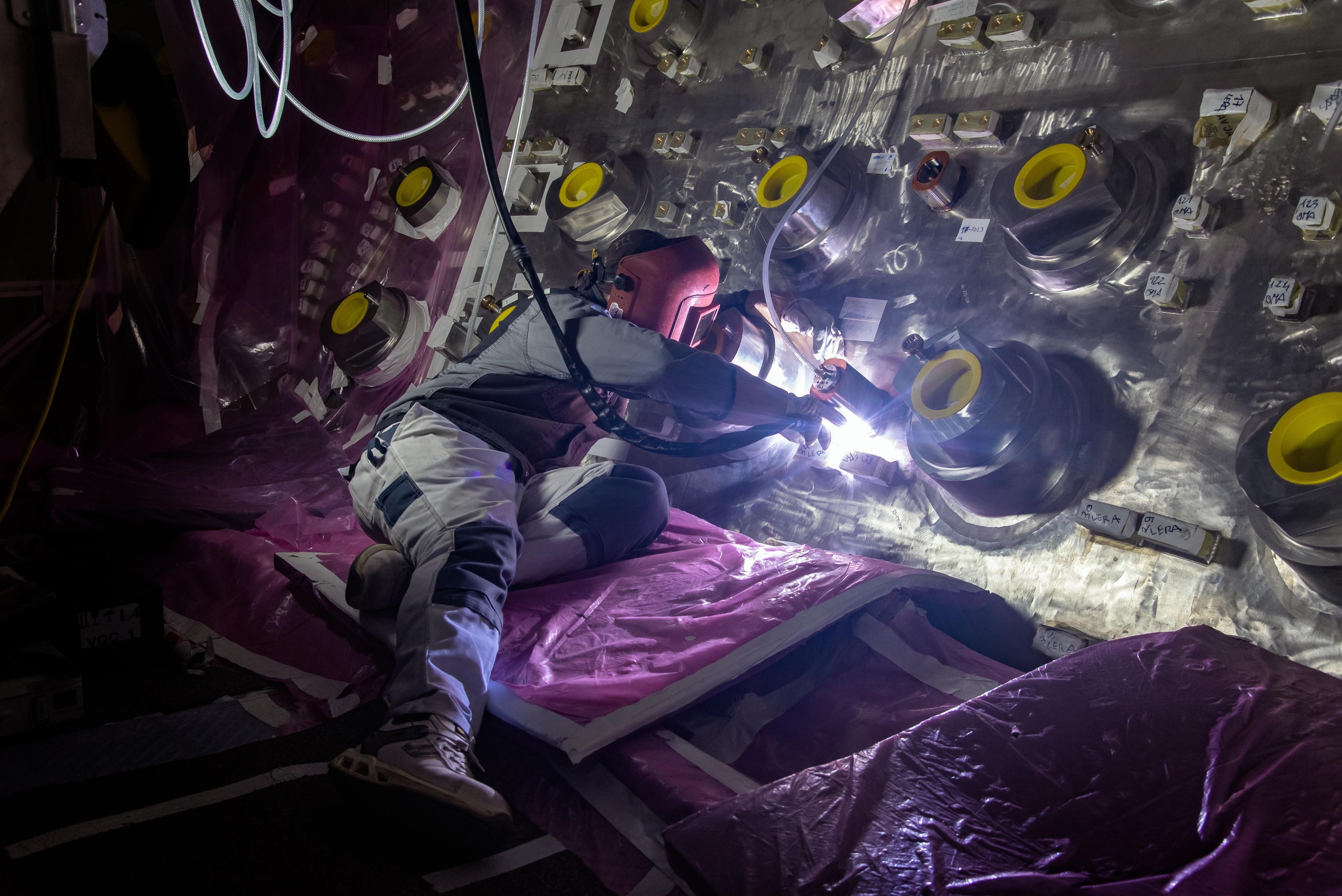
One by one, supports for magnetic sensors are welded to the vacuum vessel’s inner surface in February 2026. There are approximately 2,000 such supports per sector.

© ITER Organization
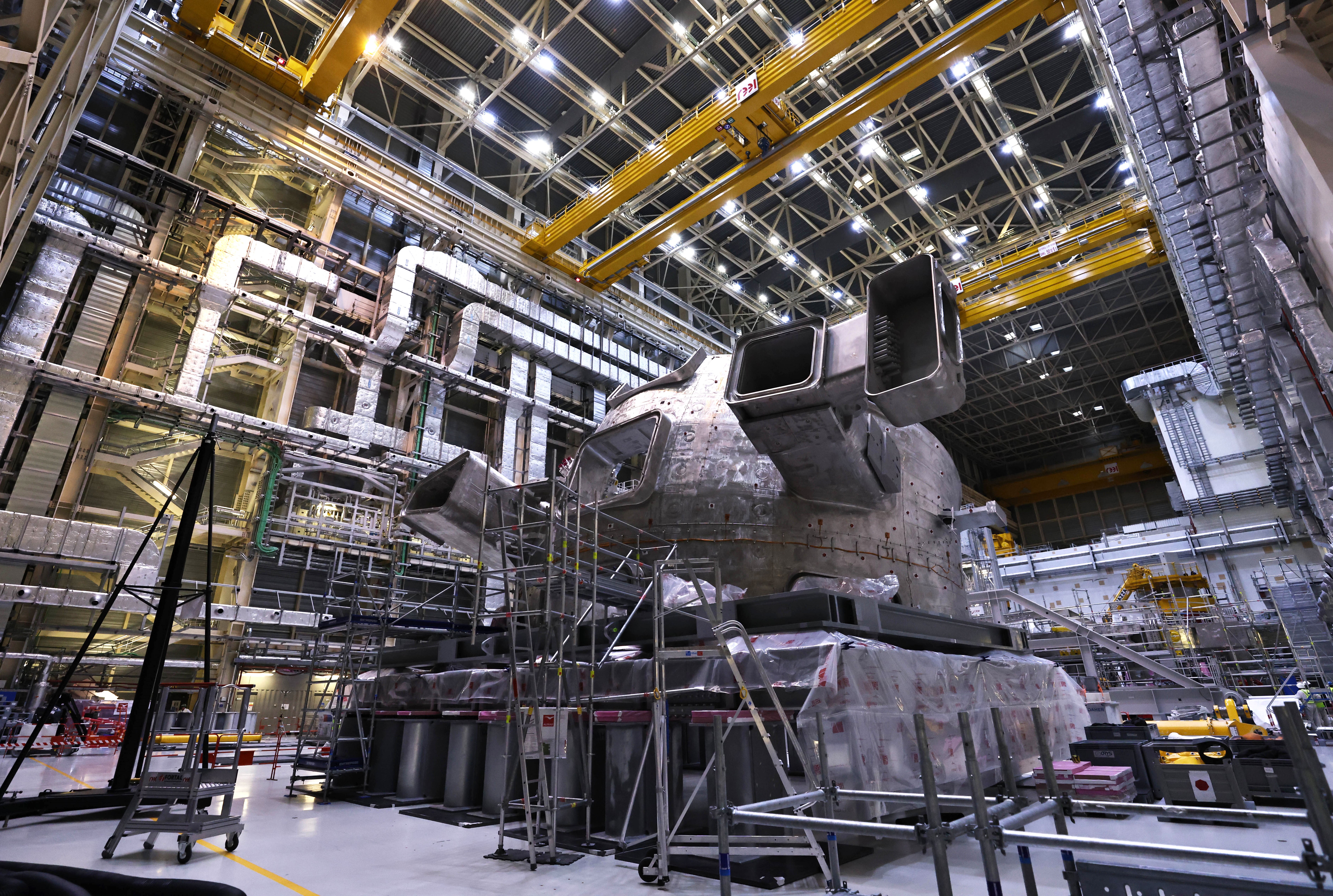
The fifth sector module nears the end of its 12-hour journey from the tooling area, and is lowered by a gantry crane into its final landing spot in the tokamak pit in May 2026.
Gao Jing / Xinhua / Getty
A vacuum-vessel sector sits on its side in a preassembly hall in Saint-Paul-lès-Durance on November 23, 2023.
© ITER Organization
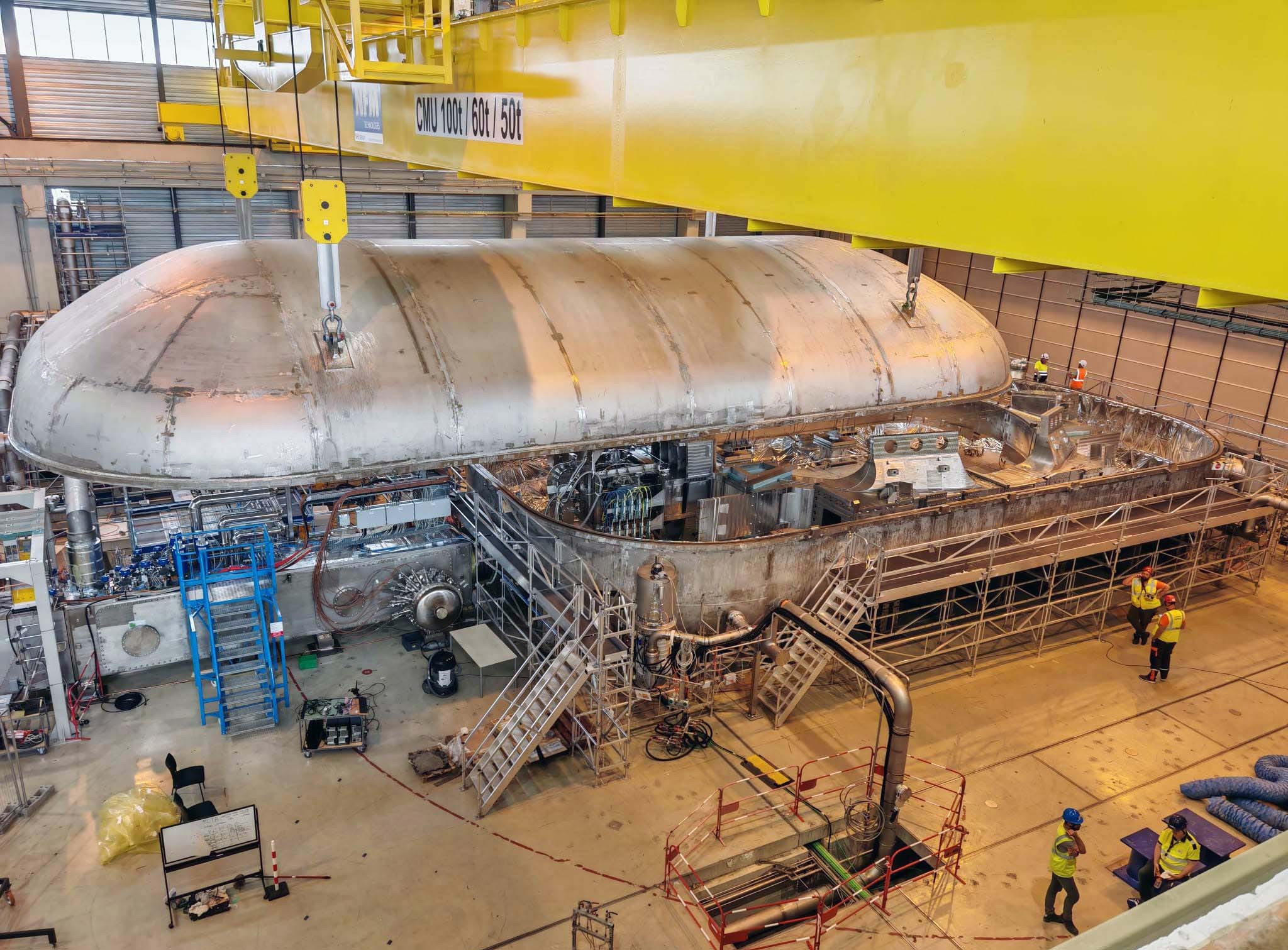
This insulated 11-by-22-meter lid is lifted by a gantry crane, on its way to close the cryostat of the ITER magnet cold-test facility in April 2026. The cold-test facility will allow massive magnets to be tested at temperatures of about 4 Kelvin (a few degrees above absolute zero) before they are installed in the tokamak.
© ITER Organization
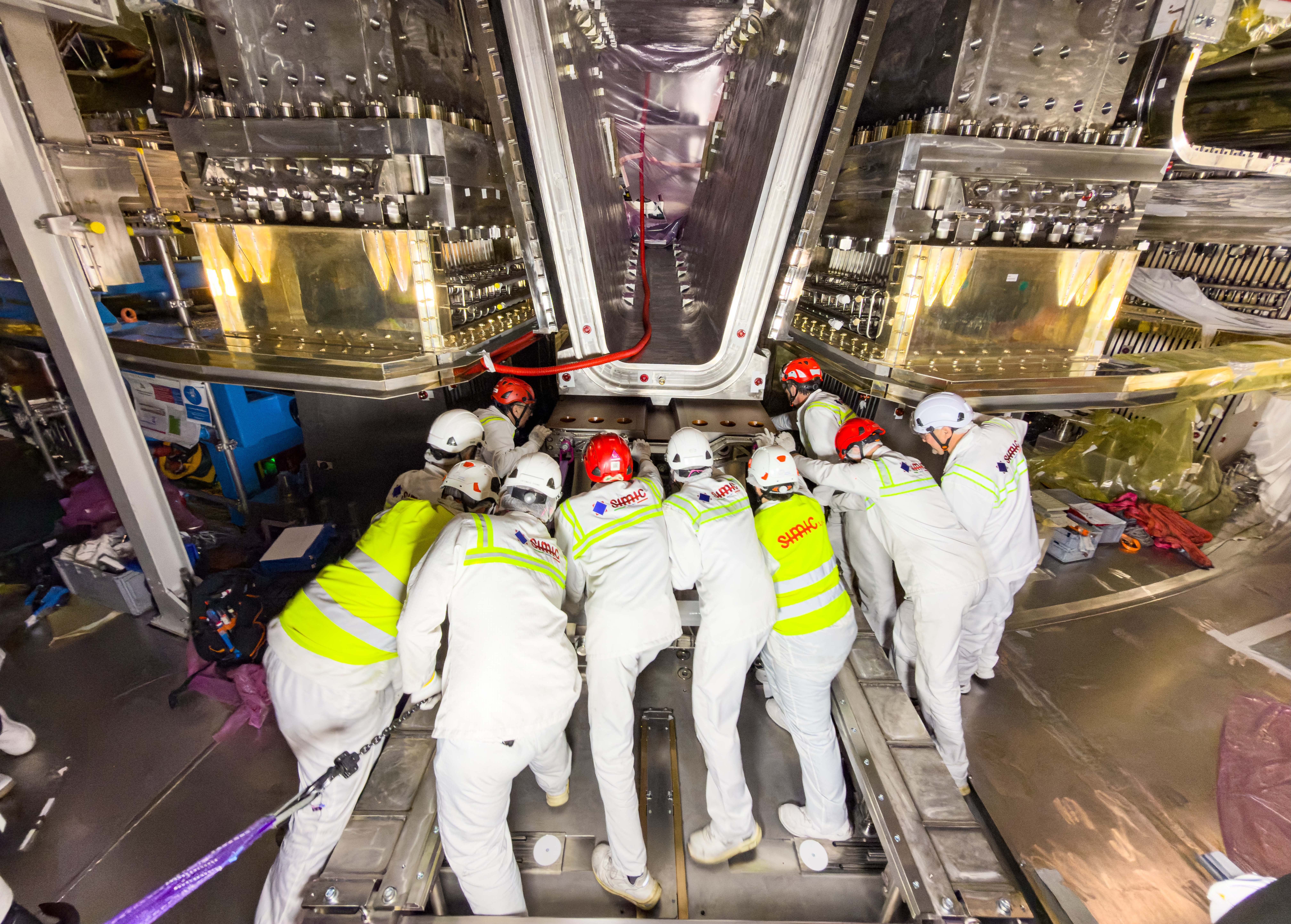
A team from Italy uses muscle power for the last stage of inserting a gravity support under a vacuum-vessel sector in the tokamak pit in March 2026.
© ITER Organization
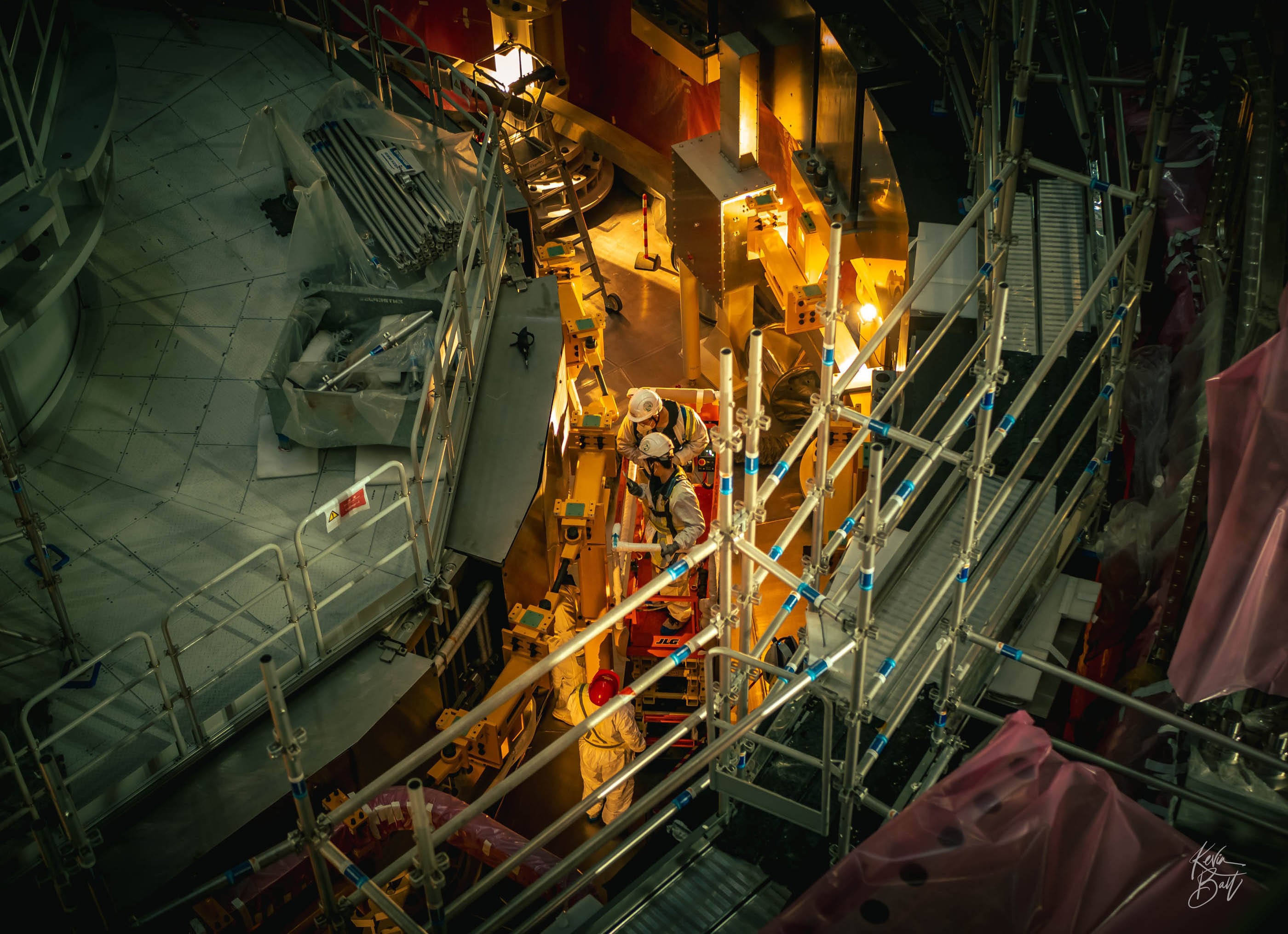
Workers stand on the cryostat base at the bottom of the tokamak assembly pit on December 17, 2025.
© ITER Organization
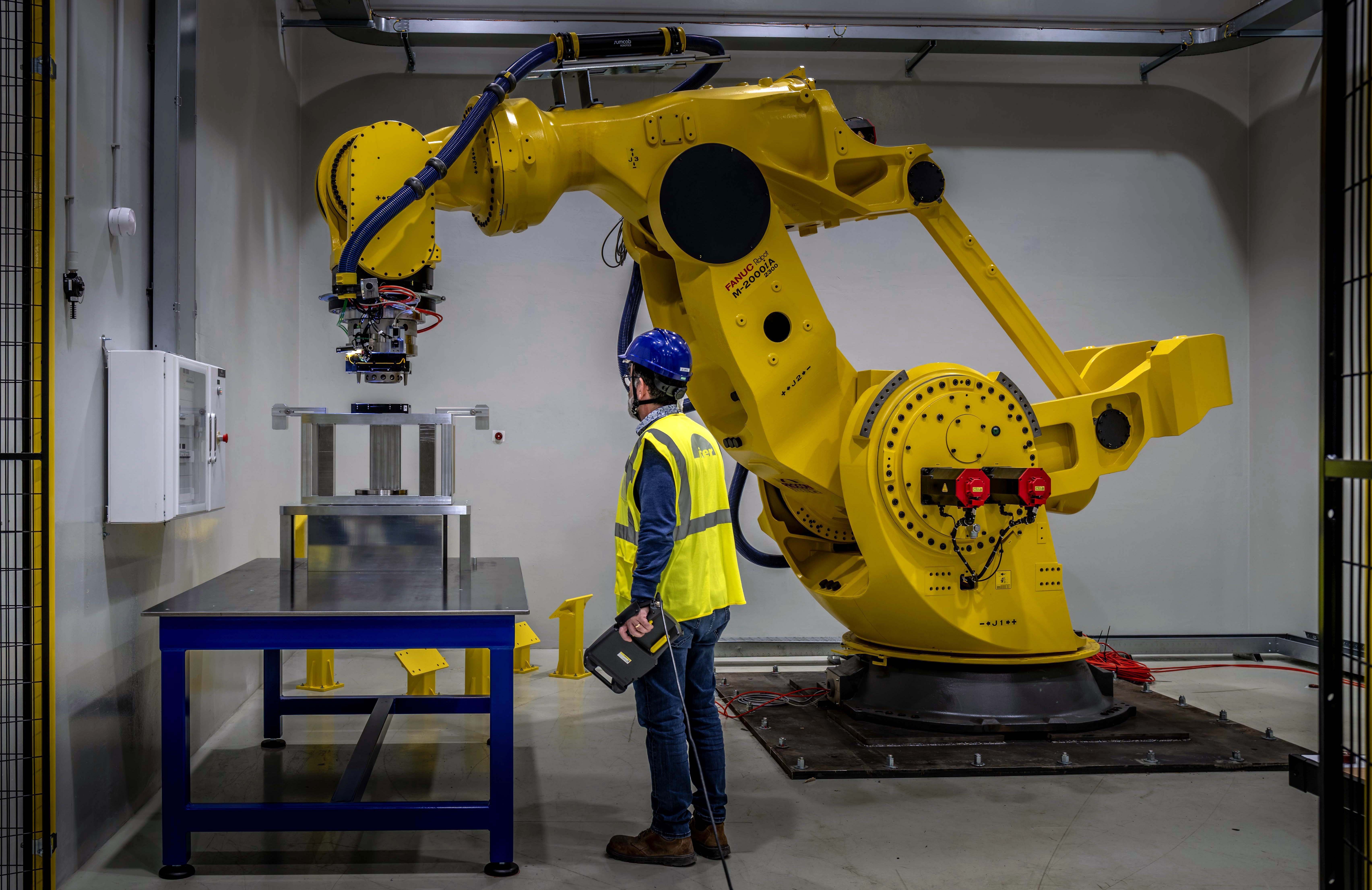
Standing 4 meters tall, with an arm that extends up to 5 meters, “Godzilla” is a platform for developing and testing the tools and technologies that will be used by robots to install components inside the completed vacuum vessel, photographed in March 2026.
CFoto / Future Publishing / Getty
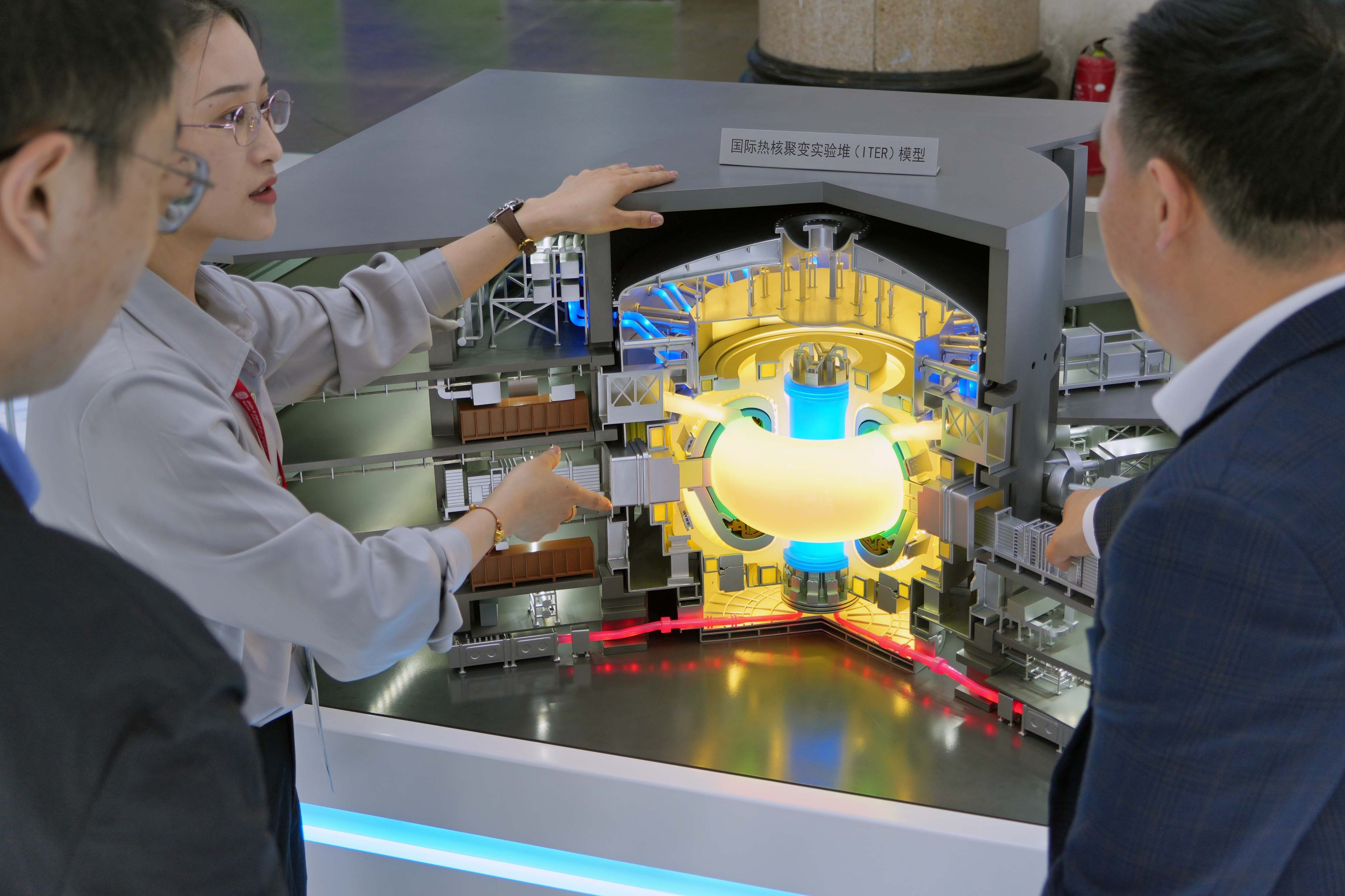
At the 2026 China International Nuclear Industry Exhibition in Beijing, visitors learn about the ITER reactor while looking at a scale model of the facility, on April 22, 2026.
© ITER Organization
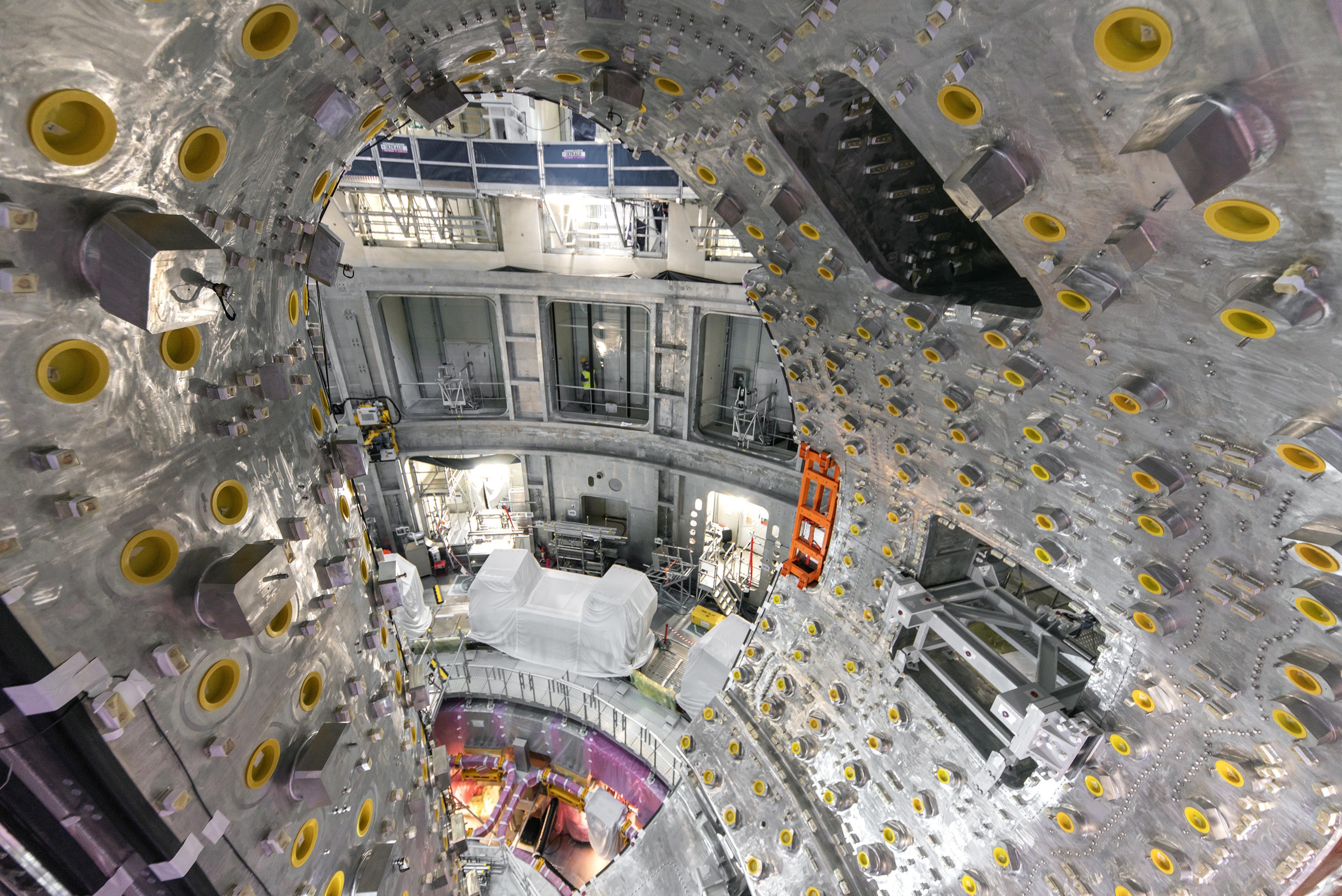
A dense forest of attachments, seen on the inside of the ITER vacuum vessel. Tiny “bosses” for diagnostics are seen here amid the much larger support pads (yellow) for the blanket shield blocks.
© ITER Organization / Kevin Ballant
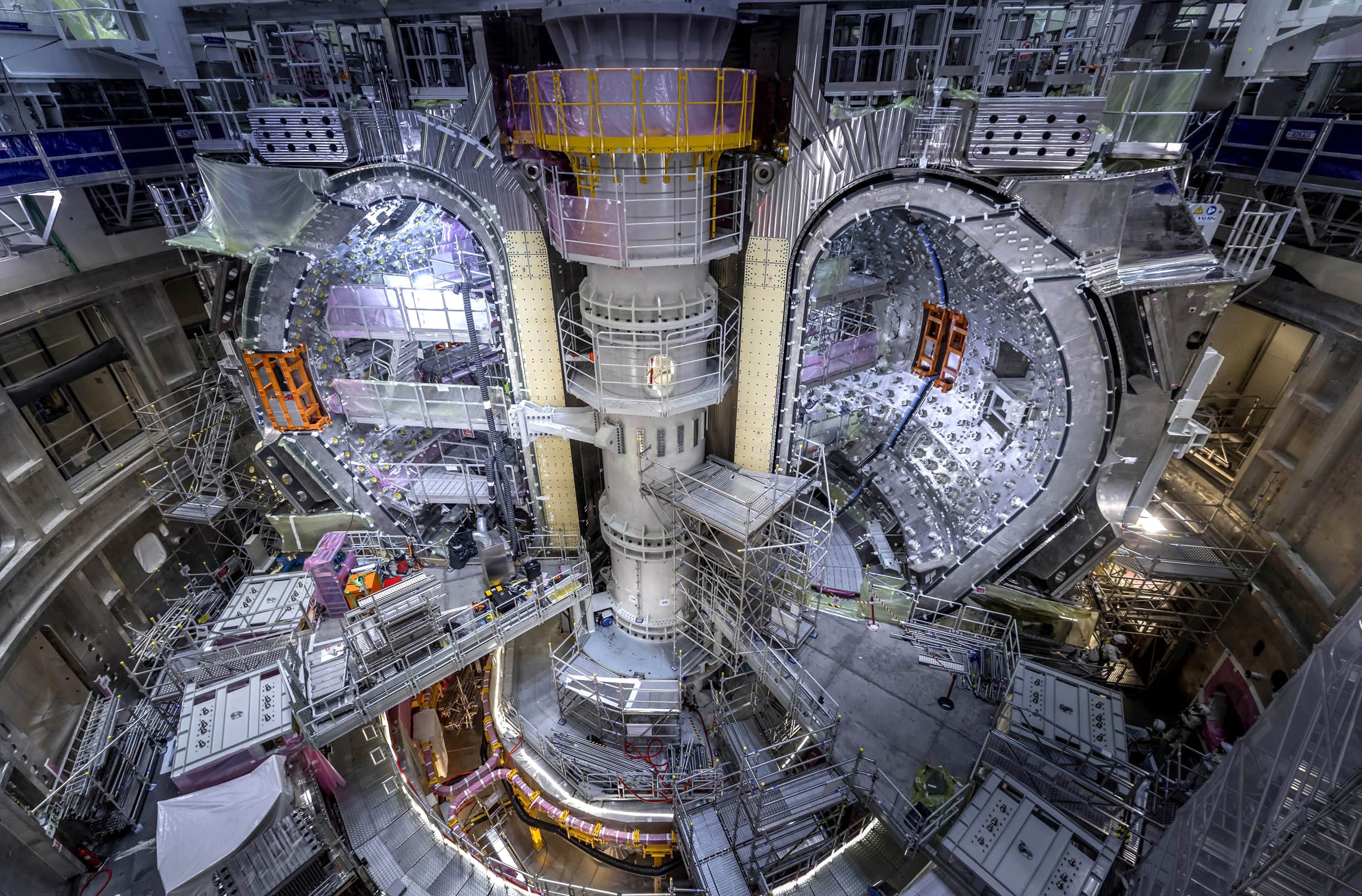
Five of the nine vacuum-vessel modules were in place in the tokamak assembly pit as of June 2026. Once all of the modules are in place, sensors and blanket shielding will be added. The plan is to create a donut-shaped chamber that will use the largest magnets in the world, alongside blanket shielding cooled to nearly absolute zero, to contain 840 cubic meters of plasma that will be 10 times hotter than the core of the sun. The ultimate goal is to create more energy output than input, and to use that to generate electricity in future projects.
© ITER Organization
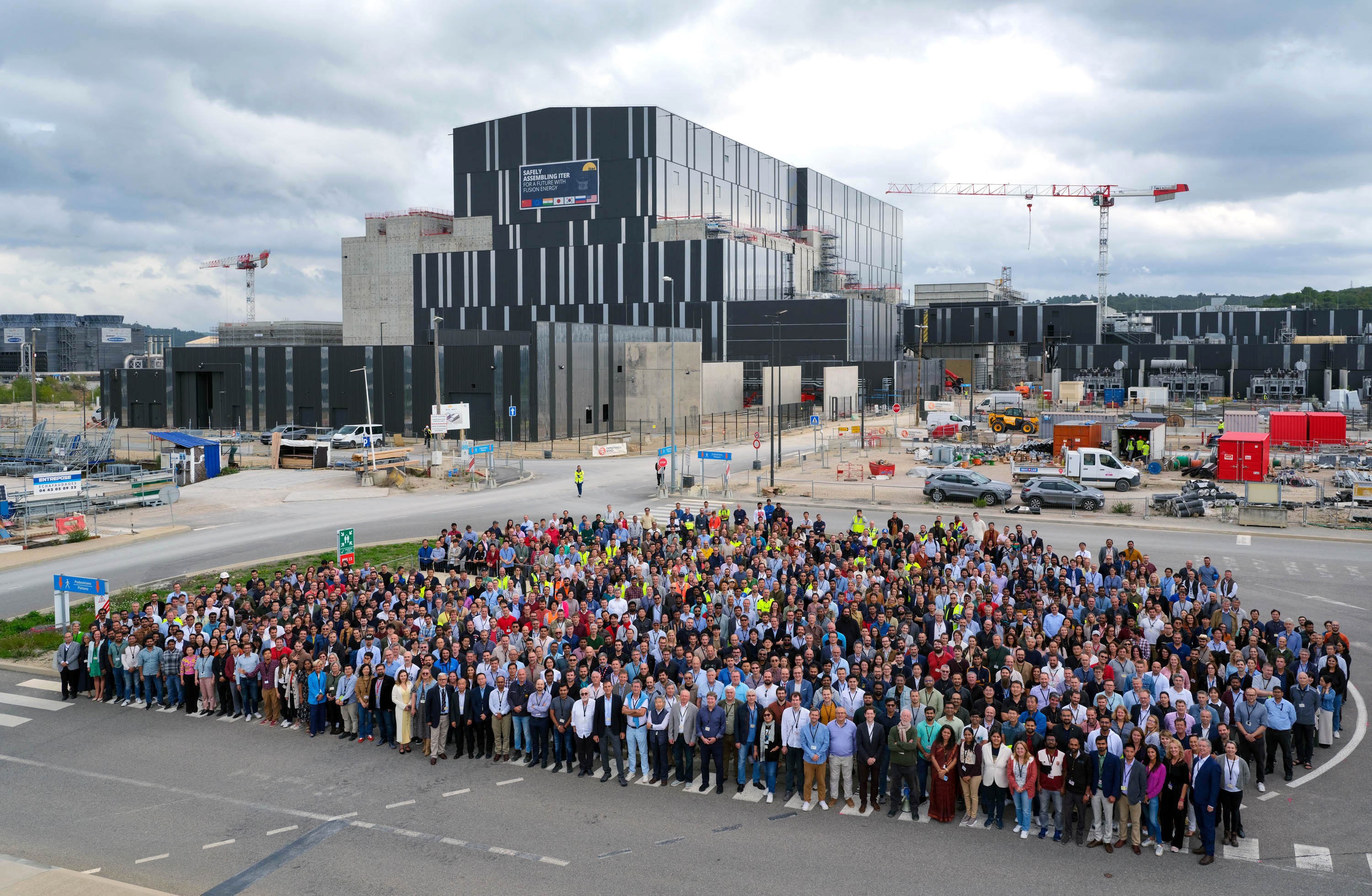
Hundreds of staff members, contractors, ITER-project associates, interim personnel, and staff from Fusion for Energy and the other members’ domestic agencies gathered on the ITER platform for a group photo in September 2024.