Photographs by Ysa Pérez
Walk past the elevator in the gold-gilded living room, past the mural of Spanish galleons seeking the Fountain of Youth, past the Mortal Kombat console, step outside, and there—just by the lazy river—you’ll find Vanilla Ice’s 9/11 memorial.
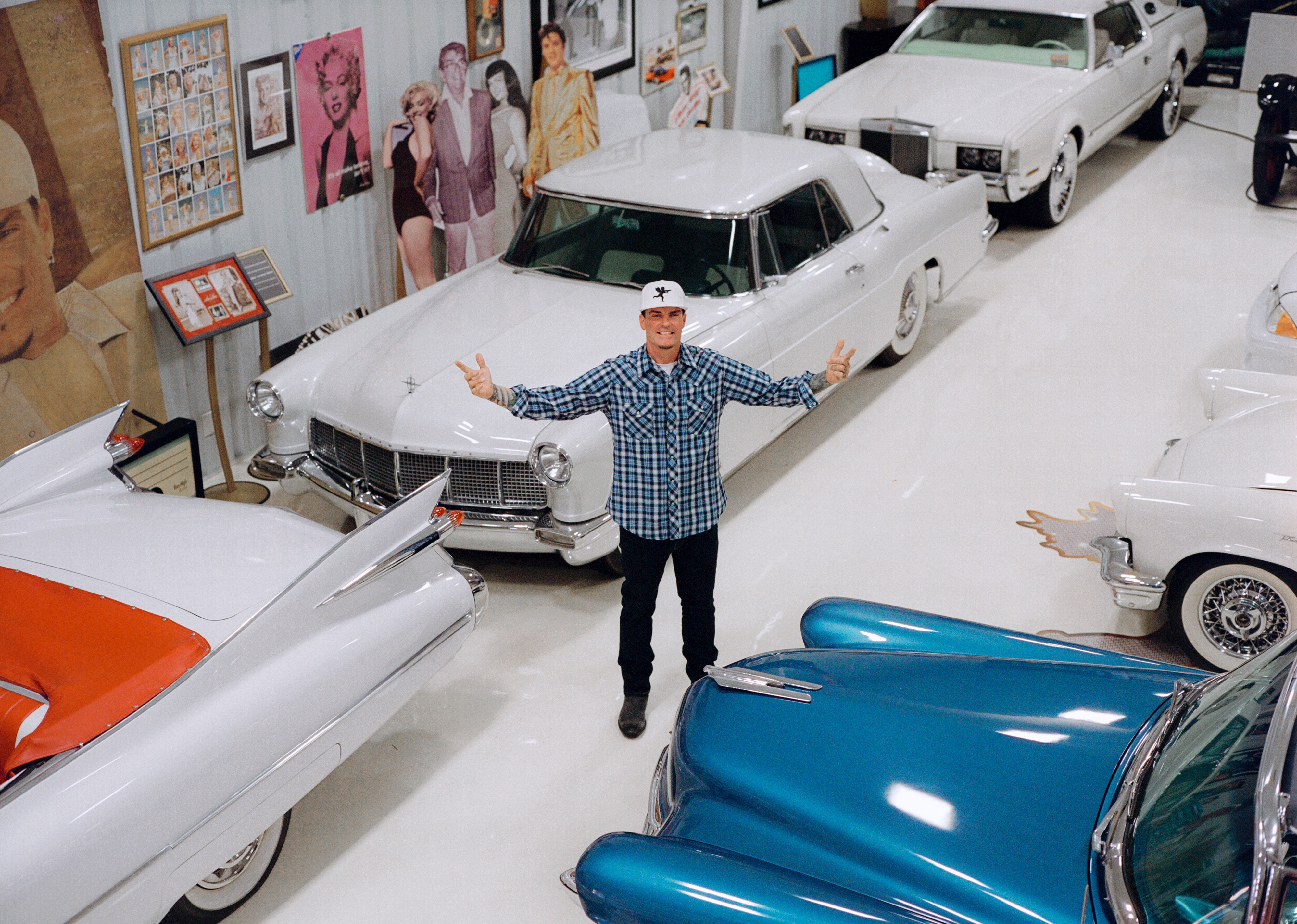
Last week, the 58-year-old rapper, born Robert Van Winkle, was giving me a tour of his mansion in Florida’s Palm Beach County. Pattering brightly and ceaselessly, he puzzled over his smart toilet (“I think it’s made for a woman to have fun and enjoy yourself on it, because it’s got buttons that I’m just thinking, This is curious”) and revealed his favorite Ninja Turtle (Raphael). We stopped at a shiny pole standing on the back patio. Before I could make any assumptions about what it was for, he explained that it had come from a fire station whose workers responded during the destruction of the World Trade Center. A wall plaque commemorated the 343 firefighters lost that day. “Never forget,” he said, before bringing me to his red-cushioned movie theater.
That Van Winkle is a patriot there can be no doubt. On Friday night, he’ll perform at the Great American State Fair in Washington, D.C.—an event that many other famous musicians dropped out of because of its association with Donald Trump. Given that Van Winkle’s fame peaked with 1990’s “Ice Ice Baby,” his status as the musical centerpiece of our semiquincentennial may seem quite random. But really, the booking makes a lot of sense. At a time when national infighting has dispelled all hopes of unified partying, Van Winkle preaches an uncomplicated view of what makes the country great, beamed in from a seemingly more carefree time.
Certainly, he’s lived the American dream, in all of its neon splendor. Van Winkle grew up in Dallas and Miami as a “dumpster diver,” he told me, who resold sneakers he’d rescued from the trash. As a teenager, he became enamored with the fad of breakdancing, which led him to rapping in small clubs, where he impressed hip-hop’s vanguard, including Chuck D of Public Enemy. On “Ice Ice Baby,” Van Winkle combined a tough flow with a twiddly bass line (borrowed from Queen and David Bowie) for a compulsively replayable tale of cruising in a Mustang 5.0. It became the first rap song to hit No. 1 on the Billboard Hot 100, and today has more than half a billion Spotify streams. (He has released many updated versions of the song over the years, and another one will be on his forthcoming EP, Now & Forever.)
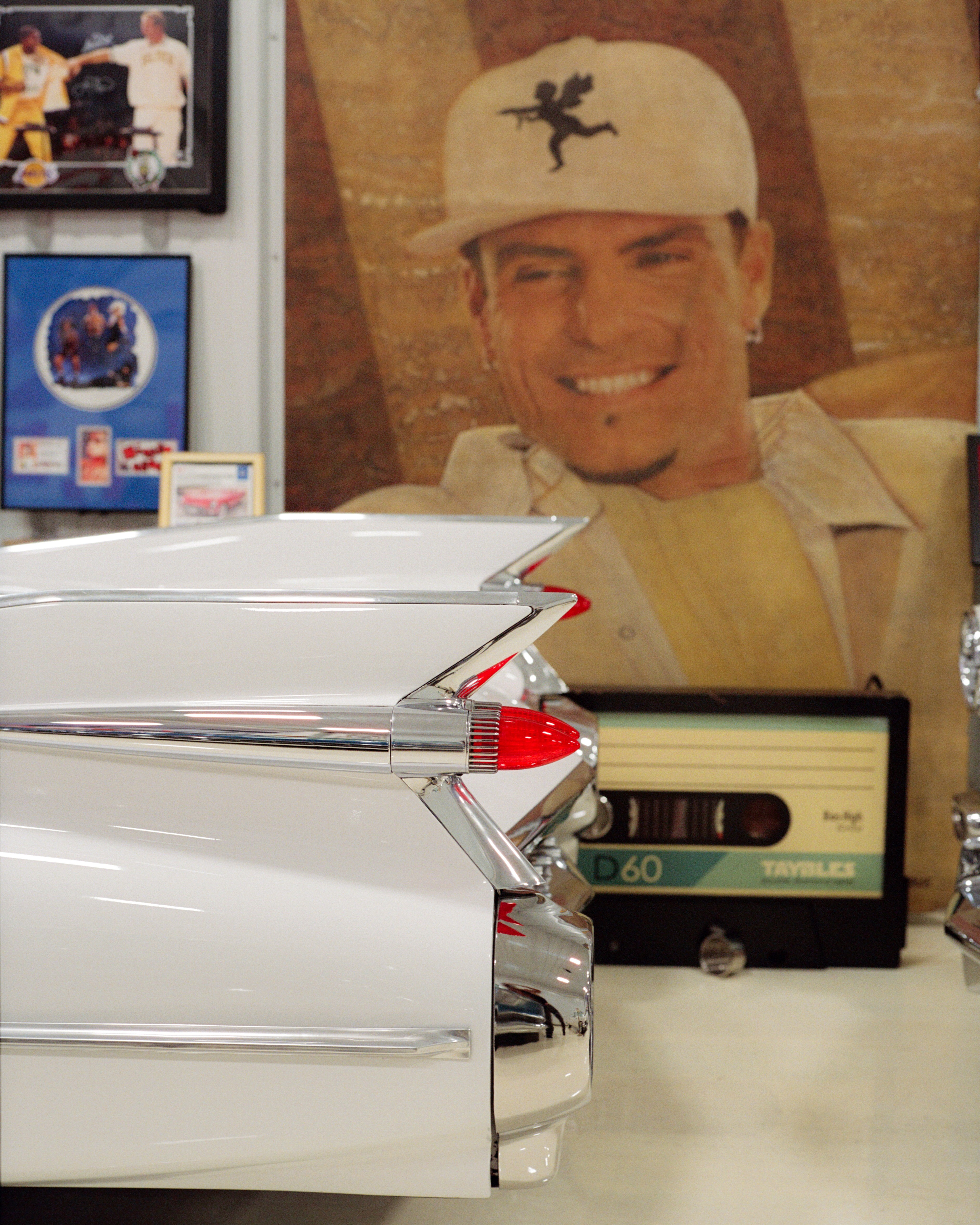
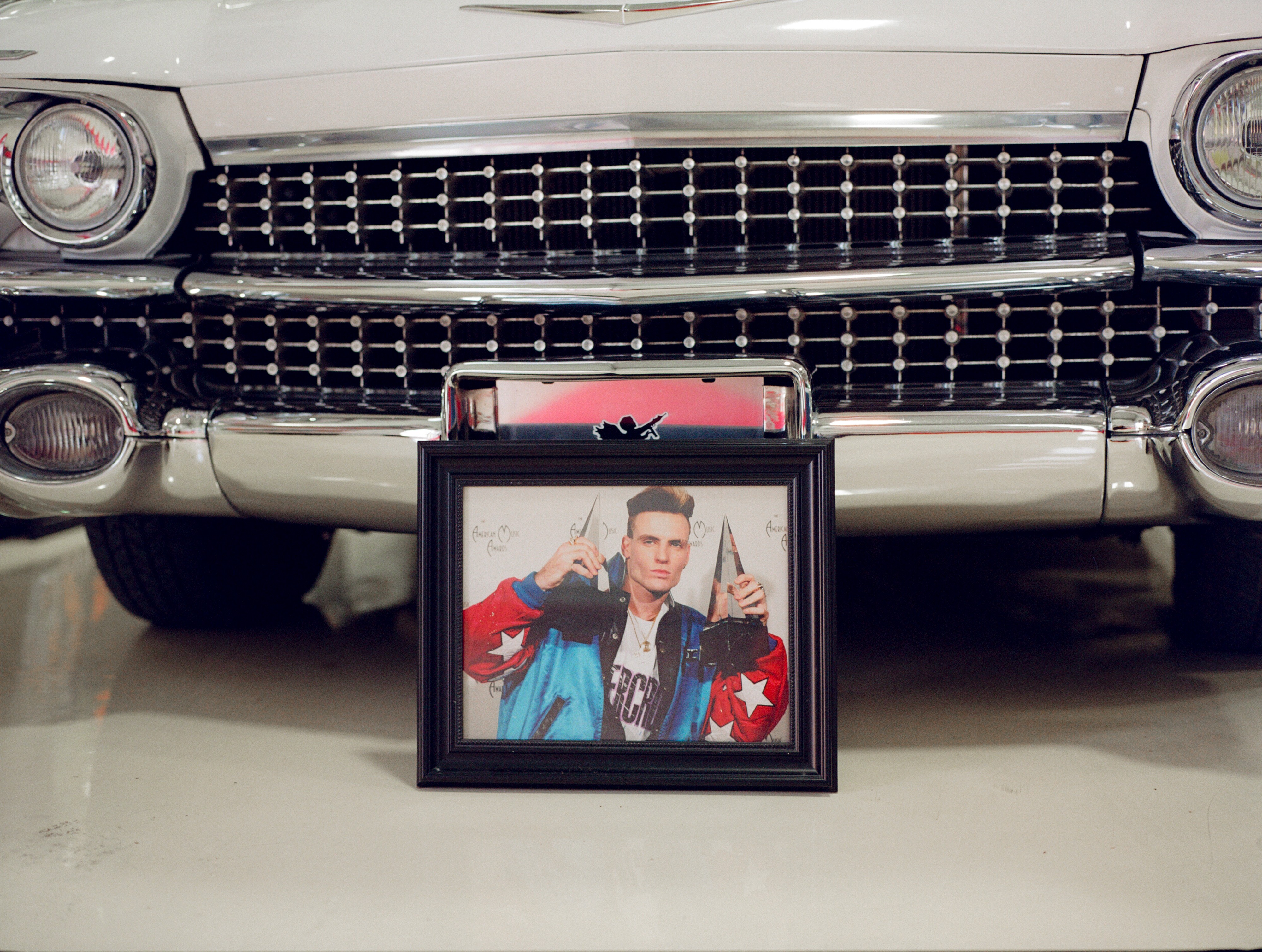
With his G.I. Joe jaw and spunky dance moves, he was quickly anointed America’s new golden boy. He wore stars-and-stripes suits, dated Madonna (until, as he’s told it, he was horrified to find himself in her racy photo book, Sex), and performed in the 1991 hit kids’ film Teenage Mutant Ninja Turtles II: The Secret of the Ooze. But backlash accumulated nearly as soon as his fame did. Critics accused him of hijacking a Black art form, comedians mocked his catchphrases (Kevin Bacon ended every sentence on Saturday Night Live with “Word to your mother”), and the grunge revolution rendered any public hint of hairspray—and Van Winkle used a lot—as way corny. His 1990 debut album, To the Extreme, spent 16 weeks at the top of the album charts; its 1994 follow-up, the reggae-heavy Mind Blowin’, didn’t touch the top 200.
A drug-fueled downfall ensued, culminating in a nearly lethal dose of heroin and other substances after a day of jet skiing on July 4, 1994. He told journalists that he’d felt like a “sellout” who’d been marketed as a pretty-faced simpleton, when really he was a survivor from the streets. “I’ve faced a lot of adversity,” he told me. “Probably more than any person to ever play a record or become a musician.” Still, today, he seems utterly without grudges. I asked him how he felt about the fact that Cool as Ice, the surprisingly lovely 1991 rom-com he starred in, flopped at the box office, leaving theaters after less than three weeks. “There’s no flop at all, bro,” he said. “What are you talking about?” The movie has a little bit of a cult following these days; he feels that it’s proved itself a timeless classic.
[Read: The happiest man in music]
Van Winkle found a second act thanks to a pastime even more American than hip-hop: real estate. Back in 1992, he had his mansion on Miami’s Star Island—a rich enclave with only about 30 homes—appointed just to his liking, with live fish swimming in each step of the grand staircase. Then Hurricane Andrew blew through and flooded the place. Instead of paying to have the work redone, he undertook repairs himself. “I was like, Holy moly, this is fun,” he said.
So began a decades-long career in construction and home flipping. After the 2008 financial crisis, he developed a hobby of going online to bid on distressed U.S. assets held by speculators in India. Many acquisitions he’s never visited or fixed up: Letting houses “marinate”—depreciate—for tax purposes is smart business, he said. His home-renovation reality show, The Vanilla Ice Project, launched in 2010 and ran for nine seasons on the DIY Network. (He said that more seasons are on the way.) In it, he shows off the same detail-oriented brain and goofy charisma that made him briefly successful in rap. During one episode, he eyes a murky pool and says, “This is how we all got here on this planet, by the way. These are single-cell organisms right here—perfect example.”
Today, he has more properties than he can recall, including, he said, seven in his Palm Beach County neighborhood. Next to the old-world-opulent manor he lives in stands a modernist home he referred to as “Priscilla’s House,” in honor of both Elvis Presley’s wife and the youngest of Van Winkle’s three daughters. Midway through our interview, Van Winkle’s second wife, Kirra Van Winkle, came by with Priscilla. (His first marriage, to Laura Giaritta, lasted from 1997 to 2019.) The 7-year-old girl beamed as he told me a story of her recently busting a move onstage with Billy Joel’s kids.
It was through real estate that Van Winkle fell into the orbit of the Trumps. He told me that his crew is regularly hired to work on rich people’s homes in the Palm Beach area, and a few years back, the client was Donald Trump’s oldest son (to do his “countertops, the cabinets, fireplace, and the dock,” Van Winkle said). Don Jr. is a big Vanilla Ice fan, Van Winkle said, and the two hit it off. (Don Jr. did not reply to a request for comment.) Since then, Van Winkle has played multiple New Year’s Eves at Mar-a-Lago. The president, he said, is “the GOAT of parties. This guy throws the greatest parties you would ever go to, like, literally.”
So when his talent agent received an invitation to play the 250th celebration in D.C., saying yes was a no-brainer. He began scheming about a souped-up version of the show he regularly puts on for the ongoing I Love the ’90s Tour that he’s been a part of: 15-foot Autobots from the Transformers franchise, all four Ninja Turtles onstage (he usually tours with just one), plus lots of pyrotechnics. He wanted to go all out to celebrate America, which he called “the only place that you can really achieve your dreams.”
But the context behind the gig wasn’t so simple. In 2016, Congress created a bipartisan commission, called America250, to plan this year’s big birthday. Last December, President Trump announced a public-private partnership, Freedom 250, that pulled funds away from the congressional effort while partnering with right-wing groups such as Moms for America. The Great American State Fair, a weekslong festival on the National Mall, is a Freedom 250 production—and thus, in some eyes, Trump propaganda. (America250 is holding a less publicized, higher-wattage Fourth of July concert in Los Angeles featuring Chris Stapleton and the Smashing Pumpkins.)
Almost as soon as they’d been announced, most of the performers who’d been booked for the fair—including Bret Michaels of Poison, the rapper Young MC, and one Milli Vanilli member—dropped out. The country singer Martina McBride said in a statement, “I was presented with an opportunity to perform at a nonpartisan event but that turned out to be misleading.” The funk group the Commodores posted, “Our music has always been our voice and we choose not to publicly affiliate with any single political party.” Left standing were three rappers: Van Winkle, Flo Rida, and Freedom Williams from C+C Music Factory, who, in a seven-minute video filmed from his toilet, equally excoriated Trump and anyone who wanted him to cancel the gig.
[Read: Trump’s golden age of culture seems pretty sad so far]
The hullabaloo mystified Van Winkle. He gave interviews to media outlets, expressing his view that entertainers should just entertain. Speaking with TMZ, he said he’d happily play for Vladimir Putin or in Iran. When I asked him whether he was serious about that comment, he doubled down and began talking about the unsavory associations he’s had in his past. He repeated his highly publicized claim that he’d once been friends with Pablo Escobar. He told me he’d performed for the Taiwanese mafia. He believes he’s even played for the Taliban, though he didn’t realize who they were at the time (“They’re dancing around, man. All the women have the ‘ninja suits,’ I call them, on”). Across boundaries, across allegiances, everywhere, he’s found fans of “Ice Ice Baby,” and he’s not one to turn down his fans.
Trump has a stable of musicians who openly support his policies: Kid Rock, Nicki Minaj, Lee Greenwood (who’s performing tonight at the rally to replace what Trump called the “highly paid, Third Rate ‘Artists’” who dropped out of the Great American State Fair). But Van Winkle isn’t in that camp. He once took a time-management course in Hawaii during which attendees were asked to tally up the hours they spent voting or watching the news. For many, the total was years. Some attendees, he recalled, regretted that they hadn’t spent that time drinking piña coladas. The course confirmed his belief that voting, or following politics at all, is a distraction from really living life—and making money.
Still, politics keeps finding him. Earlier this year, “Ice Ice Baby” hit No. 2 on Billboard’s Rap Digital Song Sales chart while ICE raids swept the country. Some social-media users had repurposed the song to protest ICE; others were using it to cheer deportations. One TikTok video set the song to an animation of U.S. Representative Ilhan Omar running away from immigration agents. Van Winkle took the viral burst as simply another sign of his song’s amazing durability. “You can use it for hate,” he said. “You can use it for whatever you want to use it for.”
Given his work in an industry, construction, that’s faced labor shortages because of ICE’s activities, I thought he might have some sort of viewpoint on the immigration debate. He told me that he’s “become a master of changing topics” when such tricky subjects come up: “When it’s politics or religion, I go, Man, dude, did you hear about the new motocross bike coming out tomorrow?” I’d already noticed this superpower of his whenever I tried to ask for detail about, say, his supposed time with the Taliban. “My opinion means nothing,” he said. “I’m an entertainer. Why would you ever base anything off of my opinion?”
Apolitical celebrities used to be the norm—especially back in what Van Winkle called “the last of the great decades, the ’90s.” He said again and again that the end of the 20th century was a golden time before computers “ruined the world” and made everyone start to take life too seriously. As manipulative online media started turning people against one another, he thinks, pop culture became fractured to the point of destruction, leaving us with only dreary subjects such as politics to argue over.
I couldn’t follow all of his logic. After all, the ’90s had plenty of divisive, overheated controversies, whether related to Bill Clinton’s impeachment or to, well, the question of whether Vanilla Ice was ruining hip-hop by turning a revolutionary sound into meaningless fluff. Although he’s not explicitly MAGA, he does share that movement’s tendency to pine for times before everything went wrong, wherever one might locate the turning point. In his mind, national greatness lay in a highly specific, obviously personal version of the past: “I am complete American through and through all my bones, to every TV show, to Blockbuster videos, to ripping our back seats out and putting in subwoofers, to having Z. Cavaricci pants, to even having a bolo—you remember what a bolo was?”
Yet as I listened to him bliss out about the ’90s, I began to see his point. Politics really has supplanted pop culture as the national obsession, to a depressing degree. The internet is partly responsible, but so are efforts by Trump to exploit occasions like the national birthday. In any circumstances, the 250th Independence Day should be an excuse for a historic bash bringing together the country’s top talents. Maybe stop, collaborate, and listen—the immortal line from “Ice Ice Baby”—really is the message America needs right now. Or maybe the real wake-up call is the fact that Vanilla Ice is the best guy that could be booked.
Then again, the real tragedy of America’s post-’90s existence, Van Winkle told me, is that there will never be a great unifying voice again—someone like Elvis, or Vanilla Ice. “You need some icons out there for people to kind of wake up and have a purpose, a meaning, some drive, some ambition,” he said. Sitting on a rococo couch next to a gold-painted cheetah statue made by Versace, he rued the fallen state of the world once again. “Everything is artificial,” he said, adding, “I don’t live an artificial life.”