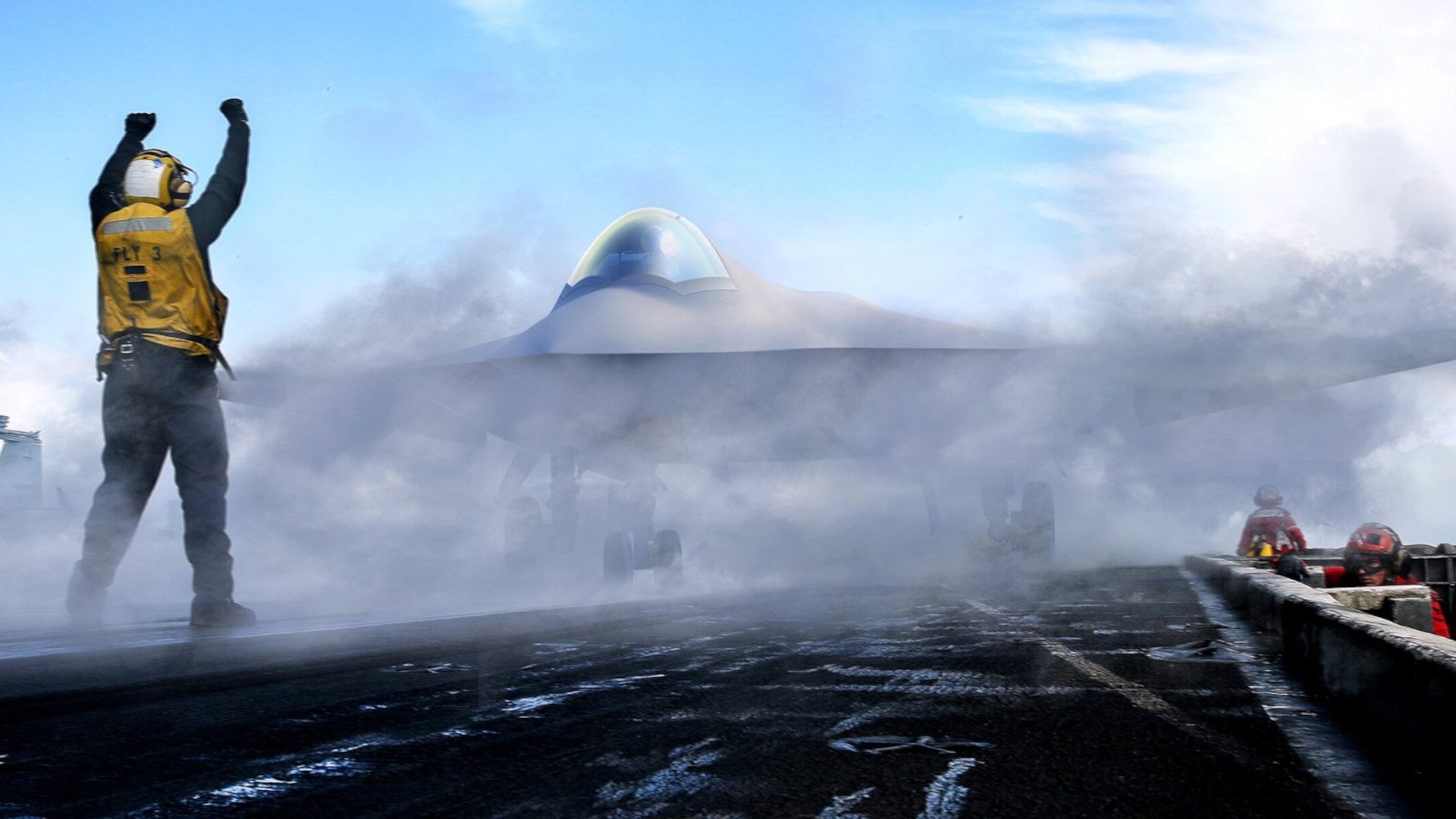
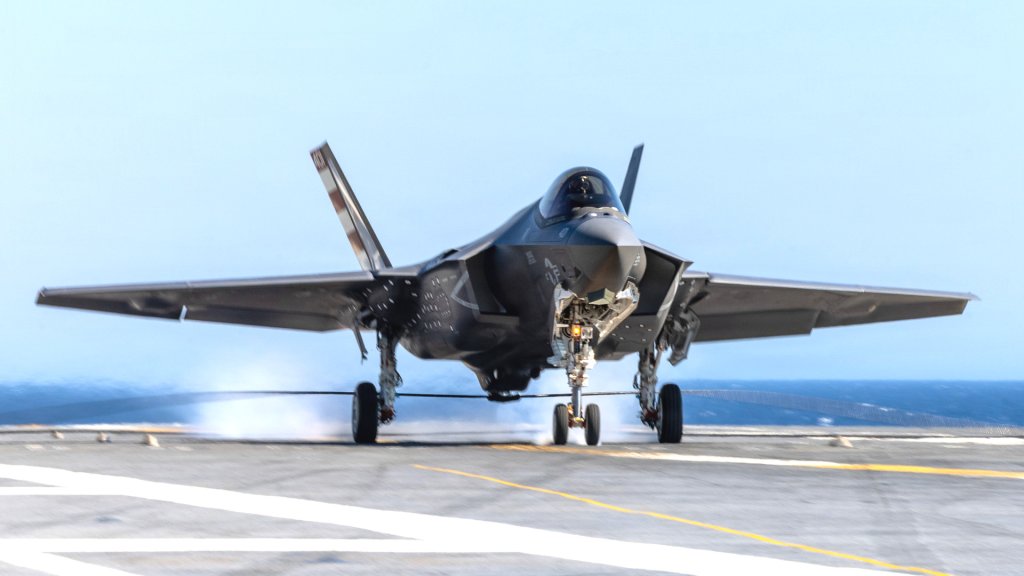
One of the key roles envisioned for the U.S. Navy’s next-generation F/A-XX carrier-based fighter is serving as an airborne controller for advanced unmanned aircraft. However, the senior official currently performing the duties of Under Secretary of the Navy says the service does not need to wait for F/A-XX to begin adding Collaborative Combat Aircraft (CCA) type drones to its carrier air wings. The service could pair CCAs first with its F-35C Joint Strike Fighters.
William Toti was asked about the Navy’s CCA plans and their relationship to F/A-XX at a hearing before the Senate Armed Services Committee yesterday. Senators are currently considering Toti’s nomination to formally assume the role of Under Secretary of the Navy.
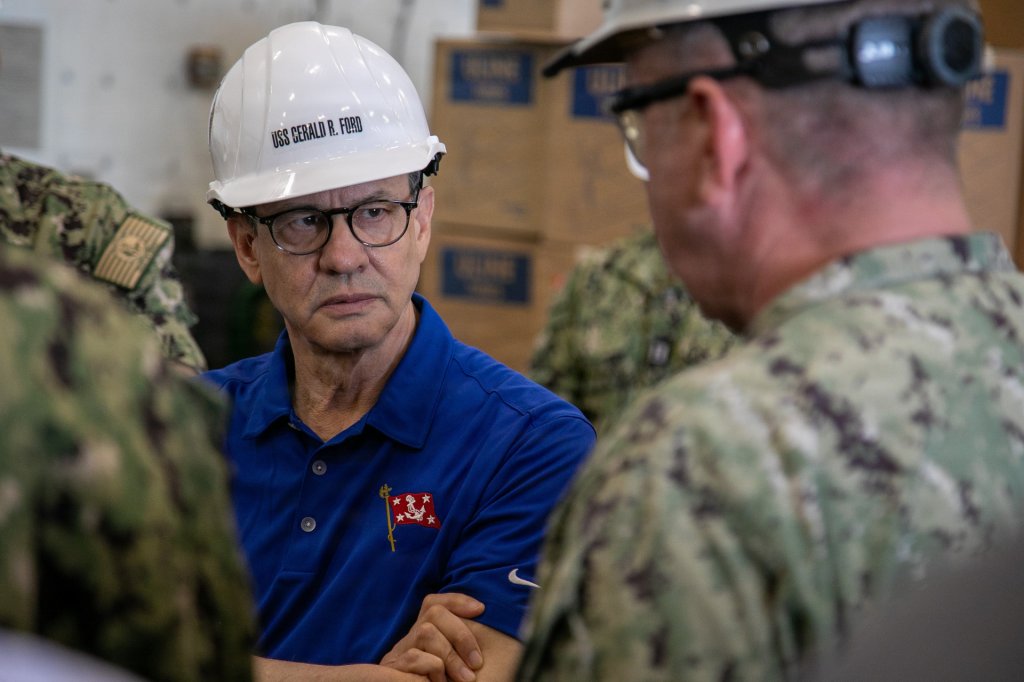
“CCA aircraft are an element of the future air fleet, the future combat capability of our aircraft carriers. We have been, for better – to put it in a better way, the Air Force has been leading this issue,” Toti said in response to a question from Senator Ted Budd, a North Carolina Republican. “We are following closely behind, but the integration of CCA aircraft in the Air Wing is critically important as we go forward.”
“We need low-cost, attritable assets in our Air Wing, and CCA will provide that. So we have programs in place to begin developing that capability. They’re still nascent,” he continued. “But I see that, with the realignment of the unmanned capability [portfolios] to the [Navy] Under Secretary’s office, which I executed while I was performing the duties of the Under Secretary, I think we’ll get adequate visibility into these issues as we go forward.”
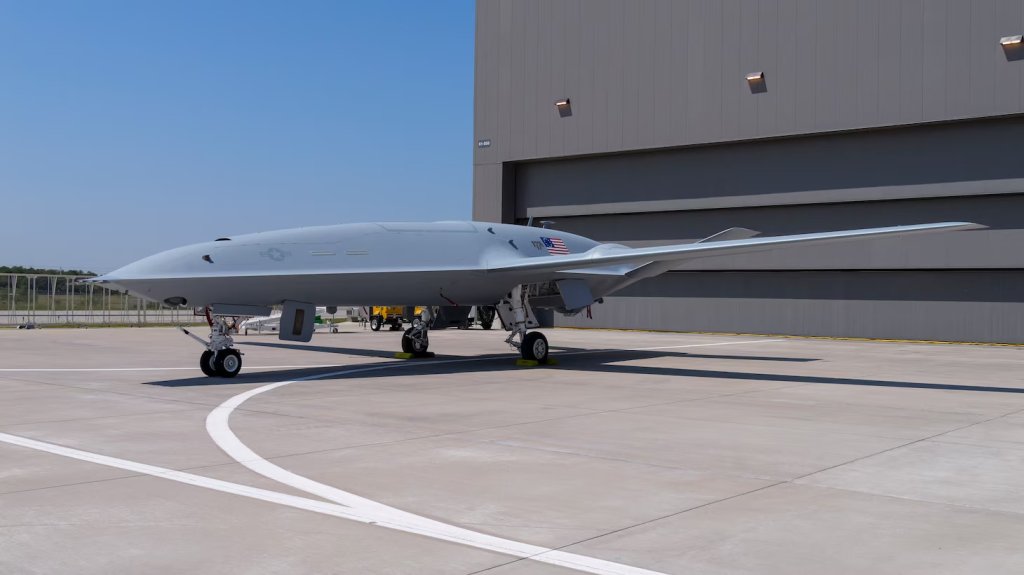
To provide some quick context, in September 2025, the Navy announced it had hired Anduril, Boeing, General Atomics, and Northrop Grumman to develop conceptual designs for future carrier-based CCAs. Lockheed Martin has also been working to develop the underlying control architectures. The Navy’s first fixed-wing carrier-based drone is currently set to be the MQ-25 Stingray, an uncrewed aerial refueling platform.
Just this past September, Boeing also beat out Northrop Grumman to win the F/A-XX competition. Boeing is the prime contractor behind the Air Force’s new F-47 sixth-generation fighter, as well. The Pentagon had previously moved to put F/A-XX on hold indefinitely over concerns about competition for resources with F-47, but Congress subsequently intervened to keep the Navy’s program going.
“Do you think CCA needs to wait on F/A-XX, or do you think that’s something that we can use with current aircraft?” Senator Budd asked Toti yesterday in a follow-up question.
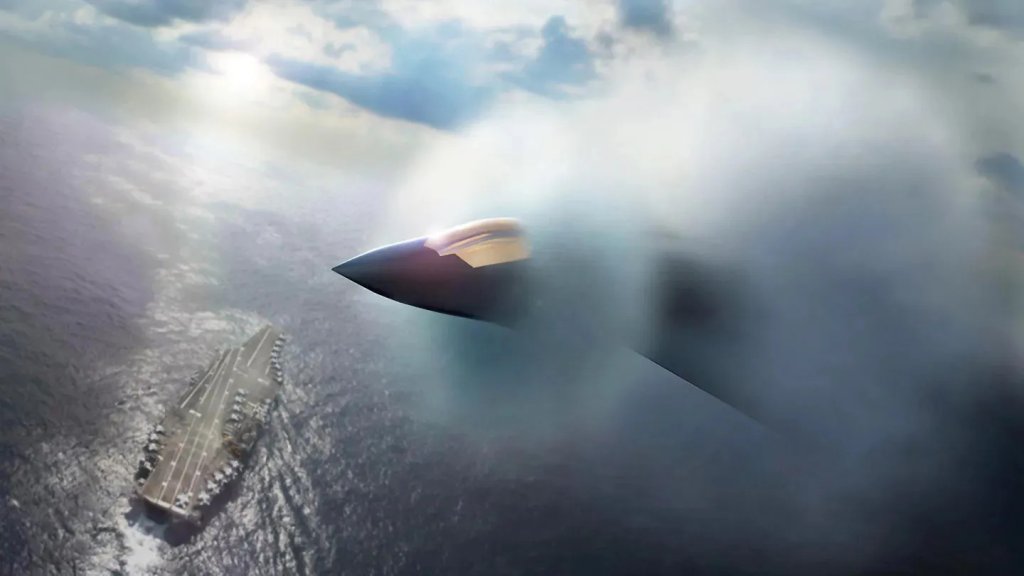
“No, Senator, I think that they’re independent. I think we could probably start integrating systems before F/A-XX delivers,” Toti responded. “Having said that, F/A-XX is a critical capability. We’re going to have these aircraft carriers around for the next 50 years, and the notion that the F-35 is the last airplane that’s going to be launched from them is just a non-starter. “
“We need F/A-XX, and CCA will certainly be probably built into it from [the] ground up, but I think it’s a capability we’ll be able to use with the F-35, specifically, as well,” he added.
“Fifth-generation aircraft, upgraded legacy platforms, and future sixth-generation capabilities each provide distinct operational advantages, while unmanned aircraft offer opportunities to extend operational reach, increase capacity, and complement manned aviation,” Toti also wrote in his prepared responses to policy questions provided in advance of the hearing. “The appropriate mix must preserve near-term readiness while delivering the capabilities necessary to maintain future air dominance.”
It should be noted here that the Air Force currently expects its F-22 Raptors to be its first aerial ‘quarterbacks’ for its forthcoming CCAs. Other platforms, including the F-35 and the F-47, are expected to follow. The Marine Corps is separately planning to pair its first CCAs with F-35s. Lockheed Martin, the prime contractor for the F-22 and the F-35, has been working to lay the groundwork for both platforms to serve in the airborne drone controller role.
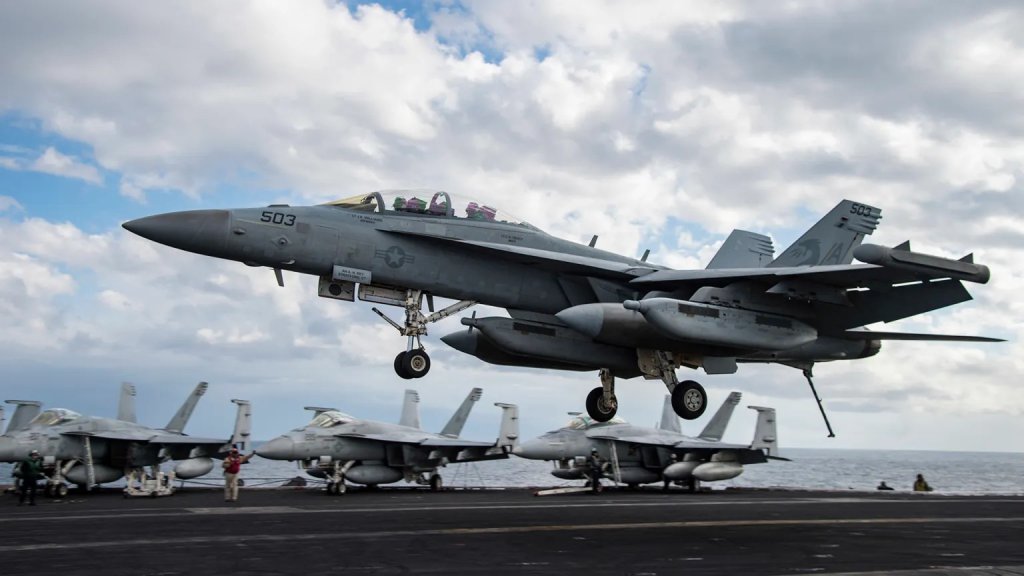
Though Toti did not explicitly mention it, Navy CCAs could be teamed up with F/A-18E/F Super Hornet fighters and/or EA-18G Growler electronic warfare jets, too. F/A-XX is slated to eventually replace those aircraft, but not for many more years. TWZ has previously laid out how CCAs could be particularly valuable when paired with fourth-generation tactical jets, also including Air Force F-16s.
The Navy and the Air Force, as well as the Marines, also have a formal agreement in place to use the same or at least compatible control architectures for CCA drones. This is intended to allow for crewed platforms across the services to direct each other’s drones during future operations.
As Toti mentioned, the Navy is still very much in the stages of executing its CCA plans, and not just when it comes to airborne control architectures. Senior officials have acknowledged before that the service is trailing behind the Air Force and Marines.
Just this year there has been a flurry of new activity on the Navy CCA front publicly, with several contracting notices signaling that the service’s vision for future carrier-based drones has been evolving rapidly. In August, Naval Air Systems Command (NAVAIR) notably laid out a new set of requirements more in line with an advanced uncrewed combat air vehicle (UCAV). This has been even more interesting to consider given that the Navy looked to be right on the cusp of fielding a carrier-based UCAV in the mid-2010s.
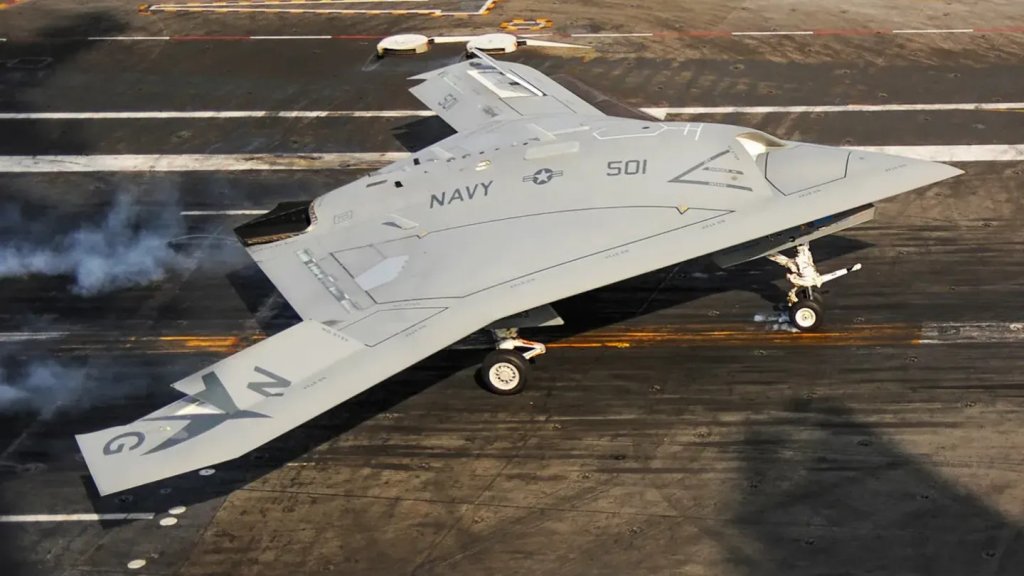
The Navy extensively flight-tested two X-47B UCAV demonstrators under its Unmanned Carrier-Launched Airborne Surveillance and Strike (UCLASS) program, including demonstrations of their ability to operate from carriers and refuel in flight. However, the service completely changed course and decided to pursue a tanker drone instead, which led to the MQ-25. The Navy’s future CCA fleets could ultimately incorporate multiple tiers of designs.
The Navy is also now investing heavily in Shield AI’s X-BAT jet-powered stealth ‘fighter’ drone with a clear eye toward fielding a version operationally. That work is currently being done through the Runway Independent Maritime Expeditionary Strike (RIMES) program, which is separate from the Navy’s CCA efforts.
X-BAT is designed to take off and land vertically from a tail-sitting position, a highly ambitious concept that could open up a host of new possibilities for employment from any ship with sufficient deck space, as well as sites on land. It is also intended to be larger and more capable than typical CCA-type drones like the ones the Air Force and Marines are pursuing now.
It remains unclear when the Navy might be looking to have its first CCAs enter operational service. Toti did say yesterday that carrier-based CCAs could begin arriving before F/A-XX, which the service hopes to see flying for carrier decks in the early 2030s.
There are separate questions already about the F/A-XX program schedule amid continued concerns about available industrial base capacity. Boeing’s defense division has been working to expand its physical production facilities to meet growing demands, including from F-47. It has also struggled with delays and cost overruns on several programs for the U.S. military, including the F-15EX Eagle II fighter, T-7A Red Hawk jet trainer, and KC-46 tanker.
“The same company that’s building F-47 is going to build the F/A-XX, and with that, we’re able to learn a lot from the Air Force to accelerate the F/A-XX program,” Acting Secretary of the Navy Hung Cao said at his own confirmation hearing earlier this week when asked about steps being taken to keep the Navy’s next-generation fighter program on track. “We literally just awarded the contract a little over a month ago. We’re doing the preliminary decisions [sic] to see how much it would cost in order to get the low-rate initial product out there, so that we can accelerate the program and get the next-generation fighter.”
Just how closely related Boeing F-47 and F/A-XX designs are remains unknown. However, TWZ has previously pointed out that Boeing will be able to leverage relevant design work, as well as production experience and supply chains, regardless.
Cao was insistent that the Navy needed F/A-XX, in general, to be able to keep ahead of potential adversaries, including China and Russia.
Toti’s remarks yesterday make clear that the Navy’s CCA plans are still solidifying. At the same time, the service is looking to press ahead with the development of these new drones as an important force multiplier for carrier air wings as they exist now.
Contact the author: joe@twz.com
The post Navy CCA Plans Will Not Wait For F/A-XX Next Generation Fighter appeared first on TWZ.