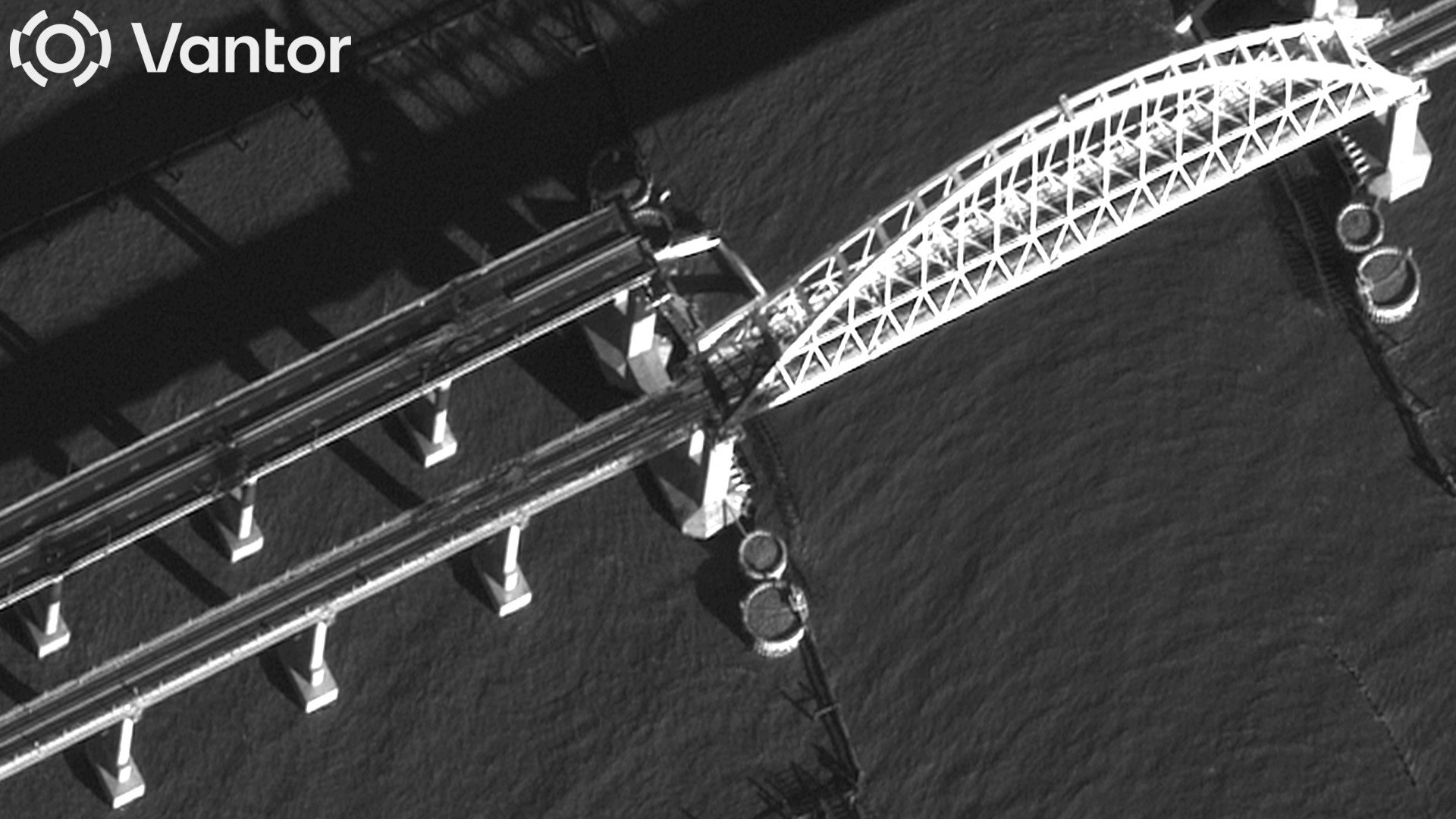
TWZ has obtained satellite imagery taken today of the Kerch Bridge. It shows damage from recent strikes to the rail span, as well as the section of the road span that was knocked out earlier in the week. The rail line was hit again just overnight, bringing train traffic across this vital Russian logistics conduit to a halt for a time. Readers can get caught up first on what was already known about the third Ukrainian strike on the bridge in now four days in our initial reporting.
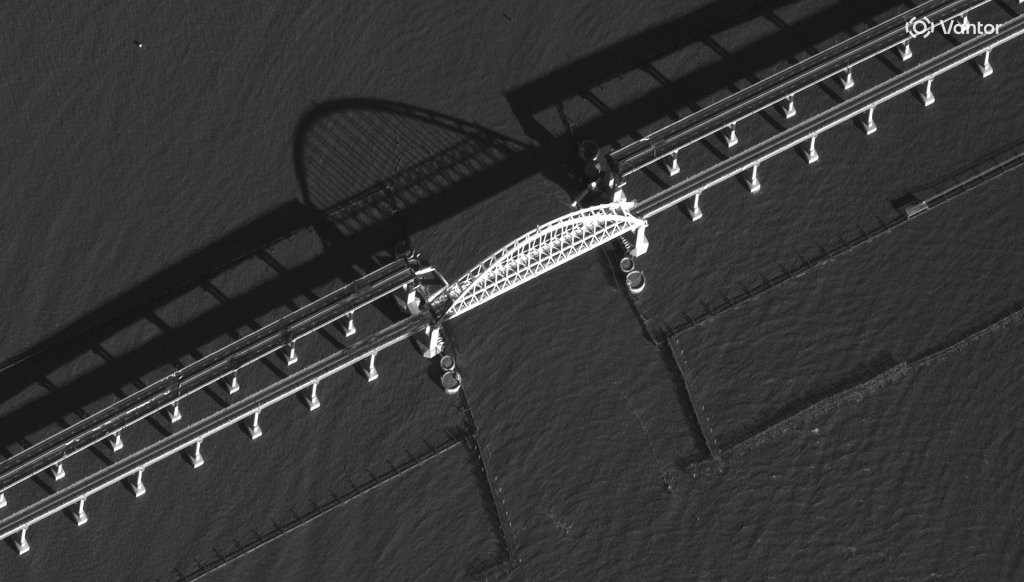
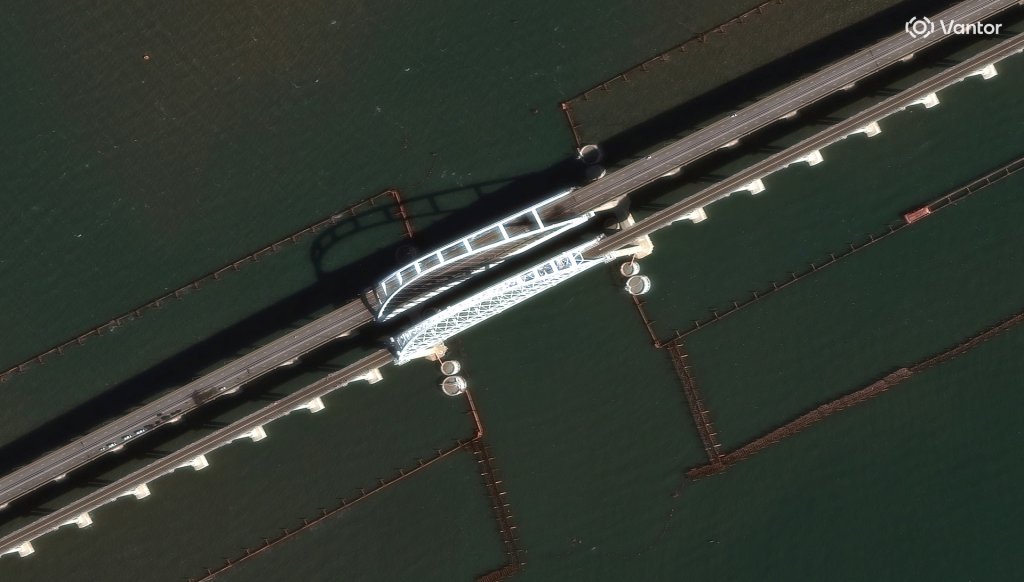
Vantor’s WorldView-1 satellite captured the image, seen in part at the top of this story and below, at 1:51 PM local time. At least two, and possibly three, impact points are visible on the rail span. From what we can see, the damage looks to be limited to only one of the two sets of tracks on the bridge.
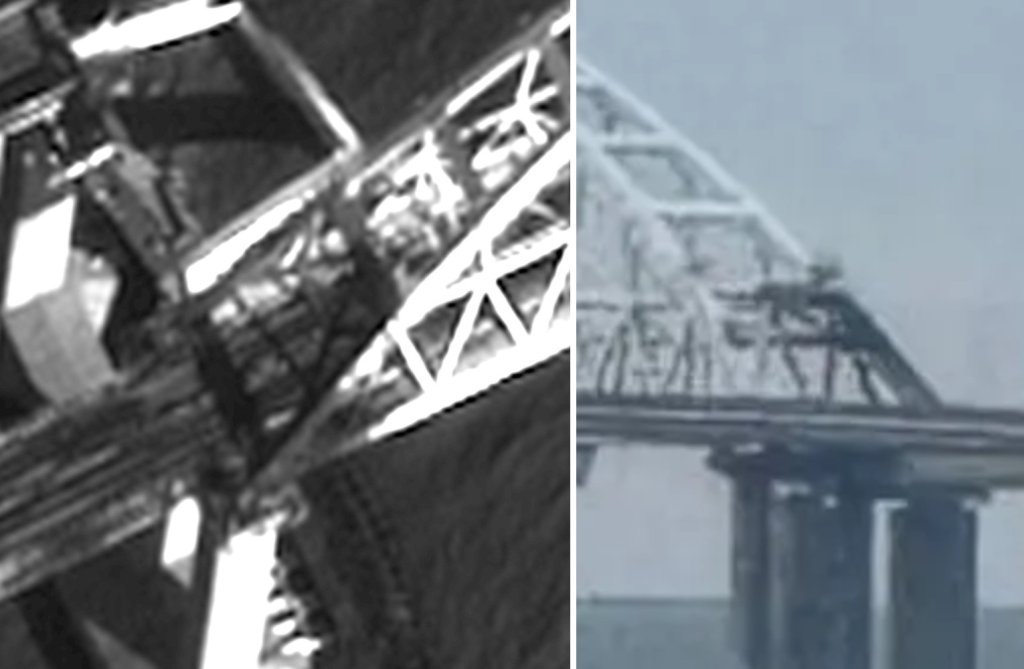
A large scorch mark is also seen on one corner of an arch that goes across part of the rail span. However, this damage does not appear to be new based on previous satellite imagery, as well as pictures and video taken at surface level.
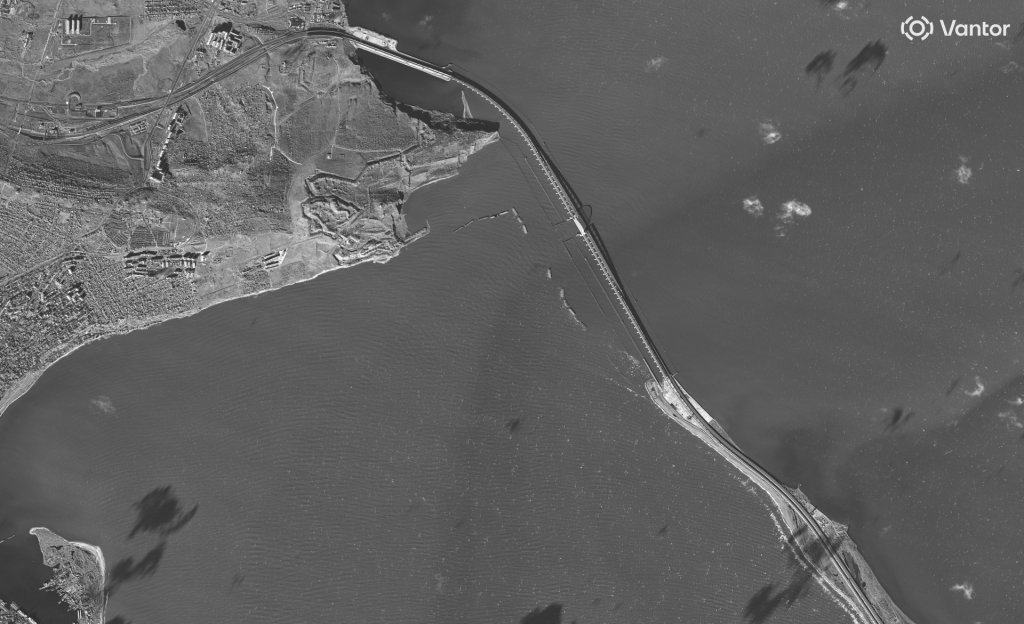
“A section of the northern highway bridge, measuring approximately 225 meters [approximately 738 feet], has collapsed with some sections remaining partially submerged,” Vantor also noted to TWZ when it sent the imagery. “No repair efforts were noted on or nearby the damaged bridge; moreover, no shipping traffic was seen in the strait.”
The damage to the Kerch Bridge’s rail span visible in the Vantor image is consistent with Ukraine’s claims to have successfully “struck the railway section … with hits recorded near the arch and on the tracks” with a volley of Neptune cruise missiles last night.
“Our military says the railway tracks were also damaged, but we’re still checking how badly,” a source in Ukrainian President Volodymyr Zelensky’s office told us earlier today. “We don’t know the results yet.”
That the damage appears to be limited to only one of the two tracks is also consistent with reports that rail service across the bridge has now been restored, but only on one line.
It should also be noted that the rail span will likely be significantly harder to destroy than the road portion of the bridge. The rail section has to be designed to handle the heavier and denser loads of trains passing across. This can be seen visually in the differences between the construction of the arches over the rail and road portions.
How disrupted rail traffic across Kerch Bridge remains now is unclear, and speaks to larger issues emerging from Ukraine’s continued strikes this week. The time it takes to inspect and repair even relatively minor damage could have increasingly serious impacts. This could be compounded by repeated strikes that halt trains from crossing in either direction for hours on end.
Beyond the Kerch Bridge, the only other options for getting ammunition, fuel, food, and other supplies to Russian forces in Ukraine are by ferry across the Kerch Strait or by truck and train overland around the Sea of Azov. As we have reported in the past, Ukraine’s mid-range strike drone campaign already holds the land routes under intense fire, severely limiting Russian logistics. Ukraine has also been hitting Russian shipping in the Sea of Azov.
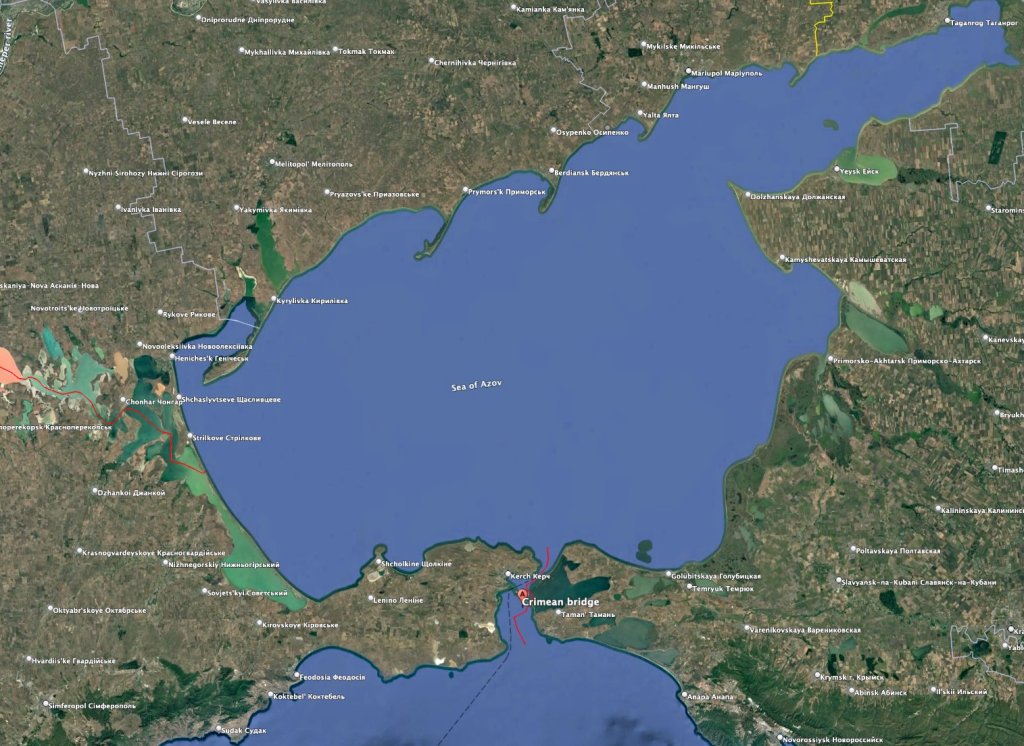
In addition to repeated strikes on the Kerch Bridge, since October, Ukrainian forces have struck at least six bridges along the R-280 highway, the official Ukrainian United24 media outlet reported. This is a major Russian logistics corridor through occupied areas along the western shore of the Sea of Azov. The attacks have damaged transport links connecting Russia’s Rostov region with occupied southern Ukraine, including routes used to supply Russian forces in Zaporizhzhia, Kherson, and Crimea, the outlet noted.
“The Kerch Strait crossing is just one link in the chain that the enemy uses to supply the front lines,” the Ukrainian MoD said today. “Step by step, the Defense Forces are reducing the capabilities of the rest of Russia’s military logistics. According to the results of previous strikes, damage has been confirmed to the road surfaces of three more bridges: on November 15, across the Seversky Donets River in the Pryshyb area of the Luhansk region, and across the Mius River in the Taganrog area of the Rostov region; on November 14, across the Mius Lagoon in the Lakedemonovka area, also in the Rostov region.”
— MAKS 26
Video of the destruction of the bridge over Mius River on R-280 highway in the Rostov region, the road through which leads to the land corridor of Crimea. pic.twitter.com/hPCYsTUdrn
(@Maks_NAFO_FELLA) November 18, 2026

Beyond severely impacting land routes, the Ukrainian strikes on the Kerch Bridge are having a major effect on Russia’s ability to use sea routes.
The collapsed section of the road bridge extended over the main shipping channel linking the Sea of Azov to the north with the Black Sea to the south. The inability of large vessels to pass through for an extended period of time would have its own serious impacts on Russian logistics chains.
“The structures fell directly into the shipping lane,” Ukrainian Shipping Magazine noted. “The Kerch Strait is only 3–6 meters deep, so all large-tonnage traffic between the Black and Azov Seas passes through the narrow 120-meter Kerch-Yenikalsky Canal. This only deep-water passage runs under the central arch of the bridge – that is where the multi-ton debris now lies.”
“The remaining spans are in shallow water, so large merchant and military ships are physically unable to bypass the blockage, the Crimean Wind monitoring channel notes,” the publication added. “The length of the collapsed span is estimated at over 270 meters, and the weight of the steel arch is 5,500–6,000 tons. Clearing it will require specialized equipment and complex underwater work.”
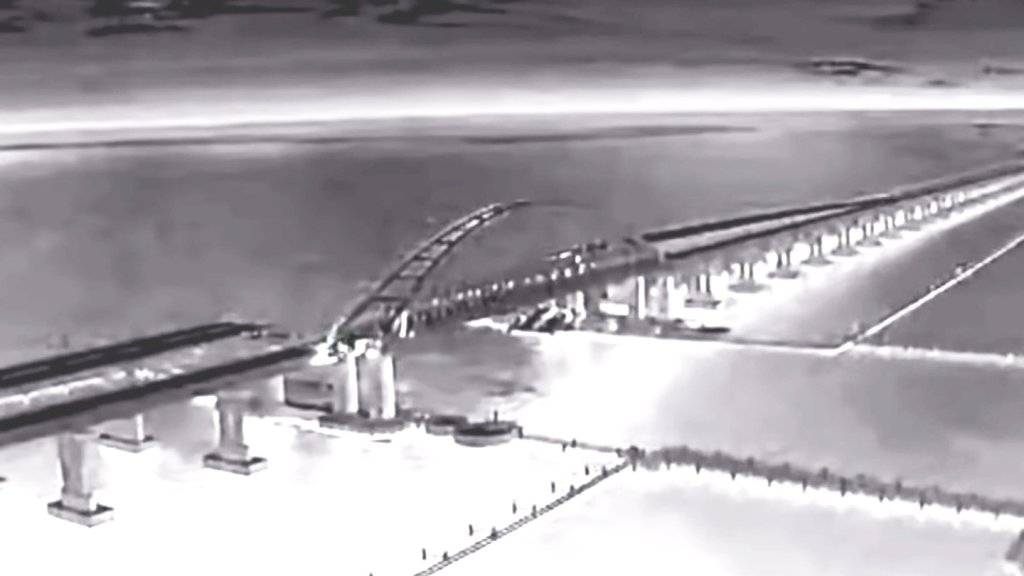
All of this is impacting Russian residents of the occupied Crimean Peninsula, as well. The following video shows Crimea residents lining up for gas after the most recent bridge strikes amid concerns about the stable flow of supplies going forward.
Officials on the peninsula say they will launch free passenger boat services across the Kerch Strait on Nov. 20, according to Oleg Kryuchkov, an adviser to the Russian-installed head of Crimea.
The service will operate between Port Krym in Kerch and Port Kavkaz on Russia’s Taman Peninsula. However, private vehicles will not be transported on the boats, and passengers will not be allowed to carry gasoline in canisters, per Kryuchkov
Kryuchkov also warned that the service would depend on weather conditions. Storms and strong winds could force temporary suspensions several times a week. Local authorities did not specify how many boats would operate, how many passengers they could carry, or how frequently crossings would depart.
Russian officials have pledged to rebuild the bridge. Russian Deputy Prime Minister Marat Khusnullin told the official Russian TASS news outlet that authorities will determine a timeline for restoration of the bridge within a week. That work would likely be lengthy and expensive under optimal conditions, let alone under the continued threat of new Ukrainain strikes. It took more than two years to build the road span in the first place and even longer to complete the rail portion.
Russian President Vladimir Putin has also now promised significant retaliation against Ukraine over the damage wrought already to Kerch Bridge.
“We will not negotiate after the strikes on the Crimean Bridge,” the Russian leader told reporters in Shenzhen, China, where he is presently attending meetings of the Asia-Pacific Economic Cooperation (APEC) forum. “We will respond to these strikes. Our actions will be much more painful.”
As was made clear just overnight, taking out the remaining rail span of the Kerch Bridge clearly remains a top objective for Ukraine.
Contact the author: howard@twz.com
The post Impacts Of Latest Neptune Missile Strike On Kerch Bridge Seen In Satellite Imagery appeared first on TWZ.