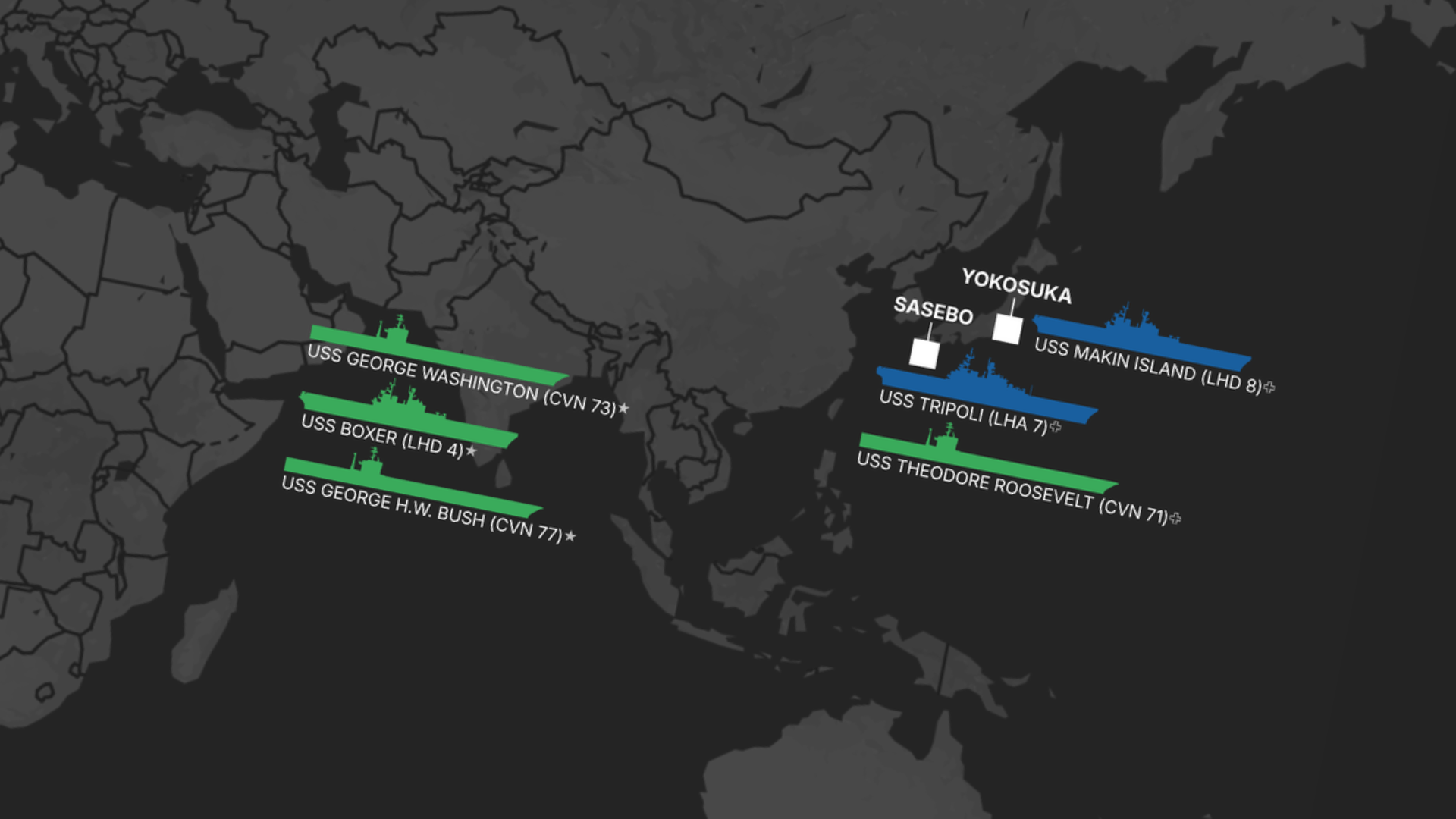
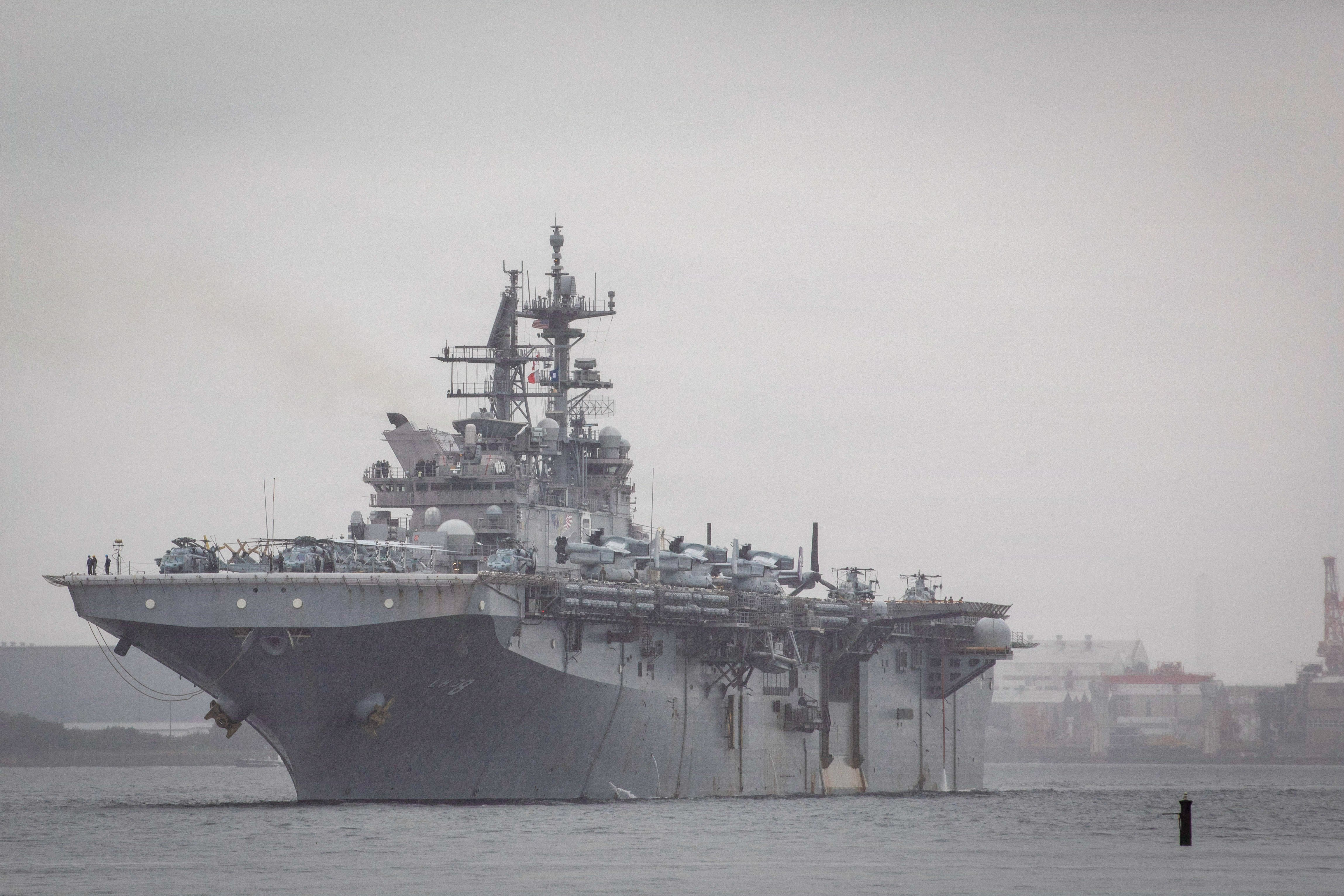
The Makin Island Amphibious Ready Group (ARG) tied up in Yokosuka, Japan, on Monday, a week after the Theodore Roosevelt Carrier Strike Group departed from the same base to participate in exercise Keen Sword 27. Both are reportedly destined for the Middle East, two U.S. officials confirmed to Fox News, which would place three CSGs and two ARGs in the U.S. Central Command (CENTCOM) area of responsibility (AOR) sometime in November, unless a group departs before their arrival. More than ten guided-missile destroyers are also operating independently in the region, as the U.S. beefs up force posture ahead of the possibility of renewed hostilities against the Iranian regime.
Meanwhile, on the other side of the world, the USS Ronald Reagan remotely controlled an MQ-25A Stingray tanker drone thousands of miles away for the first time, and the Navy announced that USS Abraham Lincoln, which just returned from a historic deployment, will conduct a homeport shift to Bremerton, Washington.
Here’s TWZ’s weekly carrier tracker monitoring America’s flattop fleet, including deployed CSGs and ARGs, using publicly available open-source information. Check out our last report here.
Where Is The USS Theodore Roosevelt?
Surrounded by allied warships, the USS Theodore Roosevelt steamed through the Philippine Sea last week as large-scale combined exercise Keen Sword 27 got underway. Roosevelt and guided-missile cruiser USS Chosin departed Commander, Fleet Activities Yokosuka, on October 19 following a three-day port call. Roosevelt deployed on September 27 and was the first non-resident American carrier to pull into the vital naval port in over four years.
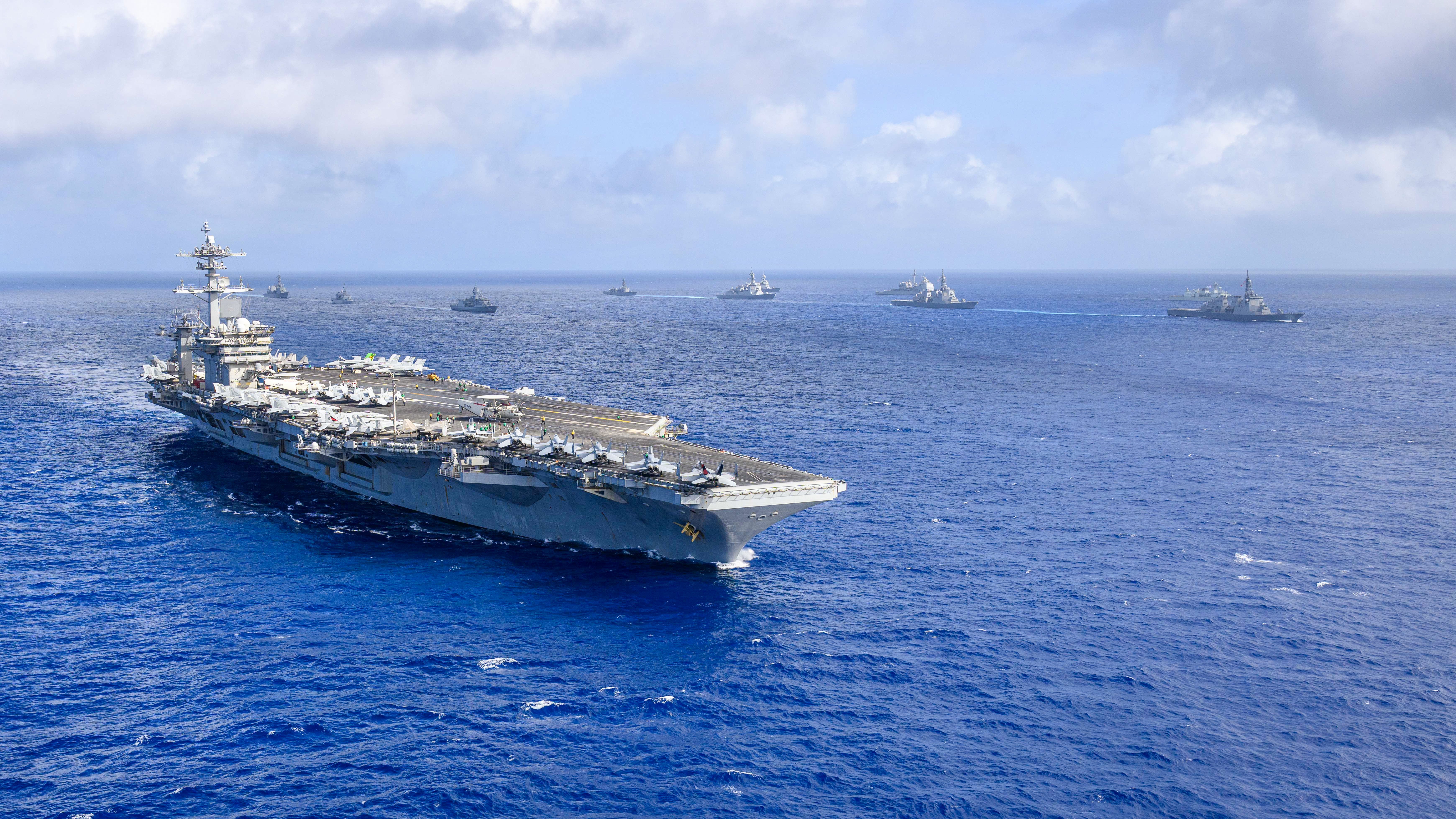
Three American warships are participating in the exercise, a Navy official confirmed to TWZ. The third participant, Pearl Harbor-based guided-missile destroyer USS Decatur, another element of the five-ship strike group, also called port in Yokosuka and transited out of Tokyo Bay on October 26.
Australian, Canadian, and French warships joined the exercise alongside the U.S. and Japan in a large show of force. Keen Sword 27 runs through October 29, but it’s unclear if Roosevelt and her escorts will remain until the conclusion before heading toward the Middle East via the Strait of Malacca. More than 45,000 Japan Self-Defense Forces personnel and 11,000 U.S. service members are participating.
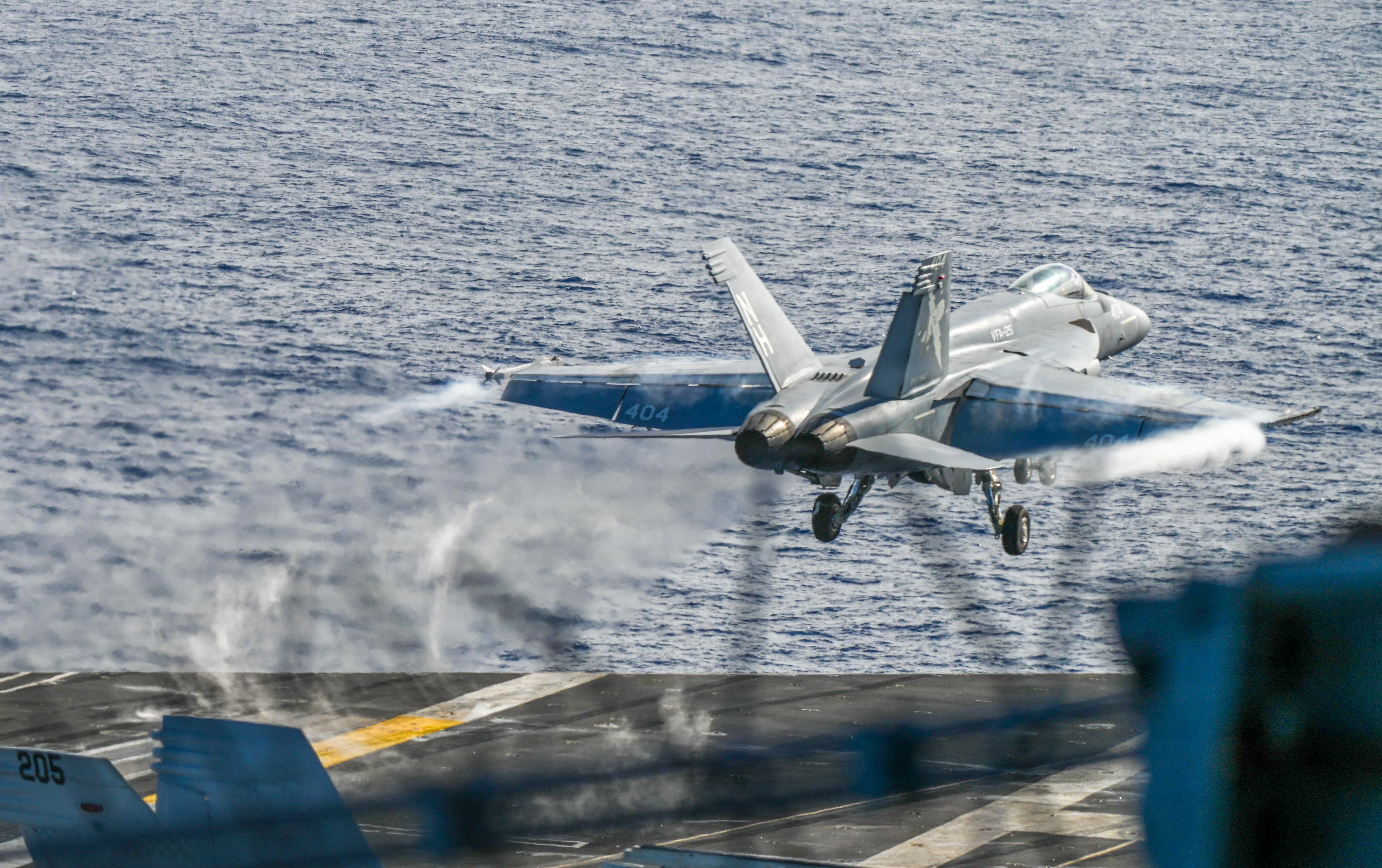
F/A-18 Super Hornets and F-35Cs launched from Roosevelt and other airbases in Japan to complete a simulated strike against a target in the East Sea/Sea of Japan, which also included land-based launchers, an exercise spokesperson told Stars and Stripes. Japanese destroyers JS Kongo and JS Maya assumed the red team role. The precise location and munitions employed were not disclosed.
The Theodore Roosevelt CSG, which a different Navy official confirmed also includes USS Paul Hamilton and USS Carl M. Levin, will arrive in the Middle East, Fox News reported last week. Both destroyers are disaggregated from the rest of the group. Hamilton, the last ship to deploy, left San Diego on October 10 and most recently pulled out of Pearl Harbor last week. Levin, the first ship to deploy, is already operating in the CENTCOM AOR, based on public images posted on the military’s content platform, DVIDS.
If the CSG and ARG, which also includes amphibious transport docks USS Anchorage and USS John P. Murtha, arrive in the Middle East before the other two carriers on station, USS George H.W. Bush and USS George Washington, and big-deck amphibious assault ship, USS Boxer, depart, that would add roughly 10,000 Sailors and Marines to CENTCOM’s arsenal, the most significant force posture in the region since the war began. However, the overlap can only be maintained for a limited time given normal rotation schedules.
Acting Secretary of the Navy (SECNAV), Hung Cao, said during a panel at the Association of the United States Army (AUSA) convention that “the Teddy Roosevelt carrier strike group just deployed on October 8 with a medium sized unmanned surface vessel (MUSV). This is the first carrier strike group to ever deploy with a large size unmanned surface vessel.” However, despite multiple requests to comment, the Navy has not confirmed to TWZ that MUSV Seahawk (2) is assigned to the strike group. Seahawk was 10 nautical miles north of Guam, publicly available Automatic Identification System (AIS) data on MarineTraffic showed, as of publication.
The USS Ronald Reagan Controlled A Tanker Drone Thousands Of Miles Away
Providing a glimpse of the future, the USS Ronald Reagan used her brand-new Unmanned Air Warfare Center (UAWC) to operate a MQ-25A Stingray tanker drone at a Boeing facility in Illinois. “In a historic U.S. naval aviation event, an aircraft carrier connected to, and controlled, an unmanned aerial refueler MQ-25A Stingray more than 2,100 miles away,” the Navy said in a press release.
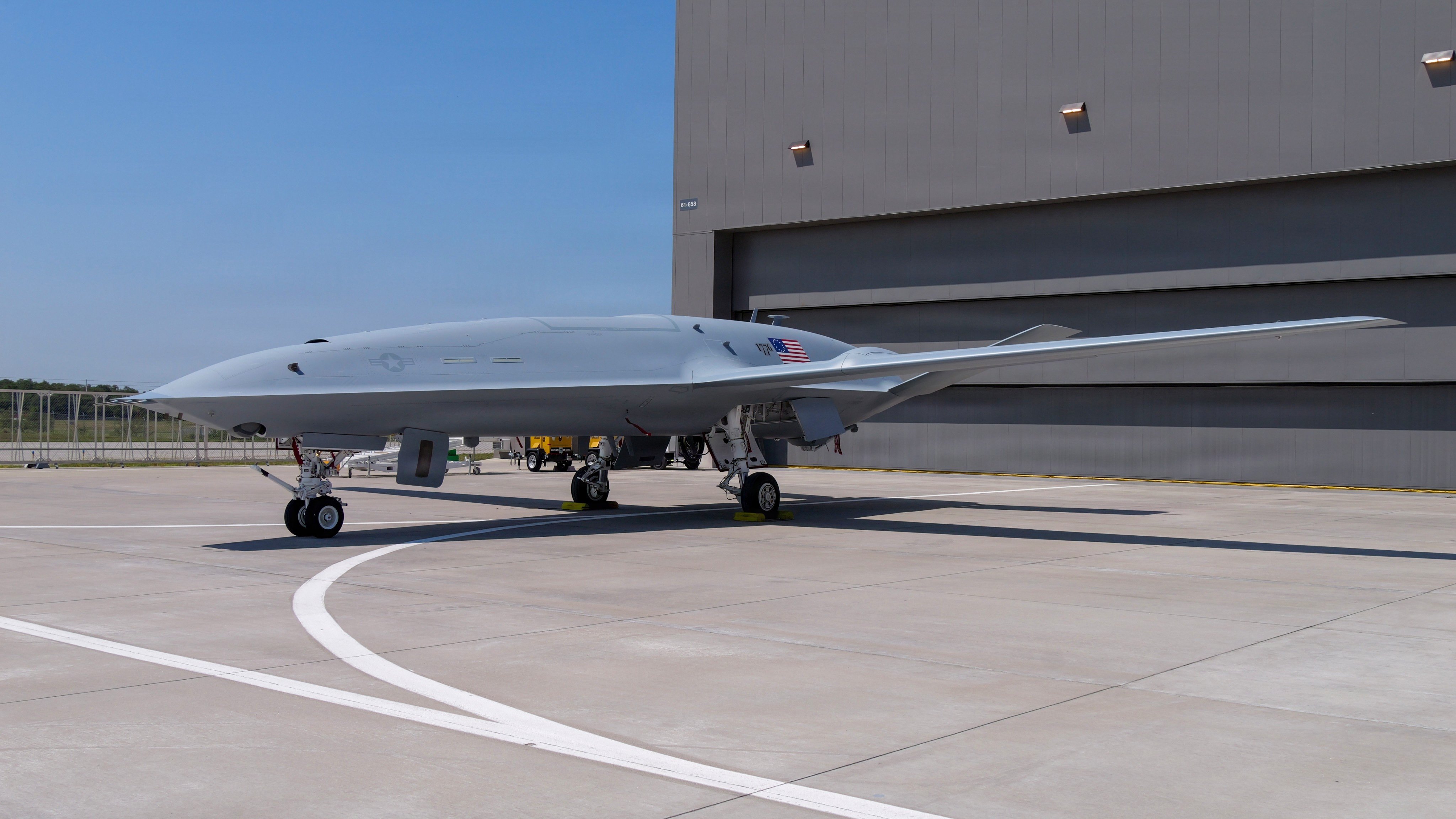
The UAWC, installed during Reagan’s recently completed 15-month maintenance available, used its MD-5C ground control station to link beyond line-of-sight with the drone while the flattop was underway in the eastern Pacific Ocean. “The MQ-25A Stingray’s carrier-based refueling capabilities enable F/A-18 Super Hornets to fly farther and longer,” the Acting SECNAV said. “The integration of this unmanned aerial refueler demonstrates the transformational change our manned and unmanned asset integration provides the Fleet.”
The test took place during a preliminary sea trial, part of a “series of build-up exercises designed to validate procedures, networks and interfaces,” reads the release. Capt. Daniel Fucito, program manager of the Navy’s Unmanned Carrier Aviation Program Office’s (PMA-268), said, “We have redefined naval power projection. This first-ever underway connection between a carrier-based UAWC and an MQ-25A aircraft proves that the Carrier Air Wing of tomorrow is a reality today.”
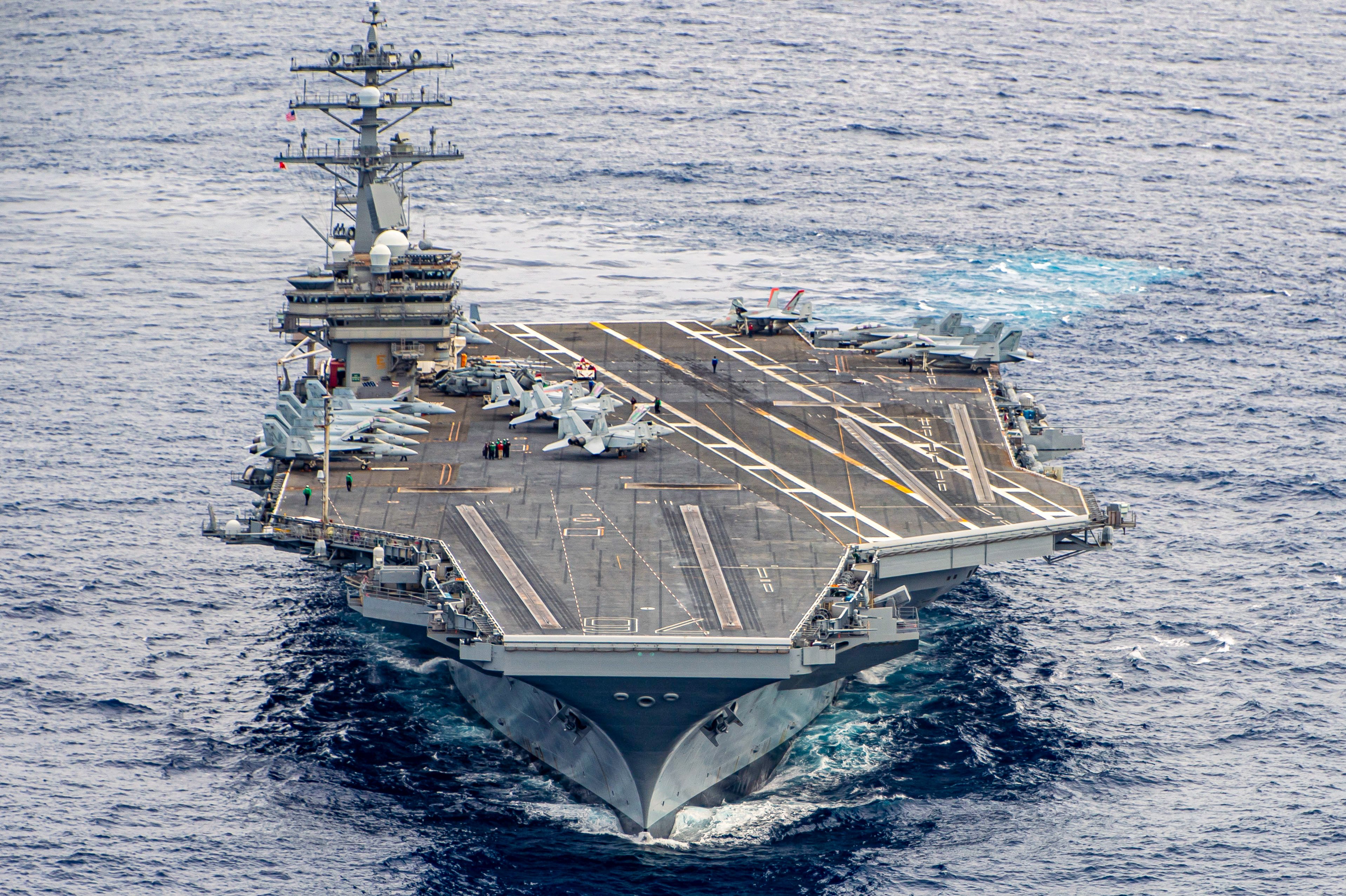
Reagan is the second Nimitz class carrier equipped with the UAWC. The MQ-25A will eventually take the roll held by the F/A-18E/F Super Hornets that are tasked with fueling carrier-based aircraft, freeing up aircraft to take on higher-end combat roles.
Reagan moored at Kilo Pier at Naval Air Station North Island in San Diego on October 27 after finishing Fleet Replacement Squadron and Carrier Qualifications.
What’s Next For The USS Abraham Lincoln?
The USS Abraham Lincoln recently returned from a record-setting deployment. The carrier arrived back home on x after being at sea for 321 days, less than a week short of the longest carrier deployment in the post-Vietnam era.
The Navy has confirmed what TWZ was the first to report: the Lincoln will complete a homeport shift to Bremerton, Washington, to undergo a Refueling and Complex Overhaul (RCOH) following a grueling deployment that left the carrier looking worse for wear. The release did not disclose the length of the availability, but Reagan was out of commission for more than a year, and was not previously involved in combat operations.
“The carrier repeatedly demonstrated unmatched multi-theater combat lethality and safeguarded critical sea lanes across the Indo-Pacific and Middle Eastern theaters. Home port shifts are part of the Navy’s continued commitment to the strategic dispersal of ships,” a statement released from Commander, Naval Air Forces reads.
The move is a permanent change of station for the crew and their families.
Where Is The Rest Of The Fleet?
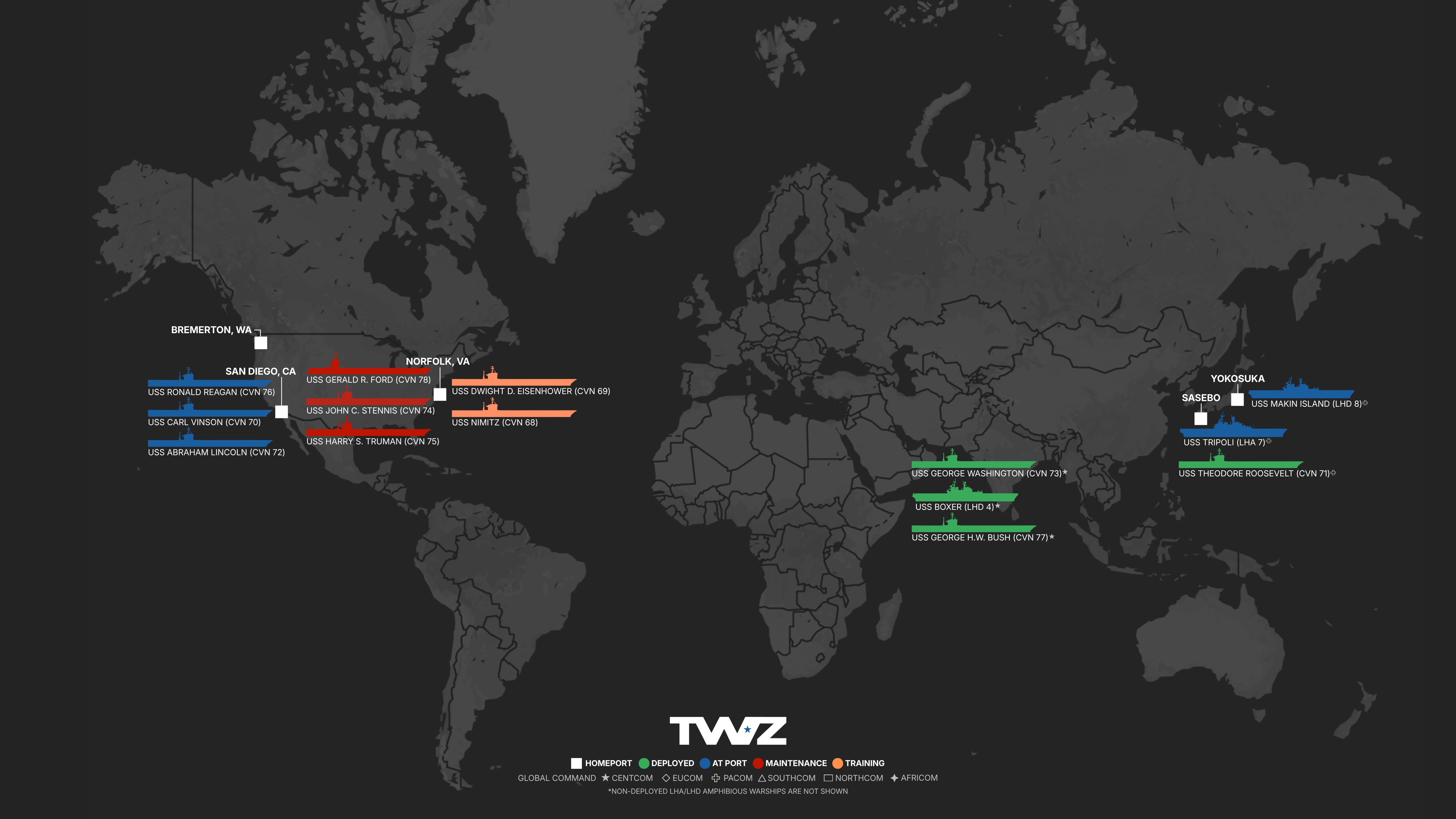
- The two carriers enforcing the ongoing blockade of Iranian ports and coastal cities, USS George H.W. Bush and USS George Washington, have both been dark on AIS since arriving in the Middle East. The former is 210 days into her deployment and recently arrived back in CENTCOM after a five-day port call in Phuket, Thailand. The latter, forward-deployed out of Yokosuka, Japan, was spotted on DVIDS conducting flight operations on October 24.
- USS Nimitz, homeported in Norfolk, welcomed the public with tours during Naval Station Norfolk’s Fleet Fest over the weekend, and got underway again for training on October 27. The 51-year old carrier is scheduled to be deactivated in Spring 2027. USS Dwight D. Eisenhower, also based at NS Norfolk, left port for work ups on October 24.
- Also on the east coast, USS John C. Stennis has been undergoing maintenance since 2021. The RCOH was expected to be completed and the carrier redelivered in October 2026, according to budget documents, but it’s unclear if that timeline will hold. However, USS Harry S. Truman recently moved to begin an RCOH, suggesting Stennis is nearing completion.
- On the other side of the country, USS Carl Vinson is in port in San Diego. Vinson returned on September 4 after a 25-day underway for a Final Evaluation Period and Tailored Ships’s Training Availability.
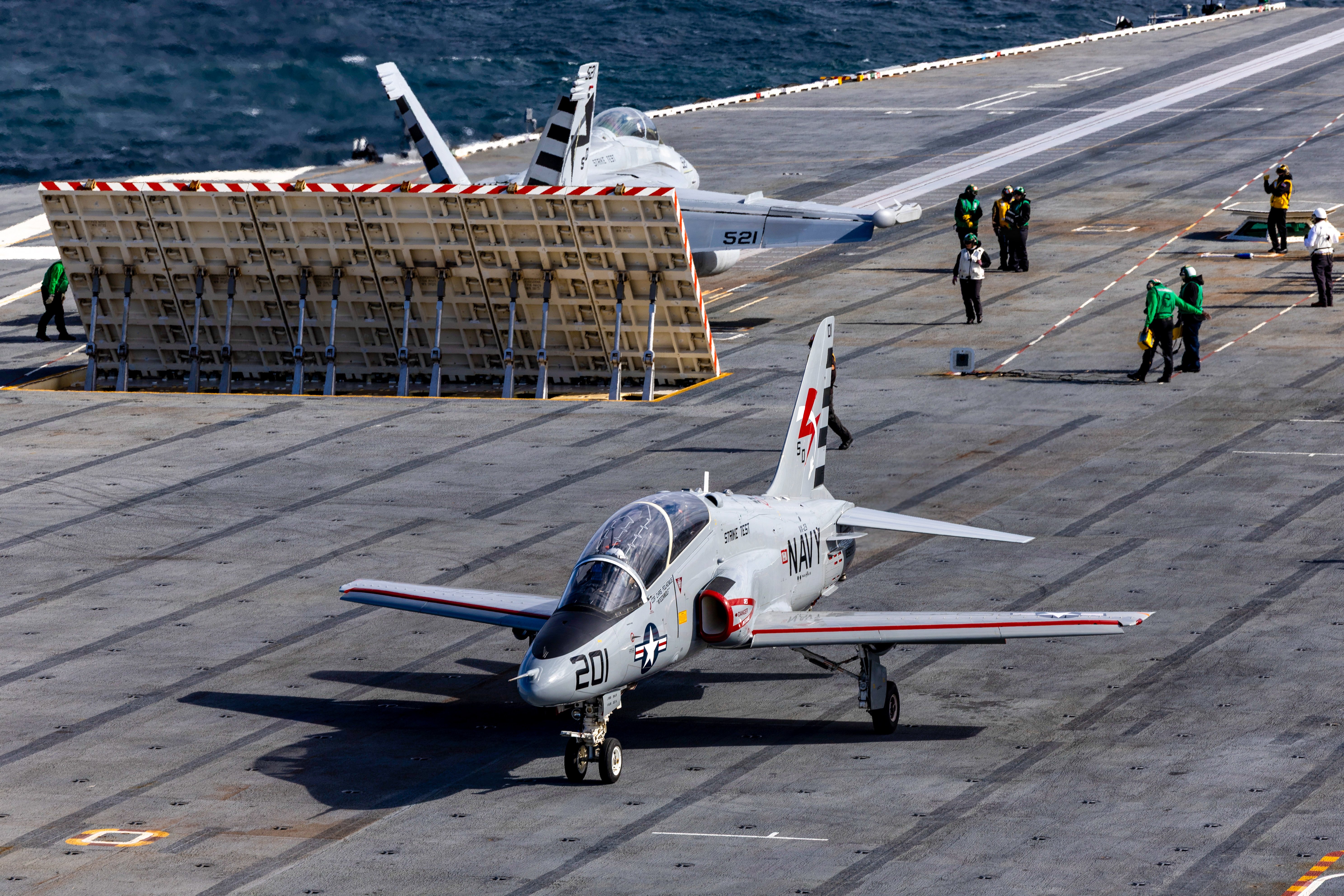
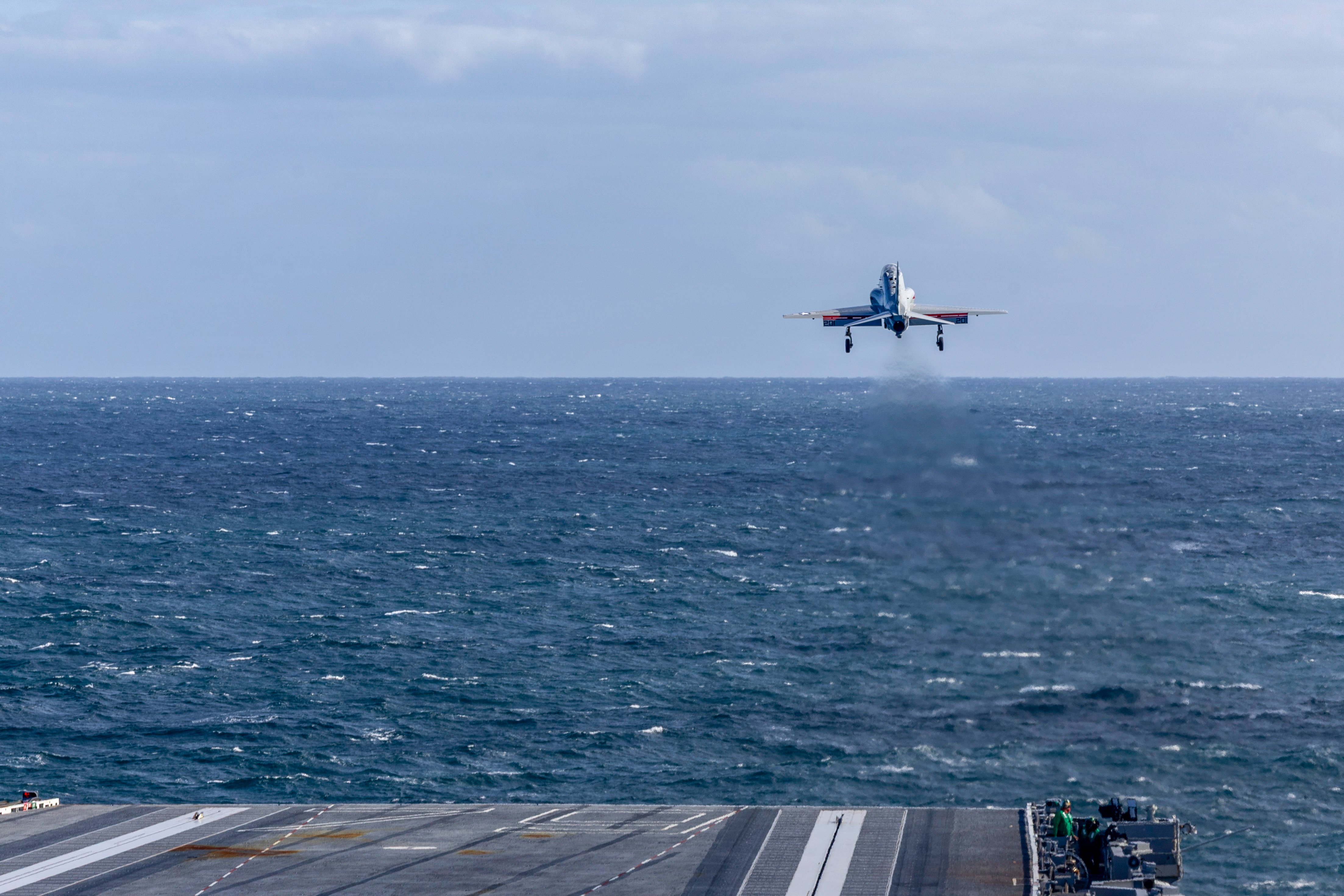
- The future USS John F. Kennedy was operating in the Atlantic Ocean launching a T-45C Goshawk training aircraft and EA-18G Growler, both attached to the “Salty Dogs” of Air Test and Evaluation Squadron (VX) 23, on October 25.
The Big Deck Fleet At A Glance
Overall, three U.S. carriers are deployed, three are working up in various states of readiness, three are in maintenance availabilities, one is post-deployment, one is being used primarily for training before deactivation, and another will be delivered in 2027. Two amphibious ready groups are deployed, one is forward-deployed, three are working up or in port, and three are in maintenance.
Note: Positions are general approximations. Non-deployed LHA/LHD amphibious warships are not shown.
Contact the author: ian@twz.com or @ianellisjones
The post Where Are The Aircraft Carriers?: October 27, 2026 appeared first on TWZ.