© James Lewin / Wildlife Photographer of the Year
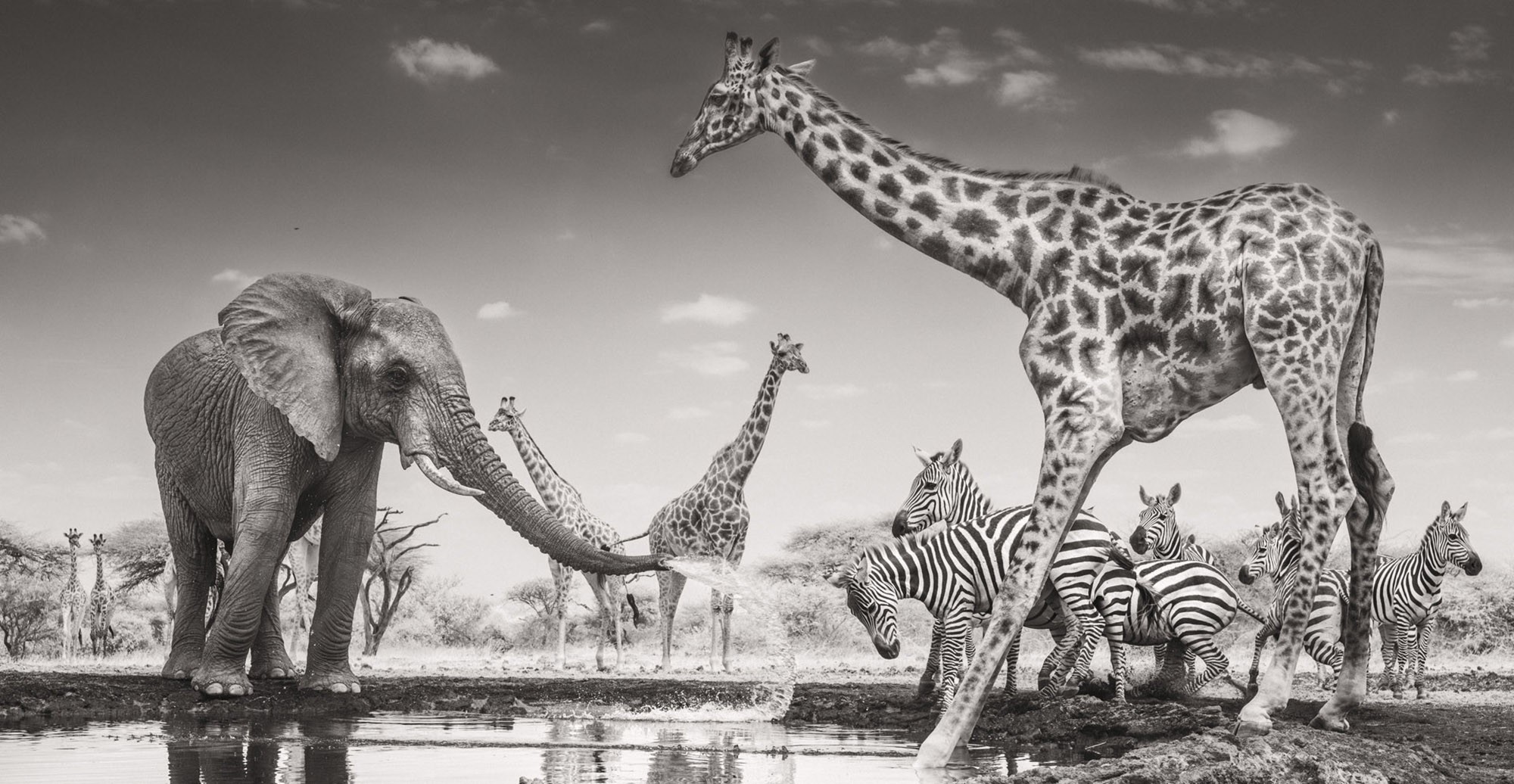
The Meeting Place. Winner, Animals in Their Environment. James Lewin watched a young bull elephant spray a group of zebra as they congregated in the Kenyan Chyulu Hills. Although there was no shortage of subjects and action around this waterhole, James had to deal with the harsh, unforgiving light. He chose to soften the light using a camera converted to infrared, creating this dreamlike scene.
© Anton Sorokin / Wildlife Photographer of the Year
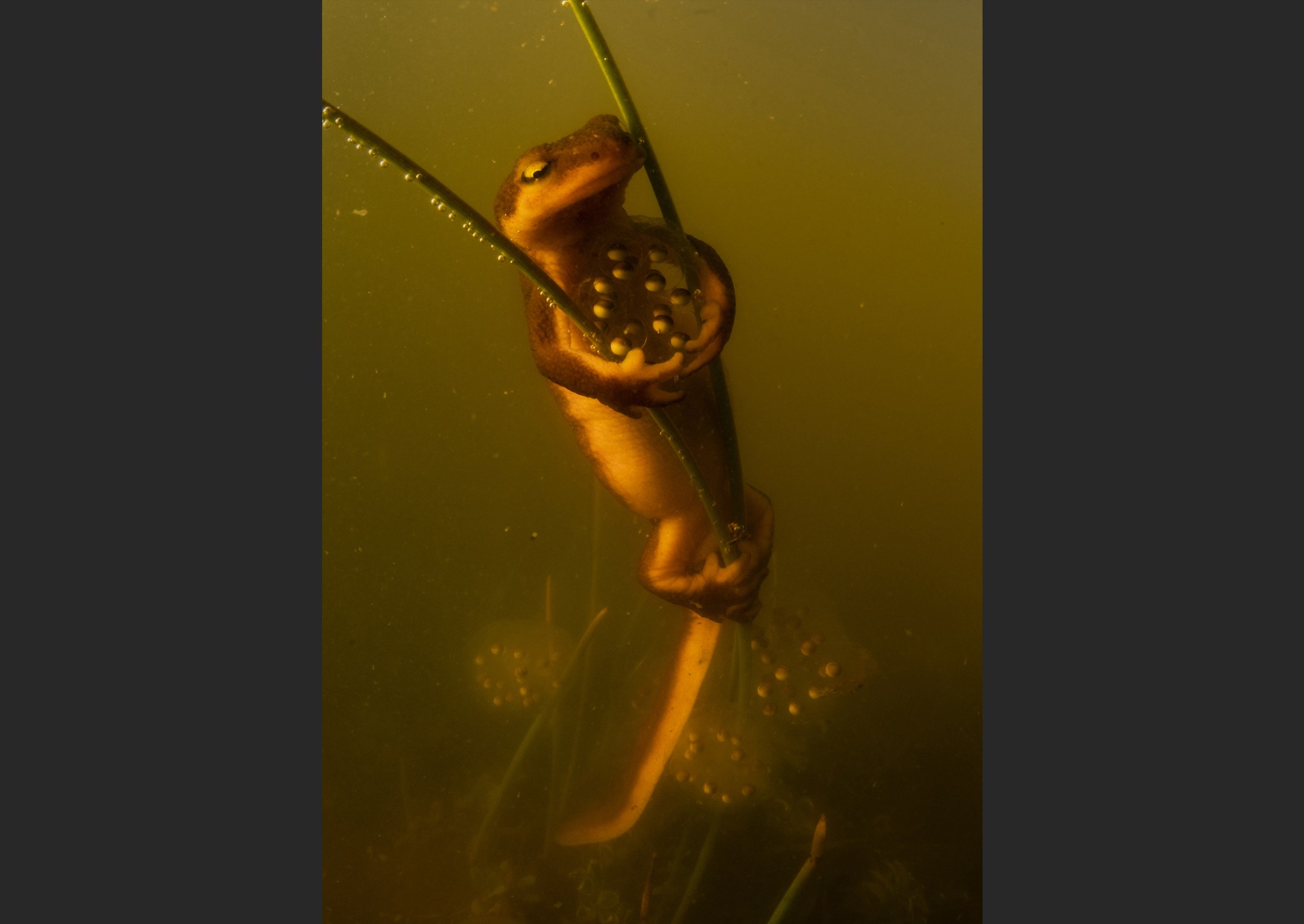
Protective Pose. Winner, Behavior: Amphibians and Reptiles. Anton Sorokin found a California newt laying its eggs as it clasped vegetation that already held another newt’s egg clutch.
© Alex Visbal / Wildlife Photographer of the Year
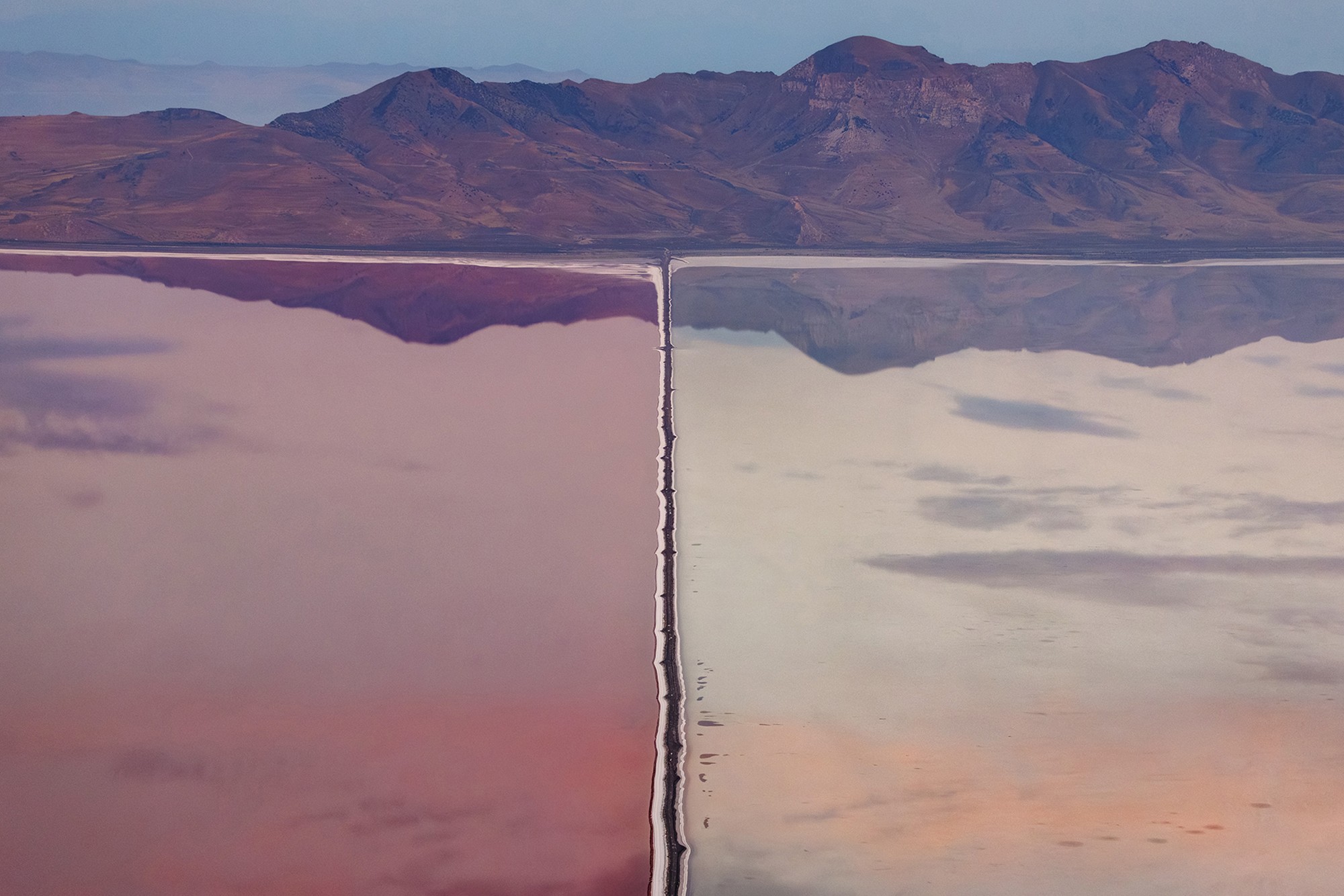
The Great Divide. Winner, Wetlands: The Bigger Picture. Alex Visbal documented how a single engineered line can reshape an entire wetland in Utah’s Great Salt Lake. The distinctive pink color on the left is caused by bright-pink microbes that thrive in extremely saline water, which happens when an area is cut off from a supply of fresh water. The lake’s ecology is in sharp decline because of industrial use, upstream diversions, and climate change. Since this image was taken, the State of Utah has brought the area under conservation management.
© Loren Elliott / Wildlife Photographer of the Year
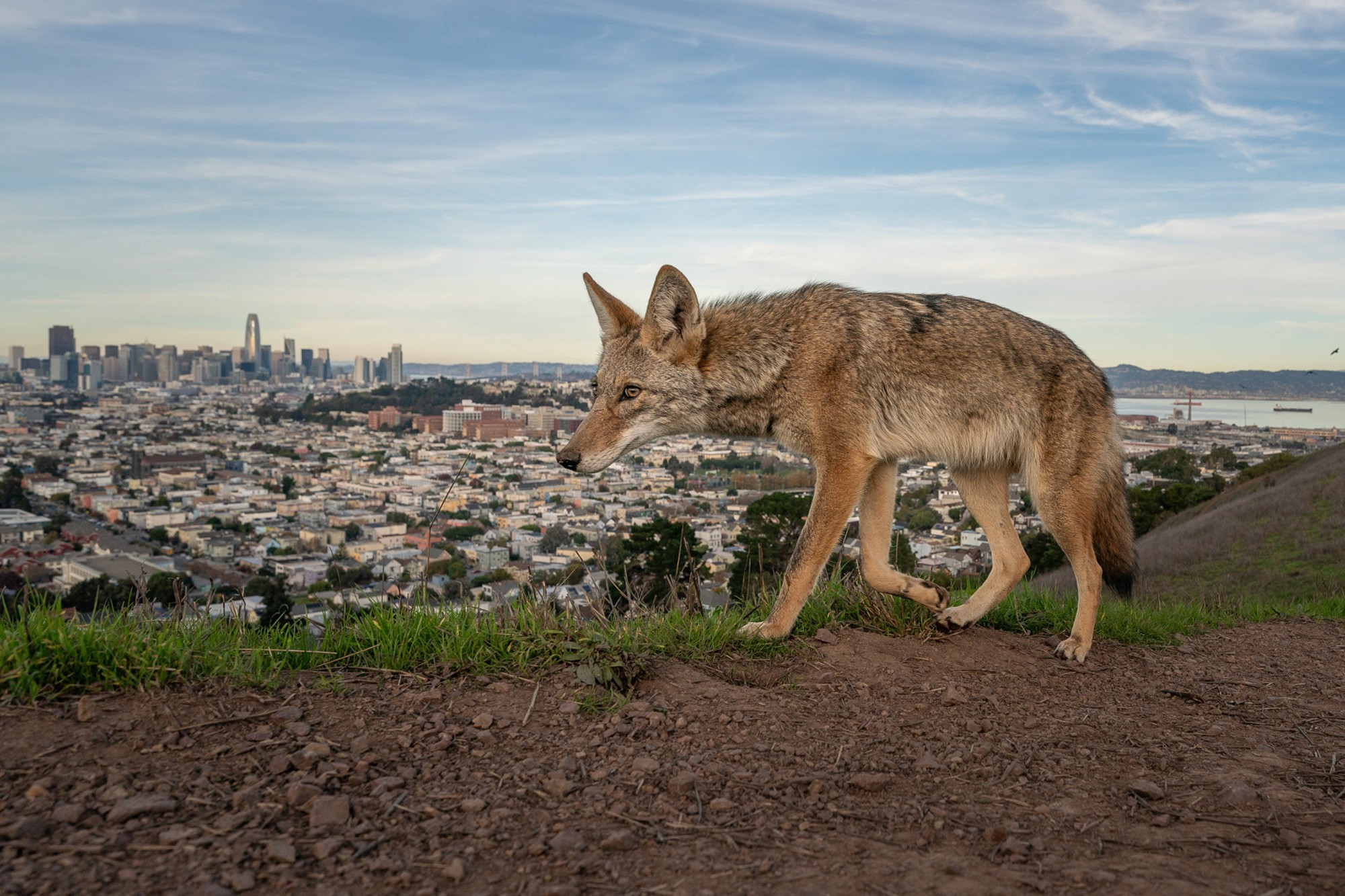
On the Outskirts. Winner, Photojournalist Story Award. A coyote pads along a trail in Bernal Heights Park, overlooking the city and bay of San Francisco. This individual is part of a resident pack that Loren Elliott observed hunting rodents in the park, which is also popular with people and dogs.
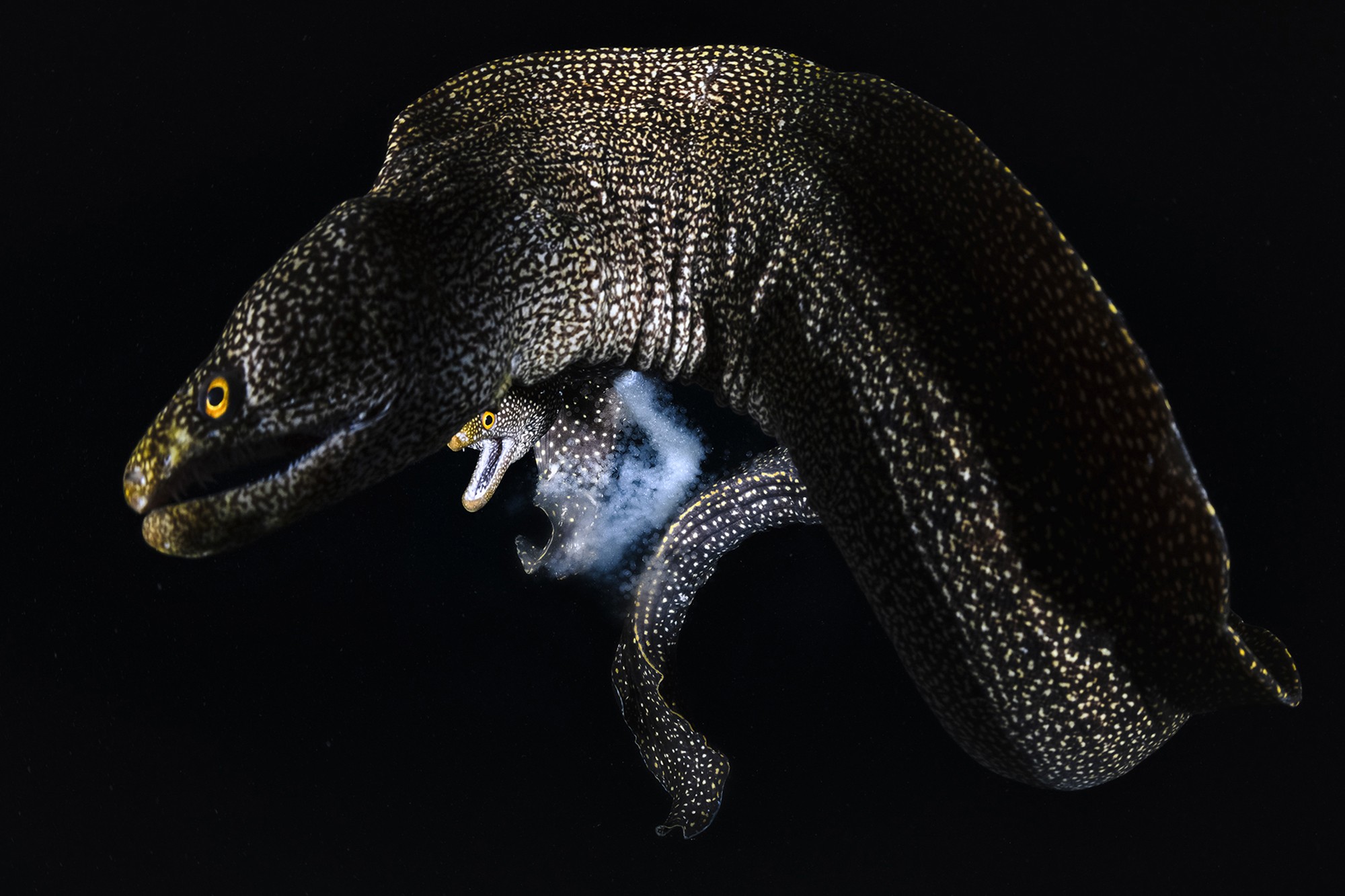
© Tony Wu / Wildlife Photographer of the Year
Making Morays. Winner, Under Water. Tony Wu provides a first-time glimpse into the mating ritual of Abbott’s moray eels. Wu has been working with biologists to address a knowledge gap of the social behavior of this eel species. Guided only by a dim red-light source to minimize disturbance, and using a customized fisheye camera lens, he has studied this male since 2024 as it visits females that dwell in crevices on the reef.
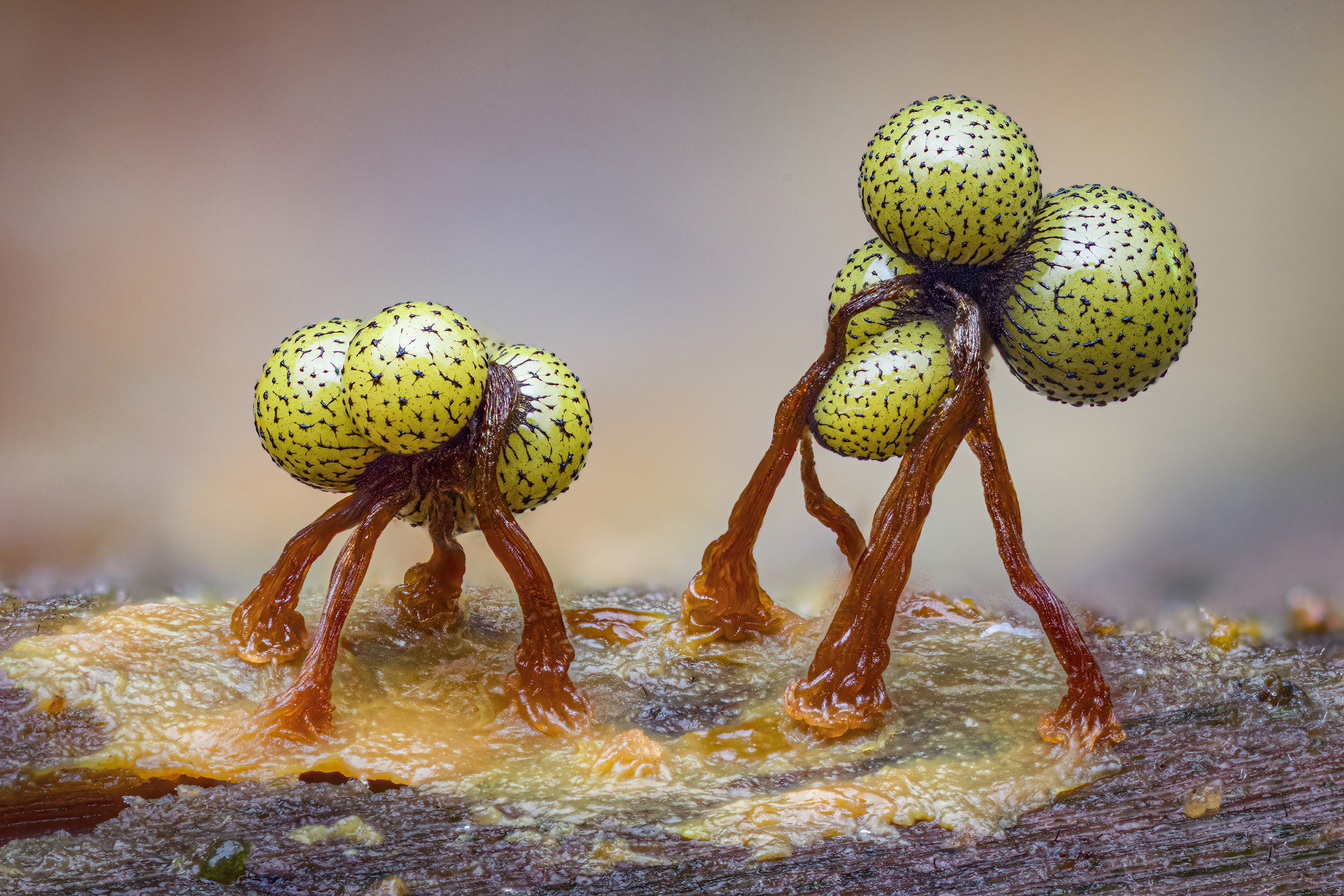
© Kutub Uddin / Wildlife Photographer of the Year
Tiny Dancers. Winner, Portfolio Award. Kutub Uddin reveals a magical and often surreal world of slime molds that can barely be seen with the naked eye. Fine threads, known as capillitium, emerge on the round, yellow-green bodies, which will eventually help disperse reproductive spores.
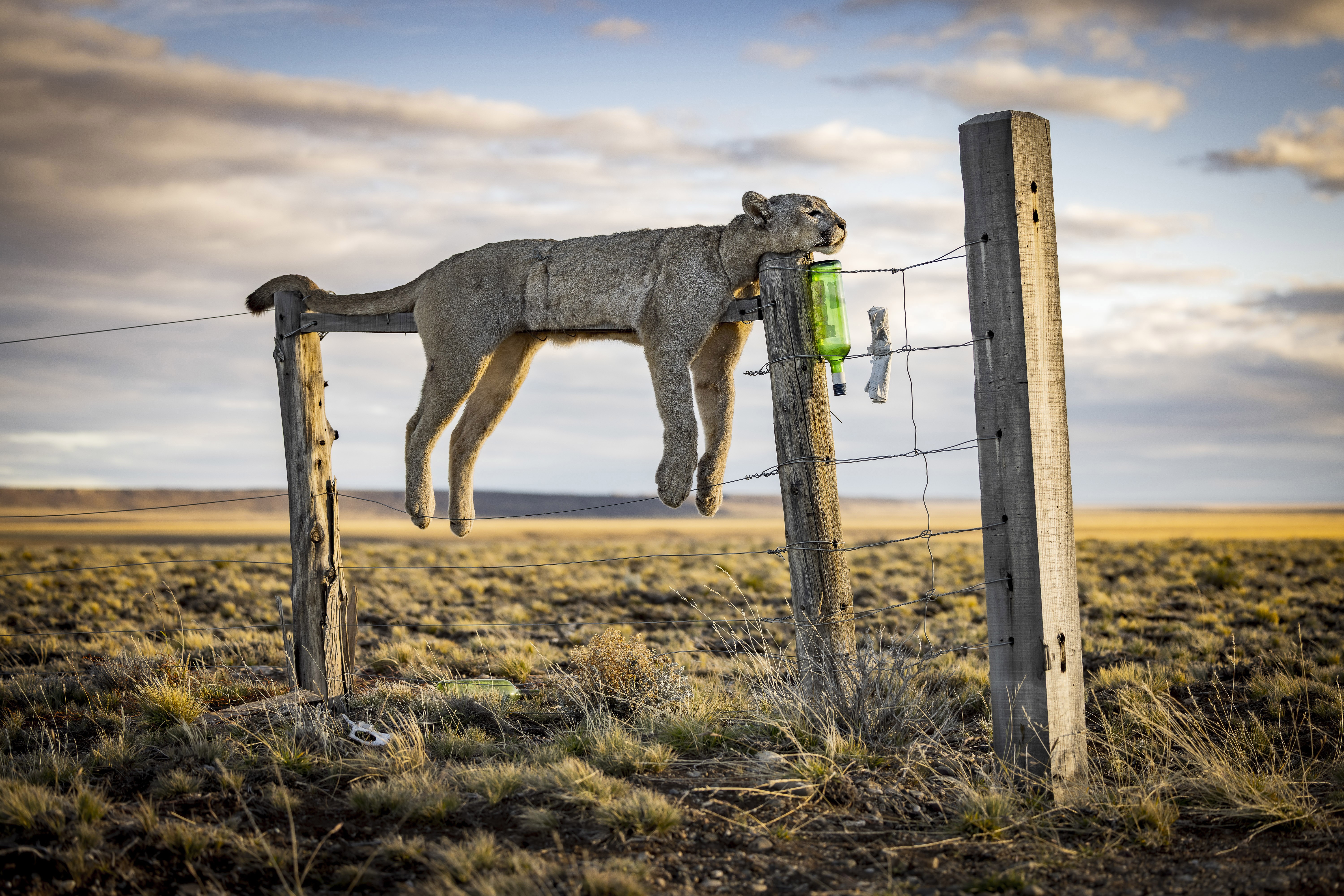
© Francisco Negroni / Wildlife Photographer of the Year
Warning Sign. Winner, Photojournalism. Francisco Negroni recorded this scene of a dead puma amid the rugged, windswept beauty of Argentine Patagonia. Tied to the fence and presented as a hunting trophy, this display was one that Francisco had “never witnessed or photographed before.” In 2025, Santa Cruz banned the hunting of pumas, but illegal persecution continues.
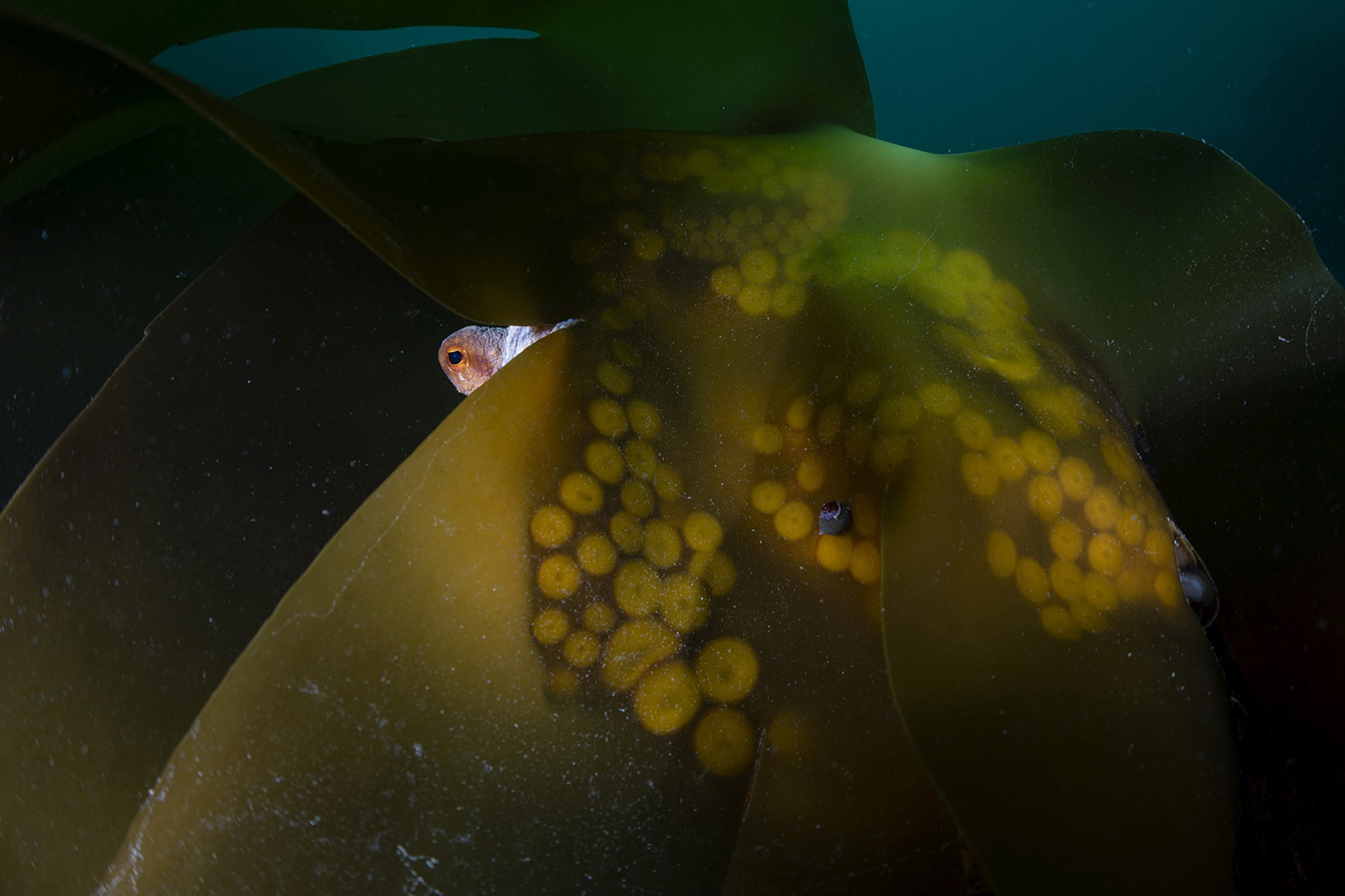
© Aaron Sanders / Wildlife Photographer of the Year
A Watchful Eye. Winner, Animal Portraits. Aaron Sanders glimpsed a common octopus behind a curtain of kelp in the waters off southwest England. Sanders was diving off Porthkerris Beach when he noticed the footprints of octopus suckers through a thin blade of kelp, and a single eye slowly emerging. “We remained perfectly still, watching one another with a seemingly shared curiosity,” Sanders said.
© Oscar Whitfield / Wildlife Photographer of the Year
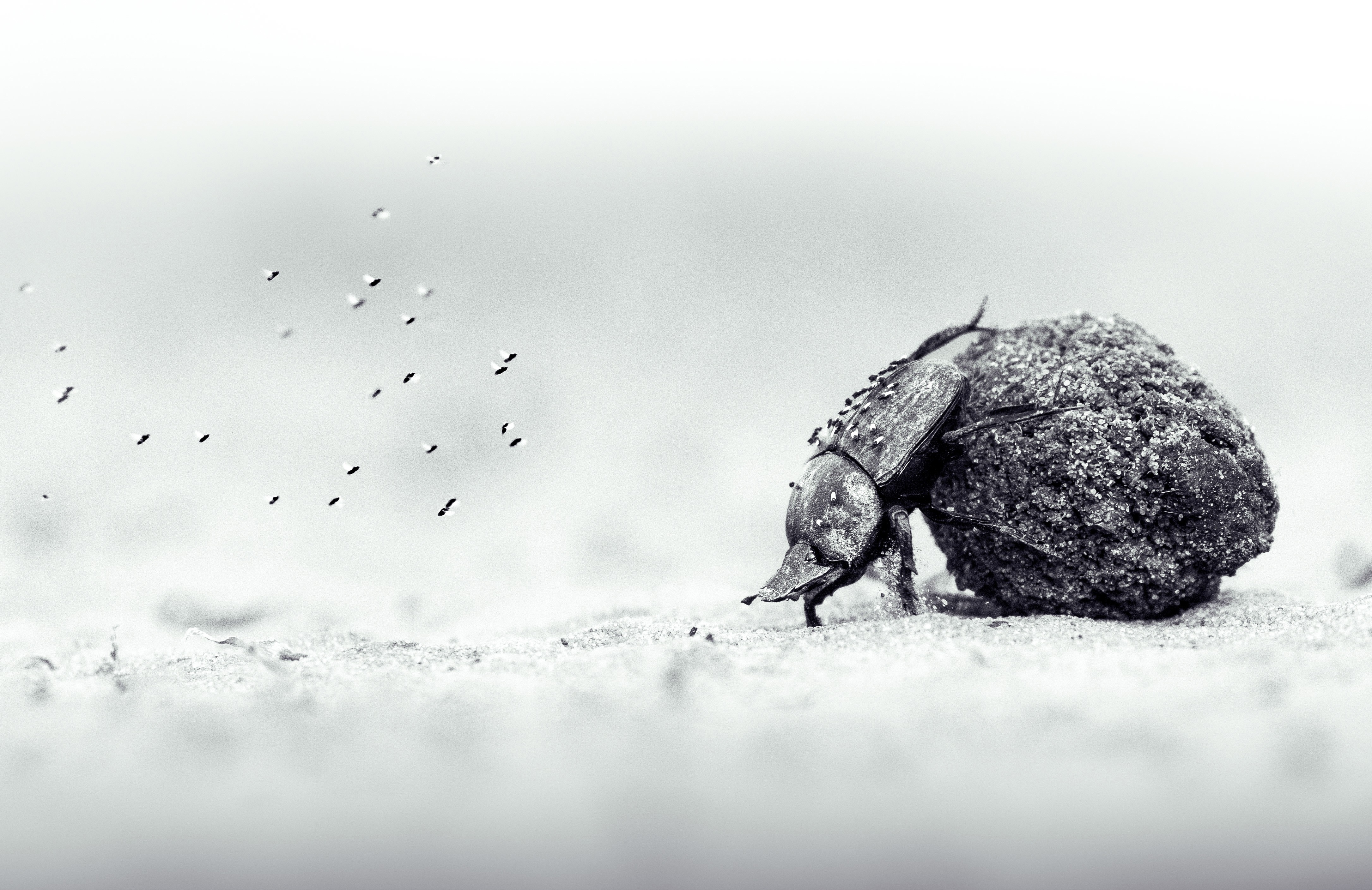
Labour of Love. Winner, 11-14 Years, Young Wildlife Photographer of the Year 2026. Oscar Whitfield noticed the arduous exertion of this dung beetle pushing its precious cargo. Using a fast shutter speed and high light sensitivity, Oscar lay flat on the ground to photograph the beetle at eye level, with the sunshine and heat creating dry dust all around him.
© Alex Lindbloom / Wildlife Photographer of the Year
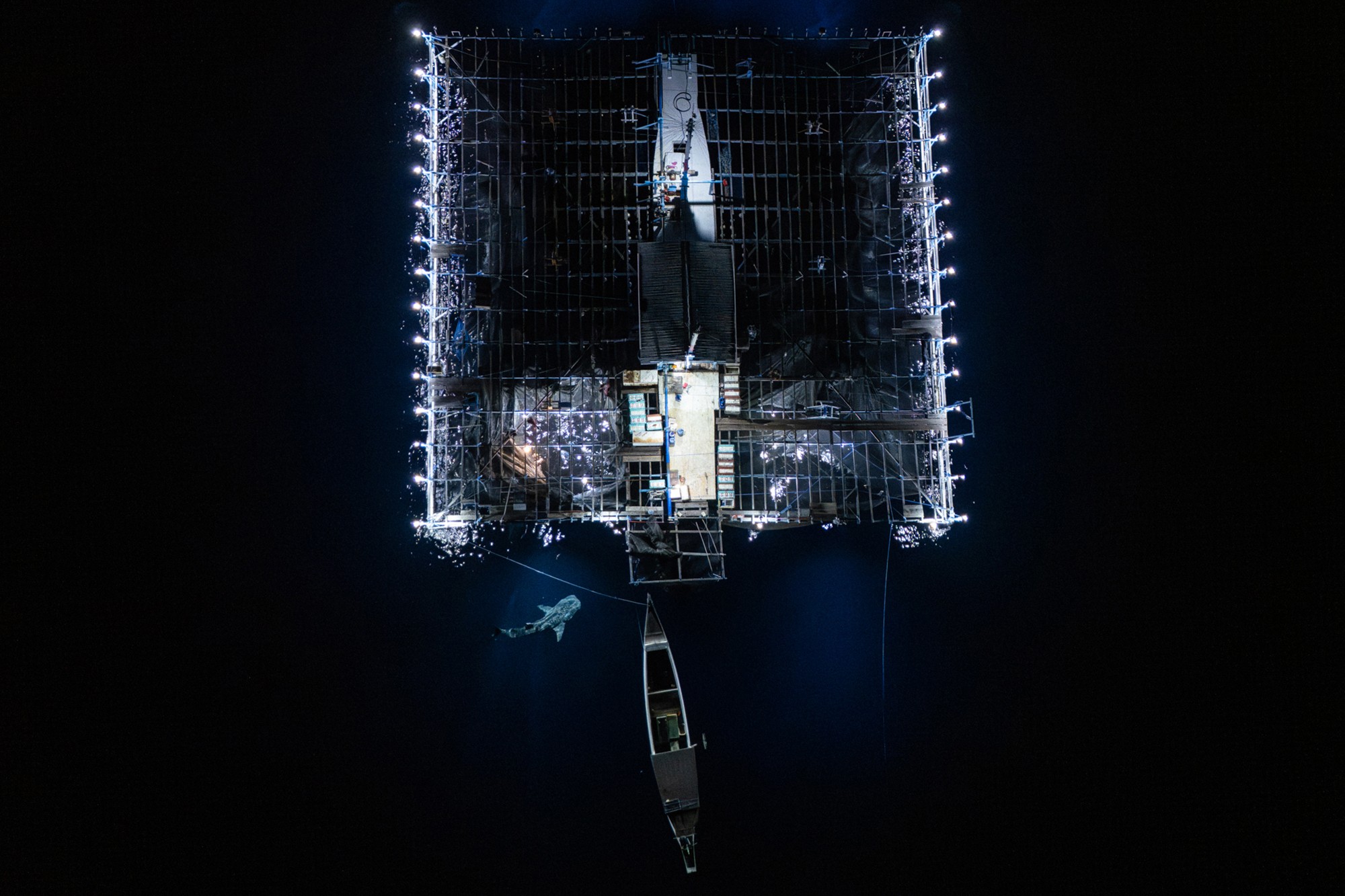
Night-Time Catch. Winner, Oceans: The Bigger Picture. Alex Lindbloom found a whale shark investigating the catch of a “bagan,” or mobile net-fishing platform, in the inky waters off Papua. Alex started searching for sharks around dawn when the nets were still in the water. Initially lacking natural light for his drone’s camera, he found these sharks illuminated by the bagan’s bright lights.
© Isak Pretorius / Wildlife Photographer of the Year
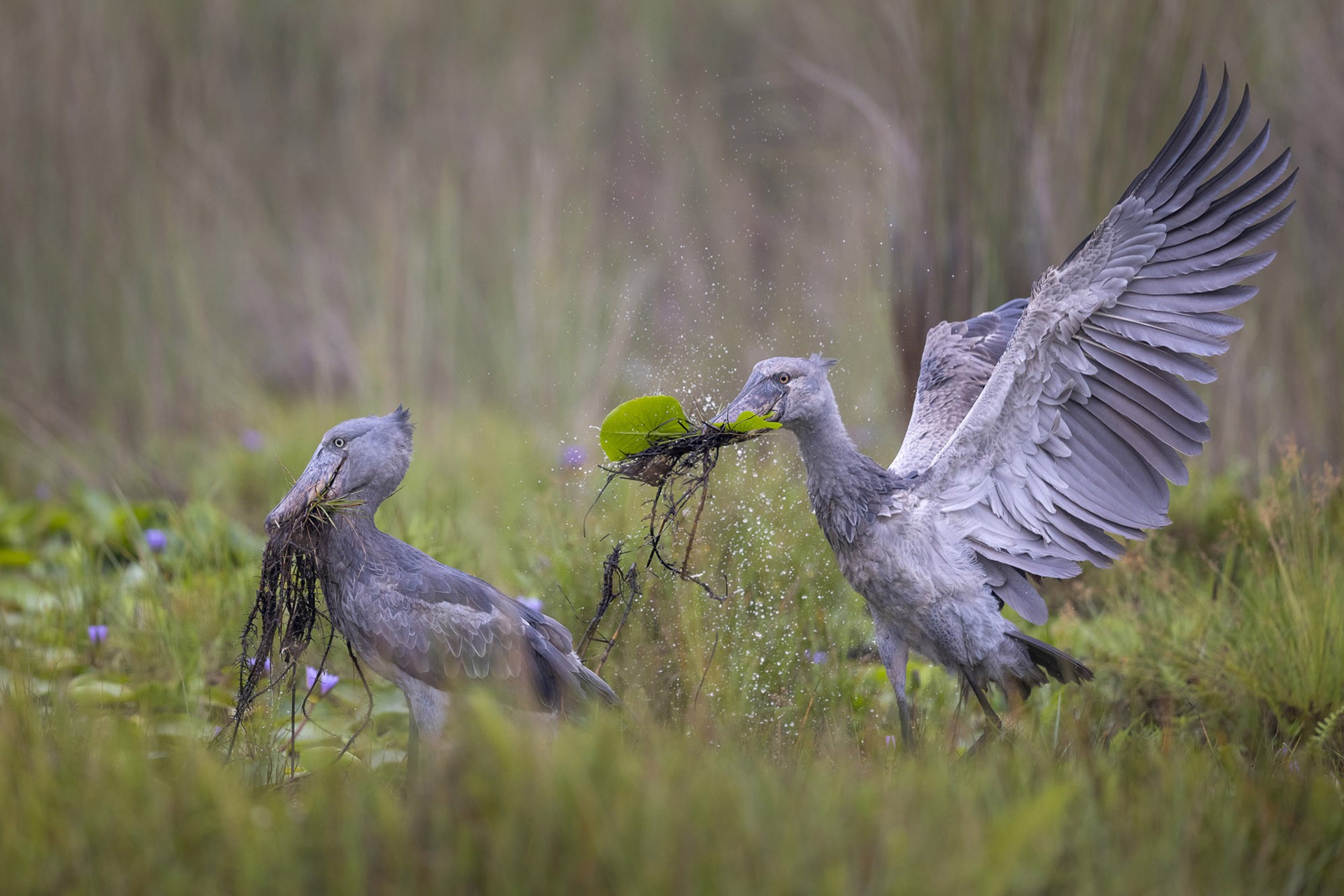
Scenes from the Swamp. Winner, Behaviour: Birds. Isak Pretorius chanced across two elusive shoebill storks among wetland vegetation. Exploring the swamp in a narrow canoe with a guide, Isak felt exceptionally lucky to see not one but two shoebills. The birds pulled out vegetation, dropped it, and then repeated the process several times. It’s likely that this was a breeding pair gathering nesting material.

© Federico Veronesi / Wildlife Photographer of the Year
The Aftermath. Winner, Behavior: Mammals, and Overall Winner, Wildlife Photographer of the Year 2026. Federico Veronesi witnessed this powerful moment of an elephant carrying a dead calf, a rare glimpse into complex animal behaviors. Veronesi was tracking elephants when he came across an unusual pattern of drag marks in the sand of a dry riverbed. The source became clear when he caught up with a family group. A female emerged with the calf, its leg wedged between her tusk and trunk. Behaviors centering on death have been observed in both Asian and African elephants, including vocalizations, guarding the dead, inspecting and handling bones, and carrying the deceased. Some researchers suggest these behaviors could indicate an elephant’s journey to understanding death, while others interpret these actions as possible displays of grief.
© Michał Michalski / Wildlife Photographer of the Year
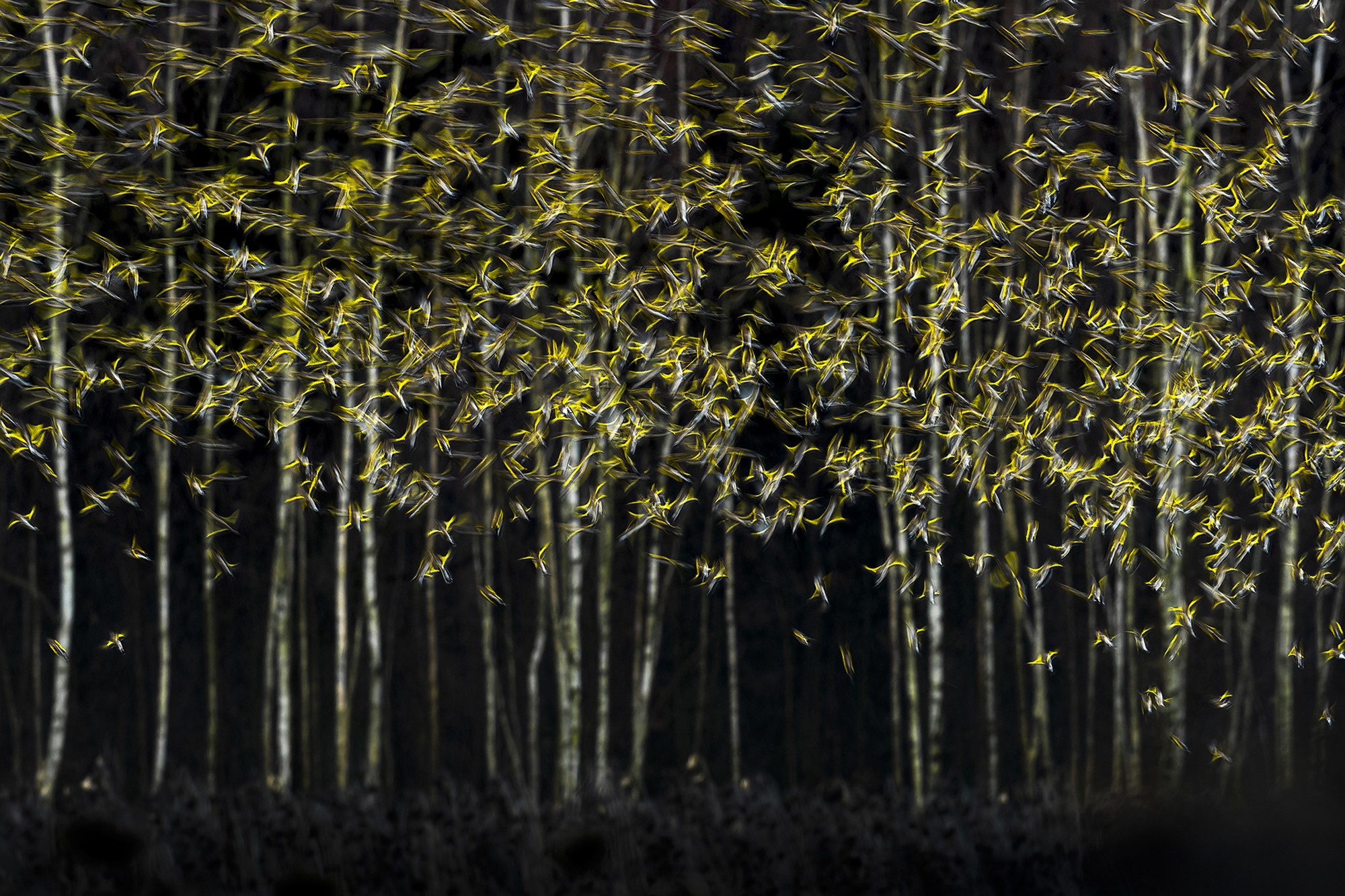
Escape Artistry. Winner, Natural Artistry. Michał Michalski used a slow shutter speed to create the illusion of trees still swathed in autumn foliage. Michalski was in a field of unharvested sunflowers that had attracted mixed flocks of birds, especially goldfinches and bramblings. As they took to the sky, startled by a sparrowhawk, Michalski blurred the movement against a backdrop of leafless birches.
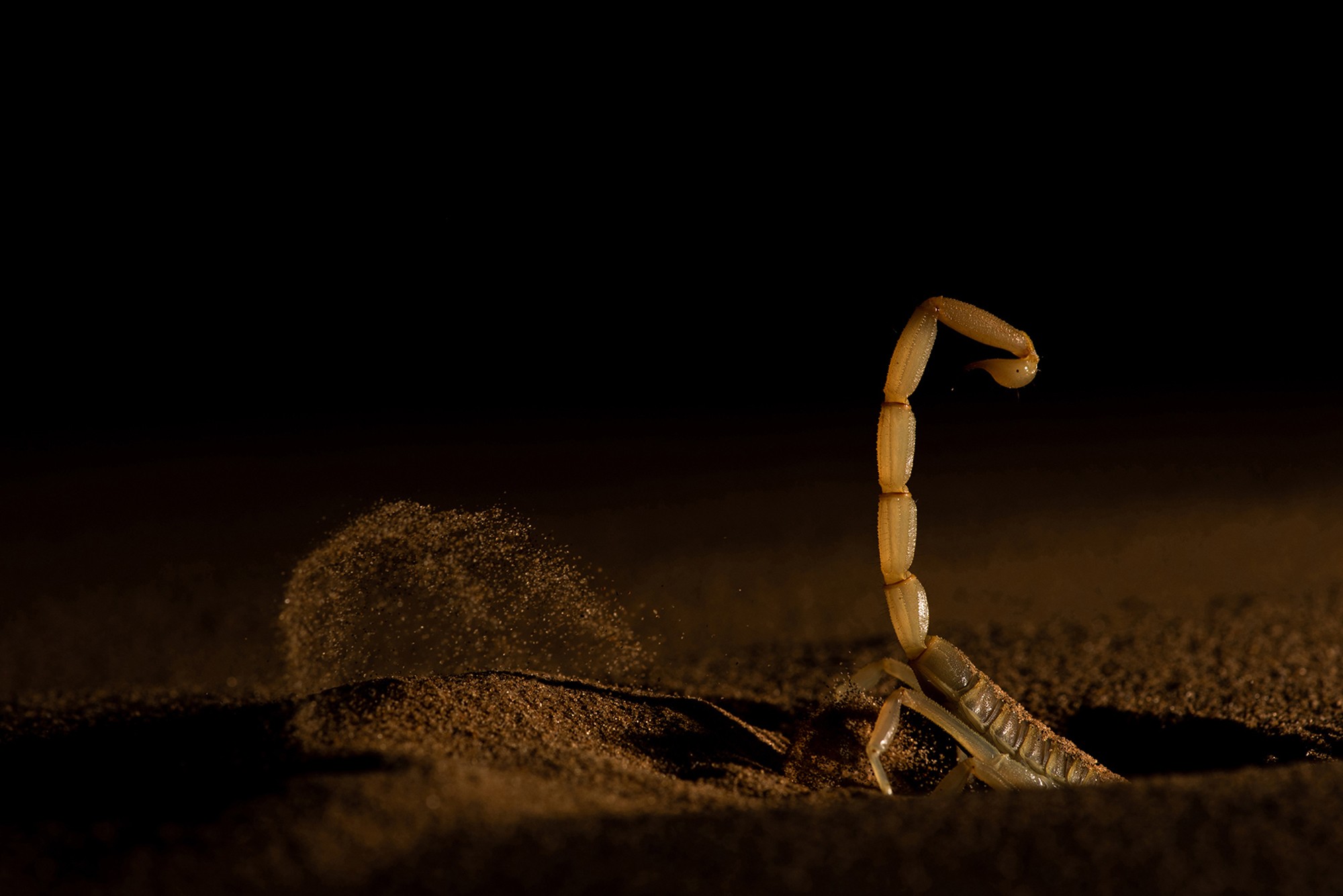
© Sitaram Raul / Wildlife Photographer of the Year
Shifting Sand. Winner, Behavior: Invertebrates. Sitaram Raul encountered a scorpion burrowing into one of the shifting dunes of the Thar Desert in India. Exploring the dunes at night near the village of Sam, Raul saw many scorpions searching for prey. But as sunrise approached, they started burrowing to avoid the intense heat. Raul timed the exposure so that the excavated sand was suspended in midair.
Wildlife Photographer of the Year is developed and produced by the Natural History Museum in London. Captions are provided by the photographers and WPY organizers, and are lightly edited for style.