Faced with a growing threat to their bases and personnel from missiles and drones and some recent hard-learned lessons, two top Air Force officials on Monday announced plans to increase protection. The statements were made during the Air & Space Forces Air, Space and Cyber Symposium that TWZ is attending. They were delivered as the service is seeking to improve its organic ability to defend its bases and has developed new doctrine to do so.
The war against Iran exposed gaps in how the U.S. can provide effective, sustained air defenses for its foreign installations and there are major concerns about a future fight against a peer competitor like China or Russia. Drone incursions at home have raised alarms about domestic base protection as has the war between Russia and Ukraine.
The following video shows a fatal Iranian attack on Muwaffaq Salti Air Base in Jordan in July.
“For decades, American air and space power has often operated from a position of sanctuary. Those days are over,” Air Force Chief of Staff Gen. Kenneth S. Wilsbach said during a keynote speech. “We can no longer treat point defense as a side hustle. We must make it a core function of air and space power.”
He acknowledged the widespread damage Iran caused to U.S. bases and suggested that lack of base defense played a large role.
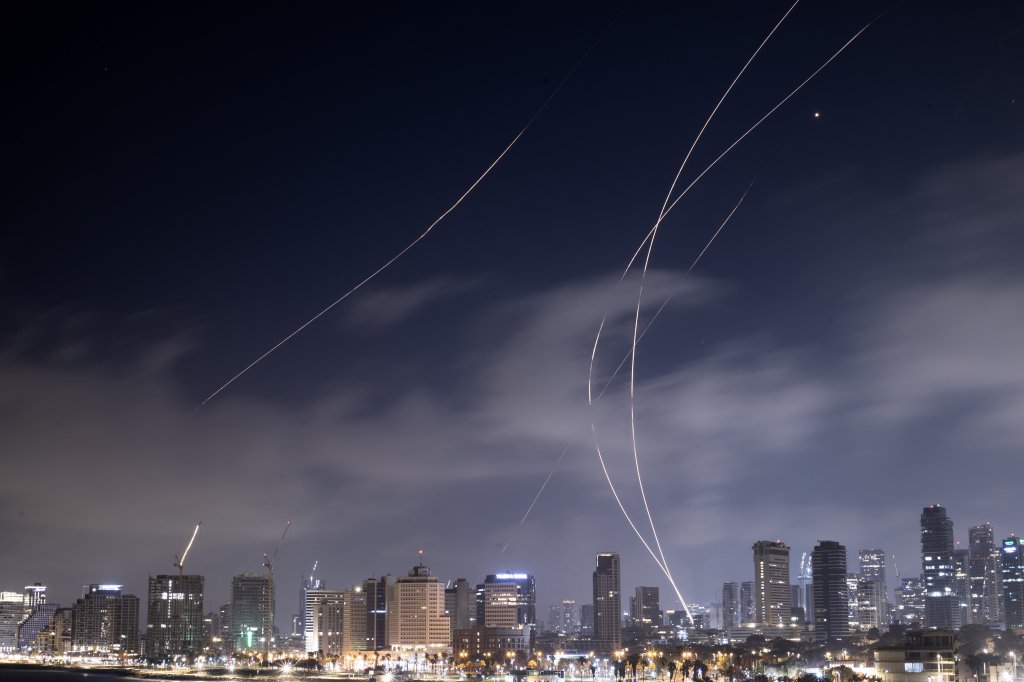
“So, if we had more robust base defense, perhaps those bases wouldn’t have been as damaged as they were,” the general admitted. “Look at Israel; they have a significantly layered, very robust defense of their country, and they didn’t take that many hits. Very few, in fact, and that shows you what a good defensive system can do, which can help you to operate not quite with impunity, but almost, and you can just keep generating air power, and your defensive systems take care of the incoming.”
Wilsbach offered some concrete suggestions about how to make improvements.
“First, we will establish the point defense weapon system, bringing together kinetic and non-kinetic capabilities to secure our air bases,” the general said. He did not offer any specifics.
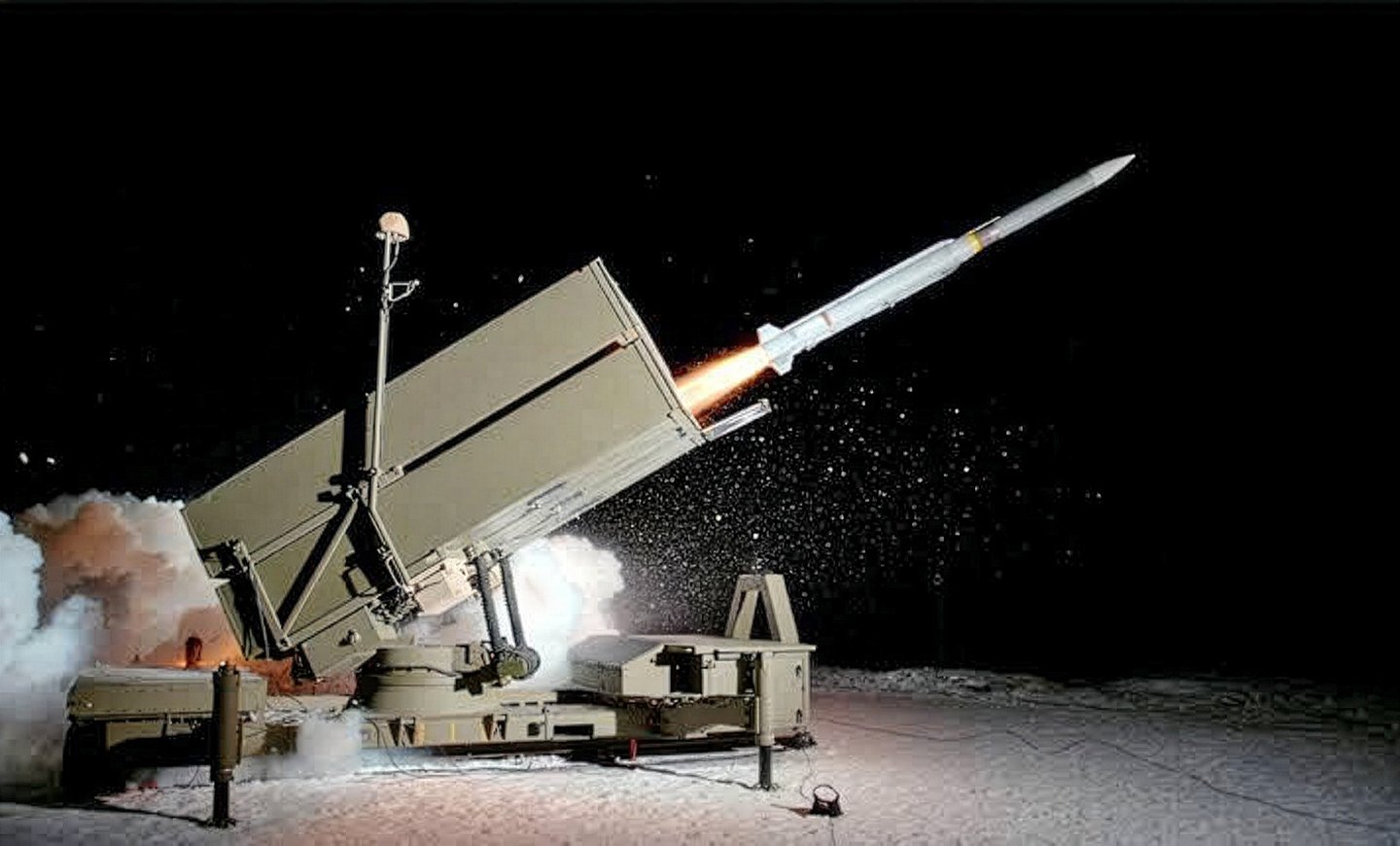
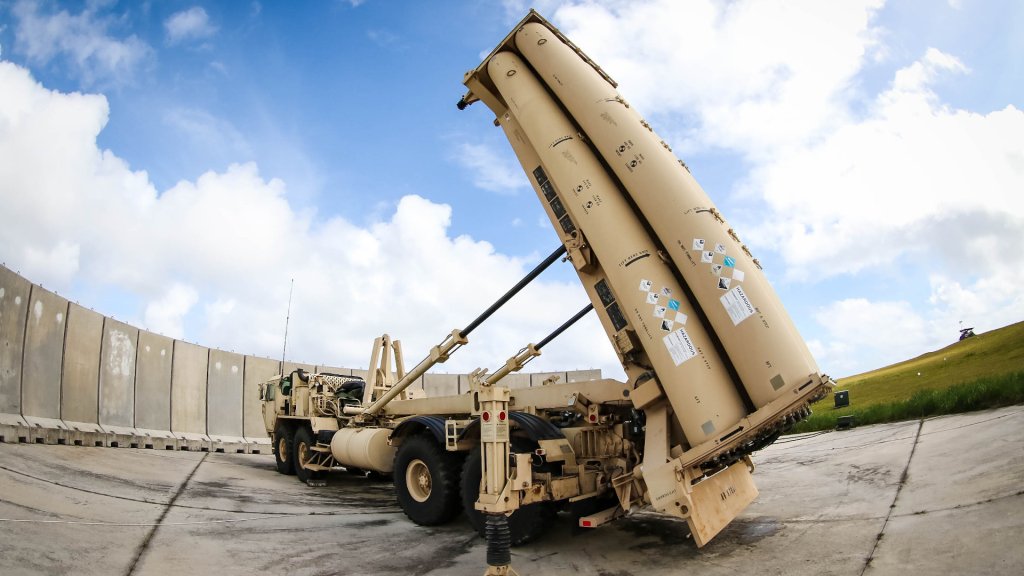
While Wilsbach offered no details about what a point defense weapons system would entail, we recently wrote that the Air Force is seeking an anti-aircraft gun system to help defend its air bases around the world from drones and cruise missiles. Introduced via a Request for Information (RFI) recently posted on the government’s contracting website, the gun system concept is part of a larger Air Force effort to play a greater role in air base defense via ground-based air defenses (GBADs). This role is largely performed by the U.S. Army, most notably with surface-to-air missile systems like Patriot and the Humvee-based Avenger system. The Terminal High Altitude Area Defense (THAAD) system can also provide broader area defense against incoming ballistic missiles. Other short-range systems optimized to swat down drones and even incoming rockets include the Centurion Counter-Rocket, Artillery, Mortar (C-RAM) system, Coyote counter-drone interceptors and more.
The Air Force currently has no such systems. Now it is set on changing that.
The Air Force is also looking at directed energy weapons like lasers for force protection and especially for defending bases overseas. While gaining traction across the services due in large measure to the much lower cost of delivering effects, these systems are still works in progress.
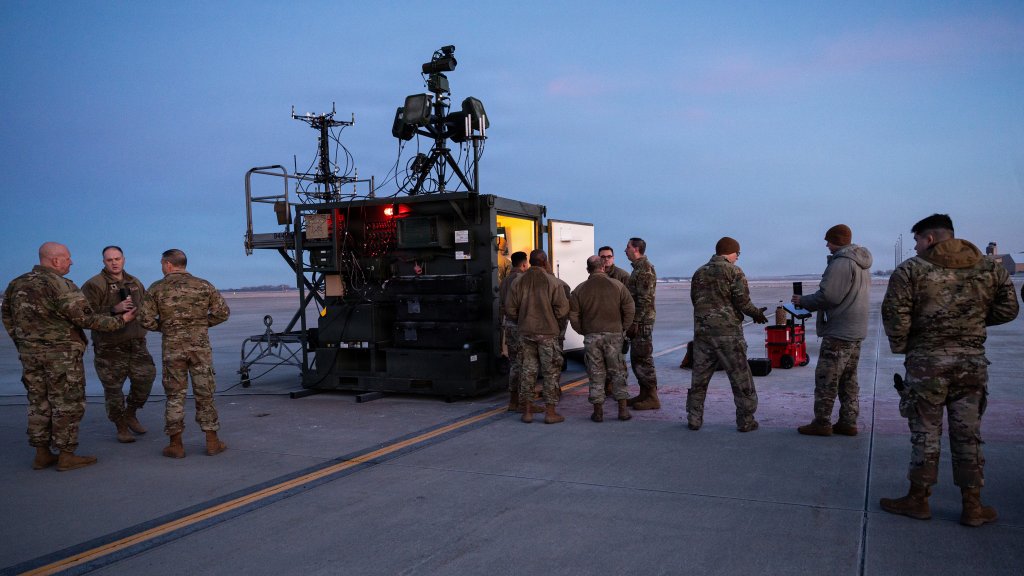
It’s one thing to have equipment, but another to have experts that know how to use it, Wilsbach noted.
“Second, we have established a new career field of point defense airmen,” he added. “This new career field will be operational in two years. Together, these two new initiatives will strengthen our defenses, reinforce our ability to generate air and space power under fire, and protect our greatest advantage: our airmen and guardians.”
“Protecting the force and generating combat power are inseparable,” Wilsbach explained. “We need our airmen trained, equipped, and ready to fight from the opening moments of a conflict.”
“Don’t you think we ought to have them at every base?” he suggested when asked about point defenders during a media engagement at the symposium. “Because if every base is going to be threatened, we have to have somebody that knows how to defend it. So, obviously, that’s a long-term objective. But what I’ll tell you for right now is we’re going to develop the career field and push it forward to the critical bases that need protecting most, and then we’ll expand it beyond there.”
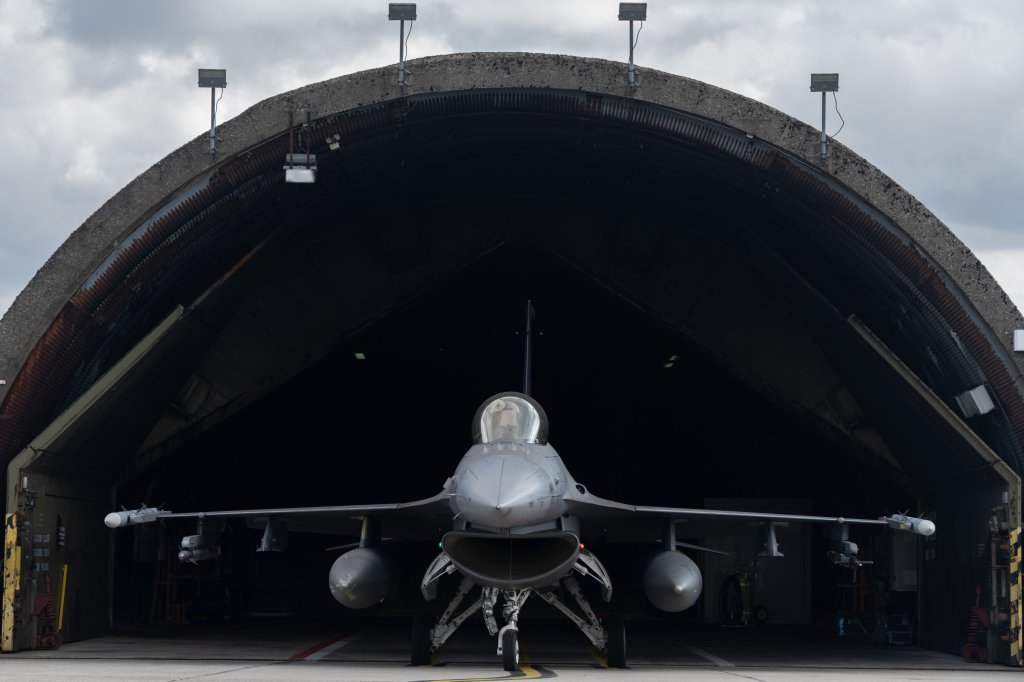
Though he wants the Air Force to come up with new defensive systems and personnel with the know-how to operate them, Wilsbach is not quite as sold on building out hardened aircraft shelters (HAS). This is his long-standing position that he reiterated on Monday.
“If you know where you’re going to fight from, hardened shelters aren’t that bad of an idea,” the general posited. “Deeply buried are even better. But if you are like us, and we don’t necessarily know where we’re going to fight from, if you build a hardened shelter and you don’t happen to be there, then you perhaps wasted that money.”
“So, given a resource-constrained environment, I would like to put my dollars in systems that can go anywhere in the world and protect you with basically the same level of security by shooting down incoming rounds versus making a hardened shelter that is impervious to an attack,” Wilsbach explained. “You have to put it 200 or 300 feet underground. Any hardened shelter that you show me that’s above the ground, I can blow up. So unless it’s really deeply buried, and then if it is, it’s expensive. And so that’s my logic: the best bang for the buck.”
To speed up the fielding of defensive systems, the service is interested in building out a procurement process specifically designed to develop weapons and other equipment needed to defend bases.
“How do you make sure that [airmen] have the kit they need to do the job?” Air Force Secretary Troy Meink asked rhetorically at a separate symposium session.
The Air Force, he said, is considering creating a new base defense Portfolio Acquisition Executive (PAE). The service created PAEs at the beginning of the year as part of an overhaul of its acquisition process ordered by Defense Secretary Pete Hegseth.
“The creation of PAEs is a central element of that direction,” according to an Air Force memo on the topic. “By organizing acquisition leadership around portfolios of capability, rather than discrete programs alone, the Department seeks to improve integration, decision speed, and outcome-focused execution across the acquisition enterprise.”
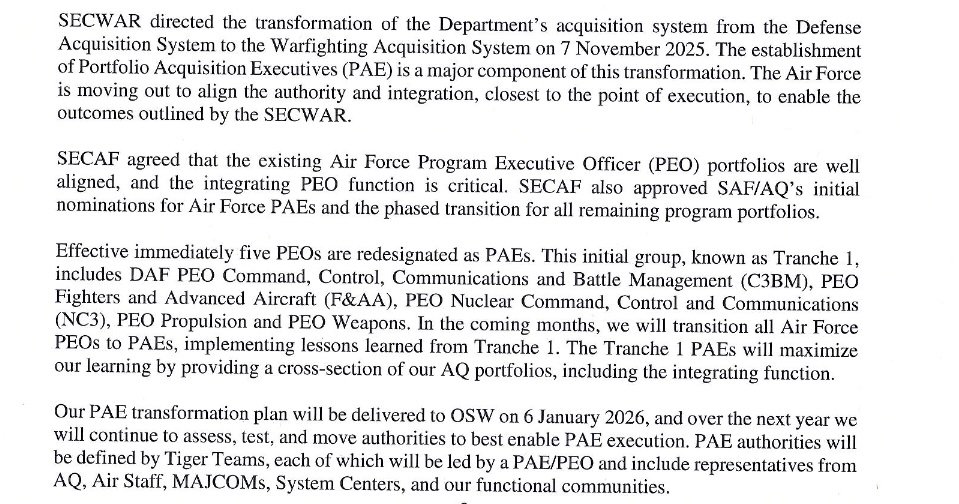
Meink acknowledged that there are challenges to creating a new PAE, most notably the overhead cost of establishing a new office with its associated personnel and infrastructure.
“Probably not going to do it right away, but obviously I think we’re on a path to something like that in the future,” the secretary suggested. “But there definitely has to be a continually increasing focus on making sure we can defend our airmen and guardians wherever they are in the world. This is not just an overseas problem; it’s a U.S. problem as well.”
Though we have been raising the alarm for years about the need for domestic base protection, the issue came into sharp focus in December 2023 after Langley Air Force Base in Virginia was beset by mysterious drone incursions for much of that month. The nature of those flights, which we were the first to report, remains publicly unknown. Since then there have been incursions at several other bases in the U.S., including Barksdale Air Force Base in Louisiana, home of B-52 Stratofortress bombers and nuclear weapons storage facilities, and a key part of the airborne leg of America’s nuclear triad. There have also been numerous incursions over U.S. bases in Europe, many of which we were the first to report.
As we noted earlier in this story, the U.S. is already facing a challenge defending against Iranian threats. A war with China would be more devastating and, when it comes to the Air Force protecting its bases, require more robust defenses and a lot more of them at many more locations. At the same time, the Air Force is still very early in the process of taking on more responsibility for protecting its assets.
Meanwhile, the Army has its issues when it comes to air defense. Its existing Patriot battalions have already been shown to be worryingly inadequate to meet heavy existing operational demands, something TWZ has been calling attention to for years now. We have also been raising concerns for a long time about its lack of SHORADS.
For the Air Force, recognizing the problem and taking steps to fix it are important steps. Whether these are the right approaches is something we will keep an eye on.
Contact the author: howard@twz.com
The post Air Force Announces New Plans To Take Over Defending Its Own Bases From Aerial Attack appeared first on TWZ.