“But is it clean?” asked Elizabeth Berger, a 41-year-old mother of two. It was five months after the terrorist attacks on September 11, 2001, and Berger was testifying at a Senate field hearing on air quality in Lower Manhattan. Just blocks away, at Ground Zero, responders were still sifting through what they called “the pile”—eight stories of twisted steel and debris, spread over 16 smoldering acres—searching for bodies, bone fragments, even scraps of clothing. Outside, the air carried the acrid smell of burnt metal.
Berger had lived 150 yards from the World Trade Center for nearly two decades. The complex was where her kids went roller skating and learned to ride their bikes. After the Twin Towers collapsed, increased levels of air pollution and particulates showed up across a wide area of New York and New Jersey. Lower Manhattan was covered in toxic dust. It had taken eight men in white suits and respirators five days to clean Berger’s apartment. She and her husband had thrown out trash bags full of toys and stuffed animals; handmade baby quilts; their clothes, sheets, and towels. They washed the walls. But every time the wind changed or she brushed dust from a shelf, Berger wondered what was still in the air, and whether it could make her children sick.
“We don’t know what the right thing to do is,” she said. “Ours is a culture that’s based on authority, but there has been none. We would do whatever we needed to do if only we knew what that was.”
That was exactly why I had called for the hearing. I had represented New York in the Senate for just eight months before 9/11. After the attacks, it was clear that the information about air quality coming from the Environmental Protection Agency did not square with what New Yorkers were experiencing. If the Bush administration wouldn’t level with people about what was really going on, then Congress needed to establish the facts and press for action and accountability. I served on a Senate subcommittee on clean air chaired by Joe Lieberman of Connecticut. I urged him to hold a field hearing in Lower Manhattan so that we could meet directly with experts, residents, and first responders on the ground.
In the grand, century-old Custom House at the foot of Broadway, Kerry Kelly, the New York City Fire Department’s chief medical officer, told us about firefighters who had been exposed at Ground Zero and were now struggling with persistent coughs and shortness of breath. Schoolteachers described children suffering rashes, nosebleeds, and respiratory problems. Parents questioned whether sending their kids to schools was safe.
[Ellen S. Bakalian: The anniversary I wish I didn’t share with my husband]
Stephen Levin of Mount Sinai Hospital in Manhattan told us his team had examined more than 250 people who worked or volunteered at or near Ground Zero, and most had developed respiratory problems. He warned that without a comprehensive medical-surveillance program to track symptoms, we risked missing the people whose illnesses would persist or worsen over time.
Again and again, New Yorkers told us they weren’t asking for certainty where none existed. They were asking for someone to take responsibility for finding the answers.
Twenty-five years after 9/11, much has been written about that horrific day and its aftermath: the 2,753 lives lost when the buildings fell, the heroism of those who ran toward danger, and the extraordinary resilience of a city and the mistakes of a country under attack. I want to tell a different part of the story—one that’s still coming into focus even now, as New York City makes 170,000 pages of documents related to air quality in the days after the attacks available for the first time. It’s the story of the people who survived 9/11 and those who went to Ground Zero to help, many of whom would pay a terrible price in the years that followed. It’s also a story about what happens when government fails the people it is supposed to serve—and what it takes to make government work.
I was in Washington on September 11, 2001, preparing for a hearing on early-childhood education featuring First Lady Laura Bush. I raced to the Capitol as soon as I heard about the attacks on the World Trade Center. My daughter, Chelsea, was staying with friends in New York, and I was desperately trying to track her down. Fortunately, she was safe. At the Capitol, an aide rushed to meet me and said that a plane had crashed into the Pentagon, only three miles away. The Capitol was being evacuated, she said. We had no idea what was happening or where the next blow might come. I made sure my staff got safely to a nearby townhouse, and I remember watching the disaster unfold on television. You could see the dust choking the streets and skies of Manhattan. I was already worried about the first responders working in that toxic cloud.
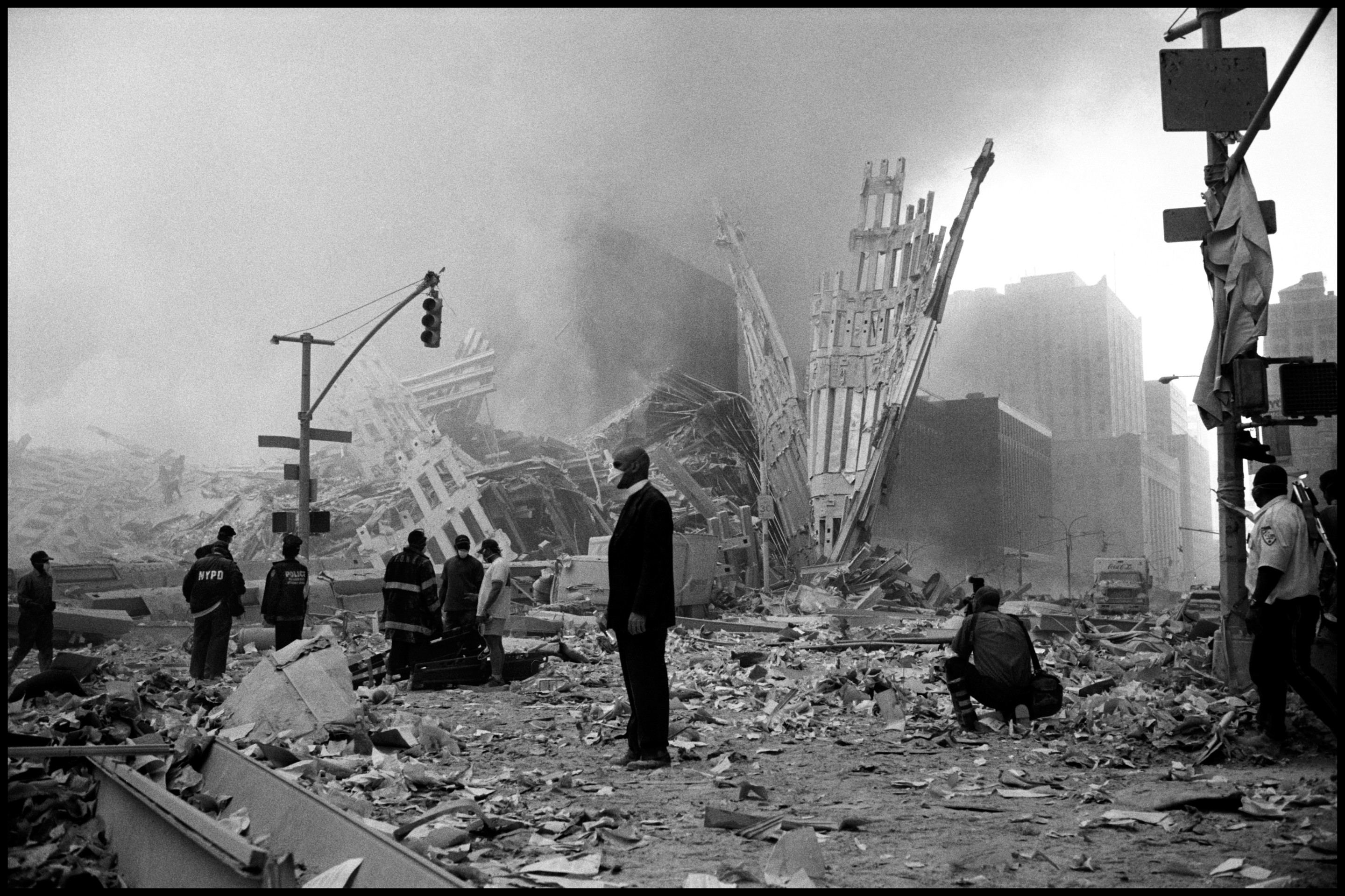
The next morning, I flew to New York with my colleague Senator Chuck Schumer on a special FEMA flight and then boarded a helicopter that circled over Lower Manhattan. The television images I had seen the night before had not prepared me for the scale of the destruction. Smoke was still rising from the smoldering wound where the World Trade Center had stood. Fires burned deep beneath the twisted girders and shattered beams, and periodically flared. It would take three months before the last flames were extinguished. Firefighters, police officers, and construction workers searched desperately in the rubble for survivors.
Our helicopter landed, and Schumer and I joined Governor George Pataki, Mayor Rudy Giuliani, and other officials walking toward the site. Occasionally, a firefighter would emerge from the dust and gloom, exhausted, dragging an axe, covered in soot. Some of them had been on duty nonstop since the planes hit the towers, and they had all lost friends and colleagues. I wanted to thank them and tell them everything was going to be all right. But I wasn’t sure yet that it was.
The air was bitter, and the thick smoke made it hard to breathe or see. I was wearing a surgical mask, but the air burned my throat and lungs and made my eyes tear up. In the makeshift command center at the Police Academy on East 20th Street, we were briefed on the damage. Later, I saw a draft of the White House’s initial emergency national-security spending bill. To my horror, I realized there wasn’t one penny set aside for New York. It was an astonishing oversight. I caught the last train south before they closed Penn Station. There was work to do in D.C. New Yorkers were going to need a lot of help to recover, and it was now our job to make sure they got it.
First thing the next morning, I went to see Senator Robert Byrd of West Virginia, chair of the Appropriations Committee. I told Byrd that we were going to fight to get emergency funding for New York added to the bill and asked if he’d have our back. “Consider me the third senator from New York,” he told me.
Next, Schumer and I headed to the White House. We needed to see President Bush face-to-face and make our plea for New York. In the Oval Office, I told the president that New York needed $20 billion in federal aid—and needed it fast. He didn’t hesitate. “You’ve got it,” he said.
In the hours and days that followed, some White House staff and Republicans in Congress tried to walk back this commitment. They wanted money for other states and priorities instead.
But President Bush kept his word, and Congress approved the $20 billion for New York and the other states attacked that day.
A week later, Schumer and I brought 38 senators to Ground Zero so that they could see the devastation for themselves. They met firefighters and rescue workers still combing through the wreckage. They talked with survivors and families. We wanted our colleagues to have this firsthand experience because we knew that New York was going to need their support for months, even years, to come.
On September 18, EPA Administrator Christine Todd Whitman said she was “glad to reassure the people of New York and Washington, D.C., that their air is safe to breathe and their water is safe to drink.” Based on my firsthand experience, that was hard to believe. And rigorous indoor air testing had not yet been conducted. Sure enough, by early November, nearly 4,000 firefighters who had been working at Ground Zero were being treated for severe coughs. They started calling it the “World Trade Center cough.”
I had seen this pattern before. As first lady, I heard from men and women who had served in the Persian Gulf during Operation Desert Storm in 1991 and later suffered from “Gulf War syndrome”—a cluster of agonizing illnesses linked to wartime exposure to toxins that the government had been slow to acknowledge. After hearing from veterans and their families, I urged my husband to establish a presidential advisory committee to investigate. He later signed legislation extending disability benefits to eligible Gulf War veterans with undiagnosed illnesses and improving how the government screened and monitored troops for similar risks.
That experience taught me how slow the government could be to acknowledge long-term health problems, especially if they could cause political headaches. I didn’t want the same negligent approach to be applied in New York. On October 26, I read a report in the New York Daily News that heightened my concern. The paper reported that the EPA’s own testing showed elevated levels of benzene, lead, and sulfur dioxide. I wrote to Whitman demanding answers and a face-to-face meeting. I also started urging Senator Lieberman to hold that field hearing in Lower Manhattan. New Yorkers deserved the truth. And if it was as bad as it seemed, urgent action was going to be needed.
I also began working with doctors at Mount Sinai Hospital, along with local labor leaders, to develop a monitoring and screening program for the thousands of workers and volunteers at or near Ground Zero. The doctors had seen firsthand how sick some of the first responders were becoming, and they knew that the full health consequences of environmental exposure might not be apparent for years. We couldn’t afford to wait for those illnesses to emerge before we started tracking them.
By December, the New York delegation in Congress had secured $12 million in federal funding for the World Trade Center Worker and Volunteer Medical Screening Program at Mount Sinai—an initiative I had begun pushing for a month earlier, when I introduced legislation to establish a federal health-monitoring program for people exposed to hazardous substances in disasters. It was an important first step. But it was only a first step.
The EPA continued to be unhelpful and at times untruthful. The full extent of the deception did not emerge until August 2003. An investigation by the EPA’s inspector general found that, in the aftermath of the attacks, White House officials instructed the agency to reassure New Yorkers that the air was safe to breathe, even though deadly contaminants such as asbestos and lead were present. The agency “did not have sufficient data and analyses” to back up its statements, the report said, noting that “competing considerations” such as reopening Wall Street played a role in their deception.
I believe that President Bush himself genuinely wanted to do the right thing for New York. Three days after the attacks, he stood on a pile of rubble at Ground Zero, put his arm around a firefighter, and pledged his support. But members of his administration were eager to restore a sense of “open for business” normalcy. Alarming reports about toxic air near Wall Street would have made for inconvenient messaging.
In my decades of public service, I have rarely been as angry as I was the day that the damning inspector general’s report was released. I thought of the firefighters working around the clock in poisonous dust and soot. I thought of Sister Cindy Mahoney, a nun who volunteered as an EMT at Ground Zero and prayed with weary workers—a few years later, she died of severe respiratory failure and asked for her body to be autopsied for evidence of the effects of exposure. I thought of every resident and responder I’d met with over the past two years, each with their own quiet stories of loss and heroism.
The government had told them the air was safe to breathe. It wasn’t. And they knew that.
Representative Jerry Nadler and I immediately organized a press conference on the steps of city hall, just blocks from Ground Zero, along with doctors and first responders who’d been lied to. I am usually someone who keeps her cool. This time, I lost my temper. “I know a little bit about how White Houses work,” I said, my fury rising. “I know somebody picked up a phone, somebody got on a computer, somebody sent an email, somebody called for a meeting, somebody in that White House, probably under instructions from somebody further up the chain, told the EPA: ‘Don’t tell the people of New York the truth.’ And I want to know who that is.”
The Bush administration never really came clean about its lies about the dirty air. For a lot of people, it became just one more example of government corruption and incompetence. As time passed and more responders became sick, I pushed to expand medical monitoring and treatment. But media attention moved on, and the political will in Washington to act dissipated. In 2005, Congress tried to rescind $125 million that had already been appropriated for injured responders’ health monitoring. It took a lot of shaming and arm-twisting to get it restored.
In 2006, Mount Sinai Hospital reported that nearly 70 percent of the roughly 9,500 responders it examined had developed a new or worsened respiratory symptom. That same year, James Zadroga, an NYPD detective who had spent more than 450 hours at Ground Zero, died after becoming gravely ill. His death made painfully clear what many responders and their families had been telling us for years: This wasn’t simply about monitoring people to see whether they might get sick. People were already sick, and they needed care.
I introduced the 9/11 Heroes Health Improvement Act to provide long-term medical and mental-health monitoring and treatment. This was the part of governing that rarely makes for a compelling news story: the hearings and markups, the calls to colleagues, the negotiations over language and money, the votes that had to be counted and counted again. But every step mattered. We were trying to turn an emergency response into a lasting obligation of the federal government.
It took years. The effort eventually became the James Zadroga 9/11 Health and Compensation Act, signed into law by President Obama in 2011, creating the World Trade Center Health Program and reopening the September 11th Victim Compensation Fund. The program exists today because leaders such as Chuck Schumer, Kirsten Gillibrand, Carolyn Maloney, Jerry Nadler, Peter King, and many others kept pushing after the rest of Washington moved on. That is the hard, unglamorous work of governing: staying in the fight after the cameras leave, listening to the people affected, lifting up their voices, and making the case for their needs again, and again, and again, until a promise becomes a program and the program gets results.
There are many important lessons worth learning from 9/11. This is one of them: Government should be about producing results for people. It’s not enough to give an inspiring speech from atop a pile of debris (or, 25 years later, to rile people up on social media). Our leaders need to level with people, tell them the truth, and follow through with actual results that make a difference in their lives. Unfortunately, a quarter century after 9/11, this kind of patient, persistent approach to solving problems has fallen out of fashion in Washington.
The Trump administration does not seem to have learned any lessons at all from 9/11. The president’s penchant for denying obvious truths is well known, whether it’s harmless facts such as the size of the crowd at his inauguration or deadly serious matters like the safety and efficacy of vaccines. But he fired or muzzled inspectors general across the government, so we’re unlikely to get a report calling out his lies the way the EPA IG did for the Bush administration on air quality in New York.
The Trump administration barely pretends to care about whether government delivers results for Americans, other than tax cuts for the wealthy and sweetheart deals for friends of the president. DOGE took a chainsaw to programs that provide lifesaving assistance to people across the country and the world without a second thought. It was shocking, but not surprising, to see the administration gut the World Trade Center Health Program, even as the need has grown only more urgent.
Nearly 29,000 civilian survivors have now been diagnosed with cancer linked to their exposure. Recent data from the WTCHP show that, for the first time, cancer cases among people who lived, worked, or went to school near Ground Zero have surpassed those among first responders who worked there. And the toll on first responders remains staggering: Just this month, the FDNY released a report finding that more than 12,000 firefighters have been certified with a 9/11-related condition, nearly a quarter of them have been diagnosed with cancer, and more than 600 have died from related illnesses.
Every one of these survivors deserves the care our government promised. Instead, the Trump administration cut nearly 20 percent of the WTCHP’s staff and fired its longtime leader, John Howard. As a result, men and women who served their fellow New Yorkers in our darkest hour are now being abandoned in theirs.
For the Trump administration, this is all business as usual. When measles began spreading in West Texas last year, the Trump administration cut staff at the CDC and sent mixed messages about the value of vaccination and treatment. Texas had more than 750 cases, more than 90 hospitalizations, and two deaths—the first U.S. measles deaths in a decade.
We saw the same thing with lead poisoning. Last year, the CDC eliminated its Childhood Lead Poisoning Prevention branch, firing the entire 26-person team. The timing could hardly have been worse. Milwaukee was confronting widespread lead hazards in its public schools and had asked the CDC for help. City health officials had relied on the federal experts to help determine which children should be tested and how to respond to the exposure. After the firings, the CDC told Milwaukee that, because of the “complete loss” of its lead program, it could no longer provide that assistance. (The cuts were so egregious that the program was eventually reinstated.)
Does anyone think the plight of those kids will keep President Trump up at night? Will the dinner crowd enjoying the rarefied air at Mar-a-Lago spare even a passing thought for the firefighters, police officers, and construction workers who got sick breathing poison air at Ground Zero? They might as well be invisible.
When Trump is out of office—and there will come a time when he is out of office—Democrats and principled Republicans alike will have to rebuild the federal government and our democracy. We’ll have the chance to reconstruct entire agencies from the ground up. When that time comes, we should remember what the long tail of 9/11 has taught us: Policy must be about people. Americans who need help don’t care about ideology or who gets credit. They care whether government delivers results. So sweat the details, do the work that makes a difference in people’s lives, and stay with it until the job is done. Progress requires both urgency and perseverance. Sometimes you have to move fast. Sometimes you have to work patiently, step-by-step. You always have to put people first.
[From the September 2021 issue: What Bobby McIlvaine left behind]
For everything that went wrong in New York after 9/11, I’m proud of what went right. The roughly $20 billion in federal assistance for New York paid for the unglamorous work of recovery: debris removal, infrastructure, transportation, housing, and economic revitalization. Over time, it helped transform Lower Manhattan from a devastated financial district into a thriving neighborhood. In 2001, about 33,000 people lived downtown. Today, more than 70,000 people do.
Elizabeth Berger, the mom of two who asked the Senate subcommittee if the air in her neighborhood was safe to breathe, was a driving force for that recovery. She spent the years after 9/11 fighting for a Lower Manhattan that was a “round-the-clock community” to raise a family and build a future. Sadly, she did not live to see what it is today. Berger died of pancreatic cancer in 2013, at 53.
In the weeks and months after 9/11, the country united behind the words Never forget. Twenty-five years after that terrible day, we must make sure that Never forget remains not just a slogan but a solemn promise. That we remember not just the tragedy and the rebuilding, but the people whose lives were changed forever.
I think of people like Debbie St. John, who was brought to the hospital as a Jane Doe after falling debris crushed her legs on 9/11. When I first met her, she told me she was determined to dance at her wedding, but doctors weren’t sure she would survive, much less walk again. I followed her recovery through the years, the setbacks and surgeries. I got to know her devoted fiancé, Gregory. And I was there, years later, at their wedding, and watched Debbie walk down the aisle and dance in Gregory’s arms. There wasn’t a dry eye in the house. There was hope and joy after suffering and loss, but it didn’t come from looking away from the hard things. It came from looking straight at the devastation and doing the long, hard work of healing.
*Image Sources: Viorel Florescu / Newsday RM / Getty; Jim Watson / Getty; David Surowiecki / Getty; Spencer Platt / Getty; Charles Phelps Cushing / ClassicStock / Getty