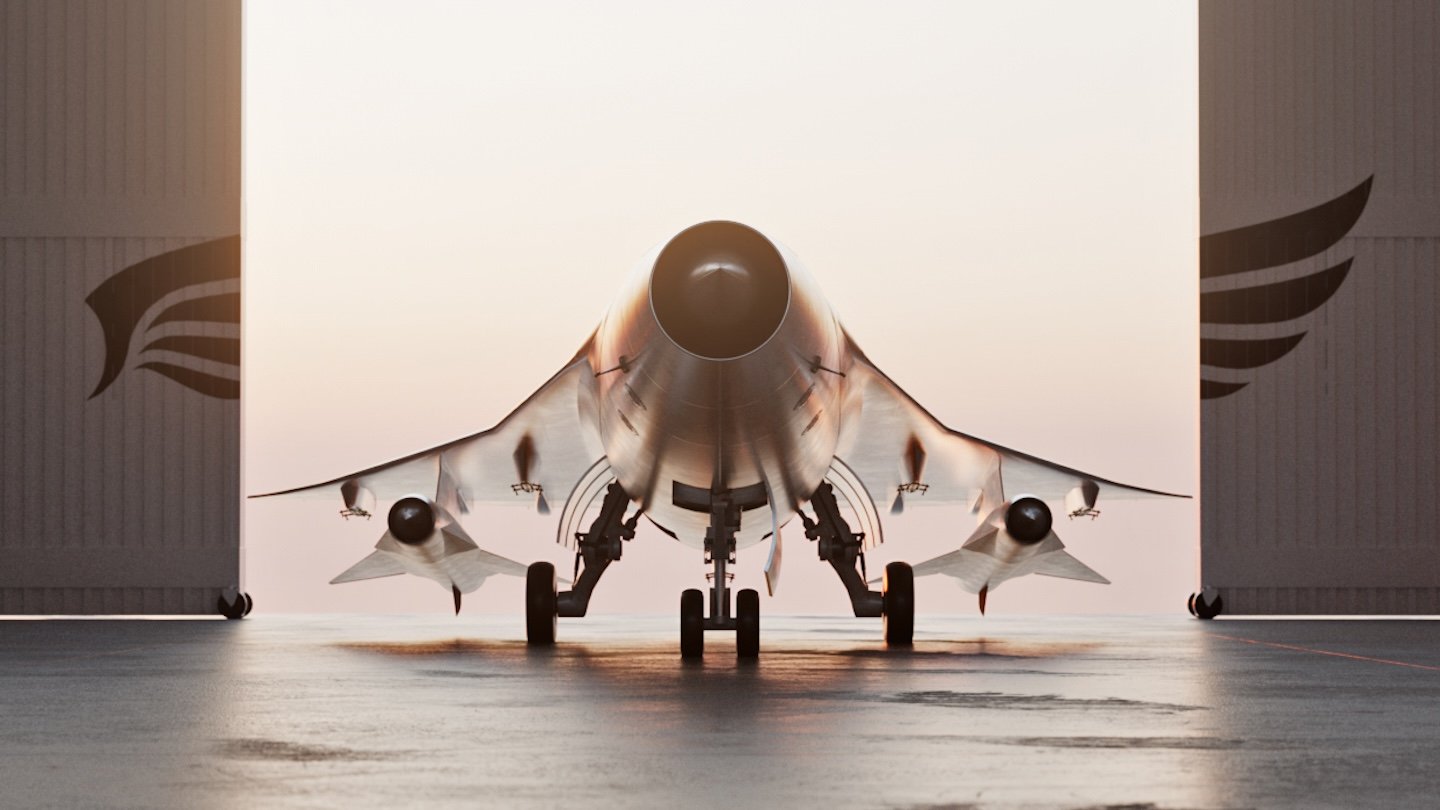
Hermeus is developing an expendable ramjet-powered aircraft, Ramjet-X, which will be air-launched from its reusable, F-16-sized Quarterhorse high-speed drone. The result aims to create a two-vehicle architecture intended to make high-speed flight testing less dependent on expensive, single-use test platforms. That would give Hermeus and potential customers a way to conduct repeated high-Mach flight tests without expending a large booster on every mission.
The company unveiled the concept today. Hermeus says the Ramjet-X will be carried beneath Quarterhorse and released at a speed of around Mach 3, at which its ramjet can begin operating. The smaller vehicle will then accelerate, climbing to around 100,000 feet, and a speed in the region of Mach 4. Quarterhorse will then return to base and be available for another mission.
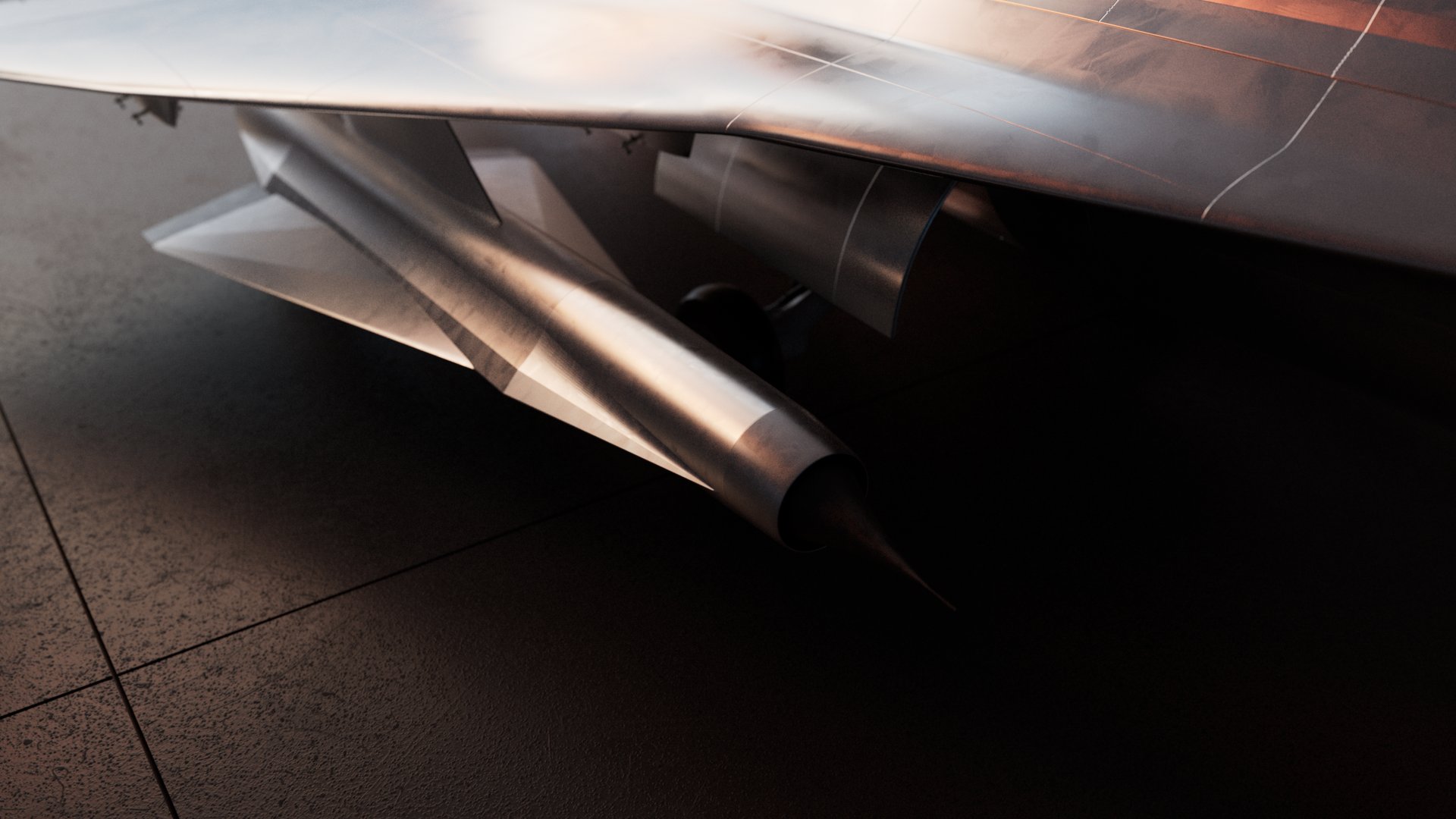
Imagery released by Hermeus shows a Quarterhorse carrying a Ramjet-X mounted on a pylon under each wing, indicating that two different high-speed tests can be carried out in a single sortie. Intriguingly, the Quarterhorse is shown with no fewer than six underwing hardpoints in all, suggesting that other kinds of external payloads are envisaged.
Hermeus has not released detailed performance specifications for Ramjet-X, including its range, payload capacity, or the critical expected cost per flight. We have reached out to the company for more information.
Images released by the company show a relatively compact, missile-like vehicle with delta wings incoporating prominent dihedral. There are no horizontal tail surfaces, but a conventional vertical fin is complemented by a ventral fin. Axios reports that Ramjet-X is approximately 22 feet long and 7 feet wide.
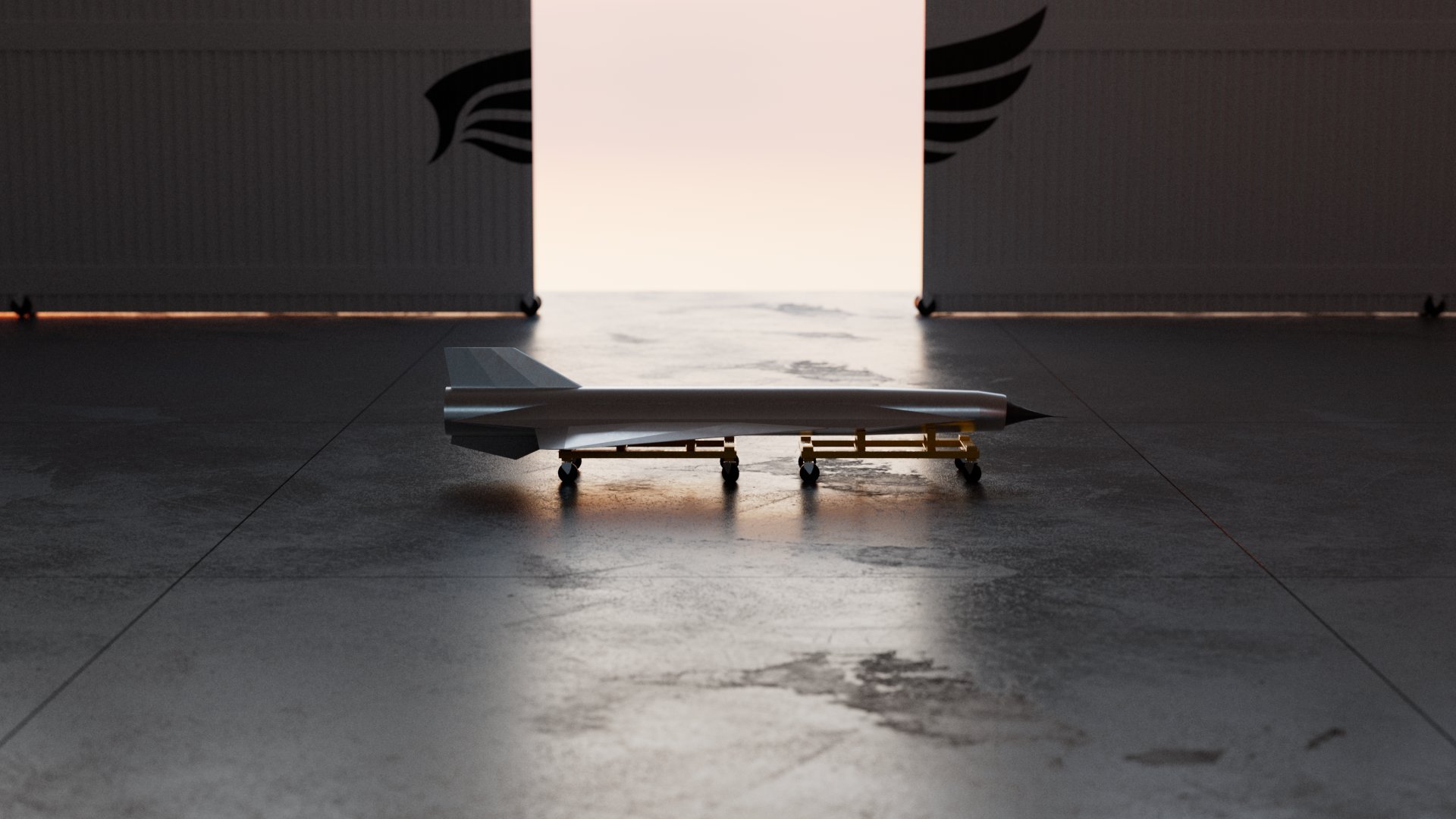
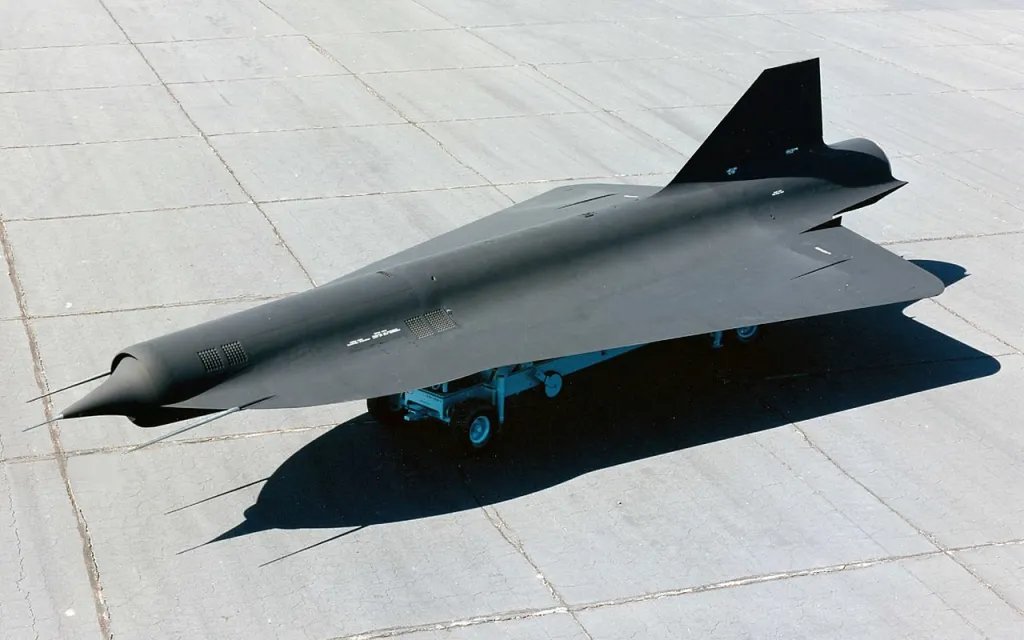
In terms of appearance, and also thanks to its ramjet propulsion system, the vehicle is outwardly very reminiscent of the Lockheed’s D-21 Tagboard supersonic spy drone. However, at more than 40 feet long and with a wingspan of 20 feet, the D-21 was significantly bigger. Overall, the entire concept recalls the Cold War-era D-21 and its M-21 mothership, on a smaller scale.
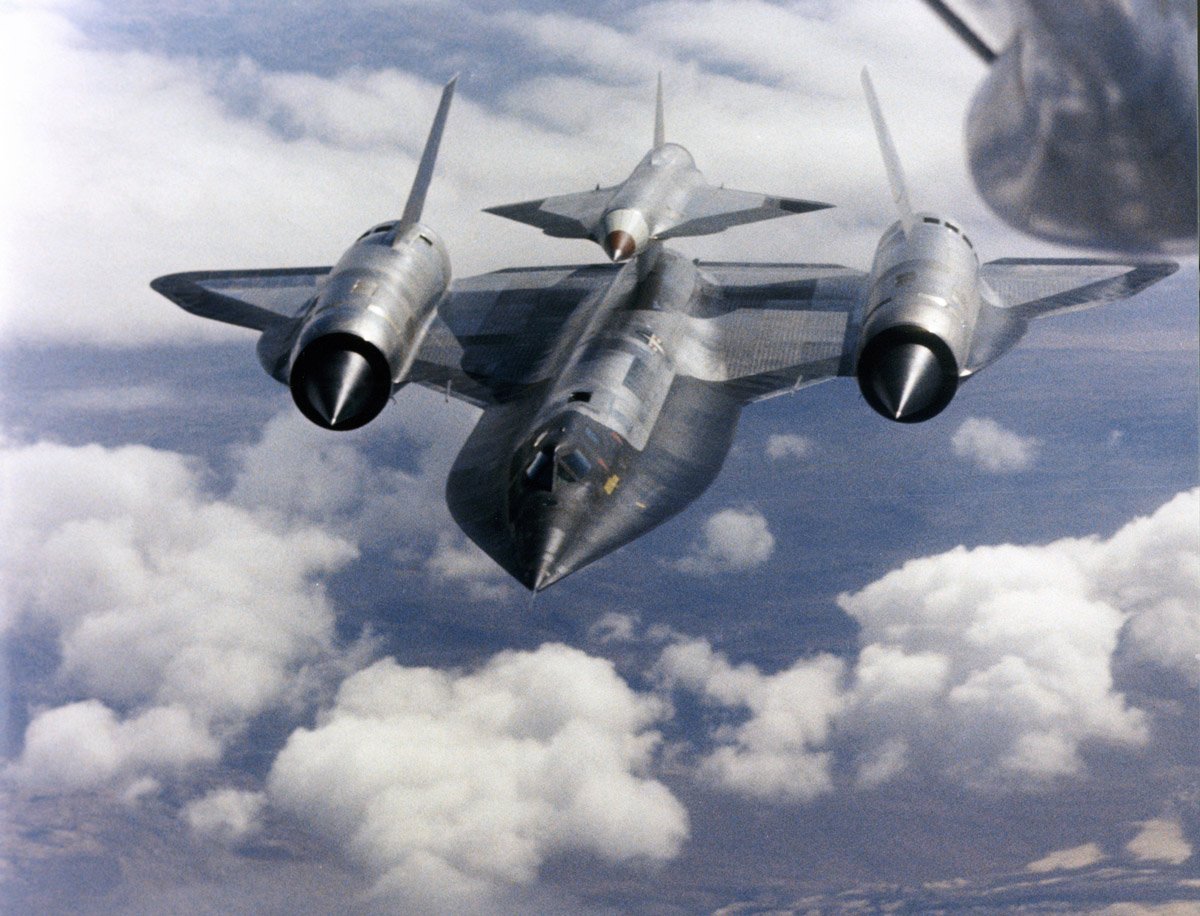
The basic concept aims to address a longstanding problem with ramjet flight testing. Unlike a conventional jet engine, a ramjet cannot provide useful thrust from a standstill. The vehicle therefore has to be accelerated to a sufficiently high speed before the ramjet can take over.
That acceleration can traditionally require another propulsion system, including an expendable rocket booster. Hermeus is proposing to substitute a reusable aircraft for that initial boost. It is unclear if the Ramjet-X vehicles are similarly recoverable, but we have asked Hermeus for more details here, too.
As it stands, flight-test programs of this kind are often constrained not only by the cost and availability of test infrastructure, but also by the limited availability of suitable airspace and range access. A reusable carrier aircraft could help address both challenges, allowing multiple Ramjet-X vehicles to be deployed from airports near a designated test range as required and launched only once the vehicle is within the approved test area. That flexibility could reduce the need for a new large booster for every experiment while also making it easier to conduct tests, including at shorter notice, within increasingly constrained airspace.
Hermeus says Ramjet-X is being designed not just for its own development work but as a potential test platform for outside customers. The company is calling the concept “Flight Test as a Service,” with customers able to fly payloads including sensors, communications equipment, computing and autonomy systems, materials, and propulsion hardware.
The program reflects a broader push toward increasing the availability of commercial high-speed flight testing that has attracted U.S. government interest.
Hermeus was also selected by the Defense Innovation Unit for work under its Hypersonic and High-Cadence Airborne Testing, or HyCAT, effort. That program is intended to use commercial flight-test capabilities to expand the government’s access to relevant high-speed environments.
The company is also pursuing its own increasingly ambitious Quarterhorse aircraft. Its Quarterhorse Mk 2.1 completed an uncrewed supersonic flight earlier this year, reaching Mach 1.21 on its third test flight. The company’s roadmap calls for subsequent Quarterhorse variants to progressively increase speed and address the thermal and propulsion challenges associated with high-Mach flight.
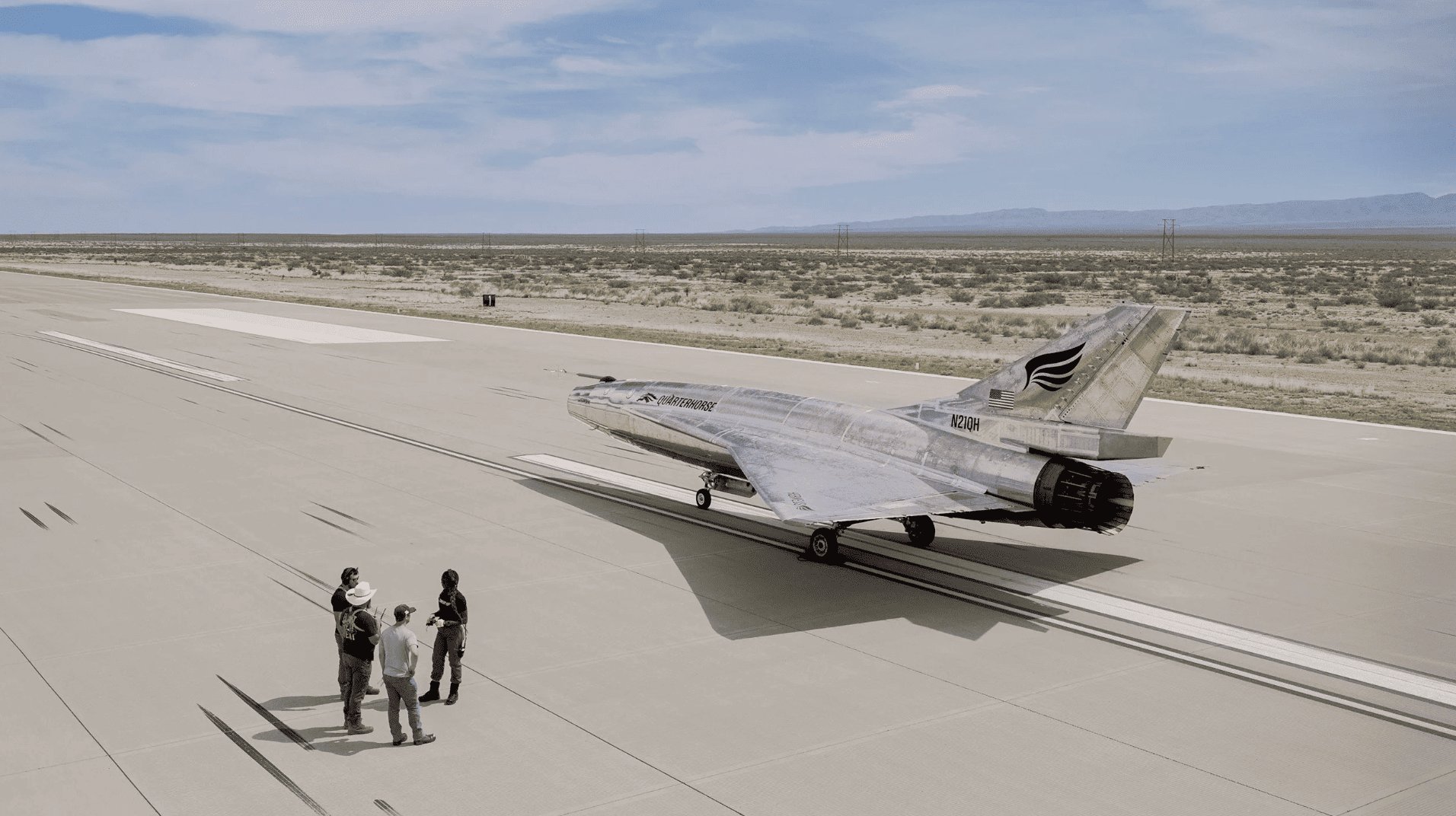
The imagery released for Ramjet-X shows a different Quarterhorse configuration than the 2.1 version, including beefed-up landing gear with twin nosewheels. The requirement for release of the Ramjet-X at Mach 3 suggests that its launch platform will be the Quarterhorse Mk 2.3, which will be the first to reach this kind of speed. This summer, Hermeus confirmed that its second supersonic aircraft, the Quarterhorse Mk 2.2, and the Mach 3-capable Mk 2.3 aircraft were under construction.
For its future Quarterhorse Mk 3, Hermeus has been developing Chimera, a turbine-based combined-cycle propulsion system. This is intended to transition from turbine operation to ramjet operation as speed increases.
Ramjet-X effectively separates part of that problem into another aircraft and the system could also be useful for experiments that do not require an entire hypersonic aircraft.
For example, an organization developing a high-temperature material might need to know how it behaves in an actual high-speed flight environment, rather than only in a ground test. The same could apply to weapons, sensors, communications systems, guidance hardware, onboard computers, or other components intended for high-speed vehicles.
So far, however, it’s not clear what kind of flight profiles Ramjet-X will provide. Hermeus has mentioned a cruise phase lasting “tens of minutes.”
But a short-duration dash through a high-Mach regime is not equivalent to sustained flight at those speeds. The duration available to an experiment, thermal loads, acceleration, vibration, available electrical power, telemetry, maneuverability, and payload mass will all determine what can actually be tested.
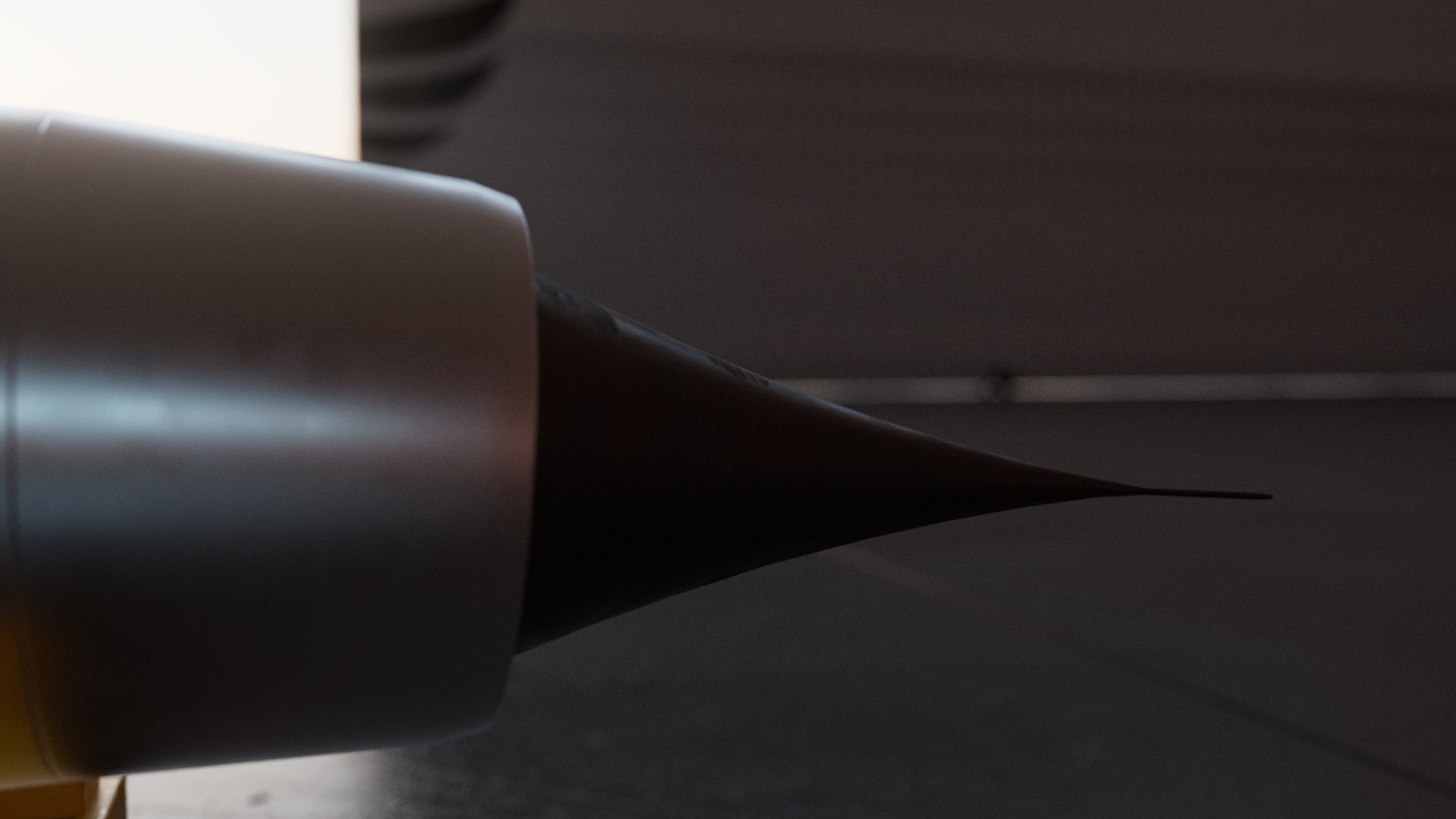
The company says it is already testing the Ramjet-X propulsion system at its High Enthalpy Air-Breathing Test facility in Jacksonville, Florida. High-temperature structures are also under development at its El Segundo, California, headquarters. Integrated vehicle testing is currently planned for 2027.
The HEAT facility itself is part of Hermeus’ effort to establish high-speed propulsion test infrastructure. The company says the facility is being developed to eventually provide continuous high-Mach airflow for more flight-like ground testing.
Ramjet-X has yet to fly, but if it performs as intended, it could help lower one of the major barriers to obtaining real-world flight data at high Mach numbers. At the same time, the company is entering a market that is attracting growing interest from other aerospace firms, which are also expanding their high-speed flight-test capabilities, especially to capitalize on the broader hypersonics boom, including Stratolaunch.
There are fairly clear potential weaponization of this concept, for strike and surveillance missions, as well, although there has been no indication of that being in the works at this time.
The planned 2027 integrated testing should provide the first meaningful indication of whether the concept can progress to become a practical high-speed test capability.
Contact the author: thomas@thewarzone.com
The post Hermeus Unveils Air-Launched Ramjet Test Vehicle for High-Speed Experiments appeared first on TWZ.