During a visit in May to the Maritime Museum in Halifax, Nova Scotia, I watched a film about a 1917 cargo-ship explosion that killed more than 1,700 townspeople and injured many more. The grainy black-and-white images of the flattened city catapulted me back to the devastation of Lower Manhattan after terrorists attacked the World Trade Center on September 11, 2001. Halifax suffered a blizzard following the cargo-ship catastrophe, and the sight of the city covered in a deep blanket of snow recalled the dust and debris from the once-glimmering towers that coated the Financial District. When I heard the recorded voices of the Haligonian survivors recounting their memories, I walked out of the small theater to cry.
Twenty-five years on from September 11, 2001, an image or memory can still evoke the very moment I learned that my 36-year-old redheaded husband, Jeffrey R. Smith, would not be coming home from work that day.
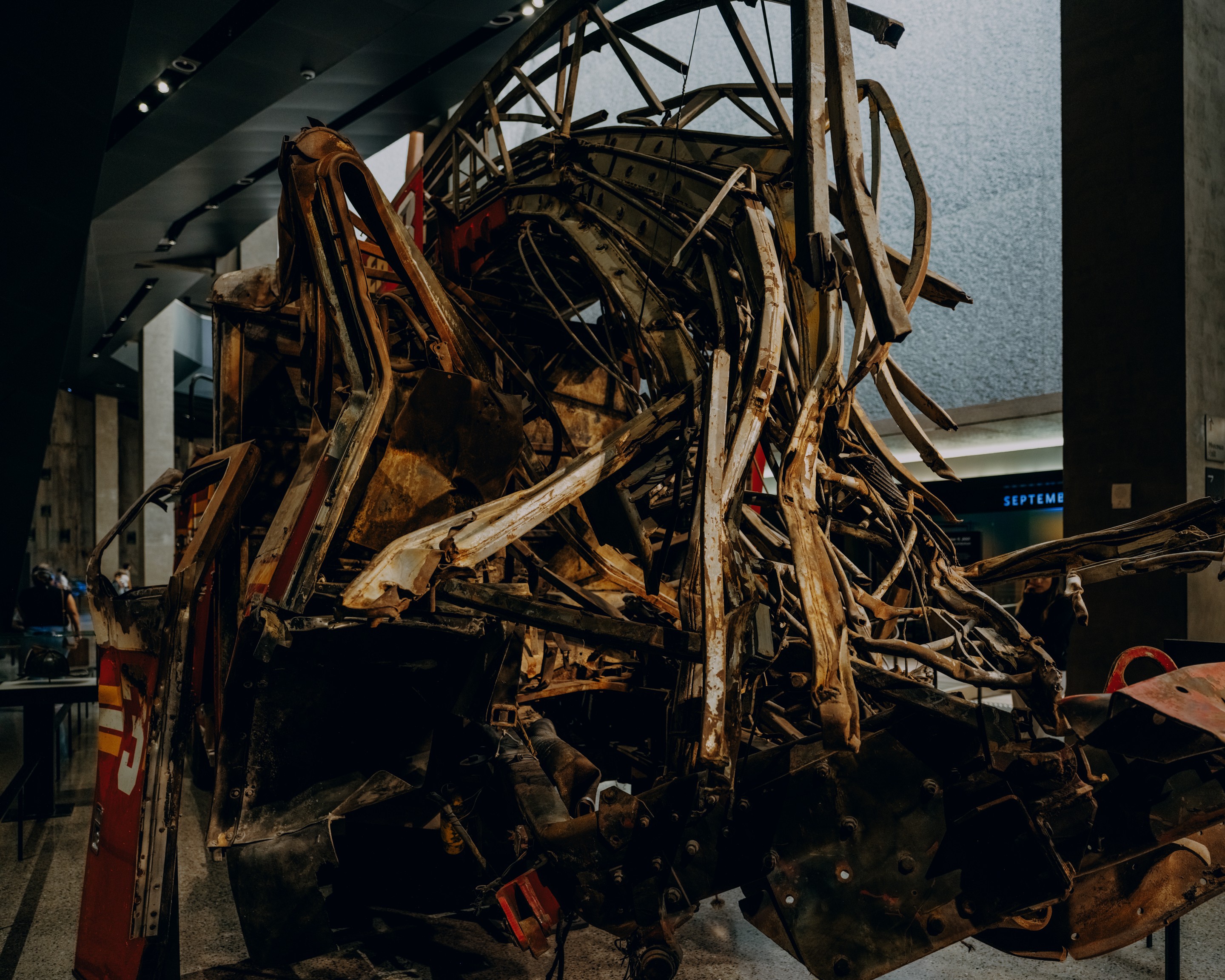
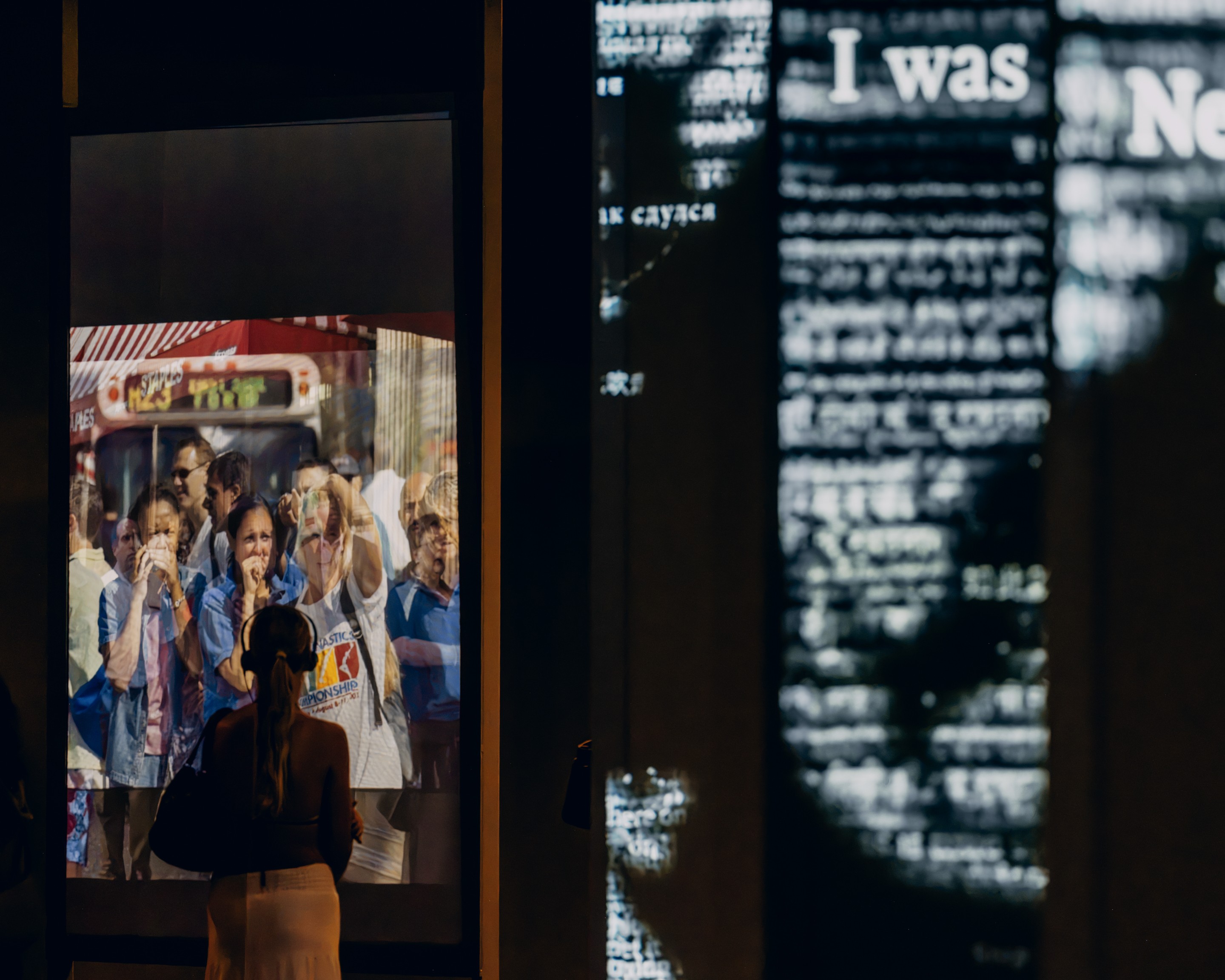
I, too, am now a voice in a museum. At the National September 11 Memorial & Museum, any visitor can replay my family’s intensely personal memories of a national horror. Years before the museum had a building, curators teamed up with StoryCorps, an oral-history nonprofit, and tried to make it easy for families to contribute by giving us a special number to call and record from home. Making this call felt like a leap of faith. How would these recordings be used? Where would they be stored? Still, my two daughters—who were then 8 and 10 years old—and I decided we wanted to participate.
[Ellen S. Bakalian: Everything my husband wasn’t there for]
I remember sitting on the couch while the girls took turns, cupping their hands over my cellphone in a semblance of privacy. I also recall one of them wandering the house, chatting like a teenager. I remember wanting them to practice what they would say, and I wanted to hear it before they called, but my girls had their own ideas. I found it nerve-racking until I realized that whatever they said would be straight from the hearts of girls who were not yet 3 and not yet 1 when their father was killed.
I haven't heard the recordings. I recently thought that I wanted to, but I couldn't imagine donning headphones and listening to my voice or my daughters’ amid strangers at the museum. I contacted the chief curator, who kindly offered a private place for me to revisit what we had said. I made a date, then canceled it. I doubt I will reschedule. I know that if I listened, the editor in me would wish we could rerecord, and the rest of me would fall apart.
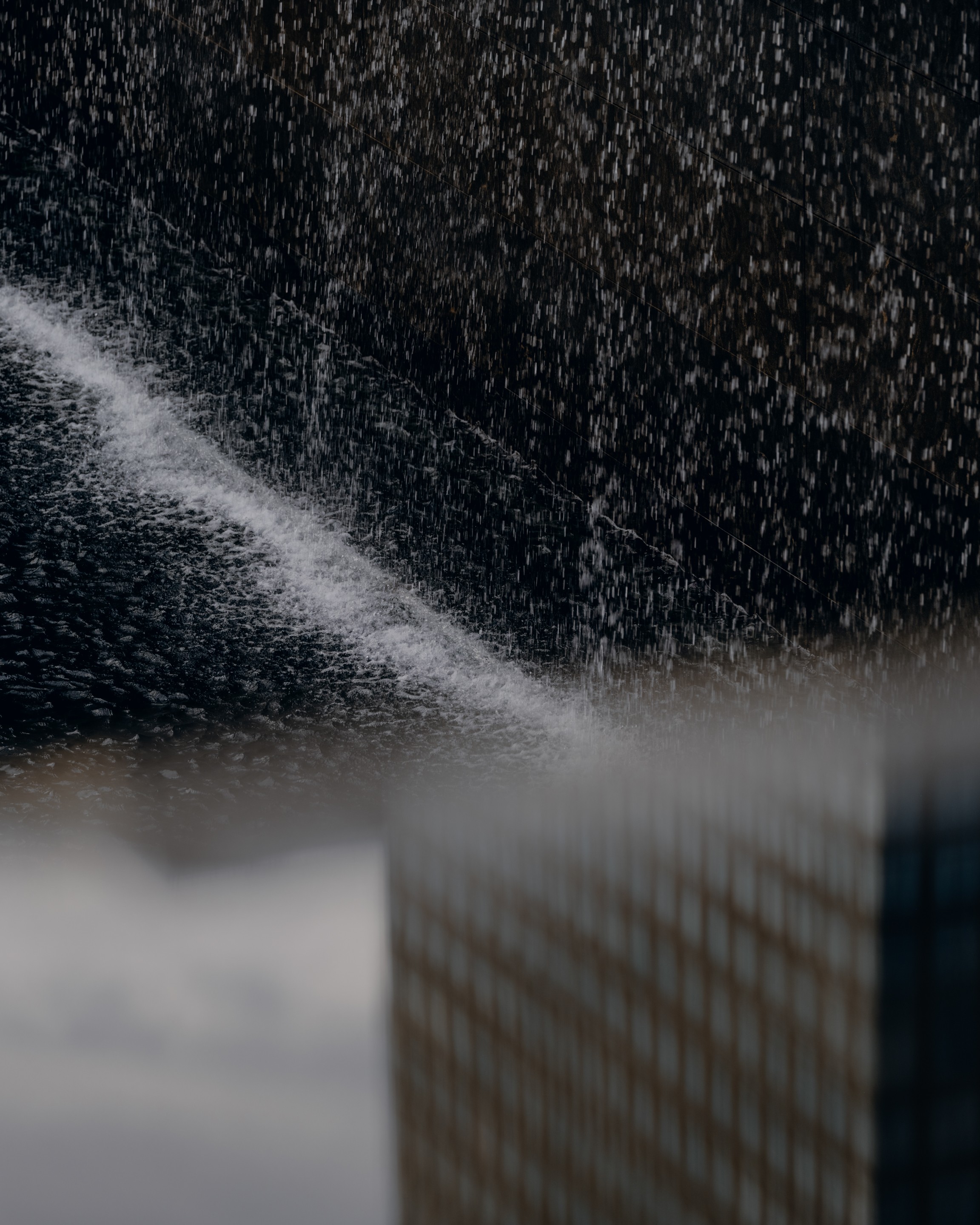
When we were in Nova Scotia, my friends and I took turns reading historical plaques out loud. I always make a point of reading the names on memorials wherever I find them. Years ago, one Presidents’ Day weekend, my daughters and I took the train to Washington, D.C. I remember standing in front of the Vietnam Veterans Memorial and deciding that we would read one young soldier’s name aloud as we traced our fingers over the letters. We looked up a 19-year-old soldier on a sheaf of laminated paper that was hanging on the wall and read the name of his hometown. We said a prayer for him and his family because, as I remember explaining to the girls, “one day Daddy’s name will be on a plaque somewhere, and we want people to read his name out loud.”
The name Jeffrey R. Smith can be found by museumgoers in Lower Manhattan, and is also on two plaques at the University of Rochester, where Jeff earned both his undergraduate and master’s degrees. I went with my daughters to see these tributes when the girls were 18 and 16. We walked in Jeff’s footsteps. We read all of the names out loud.
Unlike the men and women whose names appear on the Vietnam memorial, Jeff and the thousands of other innocent victims that Tuesday morning were not casualties of war. This is an important distinction, a line that I, like most September 11 widows and widowers, believe should not be blurred. America was senselessly and successfully attacked by terrorists, and Jeff, along with nearly 3,000 other civilians, was killed while going about an otherwise ordinary day.
[From the September 2026 issue: The man who refused to sit on the sidelines]
Knowing that our voices are in a museum because our profound personal loss is part of this country’s history is both gratifying and unsettling. I am glad that there is such a powerful monument to that awful day. I am grateful that my husband and the other innocent victims are commemorated each year with a moment of silence. But I am staggered to be part of something this big, forever and ever.
On this anniversary, I think of the couples who get to experience such milestones differently—joyfully, gratefully, together. Jeff and I will never have that. This is the pain that lurks just below the surface, only to bubble up without warning, like in a museum in Halifax.
I know, of course, that I am one story, one tragedy, among many. But within our national catastrophe, which changed so much about our collective understanding of security, of terror, is my own private and persistent grief.