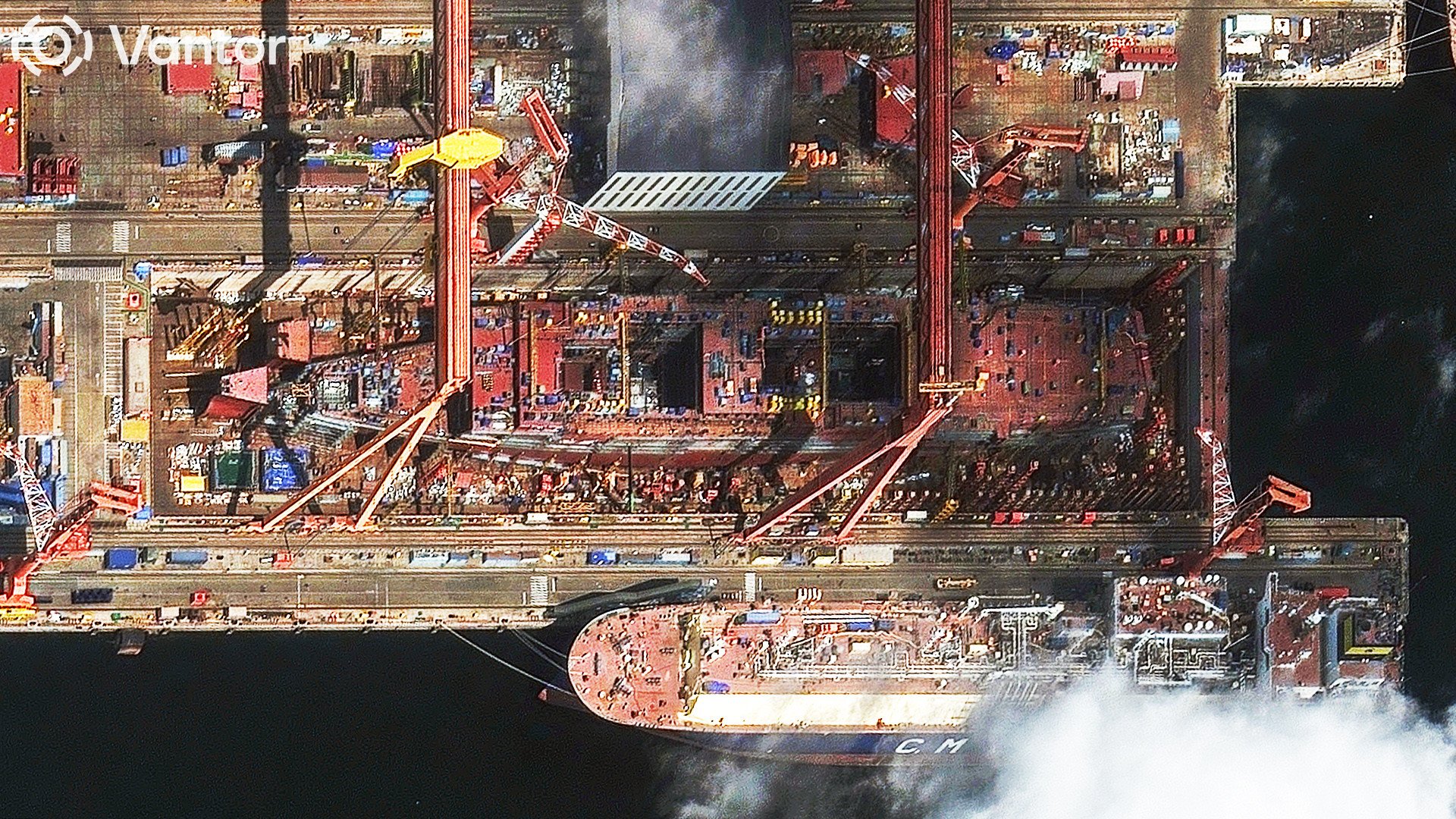
A new Chinese aircraft carrier, commonly referred to as the Type 004, is continuing to take shape, notably now featuring a more complete bow. This is set to be China’s fourth carrier, and there is strong evidence it will be its first nuclear-powered type, bringing an even more significant boost to the country’s naval power projection capabilities.
The ongoing progress on the carrier is plainly visible in satellite imagery taken just yesterday, seen at the top of this story and below, which TWZ obtained from Vantor. The ship has been under construction at Dalian Shipyard, in the city of the same name in China’s northeastern Liaoning province, since at least 2024.
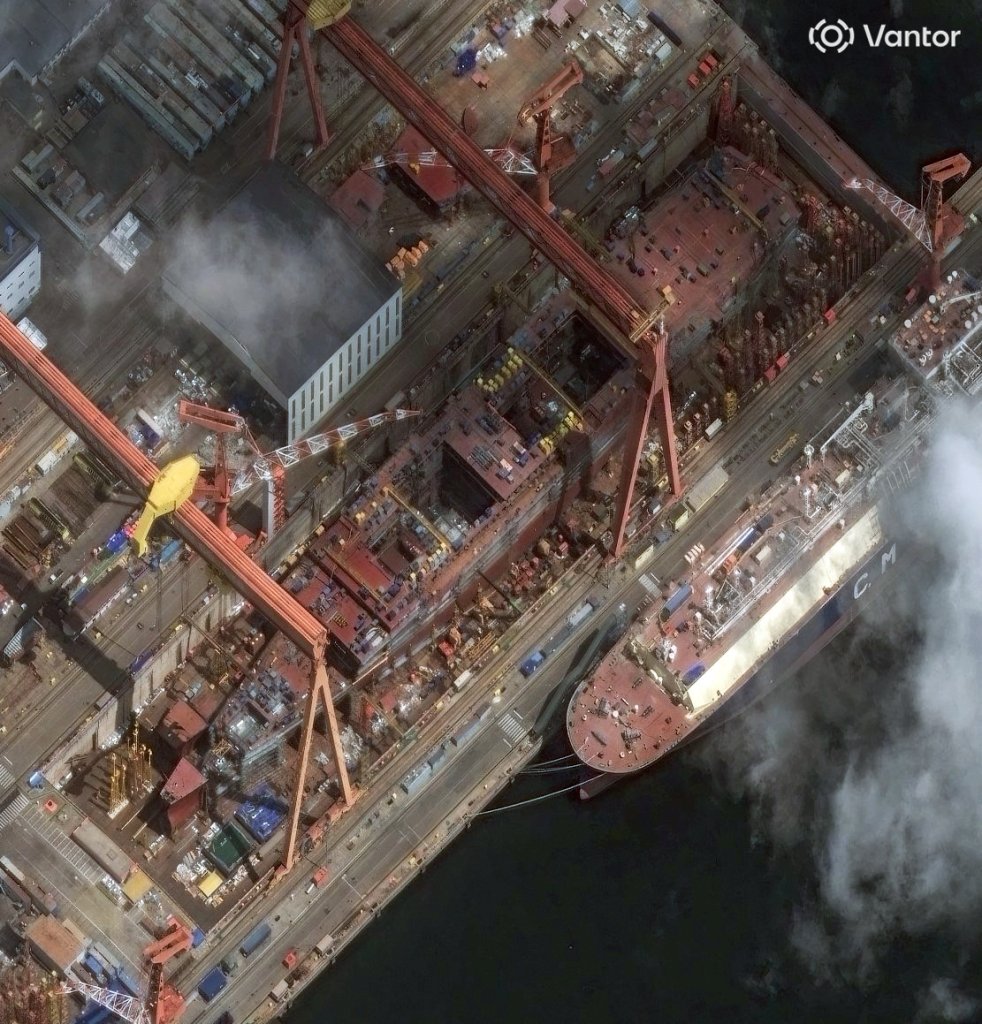
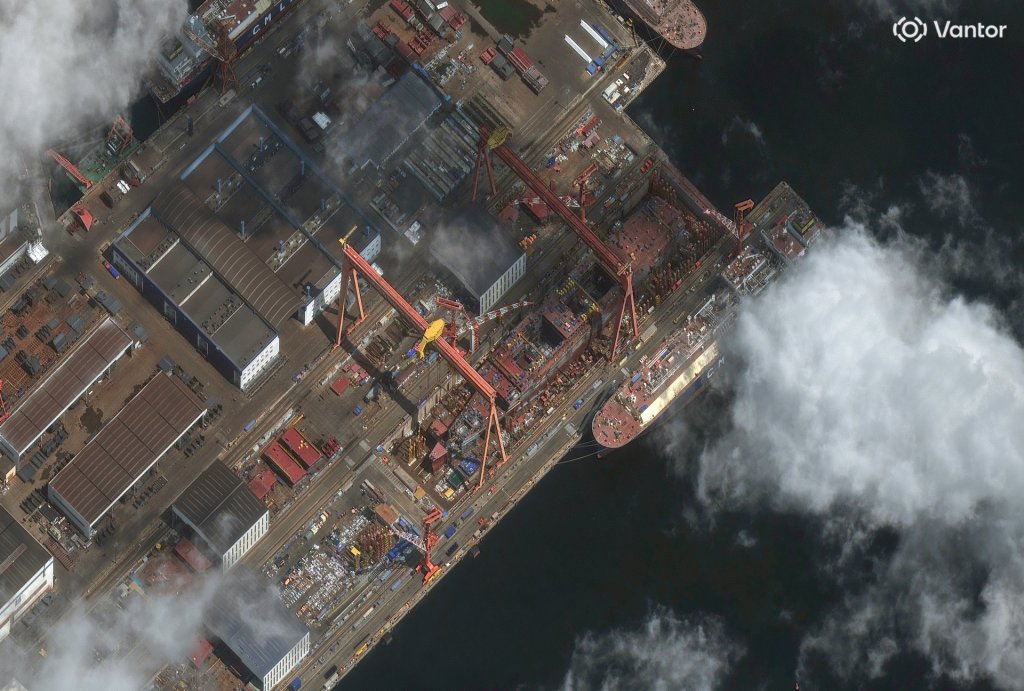
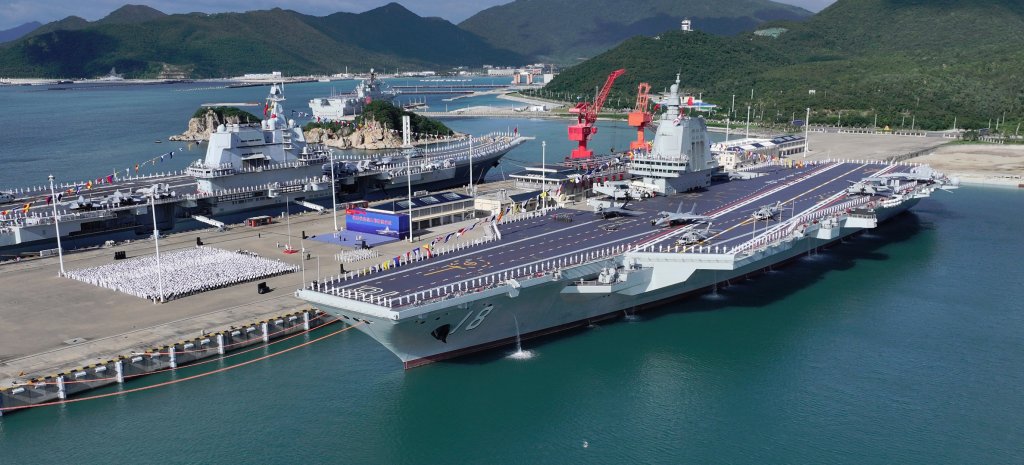
The Type 004 is being constructed in the same dry dock where China’s first aircraft carrier, Liaoning, was completed, and where its second carrier, Shandong, was built. Liaoning was originally laid down as a Kuznetsov class carrier in the Soviet Union (first named Riga and then Varyag). Authorities in post-Soviet Ukraine sold the unfinished vessel to ostensible Chinese businessmen in 1998. It was subsequently brought to Dalian in 2002 and then commissioned into operational service with the People’s Liberation Army Navy (PLAN) a decade later. China’s third carrier, the Fujian, the country’s first catapult takeoff but assisted recovery (CATOBAR) configured type, was built at the Jiangnan Shipyard in Shanghai. Liaoning and Shandong are short takeoff but assisted recovery (STOBAR) carriers with ski jump bows and arresting gear at the stern.

Based on additional satellite imagery from Planet Labs that TWZ reviewed, the current length of the Type 004’s hull now appears to be around 1,050 feet (320 meters). Its maximum width, or beam, is some 151 feet (46 meters). Carriers are typically built with hulls that get progressively longer and wider as they rise from the waterline, meaning these dimensions are all but certain to grow further as the ship gets closer to completion and gains its flight deck.
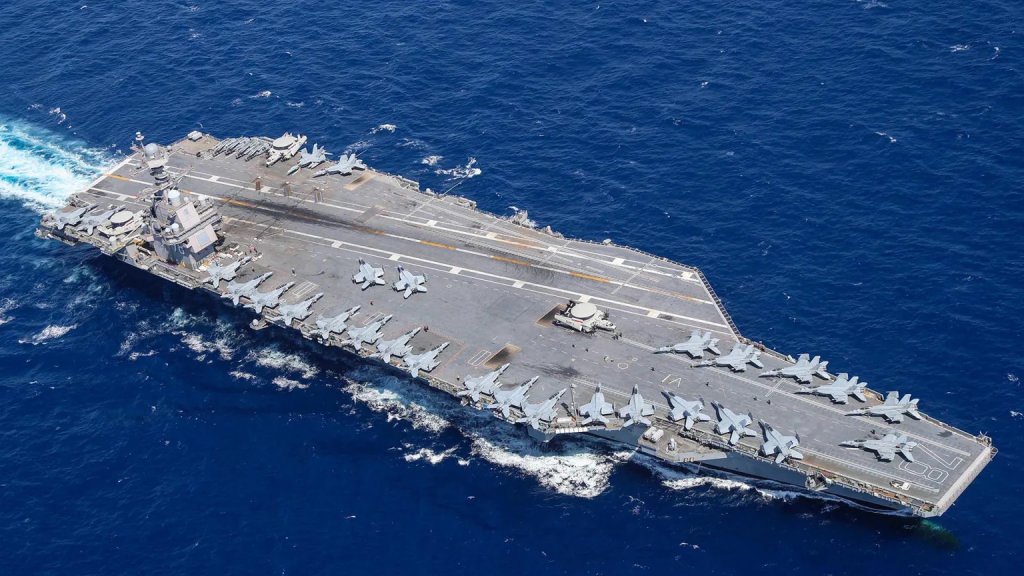
The Type 004, which is also expected to be a CATOBAR type, is already shaping up to be significantly larger than any of the PLAN’s three existing carriers. Fujian, also known as the Type 003, is currently the largest. It is approximately 994 feet (303 meters) long at the waterline and 1036.75 feet (316 meters) in total length, according to previous analysis from the Center for Strategic and International Studies (CSIS) think tank. Its beam at the flight deck level is assessed to be just over 249 feet (76 meters). As another point of comparison, the U.S. Navy’s new operational supercarrier, the USS Gerald R. Ford, is 1,106 feet (337 meters) long overall and has a beam of 256 feet (78 meters) at the flight deck.
As noted, there is already strong evidence that the Type 004’s will be nuclear-powered. This is based on what looks to be two distinct reactor containment structures that are visible in previous satellite imagery and pictures taken closer to the ground. The designs of these structures are very broadly consistent with what is found on U.S. nuclear-powered carriers. Other, more general evidence of Chinese work in support of future naval nuclear propulsion capabilities has also emerged. There have been various media reports over the years about work on nuclear powerplants for future warships and commercial vessels, as well. However, it has still not been definitively confirmed that the Type 004 will be nuclear-powered.
In general, naval nuclear propulsion does offer important advantages, including functionally unlimited range. It can also provide a valuable boost in onboard power generation for more modern designs packed with advanced weapons, sensors, and other systems. The Fujian already features electromagnetic catapults for launching aircraft, also commonly referred to as an Electromagnetic Aircraft Launch System (EMALS). This is a feature that seems likely to carry over to the Type 004, and that would benefit from nuclear power. Any windfalls from nuclear power do come at the price of cost and complexity.
As an aside, what may turn out to be the world’s largest dedicated naval replenishment vessel is also currently being built in China. As TWZ has previously noted, that ship will be especially important for supporting conventionally-powered PLAN aircraft carriers, their air wings, and their escorts, during long-duration blue water operations far from Chinese shores and friendly ports. A nuclear-powered carrier does also still require a regular flow of conventional fuel and other resupply for its air wing and crew, as well as its conventionally-powered escorts.
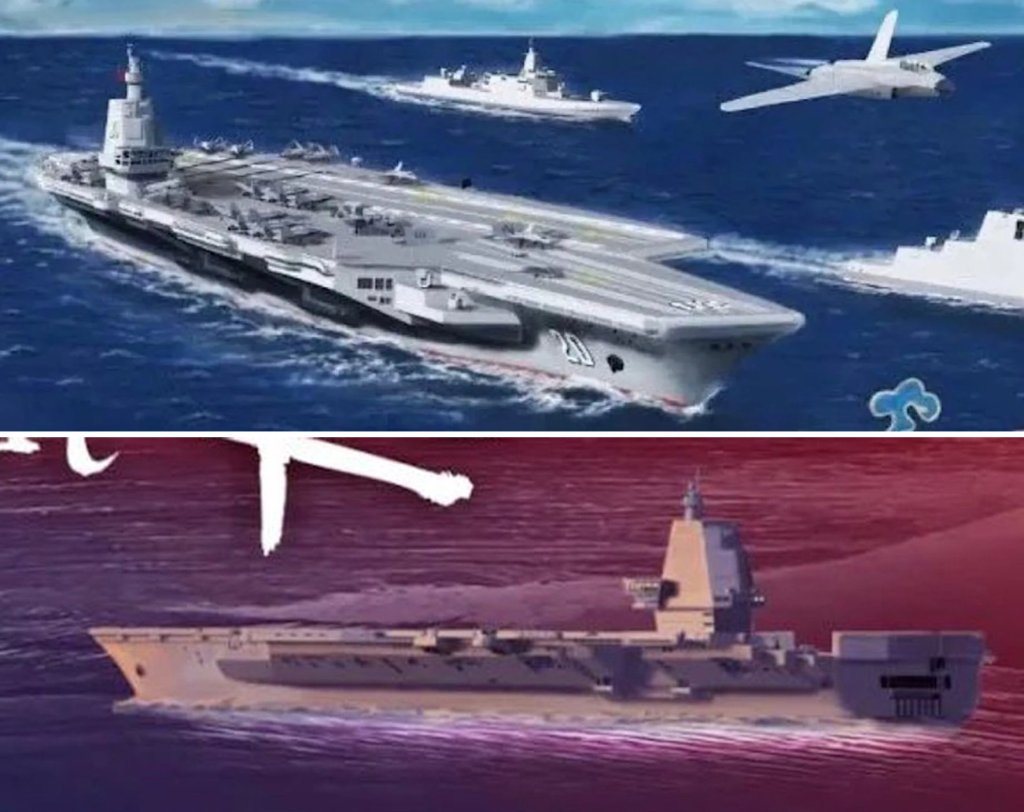
Much still remains unknown about the Type 004’s overall design and expected capabilities. What appear to be official renderings and models of next-generation Chinese carriers that have emerged in the past do point to a design broadly in line with the U.S. Ford class and other modern carriers in the works globally. This is also now reflected in the configuration of China’s full-size, land-based aircraft carrier test facility in Wuhan. Key aspects include a more truncated island structure positioned further to the rear of a flight deck optimized for maximum open space. Just this week, TWZ explored the general benefits of this flight deck arrangement in the context of the Ford class design. This followed reports this past weekend that President Donald Trump is now pushing the Navy to move the island on future carriers in that class for aesthetic reasons. Trump is also notably a long-time critic of the EMALS catapults and electromagnetic Advanced Weapons Elevators (AWE) on the Ford. Last week, he publicly ordered the U.S. Navy and the Pentagon to draw up a plan for going back to using steam catapults and hydraulic elevators starting with the fourth ship in the class, currently set to be named USS Doris Miller.
There are also questions still to be answered about the composition of the Type 004’s air wing. The PLAN is already working to significantly expand and improve its fleet of carrier-based aircraft with the addition of the stealthy J-35 fighter and the KJ-600 airborne early warning and control plane. This is on top of the growing J-15 family of multirole combat jets, which now includes an electronic warfare version. Various new drones, including navalized versions of the GJ-11 uncrewed combat aerial vehicle (UCAV), and helicopters, are also likely to be embarked on the Type 004. It is worth noting here that China has also built a huge new big-deck amphibious assault ship, the Sichuan, which features a single electromagnetic catapult and is expected to have a drone-heavy air component.
The relative speed with which the Type 004 continues to come together is also reflective of the broader capabilities and capacity of the Chinese naval shipbuilding enterprise. China currently produces a multitude of increasingly modern warships and submarines at an ever-quickening pace. There were reports last year that construction of another conventionally powered carrier might also be underway in China. The Pentagon has previously assessed that the PLAN is aiming for a fleet of nine carriers in total by 2035.
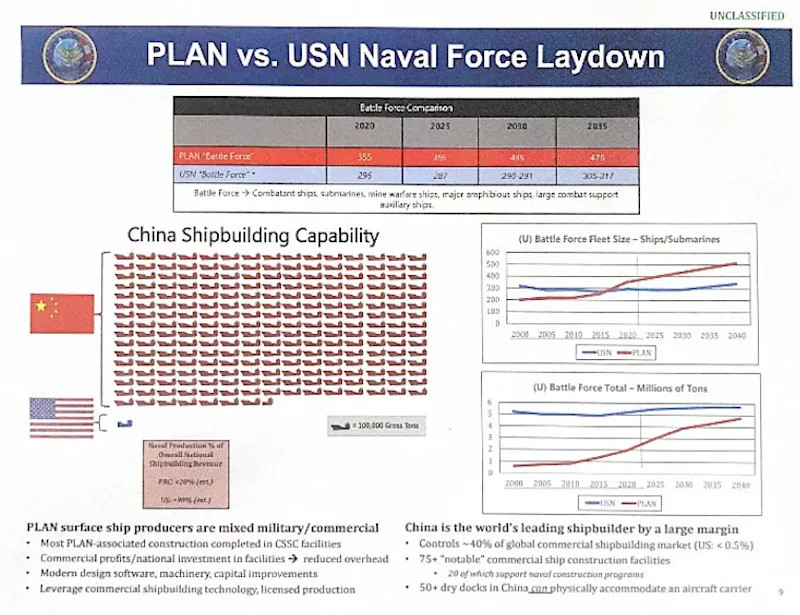
This has all, in turn, created a more and more worrisome disparity with naval shipbuilding in the United States, or lack thereof. The U.S. Navy has continued to face delays and other setbacks with major shipbuilding programs in recent years despite efforts to reverse these trends, including by leveraging foreign shipbuilders.
When the Type 004 will be launched, let alone commissioned into service, remains to be seen. What is clear from the latest satellite imagery of Dalian is that China’s next carrier is increasingly taking shape.
Contact the author: joe@twz.com
The post China’s Next Aircraft Carrier Is Taking Shape appeared first on TWZ.