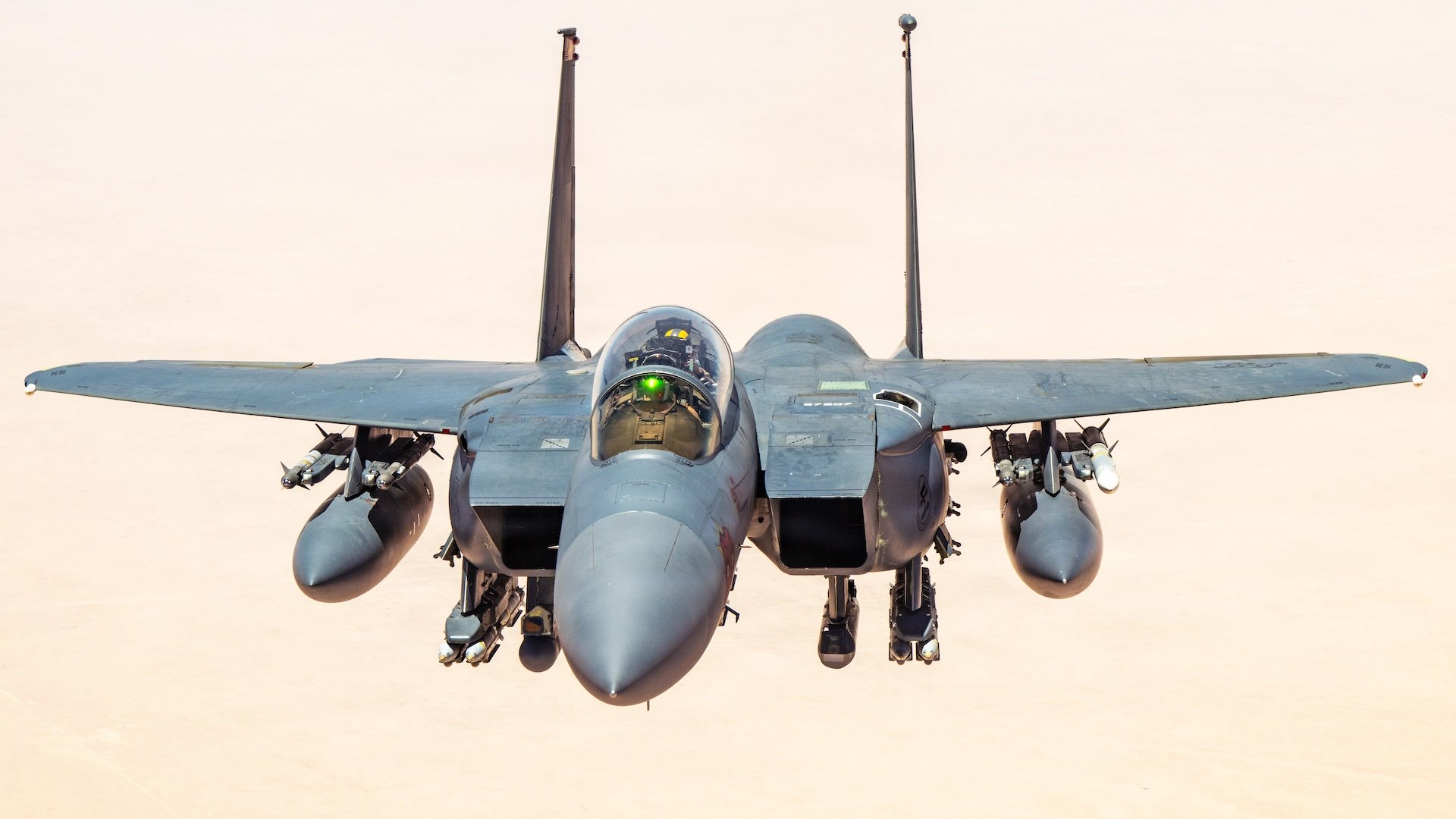
Iran used multiple drones to help target the U.S. Air Force F-15E Strike Eagle that was brought down over Iran in April of this year, a new report claims. According to an unnamed senior U.S. military official speaking to The New York Times, the Iranians employed tactics inspired by Ukraine in its war with Russia, leading to the high-profile combat loss of a Strike Eagle and a daring U.S. Special Operations forces mission to retrieve the missing Weapon Systems Officer (WSO).
The military official told the newspaper that the Pentagon concluded that Iranian drones fed “critical pieces of information to Iranian commanders that helped them target the F-15E.” Thanks to these drones, Iranian forces were provided with the jet’s GPS location, speed, and direction, the same official said.
The New York Times reports that the F-15E’s defensive countermeasures suite provided only half a second of warning before the shoulder-launched missile — thought to be Chinese-made — struck its target. In fact, it would have provided none, since the F-15E is not equipped with missile approach warning systems (MAWS) to detect incoming infrared-guided threats.
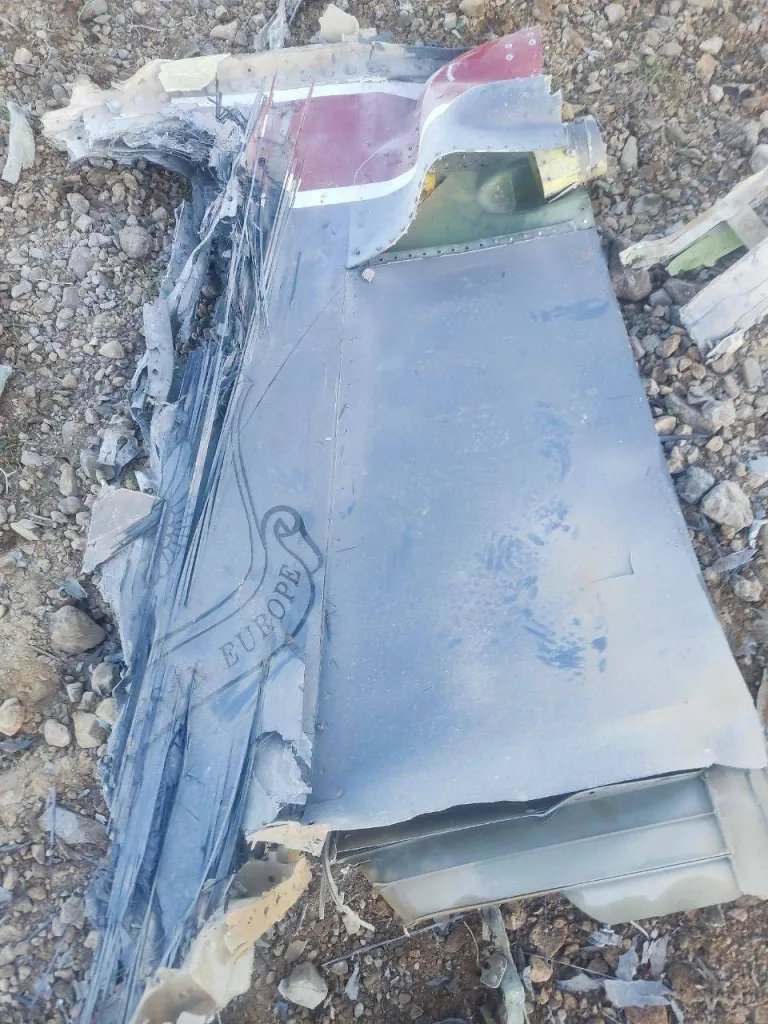
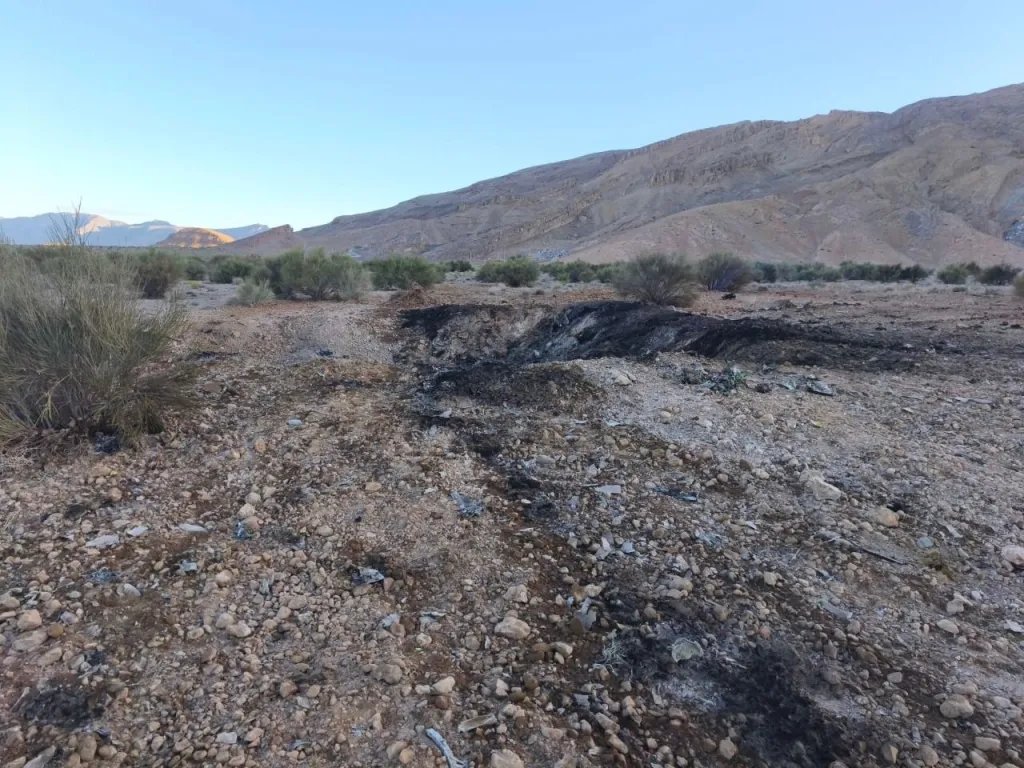
While the pilot was recovered not too long after ejecting, there followed a frantic effort to find and retrieve the WSO, a rescue mission that involved hundreds of troops, scores of aircraft, and diversion operations over more than a half dozen different parts of Iran. The effort also saw the loss of a second aircraft, an A-10 attack jet in the air, as well as two MC-130J Commando II special operations cargo planes and several H-6 Little Bird special operations helicopters that were destroyed on the ground.
The latest account comes after a reported testimony from the Strike Eagle pilot, who described a “jellyfish-like” swarm of drones in the sky, moments before they ejected from the stricken jet. The pilot saw “multiple drones interconnected and moving as one with smaller drones below the bigger drones like legs,” CNN had previously reported, based on statements it said came from four unnamed sources familiar with the matter. Another source told the broadcaster that the same pilot described seeing a “minefield of drones” in the air.
We previously analyzed the possibilities behind this seemingly bizarre phenomenon here.
While they both come with the usual caveats, the two reports together paint an interesting picture of what might have happened over southern Iran on April 3, during the U.S.-Israeli war with that country.
Provided the available accounts are even partially accurate, the information is slowly painting a picture that suggests Iranian use of drone-based airborne sensors to help bring down an F-15E penetrating its airspace.
Previous reports had suggested that the apparent ‘jellyfish’ drone swarm could have been some kind of networked formation, while also emphasizing that the pilot had been concussed and it may have been unclear exactly what they had seen. It is also very possible that a drone system unrelated to whatever the localized ‘jellyfish’ sighting was actually responsible for spotting the F-15E, and the two are unrelated.
At this point, it should be noted that, while the term ‘drone swarm’ is often used loosely in media reporting, having a large number of drones flying in roughly coordinated formations doesn’t necessarily mean Iran possesses a sophisticated autonomous cooperative swarming technology, although this isn’t much of a reach.
While talk of drone swarms is intriguing, even a single drone with a camera could have provided an alert that the jet was headed in a certain direction and at an approximate speed and altitude. Using multiple sensor-equipped drones would meanwhile provide commanders with a distributed network of relatively expendable airborne sensors that could possibly spot aircraft, even if doing so would provide rudimentary situational awareness information that can be used, at best, to assist in targeting.
As an asymmetric ad-hoc air defense solution, using even drones equipped with basic sensors to spot aircraft could offer a fallback, relatively resilient option, especially if Iran’s conventional air defense architecture, which relies on more expensive and more vulnerable radars and other sensors as well as command posts, was largely destroyed. This was indeed the case after extensive U.S. and Israeli attacks. Still, a spotting network of drones would be far less capable than those traditional systems, with luck being a large factor in spotting anything. A more advanced, networked system is something of a different story, but that would require a higher level of technology and would need complex command and control infrastructure behind it.
Drones could also be paired with payloads used to detect a hostile aircraft’s radar and other radio-frequency emissions, which could give away their presence and potentially geolocate them. This is especially true when drones are working in a network over a wider area. Ground stations can also be used in this manner, but they do not benefit from the line-of-sight at altitude, flexibility, and the possibility of pairing these operations with airborne decoys to stimulate an enemy aircraft’s radar, thus giving its location away.
Again, providing the account is accurate, many questions still remain about the kinds of sensors on the drone or drones, and how tracking information was obtained and then transmitted to what was, in the end, a relatively inexpensive shooter in the form of a shoulder-launched missile. But once again, simple spotting networks used to spot and track hostile aircraft are an art form going back to the dawn of military aviation. Putting parts of that in the air aboard rudimentary drones is hardly a complex achievement.

As for the shoulder-launched missile that appears to have brought down the F-15E, Iran has no shortage of these, widely dispersed, and these are known weapons of opportunity. They were also likely pre-placed in areas where U.S. and Israeli warplanes were known to be penetrating, especially since the rest of the Iranian air defense system had been extensively taken down already.
The claim that Ukrainian experiences helped inform the Iranian tactics is also interesting. It is unclear if this relates to a specific drone-based sensor network, or whether it is a reference to the Ukrainian use of drones more generally.
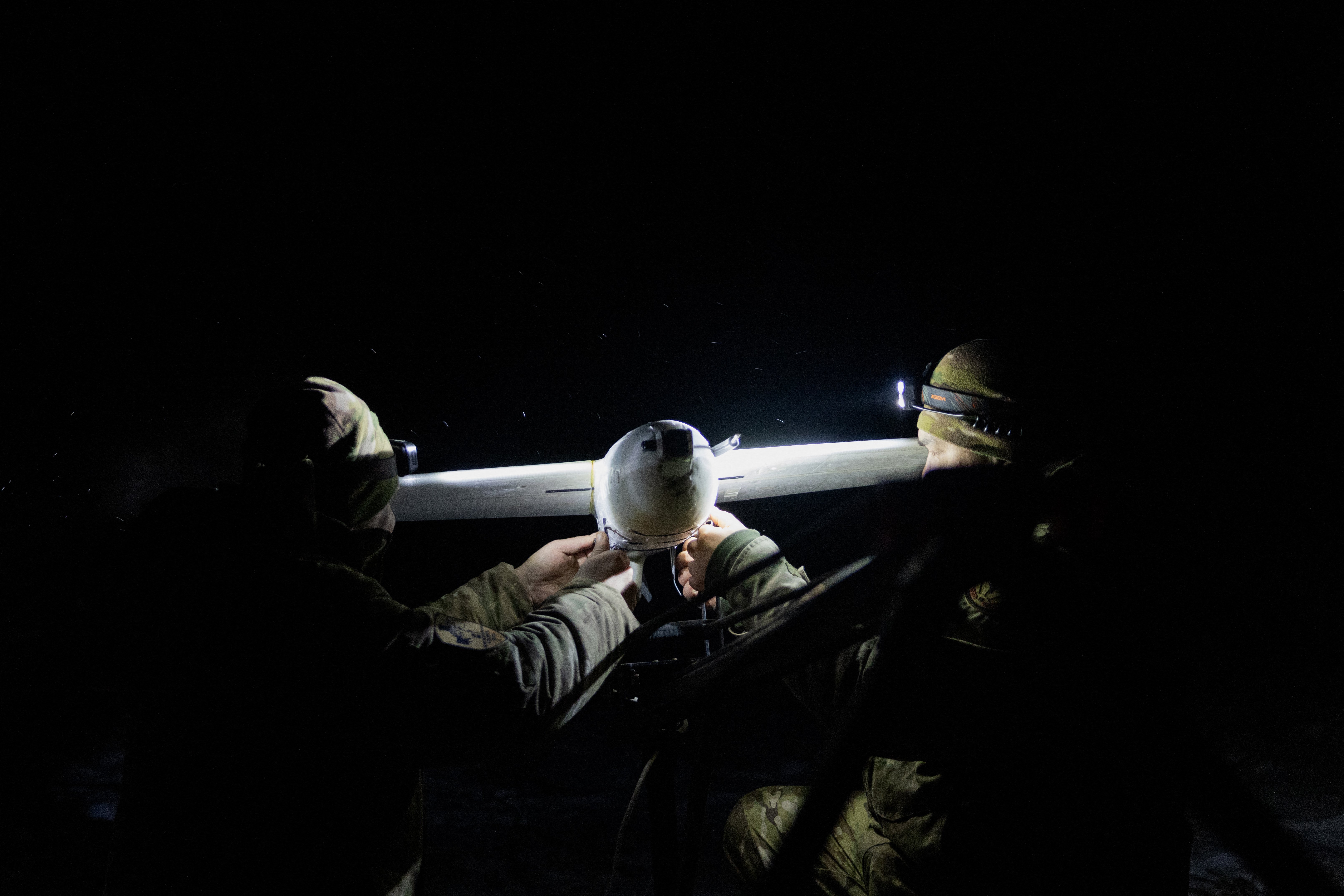
At the very least, Ukraine has repeatedly demonstrated how relatively inexpensive drones can perform reconnaissance, detect movement, track targets, identify air-defense activity, and help cue more expensive weapons. This is in addition to them being used as effectors themselves, or carrying weapon payloads. Ukraine also pioneered interceptor drones, as well, which also act as airborne spotters. With so many U.S. and Israeli drones to hunt over Iran, the lessons of interceptor drones from Ukraine would not have been lost on Iran, especially considering the country was the first to build and deploy a so-called ‘loitering SAM.’
Meanwhile, the broader lessons from the war in Ukraine include recognizing the value of layered networks of relatively cheap sensors, communications, decoys, and shooters, rather than relying on more expensive and vulnerable solutions alone. Iran clearly had planned for the demise of their traditional air defense network, so fallback concepts like using drones to spot enemy aircraft shouldn’t be a surprise.
Nevertheless, the new report combined with the ‘jellyfish’ sighting provides another fascinating, but still puzzling layer to one of the most dramatic air combat incidents of recent times.
Contact the author: thomas@thewarzone.com
The post Did Sensors On Iranian Drones Help Shoot Down F-15E? appeared first on TWZ.