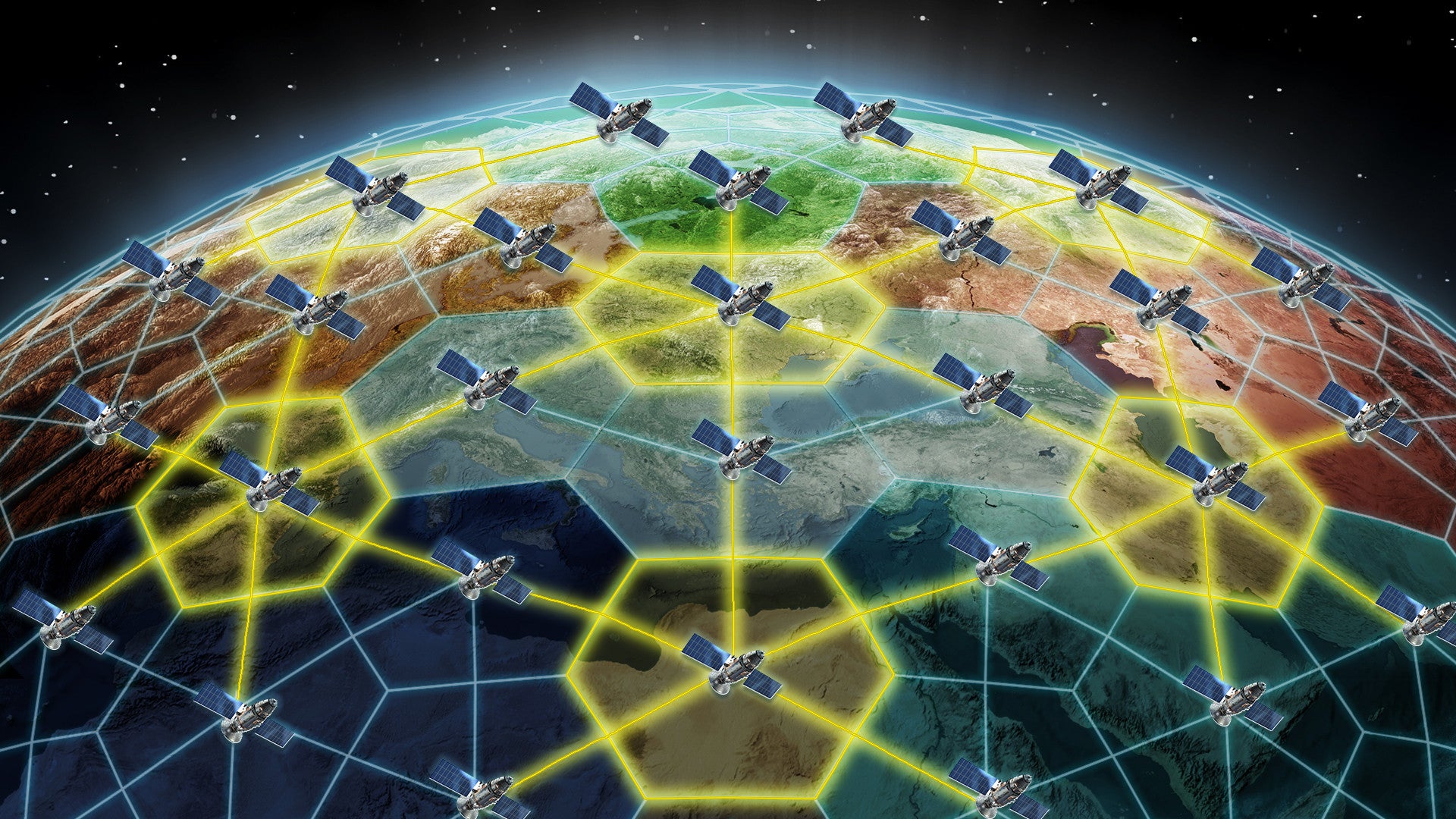
The U.S. needs to change the way it tracks and defends against future missile threats, the deputy commander of U.S. Space Command (SPACECOM) said on Tuesday. The need to do so comes as changes in missile technology are moving faster than the current defeat system can keep up with.
“Historically, if you start from the high end here, missile defense and missile warning were operating on separate and distinct stovepipe networks,” Lt. Gen. Rick Zellman said during a panel at the Space and Missile Defense Symposium (SMD) in Huntsville, Alabama, attended by TWZ. “Missile warning, of course, was going to detect a launch and let people know something’s coming inbound and see a duck and cover and whatnot, and missile defenders were looking to get a little bit more fidelity in their track and be able to shoot down an incoming missile,” he continued. “But today we don’t really have any ballistic missiles. Everything is maneuvering. Everything is complex, and so we can’t provide warning without providing a lot more observations on these missiles.”
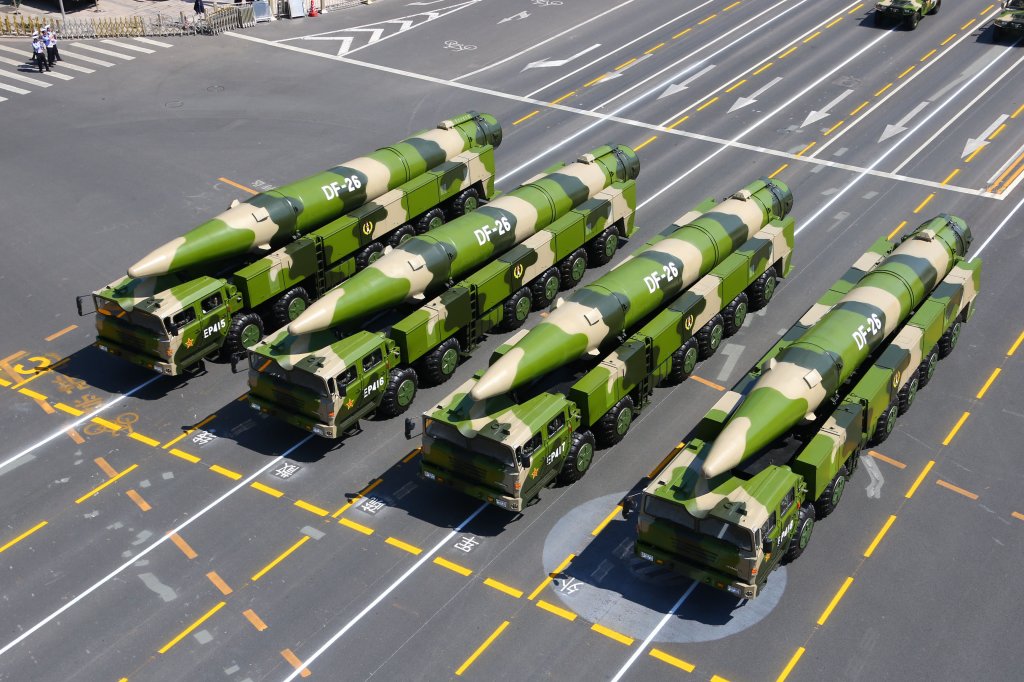
As a result of the evolution in missile technology, “the lexicon that we’re starting to see is missile tracking, right?” the general proffered. “And so missile warning and missile defense are really coming together in that realm. Missile warning was a space legacy mission area, and of course missile defense is missile defense. And you can see how these things are coming together. So really, the distinction between missile warning is almost obsolete at this point.”
The U.S. military has space-based early warning sensors that are integrated into its existing sensing, and has been for decades. But these warn of launches, they generally don’t track a weapon throughout its flight cycle. For some years now, work has been underway to substantially expand on space-based missile defense capabilities, to include the start of the fielding of new satellite constellations to help track ballistic missiles, as well as hypersonic boost-glide vehicles and other threats, during the mid-course portion of their flights. This is on top of a major push to move other kinds of terrestrial sensing to orbital layers, some of which could potentially have a secondary missile defense role.
To achieve the objective of fusing missile warning and tracking functions together, “we have to leverage a couple of really good partners,” Zellman stated, pointing to two in particular. One is the Space Development Agency (SDA), tasked with quickly delivering needed space-based capabilities to the U.S. military. The other is the Missile Defense Agency (MDA), charged with developing, deploying, and sustaining layered and integrated missile defense capabilities.
The SDA, noted the general, “is developing a number of missile-tracking satellites as part of their tranches that they’re launching.” The MDA, meanwhile, has “a long history of integrating battle management,” Zellman discussed.
“So those two together are really helping Space Command take separate disparate stovepipe information and bring it together,” he stated.
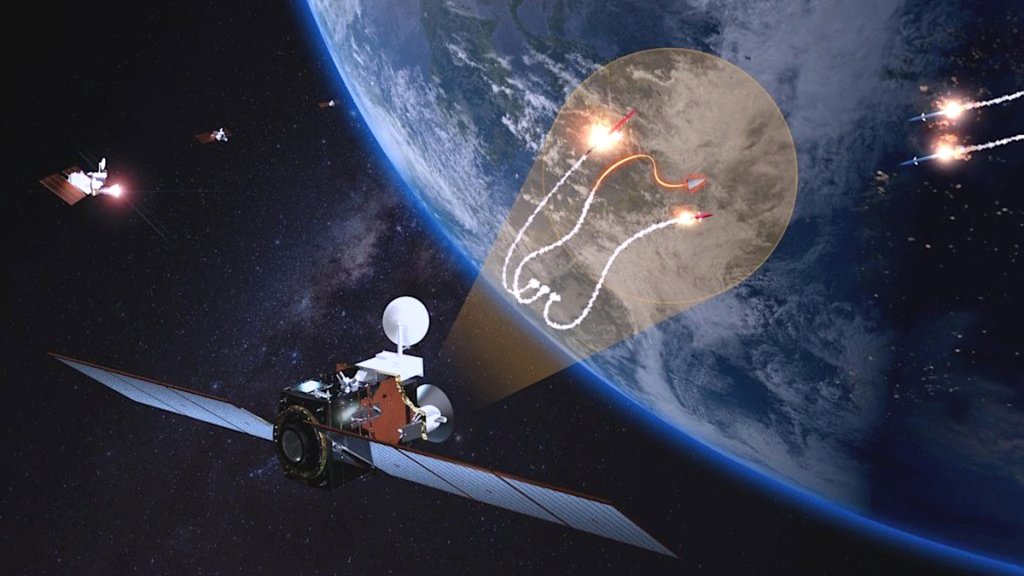
“It also has to talk about decision speed, and this really is going to require us to look at more than man-in-the-loop [MITL], and maybe a man on the loop [MOTL] situation,” he noted. MITL is when a human is fully engaged in assessing and controlling the operation compared to MOTL, which usually relies on more heavily automated systems where the human approves critical decisions, usually based on distilled data presented by the system. AI is becoming a large part of making that possible in an increasingly successful way.
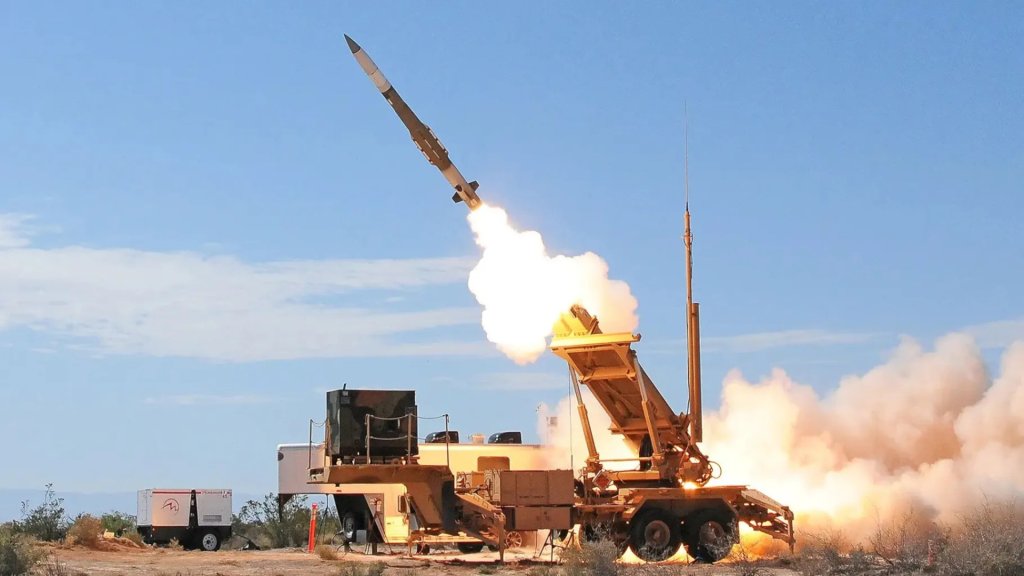
The reason to make this change, Zellman explained, is that “we have to make these decisions faster, and that data flow has to be able to enable our layered defenses – whether that’s coming from a THAAD [Terminal High Altitude Area Defense], or a Patriot, or directed energy, or SM-3, or space-based interceptors in the future – all that is going to be dependent on our decision speed.”
“At the heart of all this for the United States Space Command is one of our unified command plan responsibilities, and that is as a global sensor manager,” the general said.
“We don’t use sensors dedicated to a single mission,” he explained. “They may have originally been conceived to do space domain awareness or missile warning, or in some cases, missile defense, but we try to take the goodness of all those sensors and use them for all three of those mission areas.”
Under SPACECOM, “we take those sensors and we dynamically task them and prioritize accordingly, so we can support multiple commands around the globe. And that really, once again, gets to the theme about defending at home and abroad is being able to support these multiple commands simultaneously.”
The command’s “modern systems, whether it’s a long-range discrimination radar or some of our systems that have been around a little bit longer – like an upgraded early warning radar – they’re all inherently multi-mission,” Zellman put forth. “A single radar can see an object in space and give me space domain awareness information, and a little bit later it can see a missile launch and provide warning, and then hopefully down the road a bit more… provide essentially a track so that we can shoot an interceptor at it and kill it.”
“All these three things can be done in the same duty cycle with that same system, and so we have to be able to dynamically task these systems to ensure that whichever is the priority mission at that time is the one that is being serviced,” the general cautioned. “Historically, space domain awareness information went to space operators, and I would argue missile warning information probably went to both space operators and the missile defense community. But today, that information has to all be put in one data location, and we pull the information we need for the mission we have at hand.”
“We recognize that what we do in space at Space Command is really fundamental to what the missile defense community has to do for missile defense,” Zellman vocalized. “So that really talks about the high end. Let’s talk about the low end.”
Lt. Gen. John Rafferty, commander of the U.S. Army Space and Missile Defense Command, Joint Functional Component Command for Integrated Missile Defense, and Joint Task Force-Gold “mentioned some of this today,” Zellman noted, referring to an earlier SMD panel. “We see, I think, the low end on Epic Fury. Sure, the missiles are more high end, but we’ve seen our adversary employ a number of one-way attack systems that are coupled with these ballistic missile volleys, and we are really at this point in the history of warfare because of the democratization of space.”

“Space isn’t a sanctuary,” the general shared. “It’s no longer just the playground of nations with a lot of money. The commercialization of space has created what many call essentially a transparent battlefield. And because I can see everything all the time with commercial ISR, it’s given our adversaries capabilities that they haven’t had in the past.”
“That ISR [intelligence, surveillance, reconnaissance], if you couple it with a platform that has access to GPS or some other PNT [position, navigation and timing] system, and then you add in another layer of over-the-horizon comms, like say from an Iridium or a Starlink, and you have a pretty lethal asymmetric weapon system that our adversaries can get a hold of.”
Regardless of how much integration and automation occurs, it’s still a people business in Zellman’s eyes.
“So whether it’s a combination volley of attack drones or hypersonic glide vehicles, the mission at SPACECOM remains the same, and that’s to synchronize global missile defense and space domain awareness using a common set of information,” Zellman said. “But that synchronization doesn’t just happen in a vacuum; it happens with the joint warfighters that are standing on watch.”
Contact the author: howard@twz.com
The post U.S. Must Fuse Missile Warning And Defense To Defeat Future Threats: SPACECOM Deputy Commander appeared first on TWZ.