This is an edition of The Atlantic Daily, a newsletter that guides you through the biggest stories of the day, helps you discover new ideas, and recommends the best in culture. Sign up for it here.
If at first you don’t succeed, appeal to a higher federal court. And if you even lose at the Supreme Court … just try again anyway.
This seems to be President Trump’s approach to limiting birthright citizenship. Last year, he issued an executive order that purports to end the practice of automatically granting citizenship to babies born in the United States—as has been the norm since the late 19th century. Despite Trump visiting oral arguments in an apparent attempt to intimidate the justices, the Supreme Court struck down the order this June.
Yesterday, Trump attempted to do some of the same things via new executive orders. One is intended to deny automatic citizenship to children born to people living in the United States while working for a foreign government and children of people declared to be terrorists or adversaries of the U.S. It would also deny citizenship to people born in U.S. territories if Congress passes a proposed law allowing that, creating a new group of stateless people. The second order is intended to prevent the practice of “birth tourism,” in which people visiting the United States on tourist visas give birth to babies who are then U.S. citizens.
Legal experts and advocates say the orders are unconstitutional, and they are certain to be challenged in court. Trump’s loss at the Supreme Court seems to make these orders a long shot. As Chief Justice John Roberts wrote in his opinion for the Court, “children born of parents unlawfully or temporarily present in the United States” satisfy the relevant conditions and thus “under the Constitution, they are citizens at birth.”
The language in the orders about “alien enemies” is another likely area for dispute, not because anyone is eager to welcome the children of bona fide adversaries but because this administration has made absurd claims about illegal immigration constituting an “invasion,” which makes no sense on its face and has been rejected by federal judges.
Trump’s announcement of the orders at the White House yesterday was full of fabrications, exaggerations, and lies. Trump claimed that the Fourteenth Amendment “was meant for the babies of slaves. It was—it was right after—one week or two weeks after the Civil War ended.” In fact, it passed three years later, in 1868. The presidential adviser Stephen Miller echoed the same idea, saying that the amendment “had no other meaning and purpose outside of that, and that’s been clear, obviously, since the day that it was passed.” When a politician uses the word obviously—like frankly—that’s a good sign that what follows will be neither obvious nor true. If this had been obvious since 1868, the U.S. wouldn’t have acted otherwise for more than a century, and the Supreme Court would have ruled in favor of the administration.
Trump’s claims about birth tourism were even further off base. The president isn’t making the idea up—just wildly exaggerating it. Asked by a reporter how many people are engaging in the practice, Trump said, “I can tell you right now. Hundreds of thousands. Hundreds of thousands.” This number appears to be pulled out of thin air. During Supreme Court oral arguments, Solicitor General John Sauer, arguing on behalf of Trump, was asked how commonly birth tourism occurs and replied, “No one knows for sure.” In 2020, the Center for Immigration Studies, which supports much stricter laws, estimated the number at between 20,000 and 26,000 births each year, out of roughly 3.6 million babies born in the United States.
By attempting to end or restrict birthright citizenship in order to address these issues, Trump is trying to use a bulldozer to achieve a task that calls for a small mallet. The law already prohibits fraudulent visa applications, and the Justice Department has prosecuted people for birth tourism in the past. Trying to undermine birthright citizenship risks jettisoning one of the fundamental bases of modern American society to deal with a minor challenge.
Trump could have tried another path. Justice Brett Kavanaugh offered the White House a potential lifeline in his concurrence in the birthright case, suggesting that despite the plain language of the Fourteenth Amendment, Congress could pass a law altering birthright citizenship. The likelihood of such a bill succeeding seems very low, and pushing it through would require sustained attention from Trump. Instead, he’s trying to achieve his goals through executive orders, which are both easily reversed by a future president and have already proved unsuccessful.
But the president has a demonstrated weakness for this kind of grand, overreaching presidential gesture. Last month, after a member of the U.S. men’s national soccer team was suspended for a game in the World Cup, Trump decided to use his position to exert some pressure, calling FIFA President Gianni Infantino to try to get the suspension waived. In a direct sense, it worked—FIFA allowed the player to participate—but it may have backfired. Belgium, the American opponent, was incensed, and trounced the United States 4–1. Trump ended up looking obnoxious and corrupt, but didn’t even get a victory out of it. The player in question, by the way, was Folarin Balogun—a U.S. citizen by birth because his mother, while pregnant and visiting family, got stuck in the United States.
Related:
Here are four new stories from The Atlantic:
- MAGA’s most famous prisoner is free.
- Icarus in the faculty lounge
- Bring back the blue-book exam.
- Sadism and a blue bunny
Today’s News
- Senator Bill Cassidy said he will vote for Todd Blanche to be the next attorney general, giving Republicans enough support to confirm President Trump’s nominee despite opposition from GOP Senators Lisa Murkowski and Susan Collins.
- The U.S. economy unexpectedly lost 23,000 jobs in July, while the Labor Department lowered May and June’s job figures by a combined 103,000, adding to signs that the labor market is weakening.
- A 14-year-old student in Thailand killed his grandparents and fatally shot five teachers and staff members at a school outside Bangkok, before dying by suicide, authorities said. Twenty-three people were wounded, nine critically, and Prime Minister Anutin Charnvirakul said the government would pursue a stricter gun law following the country’s second school shooting this year.
Dispatches
- The Wonder Reader: Rafaela Jinich writes about the case for calling people on the phone.
- The Books Briefing: Emma Sarappo on the best way to learn outside the classroom.
Explore all of our newsletters here.
Evening Read

A Chatbot-Free Childhood Will Be a Status Symbol
By Dana Suskind
The human brain has evolved to learn from specific instructors. When a child hears a gentle spoken word or a soothing lullaby from another person, when their cry is responded to, their brain lights up. Nurturing interactions, or what child-development experts call “serve and return” exchanges, help shape and strengthen the 1 million new neural connections taking place in a child’s brain every single second. Every time a child cries or serves up a bid for attention and receives a caregiver’s response, that back-and-forth helps build the circuits underlying their communication, learning, and emotional well-being. No other input, not even Johann Pachelbel’s Canon in D performed by the Berlin Philharmonic, is capable of activating the neural circuitry the way human interaction does.
Until now.
More From The Atlantic
- Sophie Gilbert: The internet is in crisis.
- Ukraine’s short-lived comeback
- Iran goes looking for love in Jordan.
- The most basic step of the Ebola response is falling short.
- Galaxy Brain: How social media makes our lives smaller
Culture Break
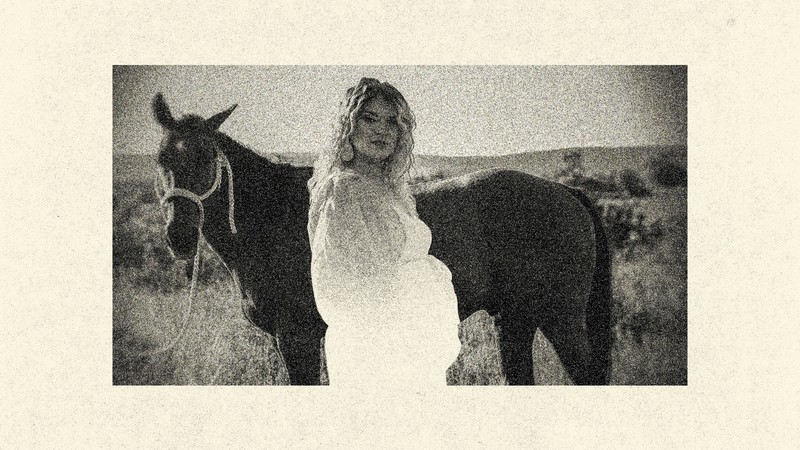
Watch (or skip). Netflix’s true-crime documentary Maternal Instinct tells the story of a woman who committed two murders—and what’s remarkable is how much it leaves out, Elizabeth Bruenig writes.
Read. Last year, Bekah Waalkes recommended six books you’ll want to read outdoors.
Rafaela Jinich contributed to this newsletter.
When you buy a book using a link in this newsletter, we receive a commission. Thank you for supporting The Atlantic.