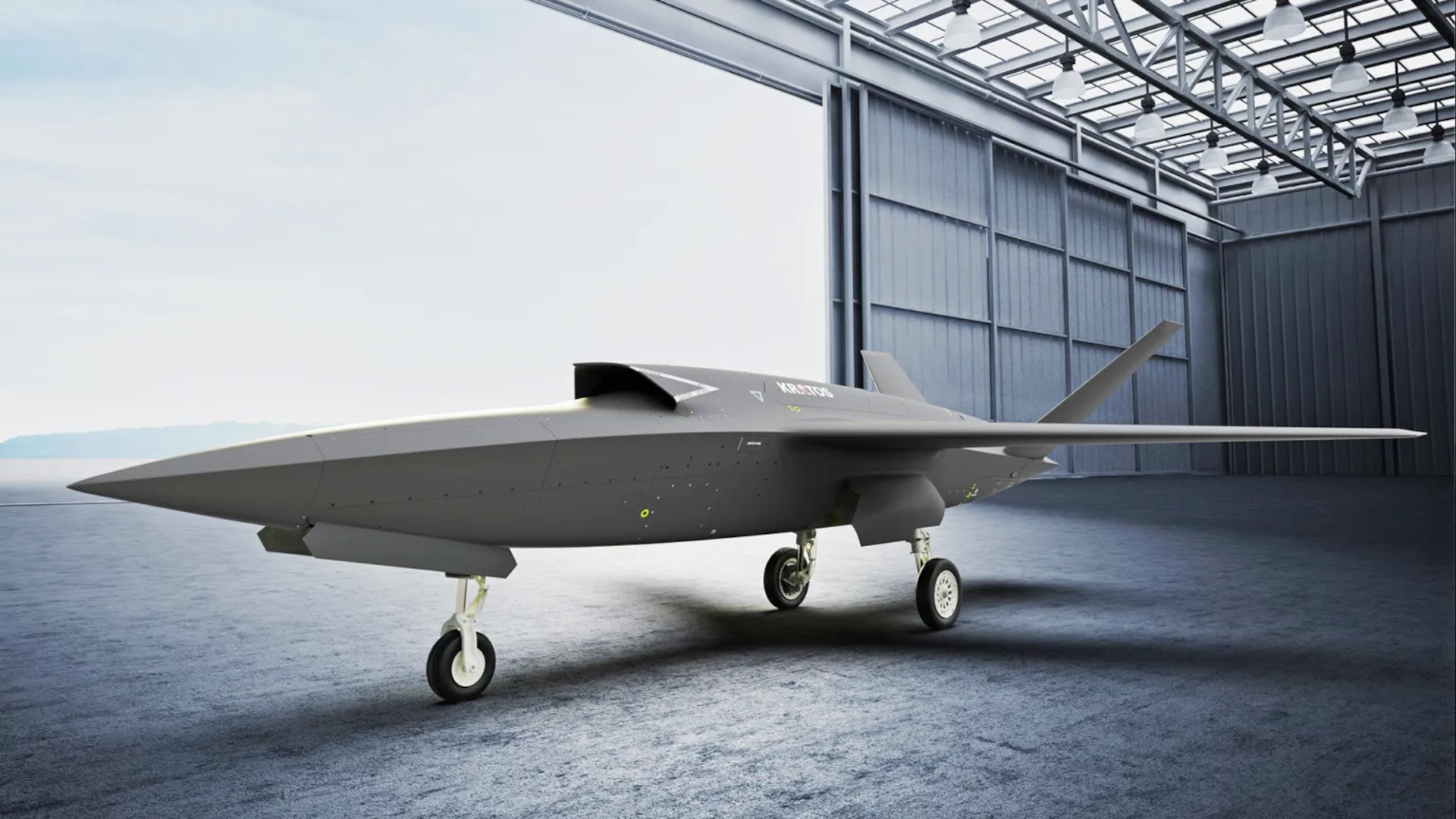
Kratos has built the first landing gear-equipped versions of its stealthy XQ-58 Valkyrie drone, with several additional examples now in various stages of construction. The company is also still producing XQ-58s designed for rocket-assisted takeoffs via static launchers, and Valkyrie production is ramping up overall. Both types offer certain advantages in different operational scenarios. Valkyrie flight test activities are currently paused following the crash of one of the drones on Tuesday, which TWZ was first to report and that readers can get caught up on first here.
In reporting on the crash, TWZ had a chance to speak yesterday with Steve Fendley, President of Kratos’ Unmanned Systems Division, who provided additional updates on the Valkyrie program. The U.S. Marine Corps notably previously announced that it is acquiring a fleet of Valkyries in the landing gear-equipped configuration under its Marine Air-Ground Task Force Uncrewed Expeditionary Tactical Aircraft (MUX TACAIR) Collaborative Combat Aircraft (CCA) program. Fendley also discussed developments across other parts of the company’s tactical drone portfolio.
To provide some quick additional context, the rocket-assisted takeoff (RATO) and landing gear-equipped conventional takeoff and landing (CTOL) versions of the Valkyrie are the two main known configurations of the design. The RATO type, which first flew in 2019, also lands via parachute. Kratos has also developed a special launch trolley that allows RATO Valkyries to conduct runway takeoffs, though they still land using the parachute recovery system.
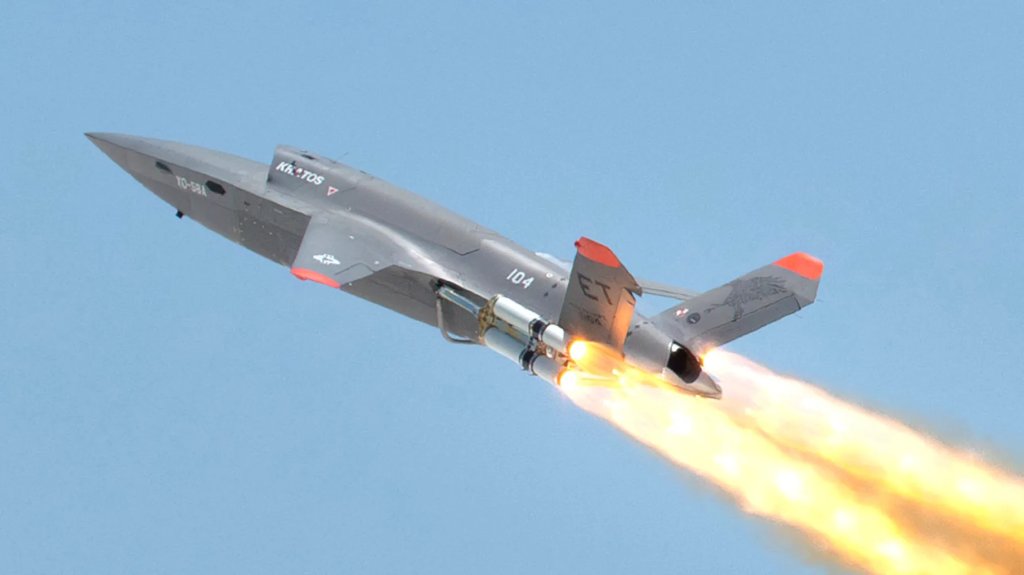
The CTOL version was first publicly announced in 2024. Drones in this configuration can also be launched via rocket, but then land conventionally. The addition of the landing gear does reduce the available internal payload space, as well, something we will come back to later on. In January, Kratos had told us it was targeting the early 2026 timeframe for a first flight, but we cannot confirm whether this has occurred. The Valkyrie crash on Tuesday did come after “takeoff from a test-range runway,” but Kratos would only say the drone in question was in “test configuration.” Whether or not this may have been the first flight of the CTOL variant is not clear.
More generally, Valkyrie is a highly modular design with an open mission systems architecture intended to be readily configurable to meet customer needs. Kratos has told TWZ in the past that it has developed at least five distinct versions of the drone. The company has also been steadily working to expand the performance envelope of the design.
“We have several CTOL aircrafts [sic] … we’ve been working on it for about a year and a half,” Kratos’ Fendley told TWZ. The CTOL configuration is now “in production. Started on those earlier this year, and again, those aircraft are – some are ready, and some still in the pipeline.”
Overall, work on the CTOL version is pressing ahead, he added, while noting that RATO versions are also still being actively produced. Kratos has customers now for both versions.
The U.S. Air Force was the first known XQ-58 operator, and continues to utilize RATO types in support of research and development and test and evaluation activities. The Marine Corps also has a handful of RATO Valkyries, which it has been using to help lay the groundwork for its future operational fleet of CTOL types, which are now sometimes also referred to as MQ-58Bs. The Marines are hoping to see the delivery of the first of these drones in 2029.
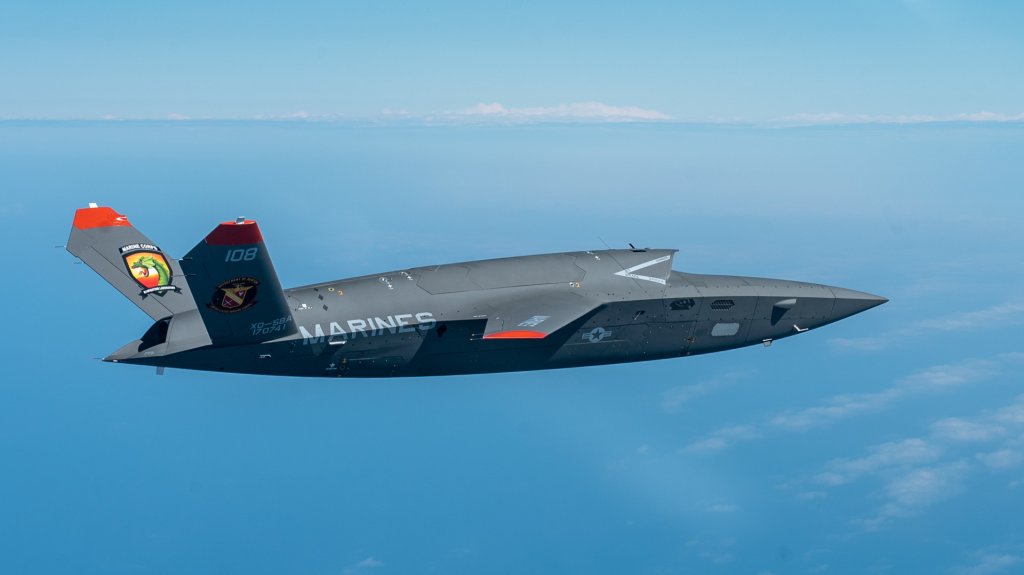
Kratos has also publicly announced a partnership with European aviation giant Airbus to develop a version of the Valkyrie aimed at meeting German requirements for a CCA-type drone. When asked about other Valkyrie sales opportunities yesterday, Fendley told TWZ that there are a “number of other international customers,” but could not elaborate.
“We have a set of customers for each configuration, and in many cases, we have customers that want both configurations,” he did note. “They’ll do test and training ops generally with the CTOL variant, but then for forward-deployed scenarios or for scenarios where they want to maximize the payload capacity, they’ll use the RATO configuration. which allows capacity inside the bomb bay.”
At the time of writing, Kratos’ website says RATO XQ-58s can carry up to 1,200 pounds of stores in their internal centerline bay, as well as payloads weighing up to 600 pounds on a single hardpoint under each wing. The bay itself is also said to be sized around a loadout consisting of four 250-pound-class GBU-39/B Small Diameter Bombs (SDB). The SDB is just under 71 inches long and has a body that is 7.5 inches in diameter. The CTOL has half the internal payload capacity, both in terms of weight and physical space, per Kratos’ factsheet. RATO and CTOL types can both also carry additional payloads weighing up to 600 pounds on two external hardpoints, one under each wing.
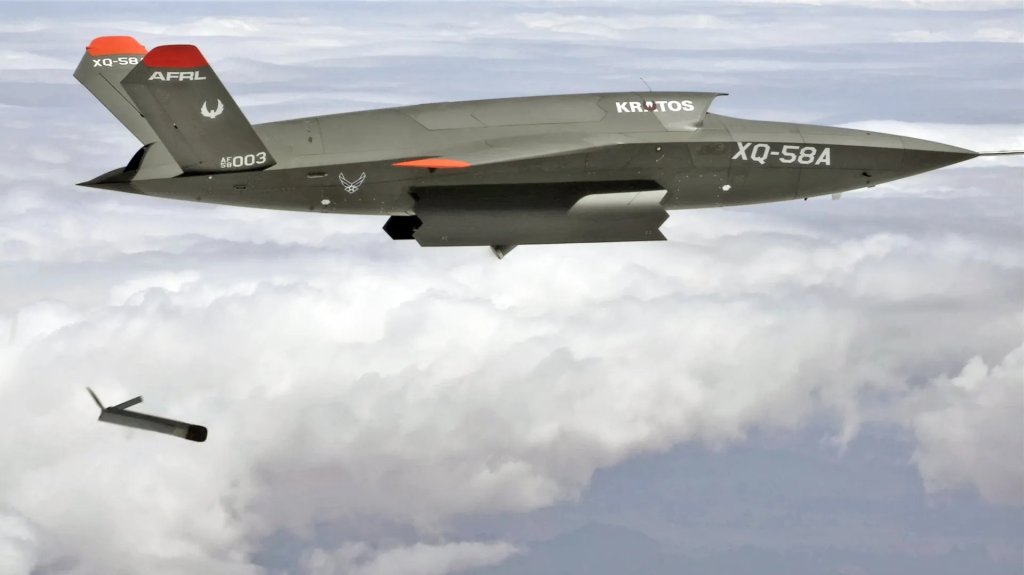
As TWZ has noted in the past, the ability to operate from traditional runways and conduct static RATO launches both offer certain advantages in different contexts. As Fendley reiterated yesterday, RATO types offer valuable runway independence for forward-deployed operations, and dramatically expand the total number of potential launch and recovery points. Previously, Kratos has shown a concept for an entirely containerized static launch system, which would offer further operational flexibility.
All of this, in turn, could help enable distributed concepts of operations that are also intended to reduce vulnerability and otherwise complicate an opponent’s decision-making cycles. The U.S. Marine Corps and U.S. Air Force, in particular, see distributed deployment concepts as critical to success in future conflicts, especially a potential high-end fight, such as one against China in the Pacific. The Air Force’s particular set of operational concepts, which it currently calls Aegis Combat Employment (ACE), were baked into the requirements for its CCA drone program from the start.
In general, static RATO launch does impose constraints on maximum takeoff weight and, by extension, on range and payload capacity. Kratos has previously told TWZ that just using the trolley launch method offers an increase “in the 10s of % for both fuel and payload capacity.” How exactly the CTOL’s payload and performance compare to the RATO version in either of these different launch modes is unclear. As already noted, the CTOL version does have less capacity available in its internal bay because of the landing gear.
Still, as we have previously written:
“The CTOL version offers a single platform with the flexibility to take off from conventional runways, which could allow for heavier overall weights, or to use the existing rocket-boosted method from a much wider array of potential operating locations. In a real-world operational scenario, the drones could fly a rocket-boosted mission to start, recover on a runway at a tertiary site, and then continue to fly sorties from there, or be deployed elsewhere. This would combine the benefits of runway independence, including the difficulties imposed on enemies trying to target what could be widely distributed launch points, during an initial wave, and the advantages offered by normal runway-centric tactical air operations for follow-on sorties.
…
“An XQ-58 that can land like any other fixed-wing aircraft on a runway offers advantages for resetting the drones and getting them back into the fight. It takes far more time and effort to get runway-independent types ready for relaunch after they touch down via parachute. That method of landing also relies on airbags to cushion the impact, and a failure of that element of the system can lead to significant damage. There is, of course, always the potential for accidents while operating from traditional runways. Regardless, a Valkyrie that uses a runway should be able to achieve significantly higher sortie rates.”
“The CTOL variant’s flexibility could also have benefits outside of a tactical scenario. TWZ has previously noted that a landing gear-equipped version would be easier to integrate, overall, with other tactical air assets that rely on traditional runways, which would also be relevant for training and other day-to-day peacetime activities. That being said, a significant portion of the Marine Corps’ future CCA fleets, as well as those that the U.S. Air Force and the U.S. Navy plan to acquire and field, may not ever be daily fliers.”
As noted earlier, Fendley spoke directly to these latter points as important benefits of the CTOL configuration during his interview with us yesterday. There are still tradeoffs with the landing gear-equipped Valkyries, especially since they have to find a runway to touch down on even after a rocket-assisted launch. All of this, in turn, speaks to Fendley’s other comments about interest from customers in operating mixed fleets of RATO and CTOL types.
Beyond the core RATO and CTOL configurations, “we have many different configurations of Valkyrie for many different mission profiles and scenarios that our customers want to resolve, handle, address with unmanned, uncrewed systems,” Fendley also told us. “The ability for that system to couple with either a fourth-gen or a fifth-gen system and increase the survivability, increase the lethality of either of those systems is fantastic.”
This “has really served us with respect to our customers who want to be able to have a defensive capability like that without expending their entire annual budget,” he continued.
The current price point for Valkyries in either the RATO or CTOL configurations is unclear. Kratos has told TWZ in the past that RATO versions are in roughly the $4 and $6 million unit cost range. Years ago, the company also said it was hoping to eventually drive the purchase price down to around $2 million. Economy of scale benefits could be on the horizon as Kratos works to ramp up Valkyrie production. The company is hoping to see the annual production rate rise to 40 airframes by 2028.
“We have increased our full year 2026 organic revenue growth forecast up to approximately 18 percent to 23 percent as compared to full year 2025, which now also includes an expectation of approximately 10 percent organic growth for our Unmanned Systems business based upon recent contract awards, including Valkyrie,” Kratos’ President and CEO Eric DeMarco said just earlier this week around the comapny’s release of its second quarters earnings report.
Kratos is also seeing a surge in interest across its tactical portfolio more broadly, driven by demand both for reusable platforms and long-range one-way attack drones. In speaking to us yesterday, Fendley specifically highlighted the company’s Tactical Firejet design, also known as Airwolf, which has now been adapted into a kamikaze drone. That work has been done in partnership with Taiwan’s National Chung-Shan Institute of Science and Technology (NCSIST). You can read more about this variant, which is also called the Chien Feng IV (Mighty Hornet IV), here.
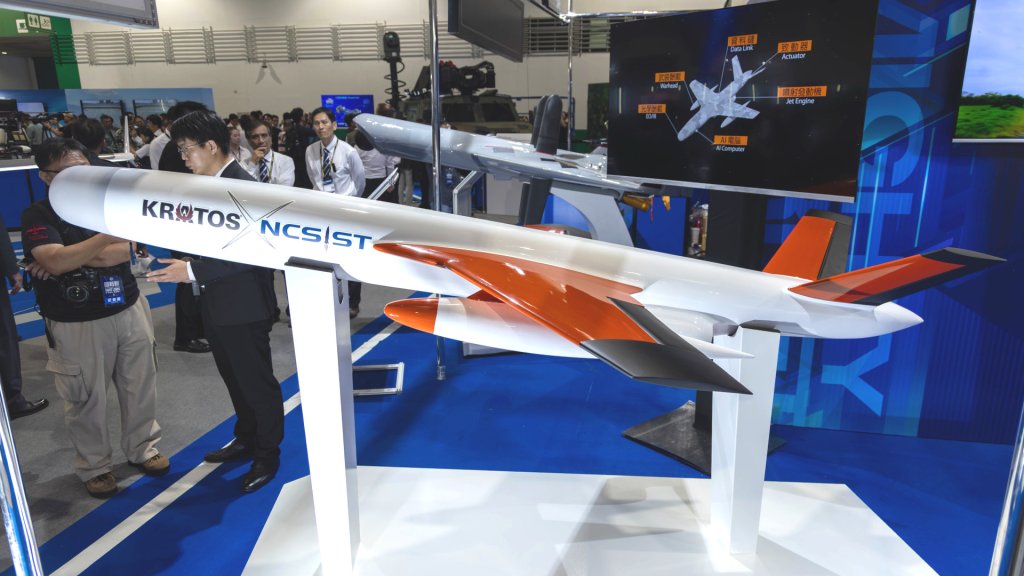
“And then, of course, our Mako system, which was our original tactical system, that we have a couple of customers who have become very interested in that,” Fendley also noted. This “is interesting because we developed that system in about the 2015-2016 timeframe, and all was quiet for a long time, and it’s really heated up in the, I would just say, in this calendar year. And I think some of that is based on world events, and some of it is based on the increase in budgets, particularly.”
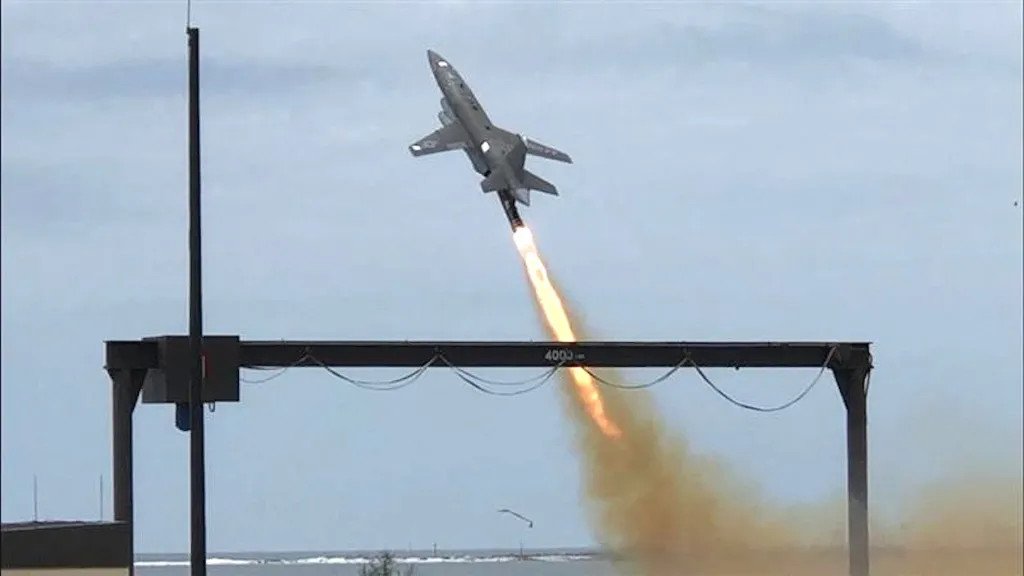
Mako, also known as the UTAP-22, is a tactical combat drone derived from the BQM-167A Skeeter target drone, which Kratos also produces. Mako was at the center of a number of important experimental U.S. military drone programs in the late 2010s and early 2020s, but had appeared to be overtaken by the XQ-58, as well as more advanced designs from other companies. The design does still offer a tier of loyal wingman-type capability that could also come at lower cost compared to other options on the open market now. Mako might be adaptable to the one-way-attack role like the Tactical Firejet/Airwolf, as well.
In addition, Fendley offered positive assessments of ongoing development of the secretive Apollo, Athena, and Thanatos drones, but said he could not offer additional details given the level of classification surrounding those programs. This also just represents work the company is doing in the classified realm that we know about.
The Valkyrie family does remain front and center in Kratos’ tactical drone portfolio. This only looks set to continue with CTOL versions now being built and production ramping up overall for a growing number of customers globally.
Contact the author: joe@twz.com
The post XQ-58 Valkyrie Drones With Built-In Landing Gear Are Now In Production appeared first on TWZ.