
The Department of War is challenging the U.S. defense industrial base to transform the way it builds and supplies weapons for the military – stimulating manufacturers to find new ways to enable faster and more efficient procurement. It’s a necessary move, particularly when it comes to weapons stockpiles, as some have been placed on red alert due to high consumption in crisis abroad. Efforts to create a so-called “Arsenal of Freedom” involve shoring-up critical supply chains, injecting predictable long-lead funding, lowering costs, and increasing competition.

Lockheed Martin’s Missiles and Fire Control (MFC) division is reacting by investing in production capacity to accelerate some of its most important munitions facilities – a reflection of how many of its missiles are in high demand. Speaking at a groundbreaking event at the company’s Troy, Alabama, site in May 2026, at which TWZ was present, Lockheed Martin chairman, president and CEO Jim Taiclet addressed employees about a “first landmark framework agreement” that will dramatically accelerate production of PAC-3 MSE (Missile Segment Enhancement) air defense interceptors, which are designed to destroy adversary tactical ballistic missiles, cruise missiles, drones and aircraft.
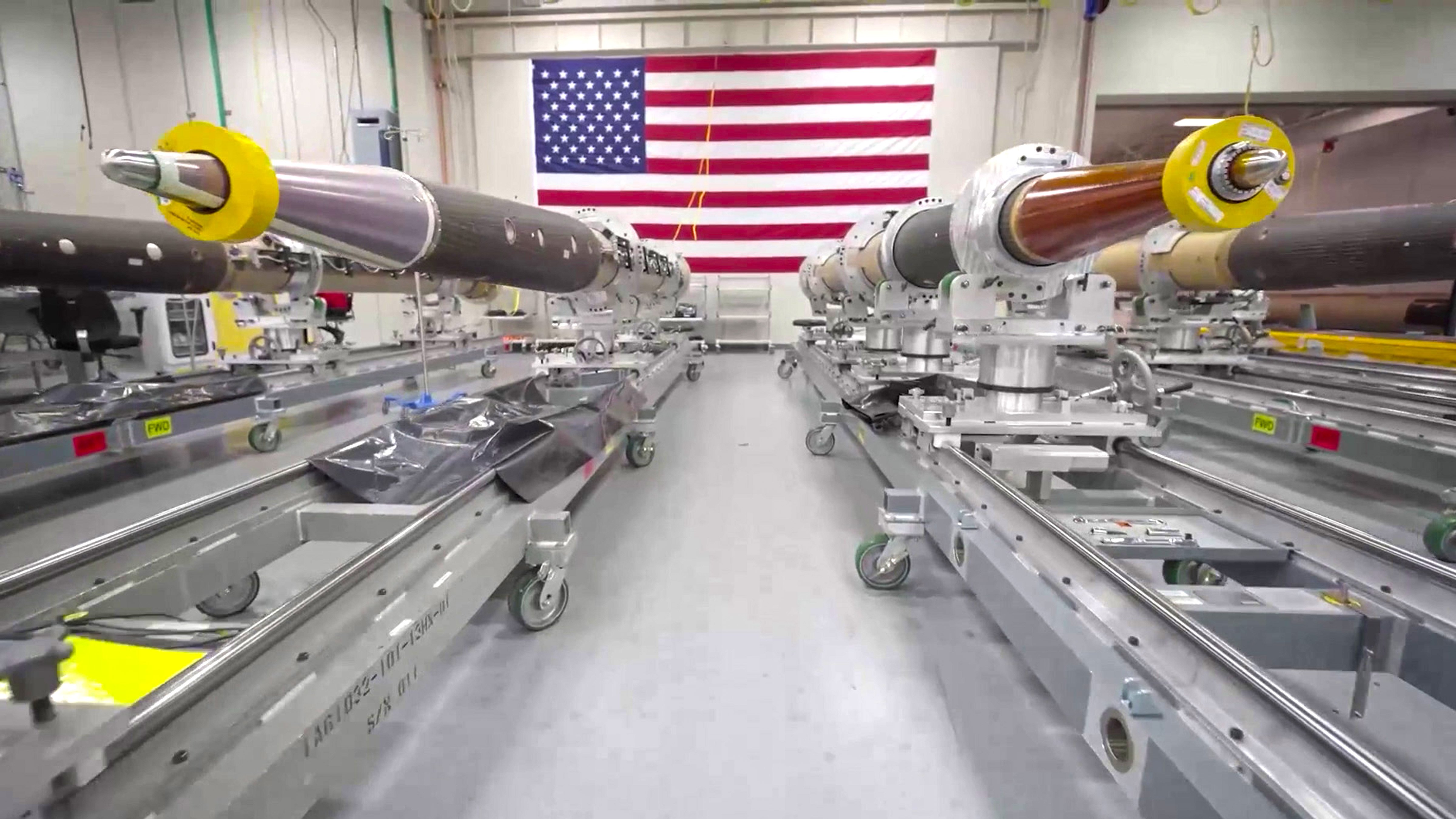
Taiclet said the “agreement represented a new model for how government and industry could work together with greater speed, accountability and shared commitment to the mission’s execution.” In addition to PAC-3 MSE, Lockheed Martin is also boosting production of its Terminal High-Altitude Area Defense (THAAD) and Precision Strike Missile (PrSM) lines to meet the urgent demand for more missiles.
Both PAC-3 and THAAD have been integrated together in Joint All-Domain Operations, including with the U.S. Army’s Integrated Air and Missile Defense Battle Command System (IBCS) and during exercises with the F-35 stealth fighter.
The company says it’s planning an $8-9-billion investment through 2030 to expand this munitions footprint across the U.S.. Lockheed Martin has invested more than $7 billion since President Donald Trump’s first term to expand capacity for priority systems, including approximately $2 billion dedicated to accelerating munitions
production. Investment is being channeled into MFC facilities, tooling, suppliers, as well as its workforce. “This effort reflects the power of a commercially-inspired partnership between government and industry,” Taiclet said, endorsing this approach as an obvious method to expand capacity for priority systems.
Paving the way for acceleration
The Department of War’s Acquisition Transformation Strategy is designed to create long-term stability that gives industry the confidence to make necessary investments to change the way it produces equipment. Lockheed Martin was the first in the defense industry to announce a framework agreement like this for munitions acceleration under the new government initiative – initially committing to the tripling of production capacity of the PAC-3 MSE interceptor and then quadrupling the production capacity of THAAD interceptors.

The U.S. government awarded Lockheed Martin a $4.7-billion undefinitized contract action (UCA) in April 2026 for the accelerated production of PAC-3 Missile Segment Enhancement (MSE), which built on a framework agreement signed in January 2026 to ramp up production of the missiles. Production of the PrSM short-range ballistic missile will also quadruple. PrSM, which succeeds the Army Tactical Missile System (ATACMS), received Milestone C approval from the U.S. Army in July 2025, which led to a $4.94 billion contract award. PrSM then made its operational debut earlier this year in operations against Iran.
“We’re rapidly ramping up a number of munitions. It’ll probably [expand to] include all the munitions that we build here at Lockheed Martin Missiles and Fire Control,” explained Tim Cahill, president of the company division. “We are working in partnership with the Department of War to identify go-quick contract actions that we can put in place, the suppliers we need and what investment is needed, and then determine what we call the enablers to make that happen.”
“It’s not just a case of let’s just go faster, it’s about what we fundamentally have to change across the entire business and in the technical process to go quickly to replenish stocks at a higher level than we ever have before,” Cahill added. “Ultimately, I would expect that we’re going to see all the munitions that we build in some sort of heads of agreement, some sort of a contract to increase the level of production.”
In addition to PAC-3 MSE, THAAD, and PrSM, the AGM-158 Joint Air-to-Surface Standoff Missile (JASSM) and AGM-158C Long-Range Anti-Ship Missile (LRASM) programs are also ramping up, and Cahill added that the AGM-179 Joint Air-to-Ground Missile JAGM and Javelin shoulder-launched anti-armor weapon are expected to follow suit. “We have been ramping some of these munitions for several years already. Javelin production has increased, as has GMLRS [Guided Multiple Launch Rocket System] and GMLRS Extended-Range, but I would expect they’re going to ramp up beyond those numbers in the next few years.”
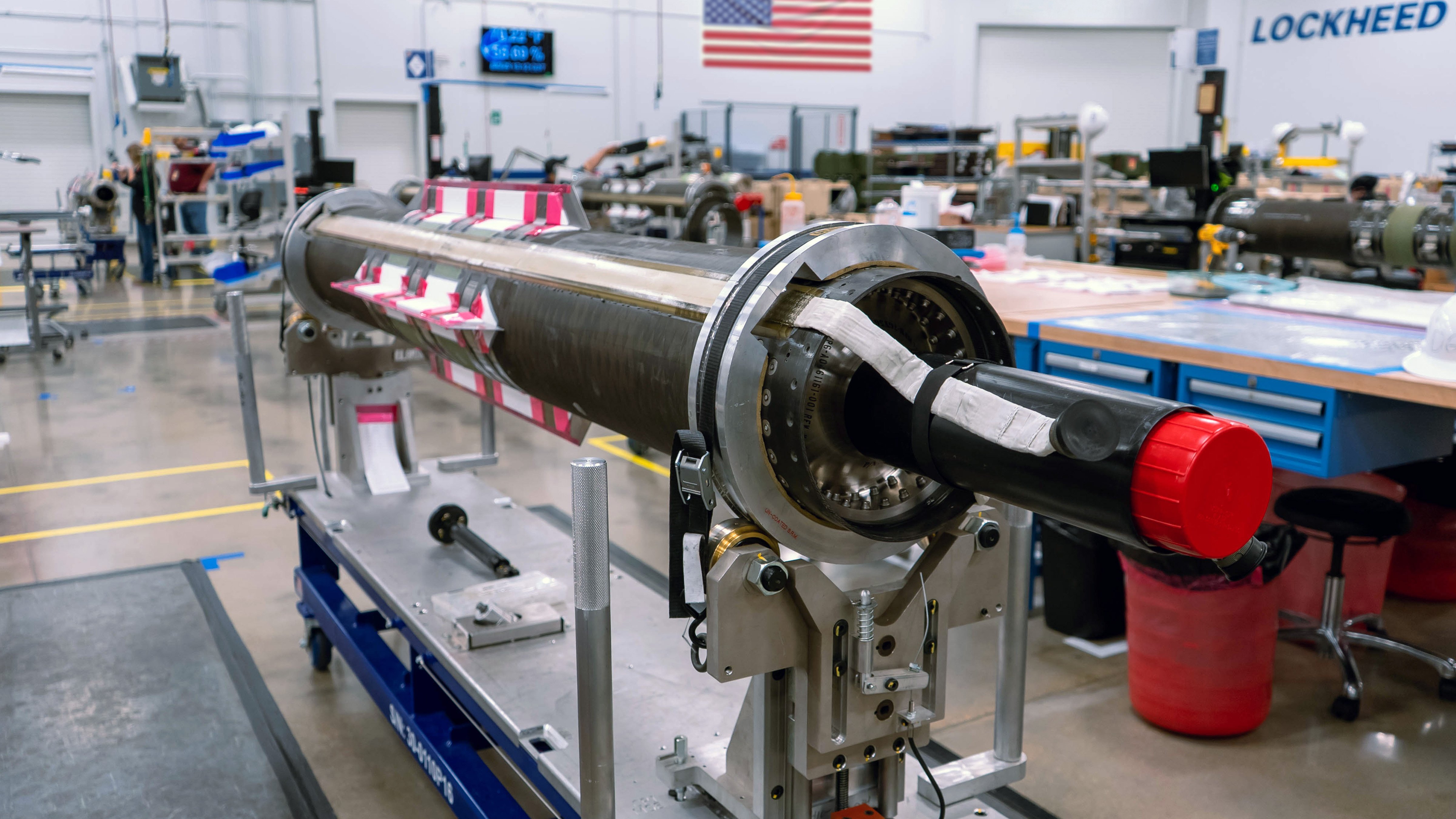
The manufacturing process for these advanced weapons is a complex business. It has typically taken as long as three years from contract signature to the delivery of a PAC-3 MSE. Lockheed Martin aims to dramatically cut timelines like this. “Lockheed Martin is not waiting – we have been taking proactive steps to ramp up production and secure materials well in advance,” explained Jason Reynolds, vice president and general manager for integrated air and missile defense. “It takes time for each of those suppliers to actually create those individual subcomponents and ship them to places like our plants in Troy, Alabama, or Camden, Arkansas. Then we do the final assembly. Once we’ve completed that, we have to go through testing and qualification, packaging and signing off, then delivering them to the U.S. government or to our partners and allies that have placed that order. It’s a time consuming process, but we’re doing everything possible to shorten that in the near term.”

One of the critical keys to the change lies in contracting. Cahill says companies have become used to annual contracts, with incremental follow-on options. He says this drove industry to commit to a year’s worth of production at a time, with no real certainty over what the ensuing years would bring. The new government approach presents a commitment of between five and seven years, which provides far greater confidence and predictability for manufacturers to invest in long-lead items to help prevent bottlenecks in the complex production cycle, and ultimately streamlines and expedites the production process.
The long-term approach to procurement has an additional benefit of being able to secure lower prices for components and materials, enabling the prime contractor to invest in a supplier’s capacity with greater confidence. Keeping a production line moving and not having to pause to wait for components to arrive is a significant factor. Securing larger quantities of parts with plenty of lead time enables cost savings and production acceleration.
“For all of us, there’s also economic value there,” explains Cahill. “There is real money in being able to drive efficiencies, knowing what the next seven years will be like. We can take those efficiencies and effectively apply them into self-investment up front, so the U.S. government gets better value in the price of the munitions. They’re ordering more and business gets the opportunity for increased revenue and increased capability.”
“We have thousands of suppliers, particularly underneath our key suppliers all across this nation and in many cases across the world. It’s about what they need all the way down to raw materials. For example, one thing that’s held us up over the years is titanium. Titanium goes into a lot of things, including golf club shafts! So you’re out there competing on the commercial market for materials. Being able to get ahead of that curve and aggregate demand, first of all, increases our priority and allows us to deal with the lead times and plan for that so those don’t become bottlenecks. What we are doing with our suppliers is in effect addressing all those elements.”
It’s not just the contracting that is being overhauled, changing the way these complex systems are actually built is equally important. Lockheed Martin is now increasing both its workforce and the use of robotics, plus it’s bringing in additive manufacturing techniques such as 3D printing to reduce reliance on costly and time-consuming traditional tooling.

“Building missiles faster is a key priority for us, and we can do that a couple of different ways,” added Jason Reynolds. “You can shorten the span time and the lead times of all the different components, and you can actually increase the factory floor [footprint] to increase throughput. We’re doing all of that. We’re working with suppliers to reduce the individual span times, whether it be a rocket motor, a seeker, or a section that we make internally like the guidance section, so that we can build these things faster using automation and advanced manufacturing technologies at the same time. We’re increasing the actual capacity. We’re making additional tooling and test equipment, hiring additional people both here at Lockheed Martin and at our suppliers around the world.”
License production is another means to share the load and unlock expanded production capacity. Lockheed Martin has already licensed PAC-3 MSE production to Japan, which operates a final assembly and checkout facility. “That’s something we’re going to be looking at, because if we can expand our supply base in Europe, for example, where we have potential co-production in Europe, there are some great possibilities there,” says Tim Cahill. “We’re looking at all the elements, everything that might be a methodology to bring those numbers up and make sure that our nation and our allies have the capacity they need. Licensed production could very well be part of that.”
Rapid prototyping and speed to field
New start-up companies and industry “disruptors” are playing a fundamental role in changing the government’s expectations when it comes to driving down costs and rapidly developing and then producing new capabilities. Tim Cahill pulls no punches when acknowledging this and emphasizing how Lockheed Martin is similarly evolving its approach.
MFC has set-up a Rapid Fielding Center at its Grand Prairie facility in Dallas, Texas, designed to promote the use of latest in production and prototyping technologies. “We are looking at how we can apply some of the emerging technologies to do things quickly, like using Artificial Intelligence and Machine Learning to make our production more adaptive and able to build in mass quantities that we couldn’t build before. We are competing in that space.”

The use of commercial off the shelf products is a recognized means to accelerate, but Cahill cautions that it’s not always a suitable solution. “You’re looking for the most capable parts to meet the requirements and get you there fast. That’s always been part of the dynamic for Lockheed Martin. We always look at commercial parts. Some systems are more conducive to it than others. If you’re building a low-cost drone or a counter-drone system, you’re looking for something that’s treatable – it’s great for those kinds of systems. But as these become more complex – when they have to operate in environments that range from the Arctic to the high desert in the Middle East in the middle of summer – or if they have to go through extreme launch environments or whether they have to survive in the presence of our adversaries trying to counter them. As the requirements get harder and harder, commercial off-the-shelf parts just don’t meet those requirements. They fail because they’re not designed for that.”
“You can’t take an automotive guidance system and run it at Mach 5, run it through the atmosphere at high temperature and have somebody try and disrupt it. In most cases we have to make them more robust and capable, or build parts that are unique to those particular products. We always start with the questions of how we accomplish the mission? How do we give our warfighters what they need to prevail, and we will use commercial off-the-shelf if that fits what is necessary for that mission – sometimes it does and sometimes it doesn’t. Any technology that you can imagine, we are looking for, how might we apply that just like all the new entrants and frankly all the traditional companies are doing much the same. We get the sense of urgency and that’s what we intend to do.”
Lockheed Martin is also involved in deep research around low cost weapons. “There’s a lot of people competing in that space,” Cahill acknowledges. “Sometimes for us when we’re applying our investment, our expertise, it’s more effective to focus on some of the other capability areas. For example, we have introduced a counter-UAS [unmanned aircraft system] called MORFIUS X-Rotor, a newly-released airborne high power microwave system that can neutralize more than 50 enemy drones in a single flight.”
MORFIUS is designed for field recovery and reuse and Lockheed Martin says it offers a very low cost-per-kill ratio.

Lockheed Martin is also ready to move ahead with a lower-cost Patriot missile interceptor. “Our PAC-3 Adapted Capability Effector, or PAC-3 ACE, answers the call,” Cahill told TWZ, adding that it will probably be less than half as expensive as the current PAC-3 MSE, but that it would still retain a lot of the capability. “They’re never going to have that full capability because you’ve got to fundamentally remove parts, some of the things that are most expensive.”
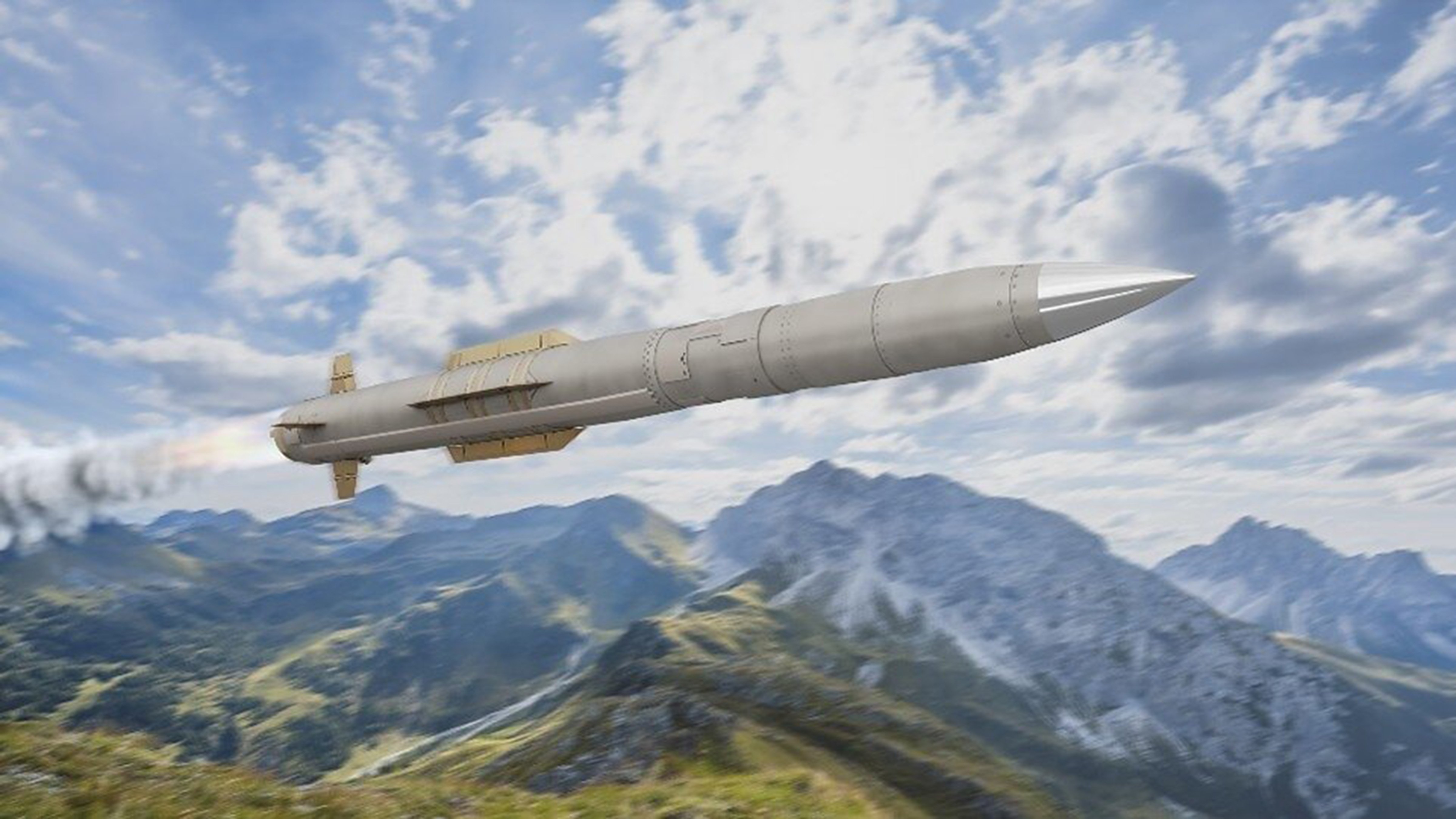
Cahill says that PAC-3 ACE is built on the PAC-3 fire-control system and will be fully linked to the Patriot weapon system and the Integrated Battle Command System. “There isn’t magic here and when you take some of those things off, they become less capable, but that’s absolutely part of the dynamic. This rapidly fielded, complementary PAC-3, will be deployed quickly and enhance the resilience of the U.S. defense industrial base worldwide.”
The post Lockheed Martin’s Master Plan For Accelerating Munitions Production appeared first on TWZ.