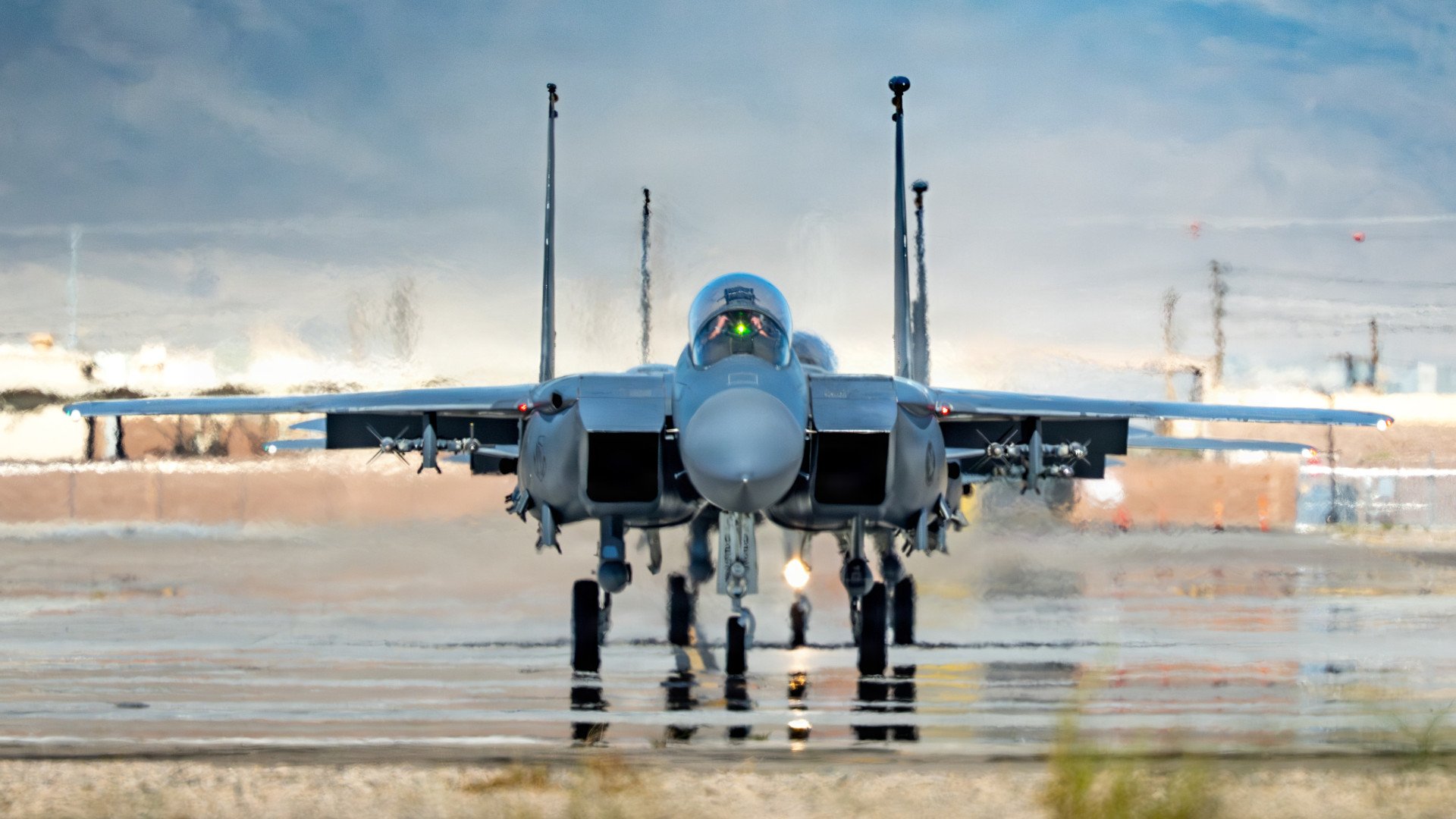
The U.S. Air Force Reserve’s 442nd Fighter Wing is now set to transition to the F-15E Strike Eagle after retiring the last of its A-10 Warthog ground attack jets. This is an unexpected announcement and follows years of uncertainty about whether the 442nd would still have a tactical flying mission at all after its A-10s headed to the boneyard. The decision to give the wing F-15Es, rather than a newer type like the F-15EX Eagle II, is also notable, and there were hints this was coming. The jets will have to come from another unit, pointing to larger force structure changes on the horizon.
Representative Mark Alford, a Missouri Republican, announced the transition plan for the 442nd late yesterday. The Wing’s home station is Whiteman Air Force Base in Missouri, which is situated in Alford’s district. Whiteman is better known for being the home of the Air Force’s B-2 bomber fleet. The Missouri Army National Guard’s 1st Battalion, 135th Aviation Regiment, with its UH-60 Black Hawks, is also a tenant unit at the base.
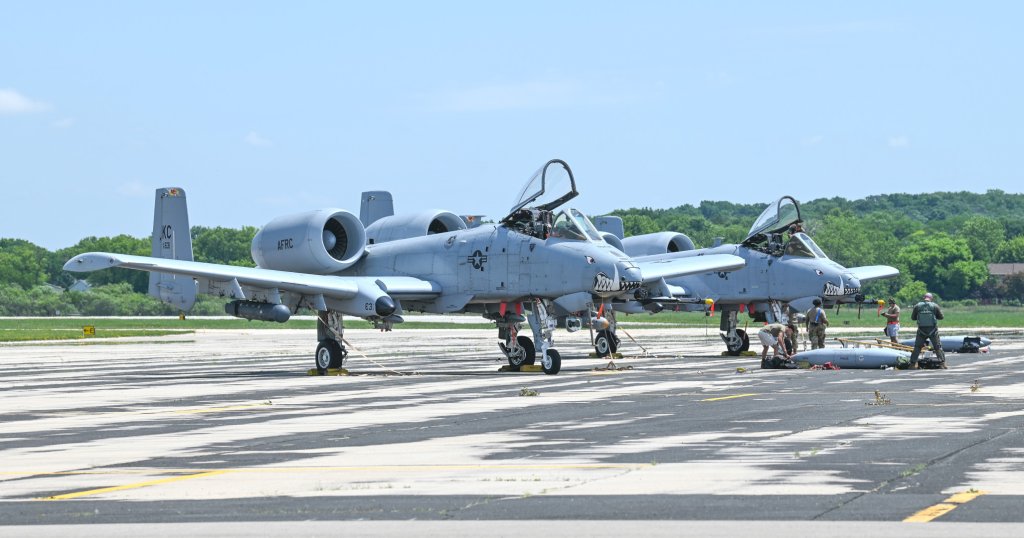
The Department of the Air Force has approved “the enterprise definition, site survey criteria, and candidate location for the Air Force Reserve Command (AFRC) F-15E Strike Eagle basing action,” according to a press release from Alford’s office. “Based on the approved enterprise definition, Whiteman Air Force Base, Missouri, has been identified as the sole candidate location for the F-15E Strike Eagle mission – a decision that marks a critical step toward securing the future of the 442d Fighter Wing and continuing its decades-long tradition of excellence.”
“The Department of the Air Force’s decision supports its broader goal of increasing fighter capacity, modernizing the fighter force, and replacing aging aircraft with a capable and sustainable platform,” the release adds. “The planned transition will bring 24 F-15E Strike Eagles to Whiteman Air Force Base, preserving a critical Air Force Reserve combat-coded fighter unit and the experience of the 442d Fighter Wing.”
The current plan is for the first F-15Es to begin arriving at Whiteman in Fiscal Year 2031, the release also notes. This is in line with the new retirement schedule for the A-10 fleet that the U.S. Air Force announced earlier this year. The service had previously been aiming to divest the last of its Warthogs in 2029, but is now set to continue flying the type through 2030. The 442nd at Whiteman, as well as an active component squadron at Moody Air Force Base in Georgia, are now in line to be the last operational A-10 units. A second active duty unit at Moody will also keep flying the A-10 for an extra year, into 2029, under the new plan.
TWZ has also reached out to the U.S. Air Force for more information in light of Alford’s announcement.
Most immediately, the decision to transition the 442nd to the F-15E is a major win for the unit and for Whiteman, preserving a tactical flying mission at the base for the future. The impending retirement of the A-10 has caused significant uncertainty for units flying Warthogs, especially in the Air Force Reserve and the Air National Guard. Members of Congress, as well as state politicians, on both sides of the political aisle have been pushing for years for new flying missions for existing A-10 units. A similar surprise announcement came in April 2025, when President Donald Trump announced that the Michigan Air National Guard’s 127th Wing would be trading its Warthogs for F-15EXs.
“I want to sincerely thank the leaders throughout the Department of the Air Force, Air Force Reserve Command, Governor [Mike] Kehoe for bringing this matter to President Trump’s attention, Missouri’s State Senators for their efforts, and the many Whiteman Air Force Base Airmen who took the time to give their concerns and help make this mission possible,” Rep. Alford said in a statement yesterday. “This outcome reflects what can happen when a community comes together, when our military leaders listen, and when we work toward a shared goal.”
“This is incredible news for Whiteman Air Force Base, the 442d Fighter Wing, and our entire state. The F-15E Strike Eagle mission secures the future for the 442d, saving jobs and bringing continued opportunity to Missouri,” Gov. Kehoe wrote in a post on X yesterday. “This historic announcement would not have been possible without @RepMarkAlford’s [Rep. Alford’s] dedication to securing this mission alongside Whiteman leadership, @SenEricSchmitt [Senator Eric Schmitt], and @SenHawleyPress [Senator Josh Hawley].”
“This is the first in several steps,” Alford also acknowledged during a press conference yesterday, as seen in the video below. “There’s a lot of planning that has to go into this, a lot of regulatory steps. But this is a first step that I’ve been waiting on for three and a half years: for the Air Force to give us a call and to email us with a detailed plan of how this is going to work out.”
As mentioned, the more specific plan now to convert the 442nd into an F-15E squadron is interesting. The original Strike Eagle is long out of production, and the Air Force currently has some 212 of these jets in inventory.
So, to make the plan work, the F-15Es heading to Whiteman in Fiscal Year 2031 will have to come from somewhere else within the Air Force. Right now, there are six active-duty Strike Eagle squadrons spread across Seymour-Johnson Air Force Base in North Carolina, Mountain Home Air Force Base in Idaho, and RAF Lakenheath in the United Kingdom. There are a smaller number of Strike Eagles assigned to test and evaluation units, as well.
It’s also important to note here that there are roughly two halves to the F-15E fleet: older jets with Pratt & Whitney F100-PW-220 turbofan engines and ones with more powerful F100-PW-229 variants. The Strike Eagles with -229 engines are newer, with the final batch of 10 aircraft being delivered in the early 2000s.
The F-15Es are still some of the most heavily in-demand aircraft in the Air Force’s inventory today, offering a very flexible multi-mission tactical platform with impressive range and payload capacity. At the same time, the Strike Eagle fleet has been heavily strained by persistent operational demands for decades now. This has been recently compounded by the loss of four jets in the course of operations against Iran this year.
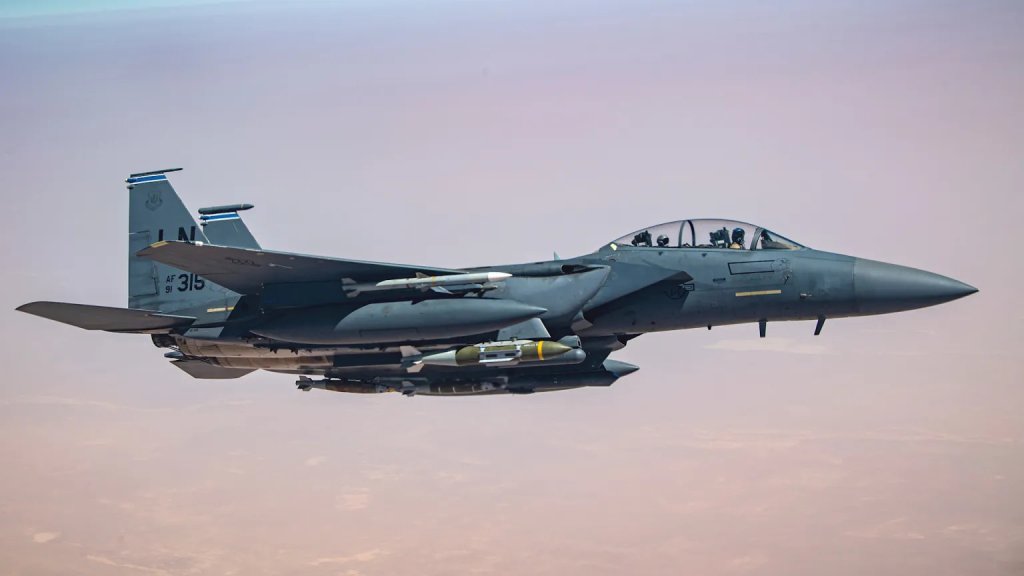
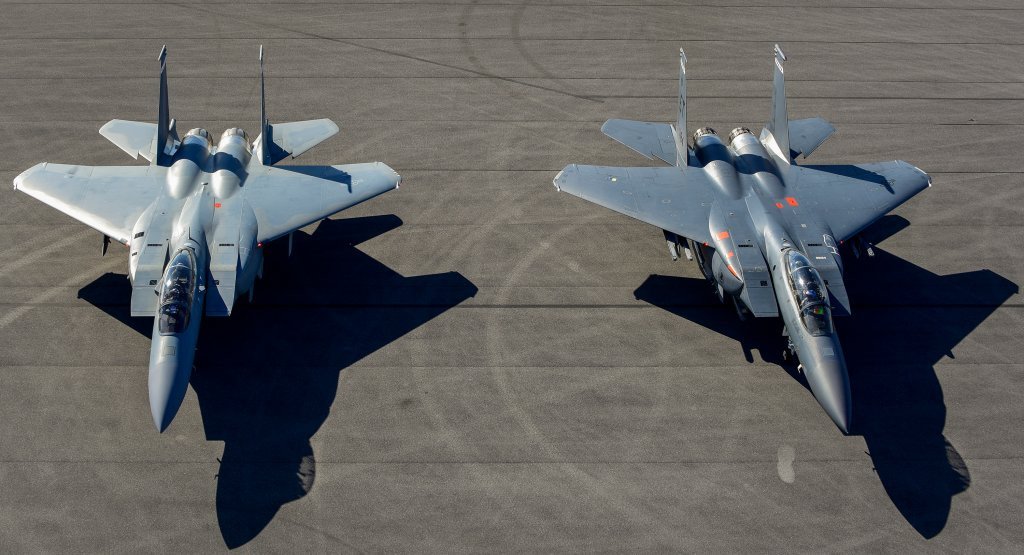
The Air Force has moved in recent years to retire its older F-100-PW-220-powered Strike Eagles, ostensibly to free up resources for new and improved capabilities as part of larger modernization efforts. Congress has pushed back against those plans, something we will come back to later on. More recently, the service also announced plans to roughly double the size of its fleet of F-15EX fleet, from 129 to 267 jets, explicitly to help “begin to recapitalize the aging F-15E fleet.”
TWZ has been highlighting the logic of replacing the F-15Es, or at least a substantial portion of that fleet, with new EXs, for years now. As we have previously noted, the current acquisition plan is large enough that it could also help fill gaps left by the retirement of the A-10 fleet and older F-16 Viper fighters.
We have also talked in the past about the potential value then of sending the resulting ‘surplus’ F-15Es to other Air Force units, especially in the reserve component and the Air National Guard. It would arguably make more sense in many cases to give active-duty squadrons newer F-15EXs while pushing older Strike Eagles to the Reserve and Guard. The more heavily air-to-ground-focused, two-seat F-15Es would be especially well positioned to carry on close air support, forward air control, and other missions currently performed by units transitioning from the A-10. The loss of this knowledge and specialization is among the biggest concerns with retiring the A-10.
“For every one of these A-10 units that are going away, I’m looking at if there’s a means by which we can get an F-15 unit behind it, whether it’s a Strike Eagle or an EX,” Air Force Lt. Gen. John P. Healy, Chief of Air Force Reserve, said just this past February at the Air & Space Forces Association’s annual Warfare Symposium in February.
“I am optimistic that we’ve at least got people listening to the value that we provide, the combat capability we provide, the experience that we provide,” Healy also said at that time when asked directly by TWZ about the likelihood of F-15Es heading to Air Force Reserve units. “We’ve proven it over and over again. We’re efficient, we’re experienced, we’re 100 percent accessible as a reserve force, and we’re lethal in all these mission sets. I think our message is sounding in a positive way with senior leadership within the Air Force. I’m not going to cash the check yet, but I’m optimistic about our future in terms of recapitalizing some of our units.”
To reiterate, sending F-15Es to any Air Force Reserve and/or Air National Guard squadron will require a redistribution of the existing Strike Eagle fleet. The comment in the press release from Rep. Alford’s office that Whiteman has been “identified as the sole candidate location for the F-15E Strike Eagle mission” raises further questions about exactly what the entire Strike Eagle force, and its disposition, will look like by the end of the decade. Seymour-Johnson is where the F-15E schoolhouse currently resides, and the base is also now the hub for F-15EX training.
The new plans for a larger fleet of F-15EXs will factor in the equation, as well. The Oregon Air National Guard’s 142nd Wing is currently the only operational unit flying Eagle IIs. The Air Force has announced that Air National Guard squadrons in California and Louisiana, as well as the aforementioned one in Michigan, will be receiving F-15EXs, too. Two active duty Eagle II squadrons are also set to be established at Kadena Air Base in Japan. There are currently expected to be nearly 120 aircraft assigned to these squadrons, as well as test and evaluation units, collectively. With the EX fleet now set to comprise 267 aircraft, there is then the question of where nearly 150 additional jets will be assigned. Recapitalizing frontline F-15E units with EXs would go a long way toward providing an answer, while also freeing up Strike Eagles for reassignment elsewhere.
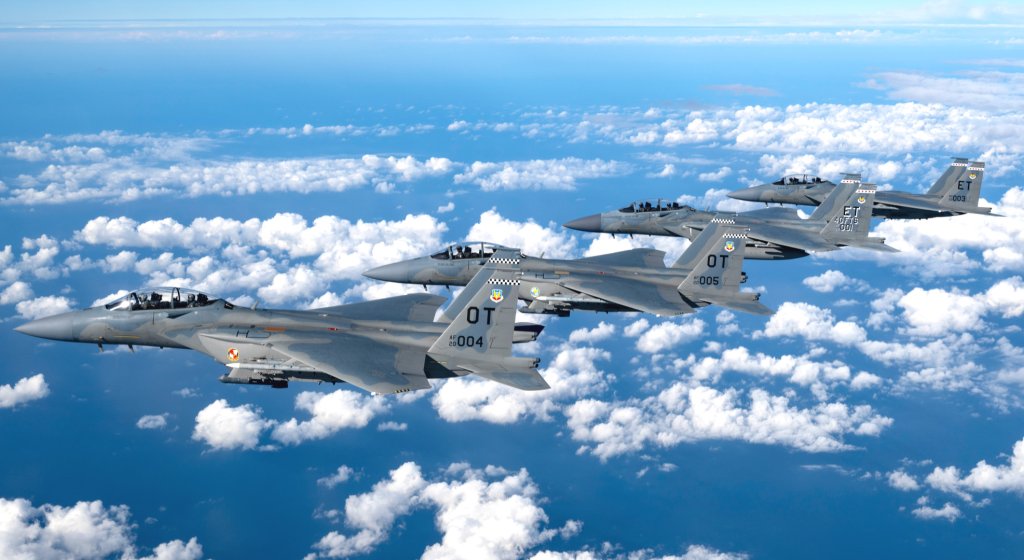
The 442nd’s transition to the F-15E is still not expected to come for several more years. There is the possibility then that the plan, as well as other expected force structure changes, could evolve further due to a variety of factors. For one, Congress has already stepped in to block the Air Force from retiring any Strike Eagles through at least September 2027, and could do the same again next year. At the same time, this would not preclude the Air Force from reassigning those jets to new units as other aircraft enter service.
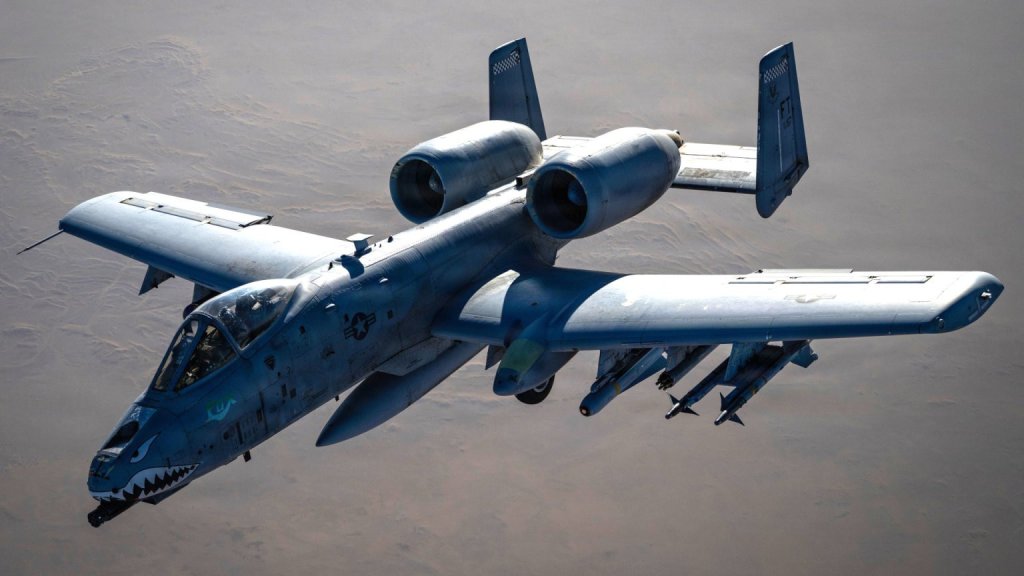
There is also the potential for A-10s to continue serving beyond 2030. Earlier this month, a bipartisan group of Congressmen introduced a bill that, if passed and signed into law, would require the Air Force to continue flying Warthogs through Fiscal Year 2033. This proposed legislation is named the BRRRRT Act (standing for Bolstering Recognition, Resurgence, Retention, and Remembrance of the Thunderbolt), a reference to the sound the A-10’s iconic 30mm GAU-8/A Avenger cannon makes when fired. This is on top of additional lifelines for the Warthog community contained in drafts of the annual defense policy bill, or National Defense Authorization Act (NDAA), for Fiscal Year 2027 that are now making their way through Congress.
The employment of A-10s in strikes against targets in and around Iran this year directly contributed to the Air Force’s aforementioned decision to extend the service life of the fleet. This has also bolstered general support for the aircraft, which has long had a vocal following among the general public.
Though clearly an important development for the 442nd Fighter Wing, the transition plan that has been outlined now looks to be just the start of major changes for the Air Force’s F-15E fleet, especially as the new F-15EX continues to take center stage.
Contact the author: joe@twz.com
The post F-15Es Replacing A-10s At Whiteman AFB Signals Bigger Realignment Of Eagle Fleet appeared first on TWZ.