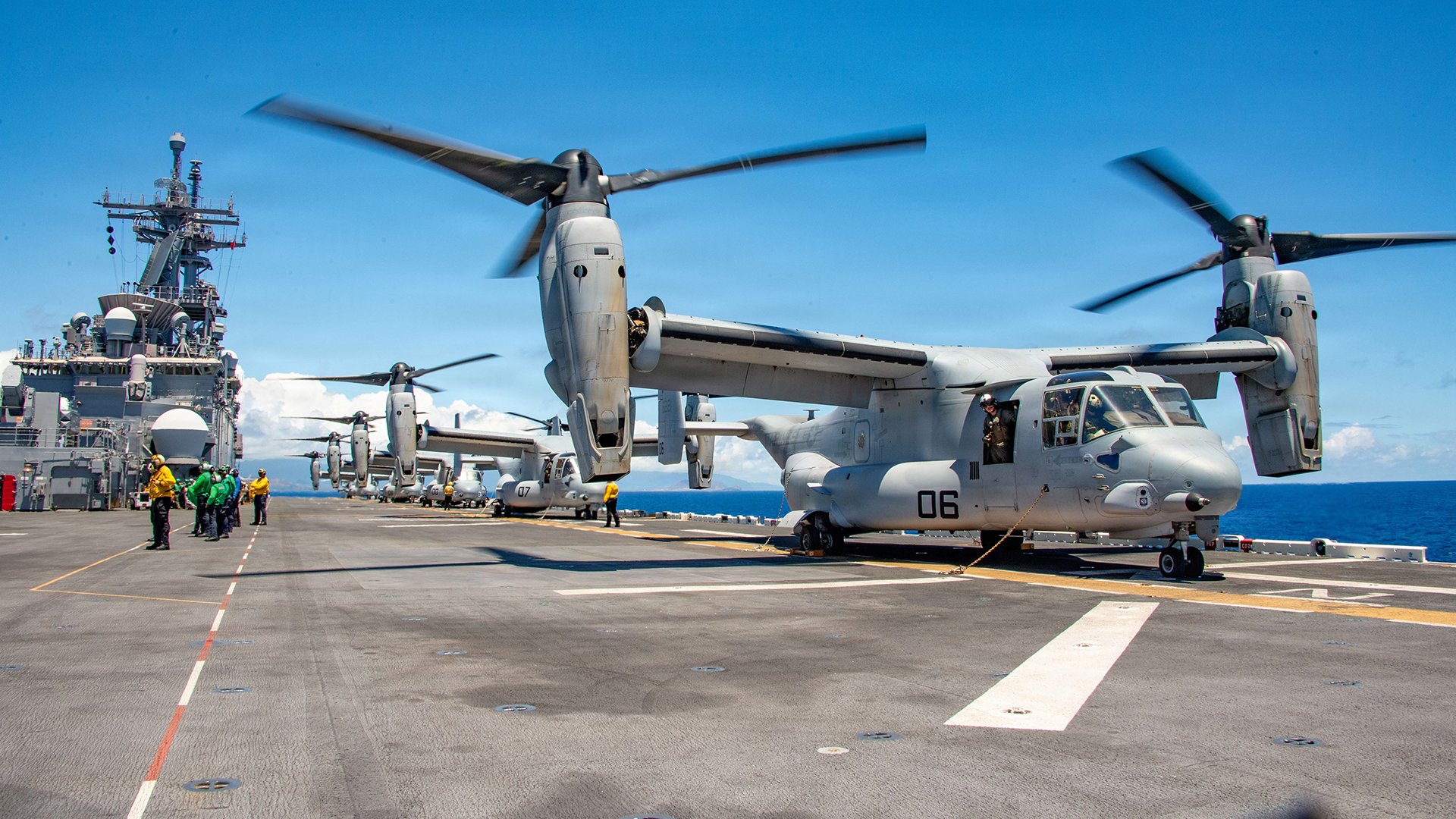
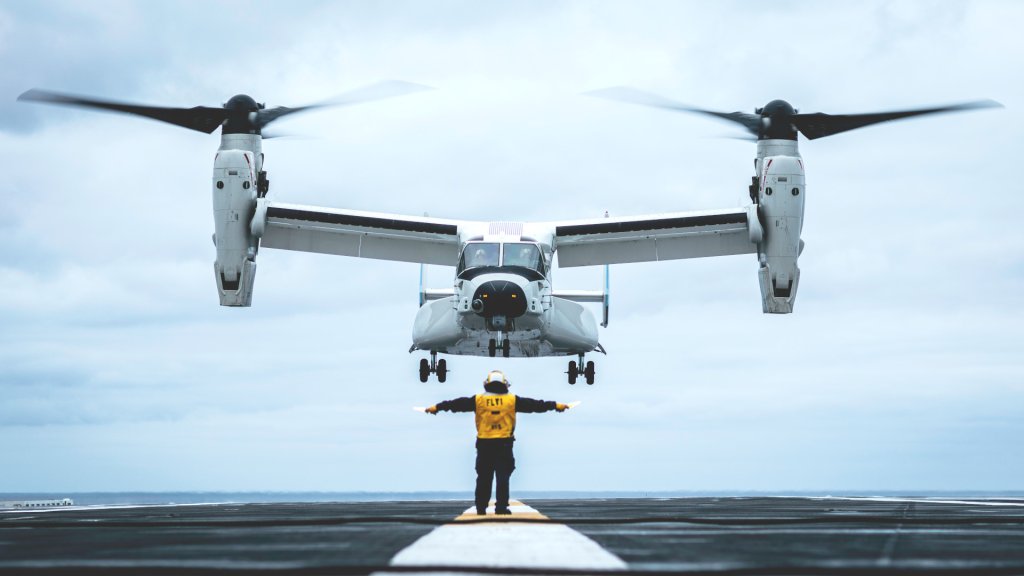
Two decades after the tiltrotor MV-22B Osprey first achieved initial operational capability, the U.S. Marine Corps on Tuesday received its final delivery of these controversial aircraft, closing the books at 359 of them. While the Osprey fleet is expected to keep flying through 2055, the Corps is eyeing a replacement, dubbed the Next Generation Assault Support (NGAS) aircraft.
Developed to bridge the gap between rotary-wing and fixed-wing capabilities, the MV-22B combines the vertical takeoff and landing of a helicopter with the speed and range of a fixed-wing airplane. After first entering service in 2007, the MV-22B became the backbone of the Marine combat air assault capability, primarily replacing the CH-46 Phrog. The self-deployable tiltrotors, able to fly themselves around the globe, vastly outrange and outpace any other rotary-wing aircraft the Corps has to offer. They can also land on ships and in tight austere locations that fixed-wing transport aircraft can’t. This unique mix of capabilities has altered how the USMC does business and opened up new tactical opportunities.
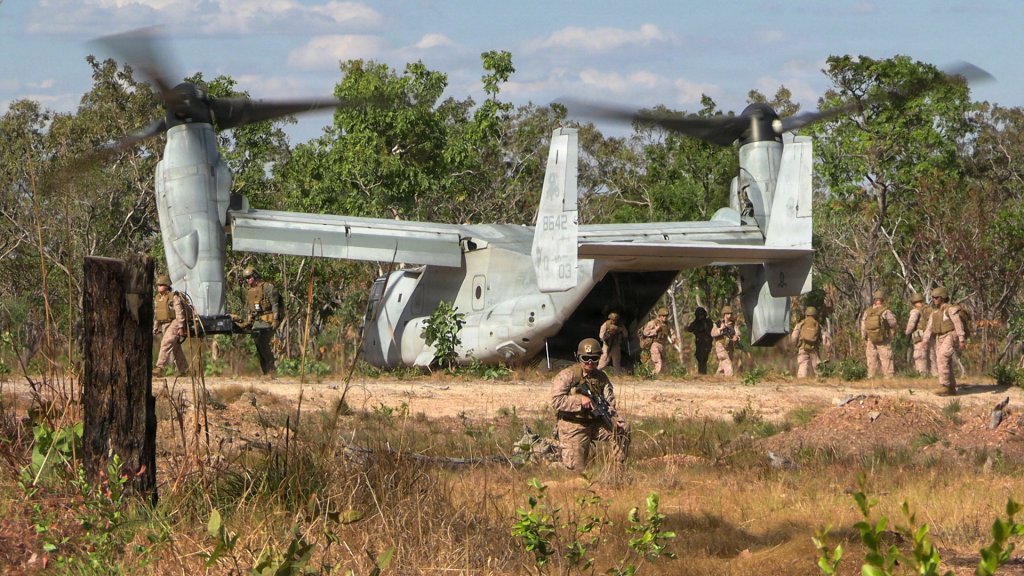
“The MV-22B didn’t just join our fleet; it fundamentally changed the way the Marine Air-Ground Task Force generates combat power,” said Lt. Gen. William Swan, Deputy Commandant for Aviation. “It provides commanders with decision space that only speed and reach can provide, connecting ships, bases, and distributed forces in ways previous generations could only imagine. Today, Marine commanders build operations around the assumption that the MV-22B will be there.”
The Marine Corps MV-22B fleet “has flown more than 686,500 hours across 114 operational deployments,” the service said in its announcement of the final delivery. “This versatile platform supports combat operations, contested logistics, medical evacuations, and humanitarian assistance from forward-deployed locations across the globe. Today, the Osprey sources 75% of all Marine Corps rotary-wing assault support. This unmatched operational tempo underscores the success of the joint acquisition program as it reaches its final delivery.”
However, the success of the Osprey has come at a cost. As of July 2025, “65 military personnel and civilians have died in mishaps involving V-22 aircraft,” according to the Congressional Research Service (CRS). “That figure includes 30 fatalities before 2007, when the aircraft was declared ready for initial operations, and 35 after 2007. Since 2022, V-22s have experienced four fatal mishaps that killed 20 servicemembers and injured another 20.”
There have been sporadic limitations imposed on Osprey operations, and the fleet faced notably increased scrutiny following a three-month-long grounding in 2024 prompted by a fatal crash of a U.S. Air Force CV-22 off the coast of Japan on Nov. 29, 2023.
With the delivery of the final Osprey, the Marine Corps is now shifting from fielding these aircraft to sustaining and evolving the fleet for decades to come.
To keep the MV-22B operational through 2055, the Corps is “focused on improving nacelle wiring to reduce maintenance hours, pursuing improved prop-rotor gear boxes with triple-melted, refined steel components, standardizing aircraft configurations across the fleet, and redesigning key components to enhance safety and make the aircraft more sustainable,” the Marines explained.
“We cannot assume that because the MV-22B transformed Marine aviation once, its evolution is complete,” said Swan. “It is our responsibility to carry this legacy forward and ensure this aircraft remains ready, relevant, and lethal for the fight ahead.”
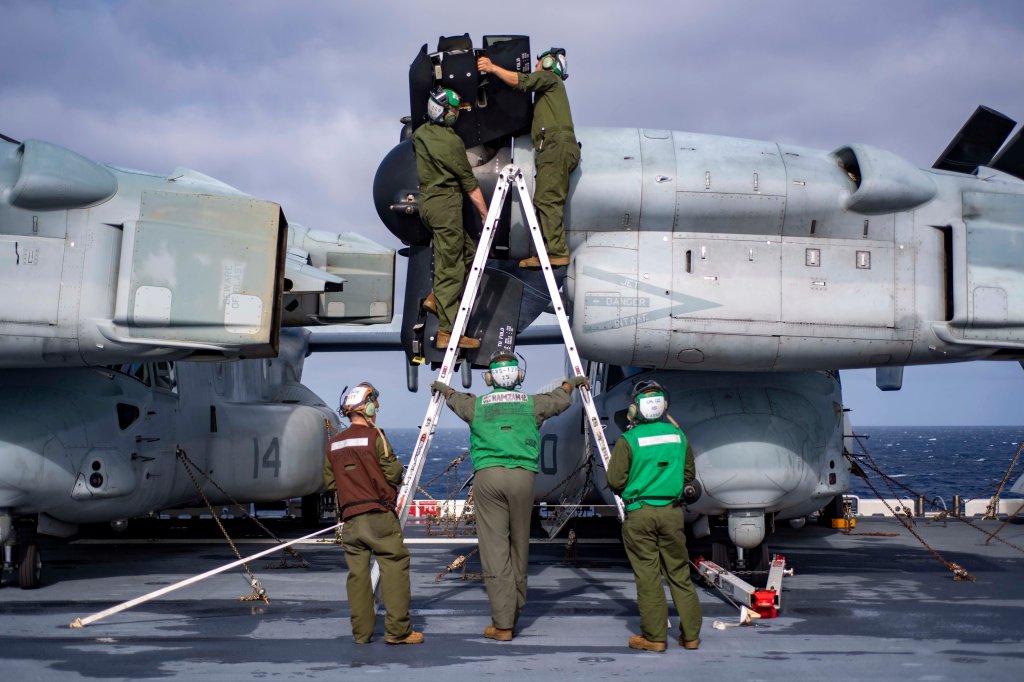
Concurrent modification plans will also provide continuous platform improvements, the USMC noted in its 2026 Aviation Plan.
“Informed by the Center for Naval Analysis (CNA) Renewed V-22 Aircraft Modernization Plan (ReVAMP) study, the Marine Corps is pursuing additional modernization efforts to ensure platform relevance and reliability until the end of the V-22 fleet’s service life, while at the same time developing and informing the requirements for the Next Generation Assault Support aircraft,” according to the aviation plan.
The aviation plan offers scant details about the NGAS program, though as we highlighted in the past, increased range, as well as greater speed to help get across the vast distances of the Pacific faster, will be key considerations, especially with an eye toward a future high-end in the Pacific against China. The Corps has touted its ability to conduct long-range and long-endurance MV-22 operations in the Pacific region, but this presents significant challenges and resource requirements, especially when it comes to aerial refueling, as you can read more about here. Those issues would only be magnified in an actual conflict against an opponent with substantial anti-access and area denial capabilities.
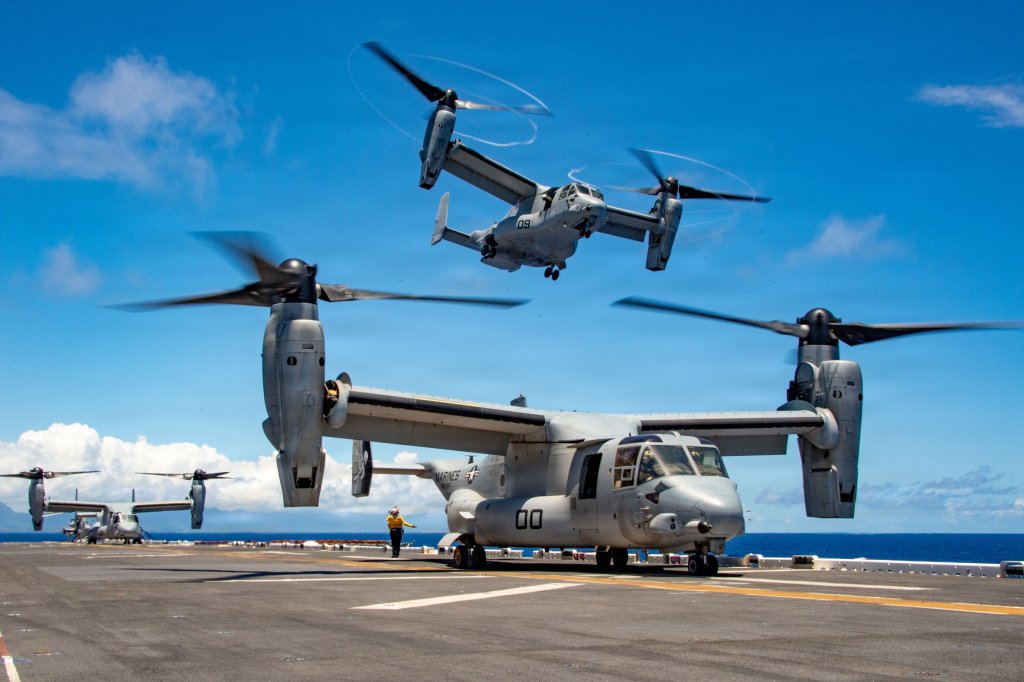
TWZ has reached out to the Marines and to the U.S. Navy’s Naval Air Systems Command (NAVAIR), the latter of which serves as the central manager for major aviation programs for the Navy and Marines, for more information. NAVAIR also leads the V-22 Joint Program Office (JPO), overseeing the entire U.S. military Osprey family that includes Air Force CV-22s and Navy CMV-22s. The JPO supports foreign Osprey operators, of which Japan is currently the only one, as well. At one time, more countries were interested in procuring V-22s, however interest faded and now the window for new foreign contracts appears to be closing as demand has not materialized and production on the aircraft is ending.
The expected delivery of the Navy’s final CMV-22 is in Fiscal Year 2028, NAVAIR told us.
“Due to operational security concerns a more detailed delivery schedule is not publicly releasable,” the command added. “The Navy will receive 53 CMV-22s in total and 42 have already been delivered.”
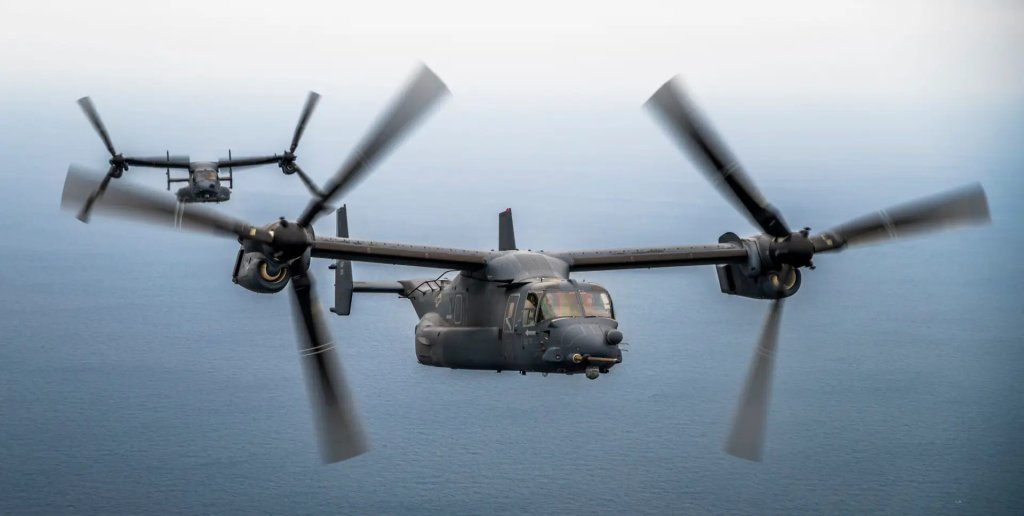
The Air Force has received all 56 of its CV-22s, with the last one being delivered in July 2025.
With fewer than a dozen Ospreys still in production, we reached out to the Bell-Boeing team to find out what will happen to the Amarillo, Texas, plant where these aircraft are manufactured.

Though it has received the last of its MV-22Bs, the Marines anticipate this airframe to remain the backbone of its combat air assault operations through the next three decades, barring any unforeseen drastic changes to its aviation plans.
Contact the author: howard@twz.com
The post USMC Just Took Delivery Of Its Last MV-22 Osprey appeared first on TWZ.