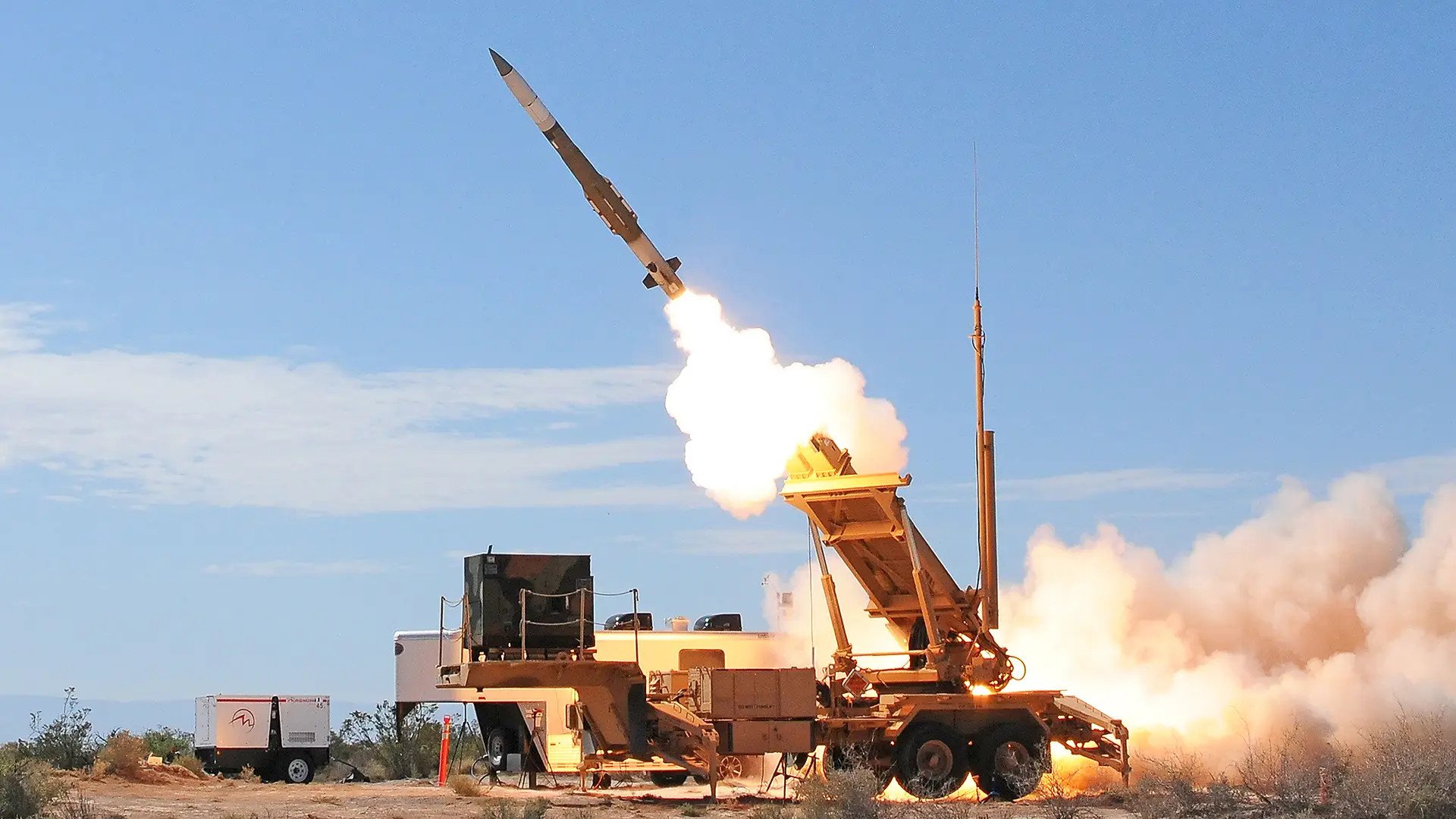
Though ostensibly aimed at giving diplomacy another shot at ending the conflict with Iran, the Trump administration’s pause in attacking the Islamic Republic reportedly comes as concerns linger over the supply of munitions, especially air defense interceptors. It is a notion that the president again dismissed on Monday; however, the lack of sufficient magazine depth is an issue that TWZ has raised frequently for years, and especially in regard to America’s air and missile defenses, in particular. In fact, we laid out in detail these exact concerns and how they would be a major issue in war with Iran just prior to the conflict starting in a feature you can read in full here. Meanwhile, amid the lull in fighting between the U.S. and Iran, Saudi Arabia and Jordan say they are still being attacked.
The U.S. and Iran stopped firing at each other late last week, leading to a pause after 13 straight days of continuous tit-for-tat operations. There hasn’t been a U.S. strike on Iranian territory since last Thursday. On Monday, President Donald Trump claims the U.S. has sufficient weapons stockpiles.
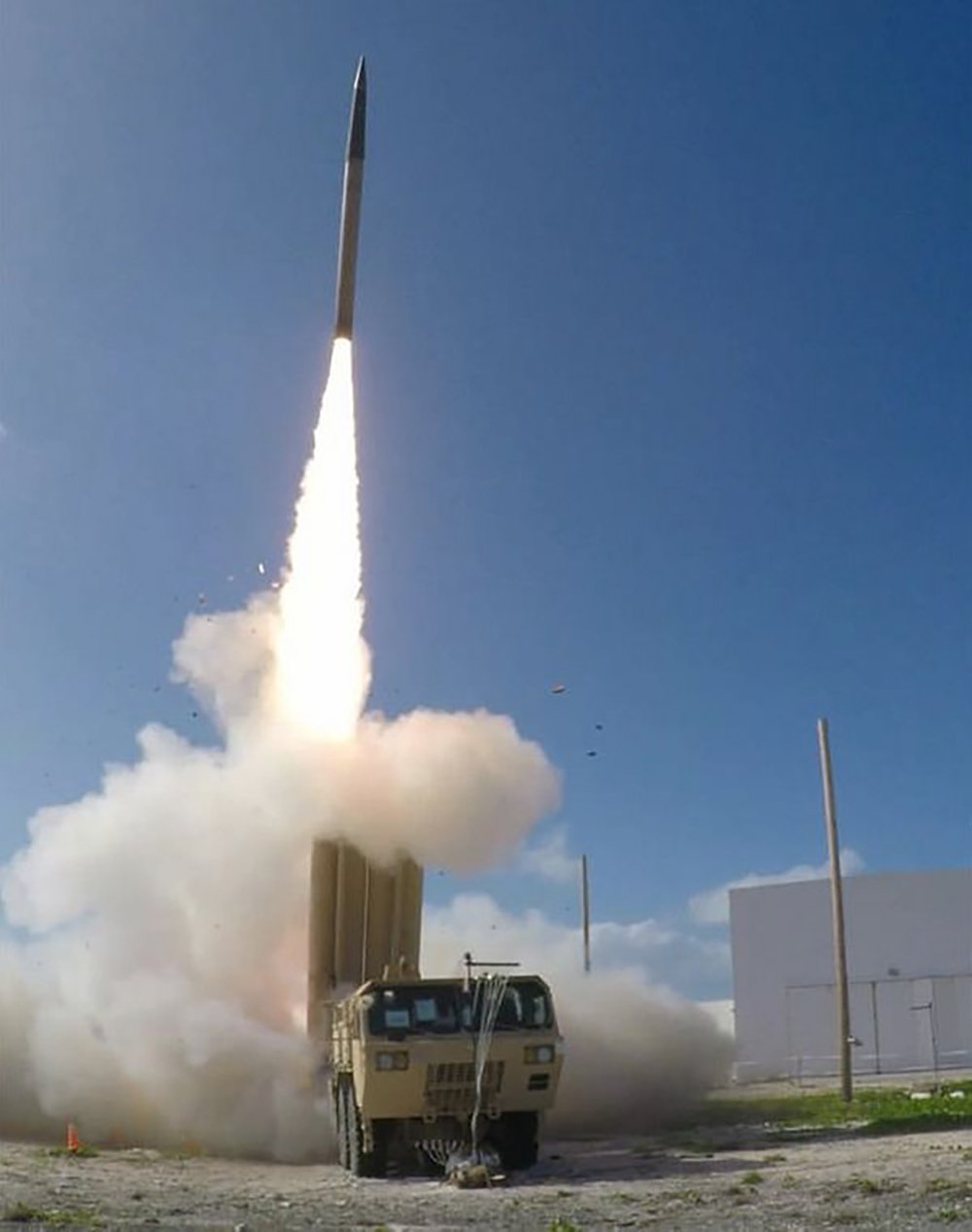
“…we have a lot,” Trump proclaimed to reporters aboard Air Force One when asked if he is concerned about a shortage of high-end munitions like interceptors for Patriot and Terminal High Altitude Area Defense (THAAD) systems. “We have a lot of the mid-level stuff too. Maybe more than we could ever use, no matter what. But we have a lot. I’d like to have more, to be honest.”
After again blaming the Biden administration for giving away too many weapons to Ukraine, Trump said the U.S. is restocking.
“So we’re building it very rapidly,” he exclaimed. “Plants are being built. A lot of equipment’s being built. The Patriots, in particular, are being built. That system is going up. We have a lot. Every one of our contractors is building four to five plants right now, and we’re in very good shape. But for some of the more sophisticated stuff, we certainly like that part.”
Before Trump spoke, the Pentagon on Monday announced that it signed “two landmark seven-year framework agreements” with Lockheed Martin and L3Harris “to expand production capacity for key components of the Patriot Advanced Capability-3 (PAC-3) Missile Segment Enhancement (MSE) interceptor and the Terminal High Altitude Area Defense (THAAD) weapon system.”
“Under this agreement, L3Harris will accelerate the production of its advanced two-pulse solid rocket motor, Attitude Control Motors, and the Lethality Enhancer,” the Pentagon said in a media release. “The motors deliver the critical speed, extended range, and precise maneuverability the PAC-3 MSE needs to defeat advanced tactical ballistic missiles, cruise missiles, and enemy aircraft.”
Concurrently, “the THAAD interceptor propulsion agreement, signed by the DoW, L3Harris, and Lockheed Martin, will expand manufacturing of two critical components: the solid rocket boost motor that launches the interceptor and the highly responsive Liquid Divert and Attitude Control System (LDACS),” the Pentagon added. “The LDACS provides the vital in-flight maneuverability required to engage and neutralize ballistic missile threats both inside and outside Earth’s atmosphere.”
As we have noted in previous reporting, current production PAC-3 MSE “is around the baseline rate of 650 interceptors per year, with half the deliveries going to the United States and the rest to allies and partners,” CSIS postulated in a May report about the severity of the depletion of U.S. offensive and defensive weapons during the 39 days of Epic Fury.
Under a contract with the Pentagon inked in January, Lockheed is committed to boosting Patriot annual production to 2,000.
Still, the supply of these weapons remains a major issue.
The Wall Street Journal on Sunday reported that questions about the supply of U.S. offensive and defensive weapons are a large factor in the Trump administration’s reasons for halting attacks on Iran.
“The U.S. military had been poised Friday to launch an intensive series of strikes against Iran, which could have lasted up to two weeks,” the Journal noted, citing officials.
But the operation was delayed “so diplomacy could proceed and as officials discussed the effect a major attack could have on the U.S.’s shrinking stocks of Patriot and other air defense interceptors,” the publication added. “The president could still order an attack, officials said, noting that the situation remains fluid.”
The White House “has been informed of the declining inventories of air defense interceptors by Gen. Dan Caine, the chairman of the Joint Chiefs of Staff,” the publication continued. “The issue is a concern for Caine, who believes that the low inventories wouldn’t preclude a resumption of major combat operations against Iran, but would add to the risk.”
Several officials said Adm. Brad Cooper, who leads U.S. Central Command (CENTCOM), “believes the U.S. can cope with the limited stocks of Patriot and other air defense interceptors because stepped-up U.S. strikes, if they are approved by Trump, would blunt Iran’s ability to launch large numbers of missiles.”
We reached out to CENTCOM for comment.
Questions about American stocks of high-end weapons also extend to Europe and Asia.
“U.S. officials now worry that President Vladimir V. Putin of Russia and Xi Jinping of China could be factoring the shortages into calculations of their next moves, in Ukraine and Europe for Mr. Putin and perhaps against Taiwan for Mr. Xi,” The New York Times posited on Sunday.
Trump also claimed that the Iranians are eager to reach a peace accord.
Iranian leaders requested a meeting and “the only reason they want to meet is because we’ve been hitting them very hard,” Trump told reporters.
Asked how much patience he has for negotiations, he said: “I have a lot of patience.”
“We’ll see what happens,” the president added. “I think there is a good chance that something could happen. If it doesn’t, we go back to doing what we were doing two days ago.”
Officials in Tehran scoffed at Trump’s assertion, saying there are no direct negotiations taking place.
The American leader also dismissed an assertion by Ukrainian President Volodymy Zelensky that Russia was providing Iran with satellite imagery used to help Iran strike U.S. an allied targets in the Middle East.
“We’ll find out if that’s true,” Trump told reporters. “I’ll ask Putin about it. It hasn’t had much impact, because we knocked the hell out of them.”
Zelensky, for his part, dismissed Iranian threats of retaliation, following his ordering the targeting of an Iranian cargo vessel in the Caspian Sea on Saturday.
Zelensky pointed out that Iran already attacked Ukraine by giving Russia Shahed drones.
Though kinetic exchanges have abated for the time being at least, the situation could always flare up again. CENTCOM is still maintaining its renewed blockade of Iranian ports and on Monday said on X that it “has redirected 17 commercial vessels, disabled two, and boarded two to ensure compliance.”
On top of that, the region is still in turmoil. Iranian-backed Houthis of Yemen, who have already struck Saudi ships and refineries after imposing a blockade on the Bab al-Mandab Strait (BAM), on Monday said they hit a Saudi Yanbu facility on the Red Sea. Saudi Arabia said it also came under fire from Iranian-aligned militias in Iraq.
“By God’s grace, a number of sensitive targets and points related to the supply and transportation of crude oil from eastern Saudi Arabia to Yanbu were targeted with a number of drones, in response to the Saudi-backed enemy’s drone incursions into Yemeni airspace,” Houthi spokesman Brig. Gen. Yahya Sare’e claimed on Telegram.
While the Saudis didn’t immediately respond to the Houthi claims, they did acknowledge being targeted from Iraq.
“Air defenses intercepted and destroyed a number of drones during the past hours that attempted to target petroleum facilities in the Eastern Region and Riyadh,” Saudi Arabian Defense Ministry spokesman Maj. Gen. Turki Al-Maliki said on X. “These terrorist attempts were launched from Iraqi territory and carried out by Iranian-backed terrorist militias, affirming the Kingdom’s legitimate right to defend itself and its capabilities, and its retention of the right to respond at the appropriate time and place.”
The latest attacks on Saudi oil infrastructure follow those on Saturday, when the Houthis said they fired ballistic missiles and drones at facilities belonging to the state oil company, Aramco, in the Red Sea towns of Yanbu and Jazan.
— Egypt's Intel Observer (@EGYOSINT) July 27, 2026

Sentinel-2 satellite imagery captured yesterday clearly shows the fire still burning at the same oil storage tank at Saudi Aramco's Jazan Oil Refinery in southern Saudi Arabia, with large plumes of thick black smoke still rising from the site. https://t.co/Ua0sce5JCj pic.twitter.com/KIzCebO3oO
As we have frequently detailed, a Houthi blockade of the BAM threatens to add far greater pressure on oil exports from the Middle East, already drastically affected by the Iranian closure of the Strait of Hormuz and the resumption of the U.S. blockade on Iranian ports. The Yemeni rebel group has expanded its target set, hitting oil terminals and infrastructure Saudi Arabia is using to pump supplies to tankers in the Red Sea. The kingdom has diverted millions of barrels of oil per day through pipelines to its Yanbu port on the Red Sea in an effort to minimize the energy shortages due to the hostilities in the Persian Gulf. Even with the BAM closed, oil exports could still head to the West, via the Suez Canal. But if the infrastructure used to convey these energy products is put out of action, the consequences could be even more severe, with far less or even no energy supplies from Saudi Arabia moving out of the Red Sea. The closing of the BAM also raised the specter of the U.S. having to get as involved as it did during the previous Houthi campaign against shipping that ended last September, which could pull resources away from Iranian-focused operations.
Jordan on Monday said its air defenses shot down two drones, though no one has claimed credit for that. However, the country, as we have pointed out in the past, has been frequently targeted by Iranian missiles and drones. Three U.S. Army soldiers were killed in an attack on Muwaffaq Salti Air Base (MSAB) on July 17.
Speaking of casualties, the Pentagon recently revealed hundreds of new troop injuries and revised how it is reporting the number of troops killed and wounded.
The deaths of 1st Lt. Tyler James Feehan, Sgt. Angel Rampersad and Pvt. Isabella Gonzales – all killed at MSAB – and Sgt. Michael Emmanuel Swinton, killed in action during a controlled detonation of a downed One-Way Unmanned Aerial System on July 19, 2026, at Erbil Air Base, Iraq, are all now listed in a separate category.
The new casualty category is called “Overseas Operations” and includes all deaths and injuries from July 7 onwards, the date the administration considers Operation Epic Fury (OEFU) to have ended. All told, since the launch of OEFU, there have been 18 troops killed. The recent rework of the Pentagon’s casualty reporting system also shows that there have been at least 621 troops wounded, a boost of more than 200 than was previously known.
For now, there is an uneasy lull in the fighting between the U.S. and Iran. However, as we noted in this story, there are many factors that could lead to a resumption of hostilities.
Contact the author: howard@twz.com
The post Uneasy Pause In U.S.-Iran Fighting Holds Amidst Growing Concerns Over Interceptor Stockpiles appeared first on TWZ.