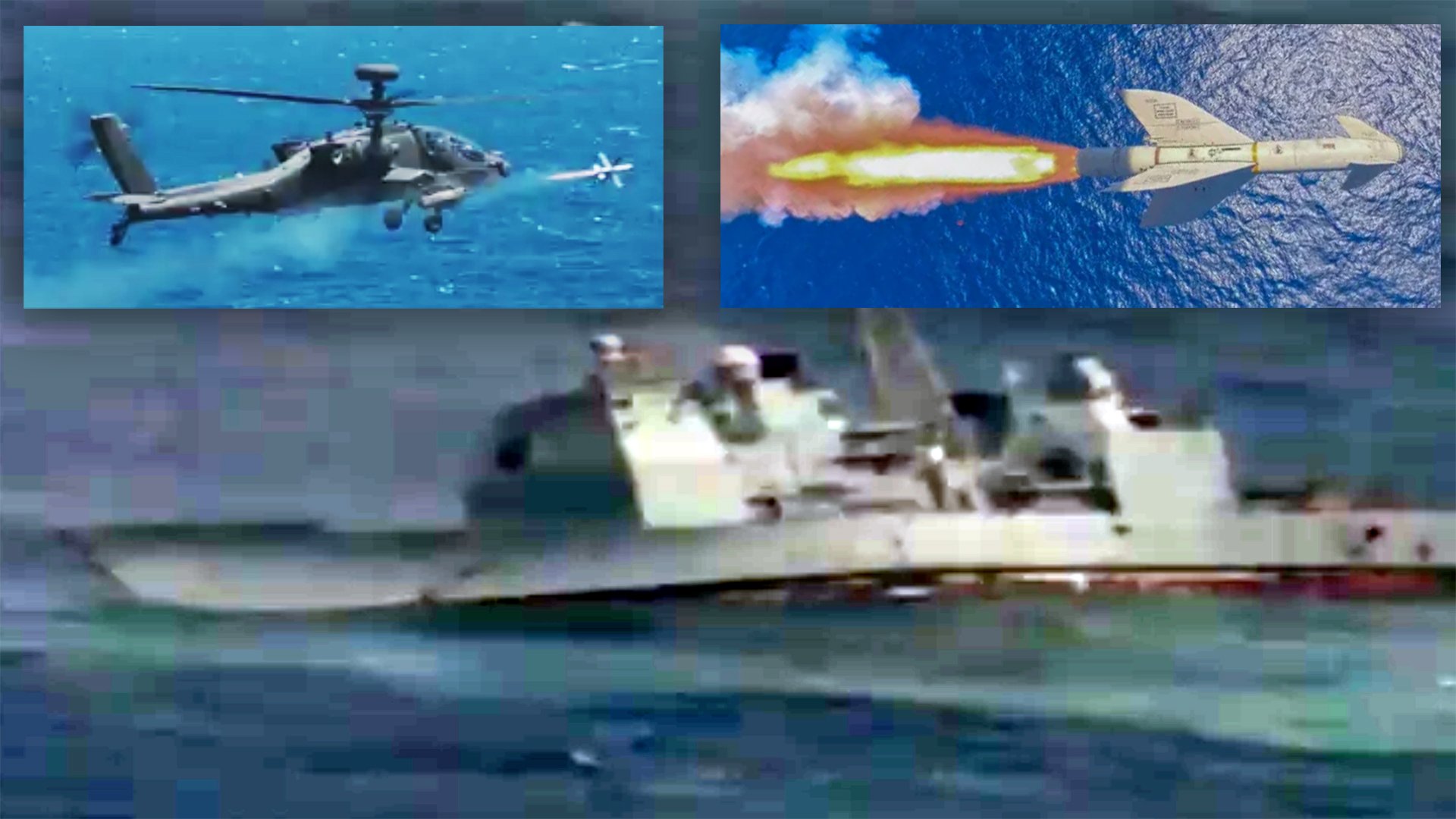
Helicopters played a major role in this year’s Rim of the Pacific (RIMPAC) sinking exercise (SINKEX), with at least three allied rotorcraft types employing weapons against retired U.S. Navy vessels. U.S. Army AH-64 Apache attack helicopters fired Spike NLOS (Spike Non-Line of Sight) missiles at the guided missile cruiser ex-USS Mobile Bay, a Royal New Zealand Navy SH-2G(I) Seasprite struck the amphibious assault ship ex-USS Peleliu with an AGM-119 Penguin missile, a Royal Australian Navy MH-60R Seahawk launched an AGM-114N Hellfire missile against a target ship, and an Italian Navy SH-101 helicopter launched a Marte anti-ship missile.
Collectively, the engagements underscored how helicopters are emerging as key contributors to distributed maritime strike, complementing fighters, warships, submarines, and land-based missile batteries with precision-guided anti-ship weapons.
The Apache strike, conducted July 11, saw AH-64s assigned to the 16th Combat Aviation Brigade, 7th Infantry Division, Multi-Domain Command–Pacific engage the former Ticonderoga-class cruiser ex-USS Mobile Bay during the live-fire SINKEX. The Army’s previous demonstration of an Apache destroying a much smaller boat with a Spike NLOS was something TWZ was first to report, but employing the weapon against a full-sized cruiser during the world’s premier maritime exercise marks another significant milestone in the service’s expanding maritime mission.
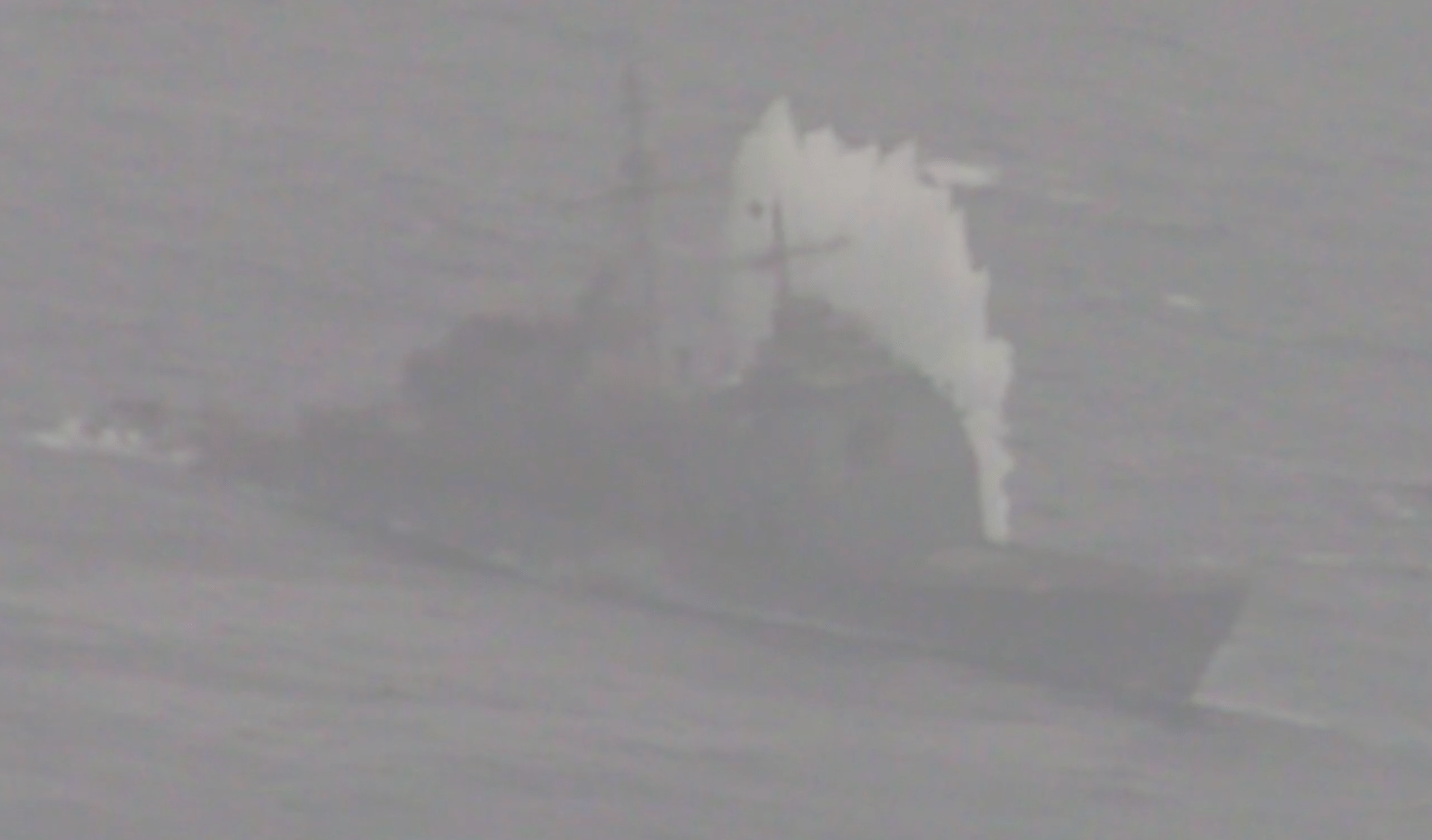
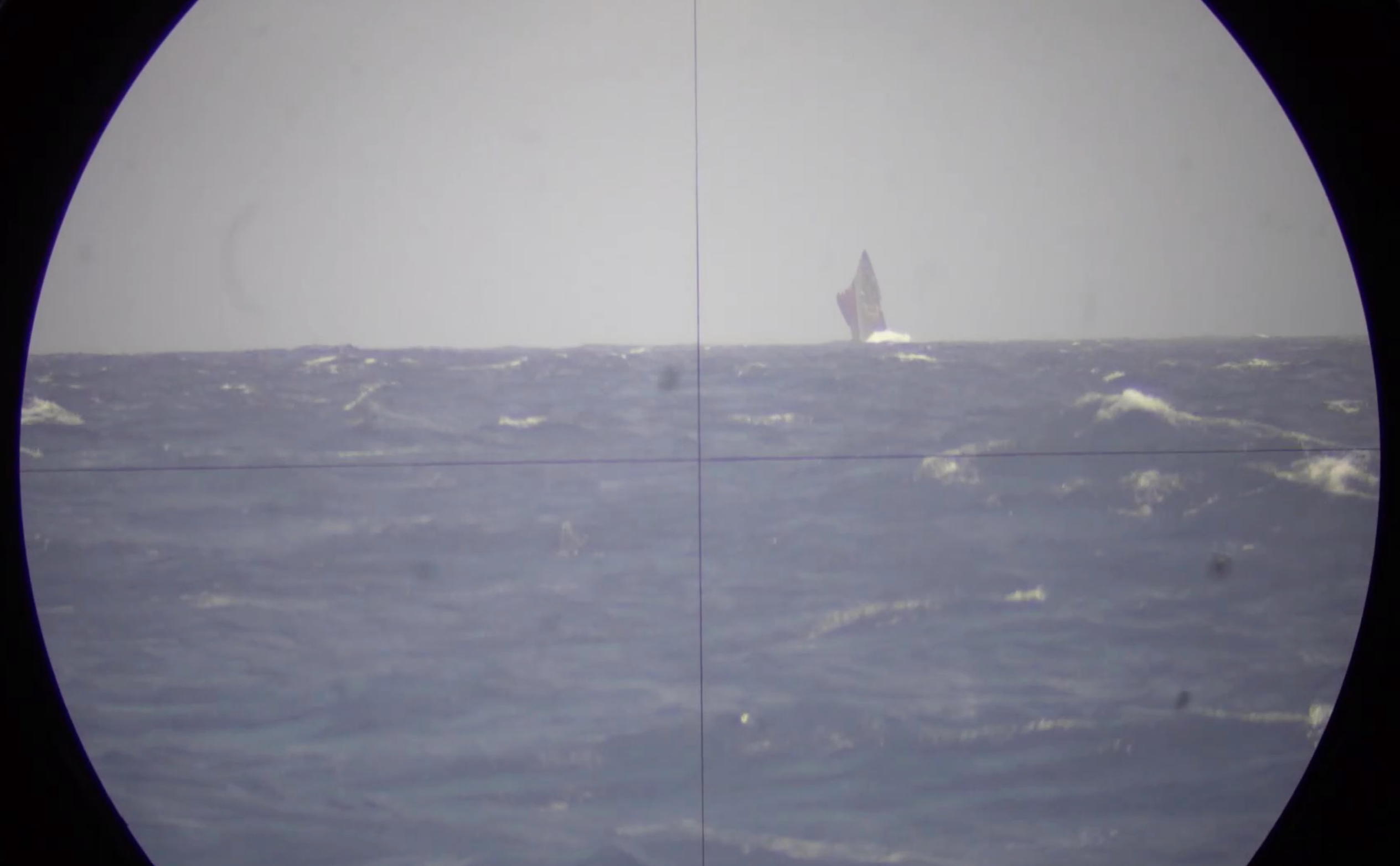
The Apache’s participation in RIMPAC reflects the Army’s steadily growing role in maritime operations across the Indo-Pacific. Long associated with close air support and anti-armor missions, the AH-64 is increasingly being tasked with engaging naval targets. This is something that has also played out in recent combat operations against Iran.
Spike NLOS has emerged as one of the key tools enabling that mission. The Israeli-developed missile provides an operator-in-the-loop datalink that allows course corrections and aimpoint refinement throughout much of the missile’s flight. That capability makes it particularly useful against moving or time-sensitive maritime targets, where target discrimination and battle damage assessment can be especially challenging.
AH-64 fires Spike NLOS during integration tests at the U.S. Army Yuma Proving Ground in 2023:
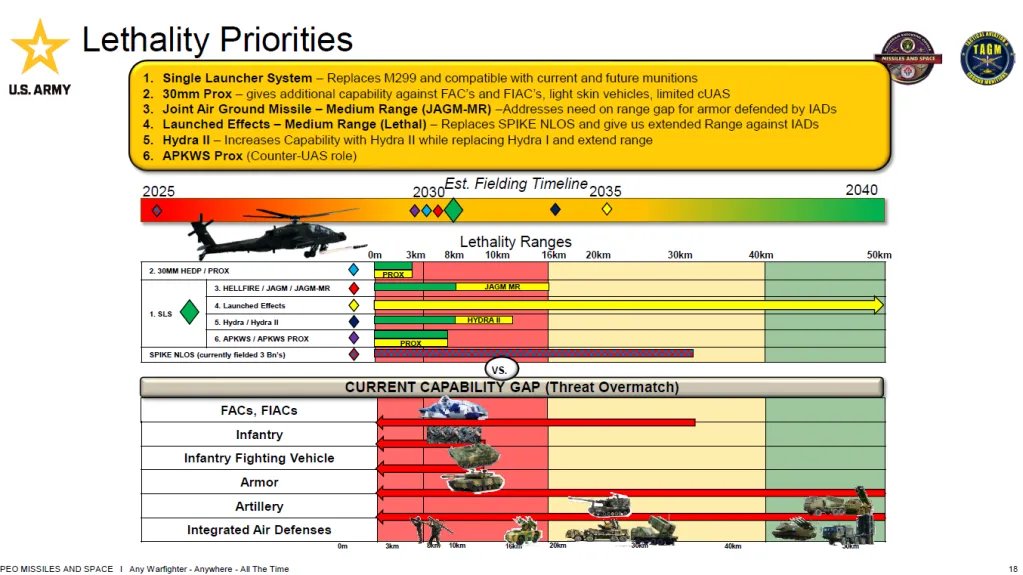
Compared with the AGM-114 Hellfire and AGM-179 Joint Air-to-Ground Missile (JAGM), Spike NLOS dramatically extends the Apache’s reach while retaining the flexibility to engage both land and maritime targets.
According to manufacturer Rafael, the latest version of Spike NLOS has a maximum range of roughly 20 miles, giving it a substantial stand-off advantage over the Hellfire and JAGM. The variants of those weapons currently fielded on U.S. Army Apaches have maximum ranges of less than 10 miles, though they are typically employed at considerably shorter distances in operational use. At the same time, extended-range versions of both missiles have been demonstrated, with Hellfire tested at approximately three times its standard range and JAGM at roughly double its baseline reach.
The Royal Australian Navy’s contribution highlighted another facet of the growing helicopter anti-ship mission. An MH-60R Seahawk embarked in the Arleigh Burke class destroyer USS Wayne E. Meyer conducted a live AGM-114N Hellfire engagement against a target ship. While Hellfire lacks the standoff reach of Spike NLOS and is primarily associated with engaging smaller surface vessels, it remains a highly capable maritime strike weapon and is a standard part of the MH-60R’s surface warfare arsenal.
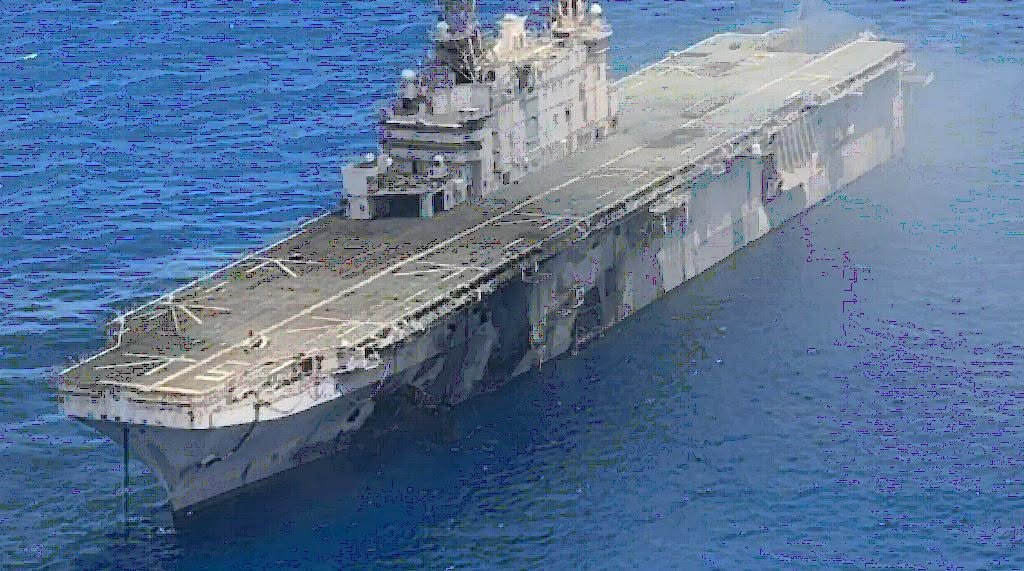
Imagery released by the New Zealand Defense Force showed a Royal New Zealand Navy SH-2G(I) Seasprite embarked aboard the Anzac class frigate HMNZS Te Mana launching an AGM-119 Penguin anti-ship missile against the decommissioned amphibious assault ship ex-USS Peleliu. According to the NZDF, the missile penetrated the hull before detonating inside the vessel, inflicting significant internal damage and compromising its integrity.
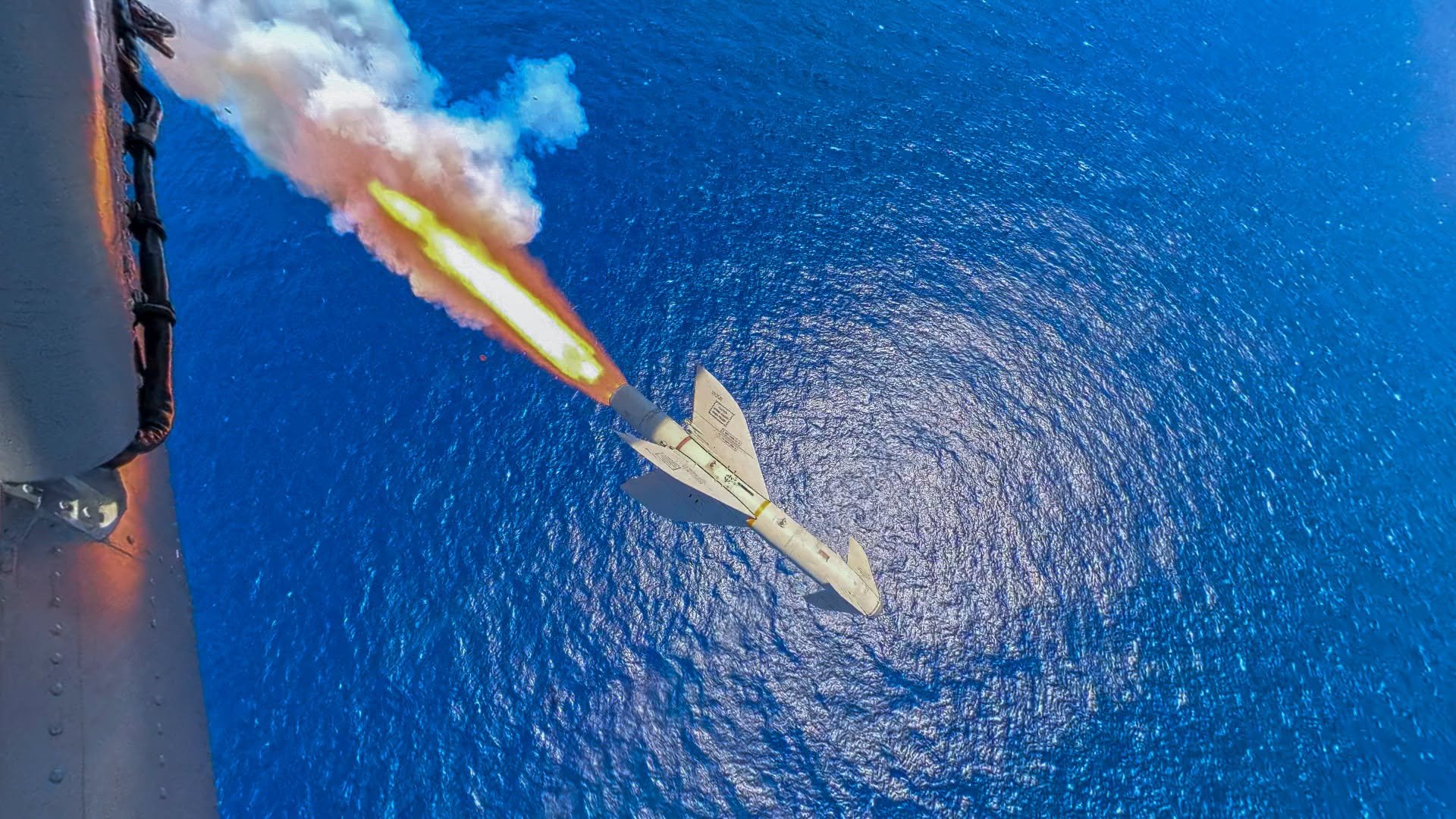
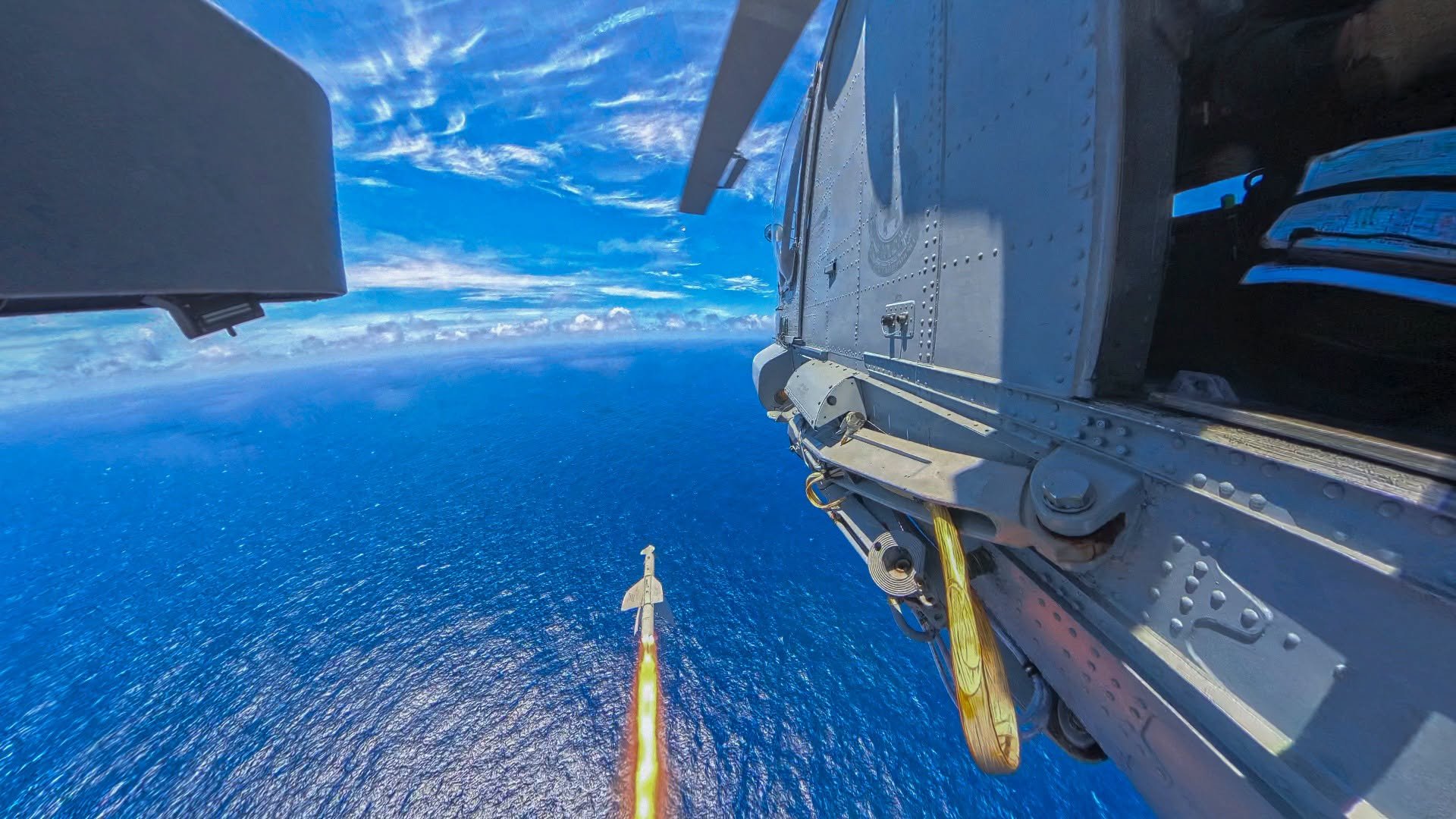
The Italian Navy also revealed that an SH-101 helicopter embarked aboard the multirole combat ship Giovanni delle Bande Nere launched a Marte anti-ship missile during RIMPAC 2026, although it did not specify which target the missile was fired against.
Together, the Apache, Seahawk, Seasprite, and SH-101 illustrated just how diverse helicopter-based maritime strike has become. Although each of the weapons described above is optimized for different targets and mission profiles, all three point toward helicopters assuming an increasingly prominent role in coalition anti-surface warfare operations.
The U.S. Army’s maritime application for Spike NLOS aligns closely with the Army’s Multi-Domain Operations concept, which increasingly envisions aviation units contributing to sea-denial missions alongside their more traditional roles. Apache crews have repeatedly demonstrated maritime strike capabilities during exercises across the Pacific, and RIMPAC provides one of the largest and most complex venues yet to refine those tactics alongside allies and partners.
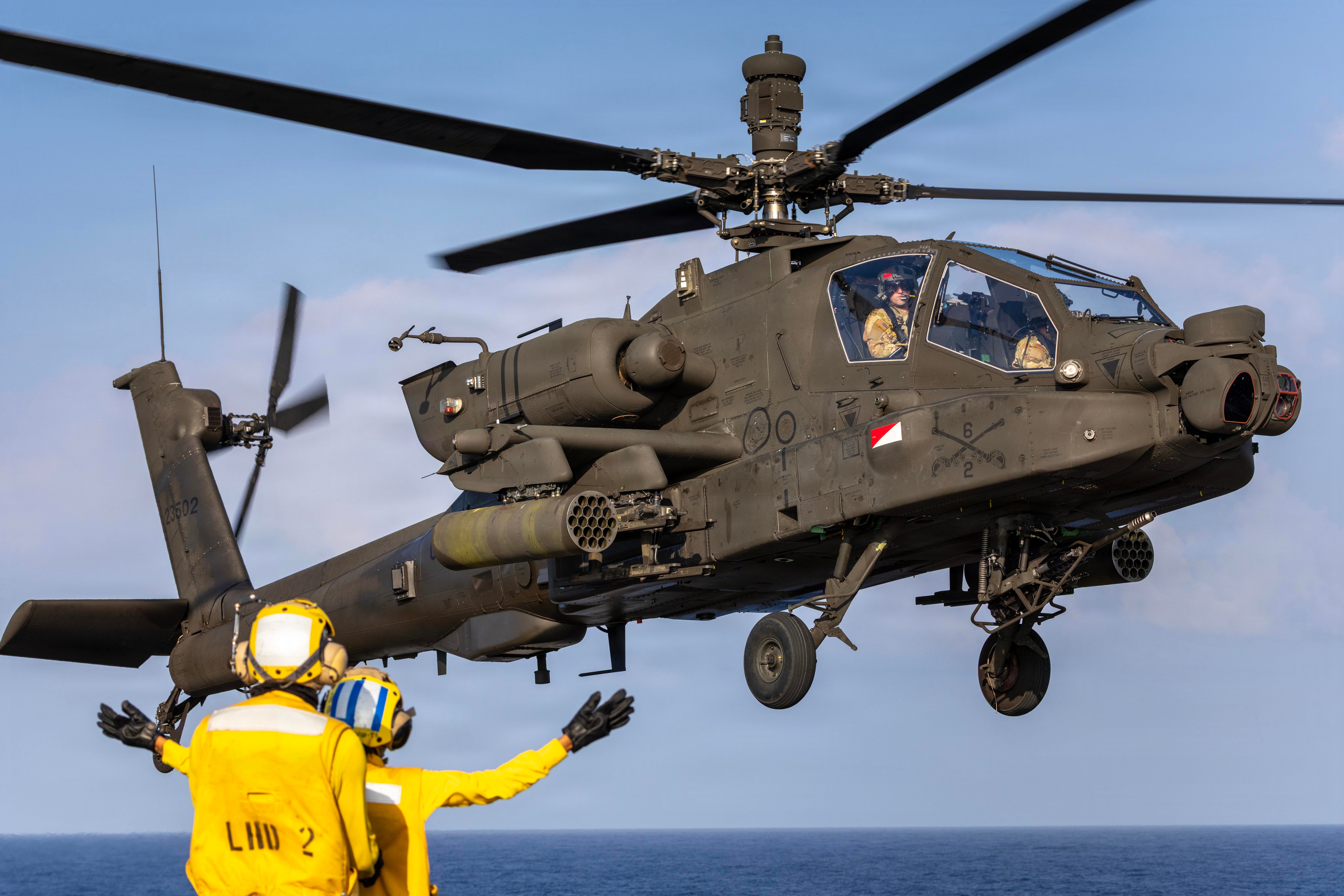
Beyond the Army’s work with Spike NLOS, the U.S. Marine Corps has been experimenting with arming its AH-1Z Viper attack helicopters with small cruise missiles, dramatically expanding their reach and giving them the ability to strike ships from well beyond the range of traditional helicopter-launched weapons. Above all else, it’s yet another example of the attack helicopter’s changing role in the maritime environment.
Although helicopters featured prominently, they represented just one layer of the larger SINKEX strike package.
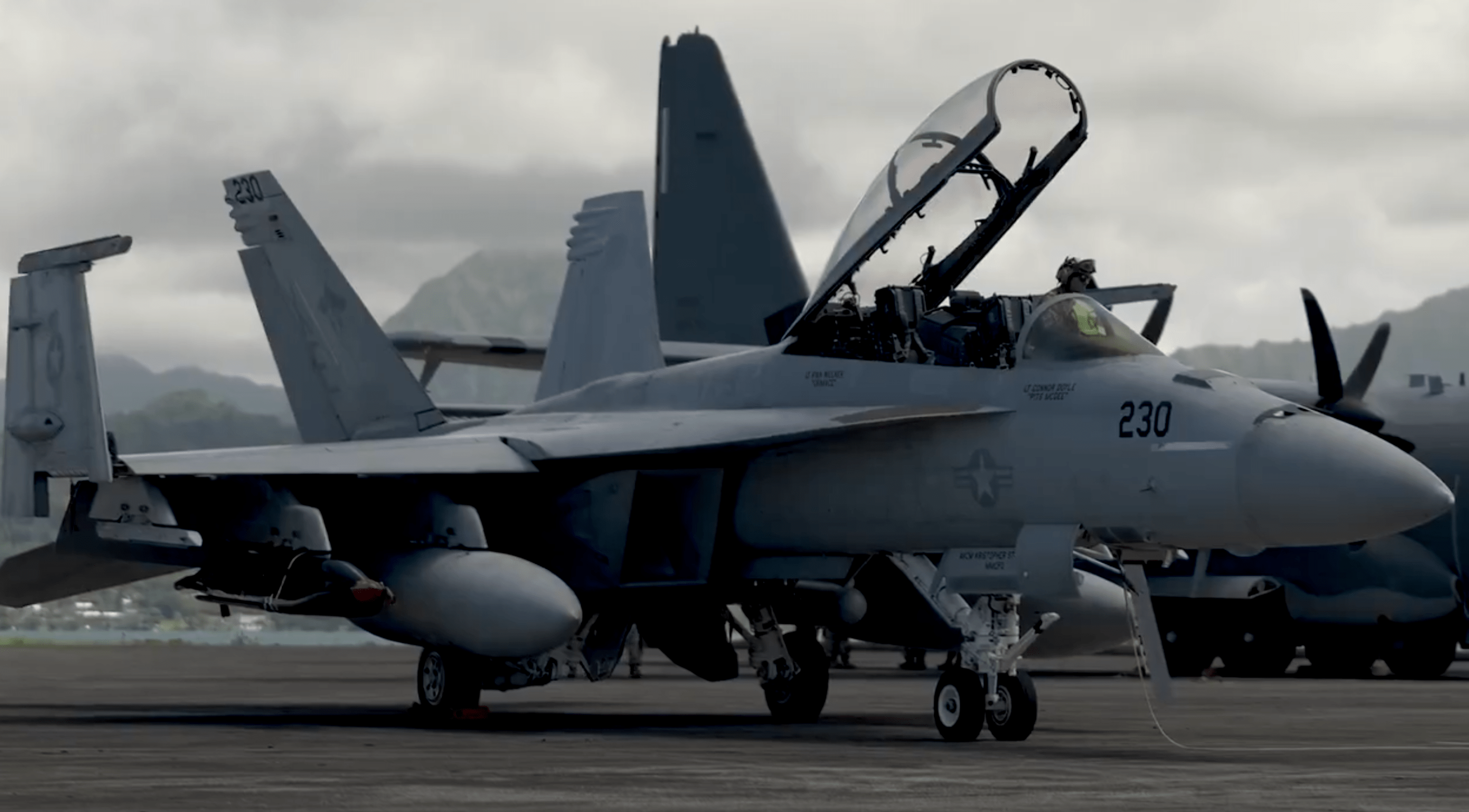
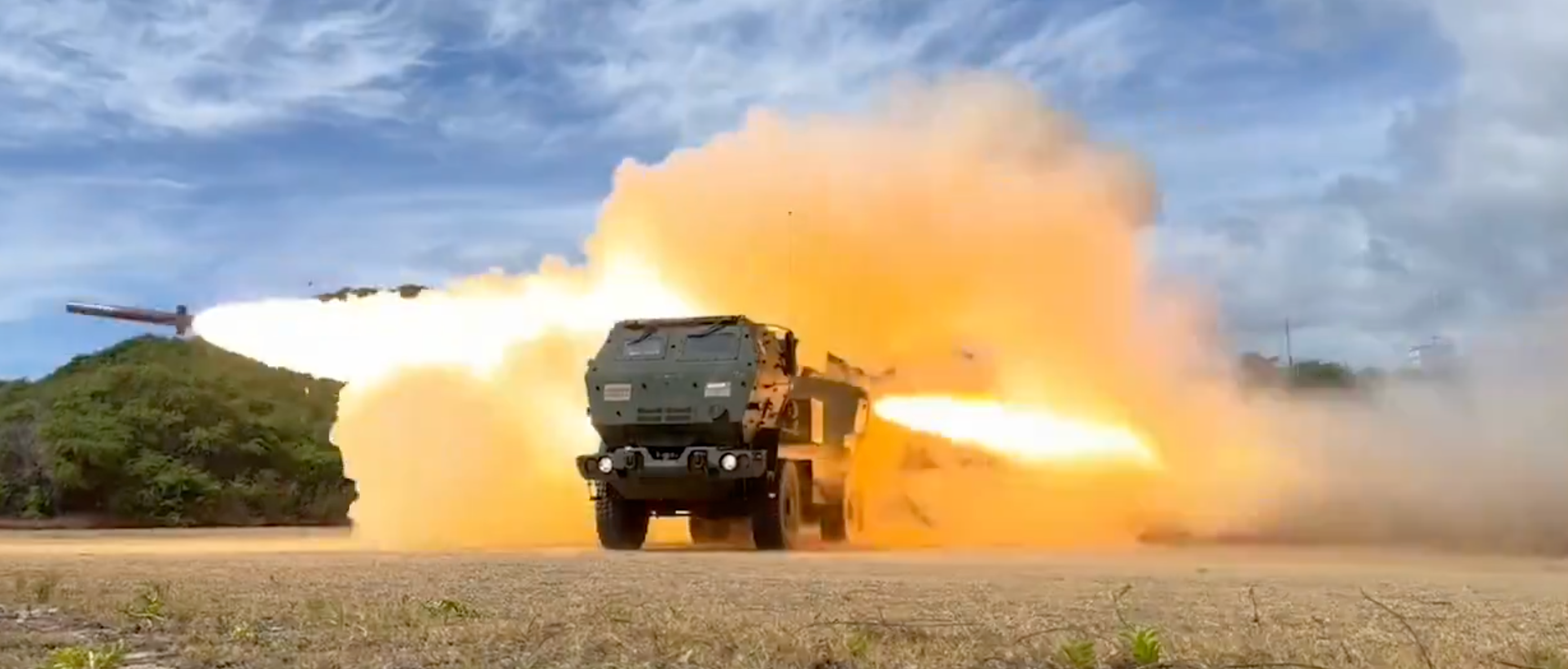
Video released this week also showed a U.S. Navy F/A-18F Super Hornet carrying AGM-158C Long Range Anti-Ship Missiles (LRASM), along with live launches from U.S. Army M142 High Mobility Artillery Rocket System (HIMARS) and Japan Ground Self-Defense Force Type 12 coastal defense missile batteries. U.S. Navy P-8 Poseidon maritime patrol aircraft were also seen supporting the event. Based on the imagery that has been published, submarines were also involved in the SINKEX strikes. Full details of which weapons and platforms ultimately sent which retired ships to the bottom remain unclear, and TWZ has asked officials for additional information.
As well as the decommissioned Ticonderoga class guided missile cruiser, the Tarawa class amphibious assault ship ex-USS Peleliu also served as a SINKEX target. As we have discussed previously, the pair represented two very different classes of major warship, providing participants with valuable opportunities to employ and evaluate a wide range of anti-ship capabilities.
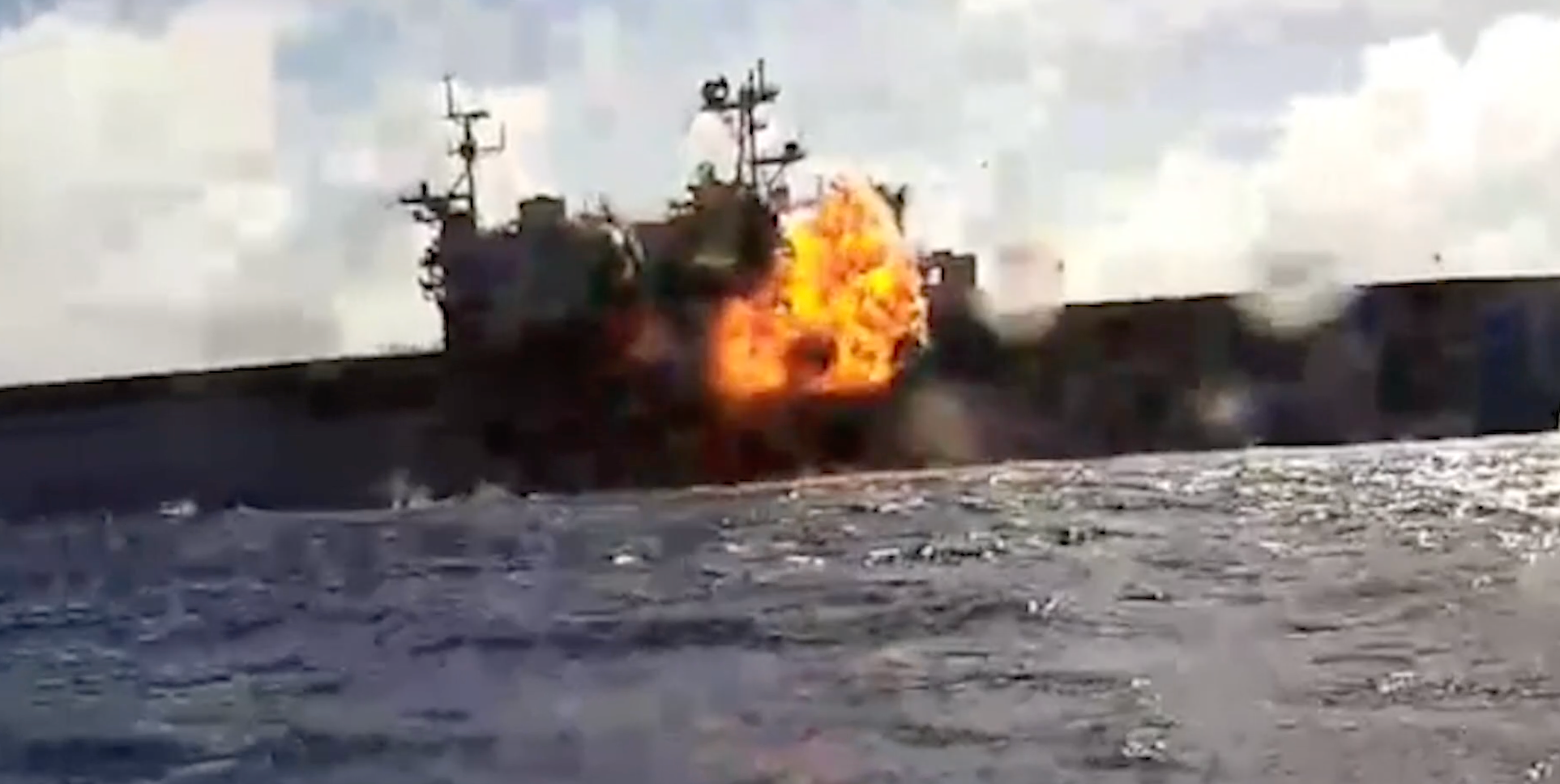
Live-fire events like RIMPAC’s SINKEX remain among the most valuable aspects of the exercise, providing opportunities that are difficult to replicate in synthetic training environments. They allow participating forces to observe weapon performance against full-sized ships, refine targeting procedures, and integrate air, sea, and land-based fires while operating within a coalition framework.
RIMPAC 2026 brings together 30 nations, more than 30 surface ships, five submarines, 15 national land forces, over 206 aircraft, and approximately 30,000 personnel operating in and around the Hawaiian Islands from June 24 through July 31. Now in its 30th iteration since beginning in 1971, RIMPAC remains the world’s largest international maritime exercise, designed to improve interoperability while strengthening the partnerships that underpin maritime security and freedom of navigation across the Indo-Pacific.
While long-range anti-ship missiles launched by fighters, warships, submarines, and coastal batteries remain central to modern naval warfare, this year’s RIMPAC SINKEX also demonstrated that helicopters are increasingly indispensable members of the maritime strike team. Whether armed with Spike NLOS, Hellfire, Penguin, or Marte missiles, allied rotorcraft showed they are increasingly expected to contribute directly to the joint force’s anti-ship kill chain. For a region where distributed operations and coalition interoperability are becoming ever more important, that evolution is likely only to accelerate.
Contact the author: thomas@thewarzone.com
The post Helicopters Just Took Center Stage In Rim Of The Pacific Sinking Exercises appeared first on TWZ.