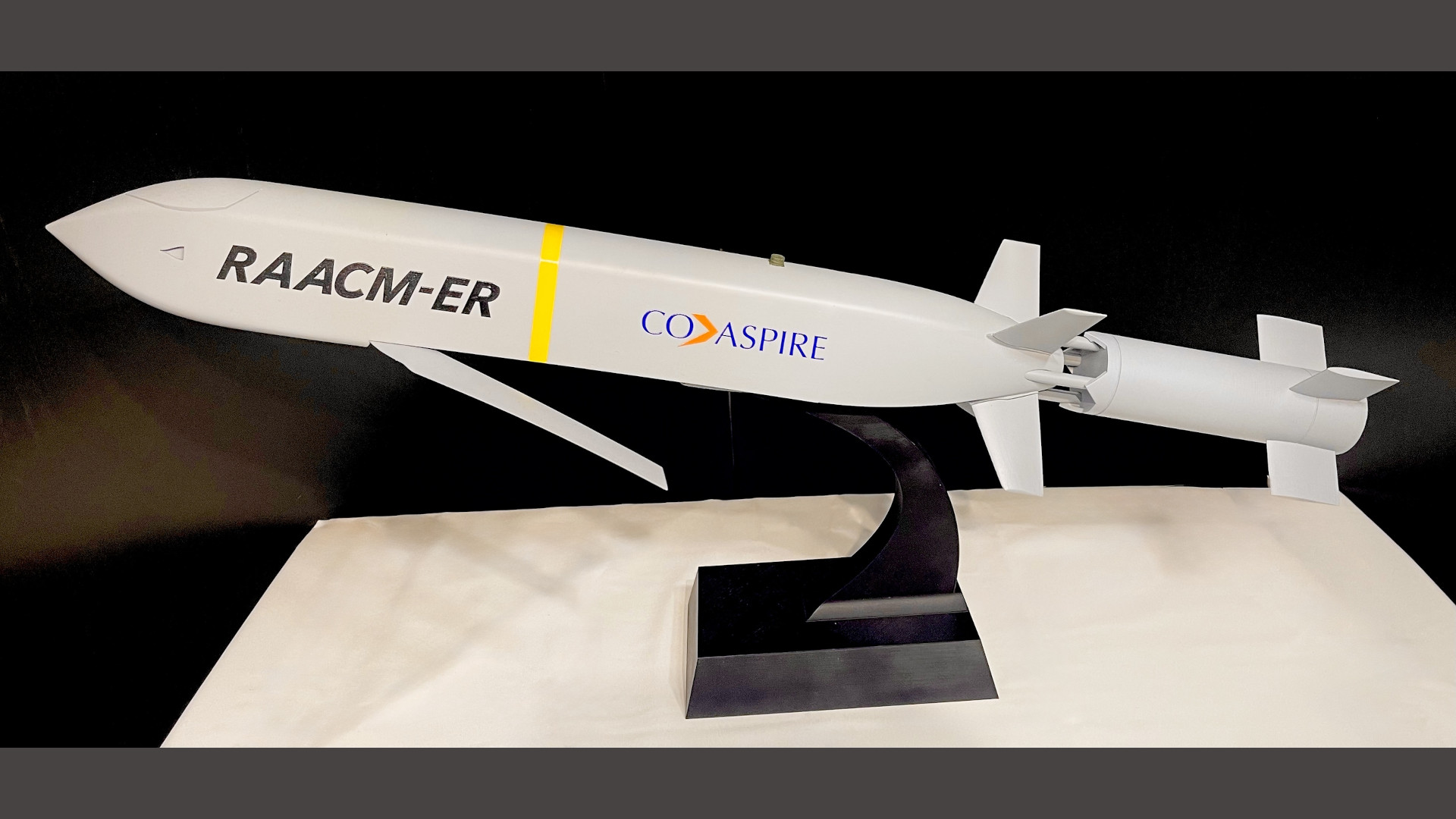
The U.S. Navy is pumping $70 million into the development of a ground-launched version of CoAspire’s Rapidly Adaptable Affordable Cruise Missile-Extended Range (RAACM-ER) cruise missile. RAACM-ER was unveiled just earlier this year. Continued work on the design will now be done under a program aimed primarily at giving U.S. allies and partners a new, lower-cost way to strike moving targets at sea and on land.
CoAspire announced today that it had received what is known as an Other Transactional Agreement (OTA) in support of the Navy’s Coalition Heterogenous Affordable Offensive Strike (CHAOS) program. The OTA process is a contracting mechanism that U.S. government agencies use to help speed up advanced research and development and prototype efforts.
“Under a $70m Prototype Other Transactional Agreement (OTA) with CMG Networks on behalf of Naval Aviation Systems Consortium, CoAspire will design, build, test, and deliver to Program Acquisition Executive for Munitions and its program office, PMX-201, an affordable, ground-launched, mid-range, cruise missile system that can attack both land-based and moving maritime targets,” according to a press release from CoAspire. “The end-use Foreign Military Sale (FMS) customers are allies and coalition partners needing an affordable yet highly effective maritime strike weapon that can be easily manufactured at scale.”
Whether or not the Navy has also selected other companies to move ahead with their designs under CHAOS is unknown, and TWZ has reached out to the service for more information.
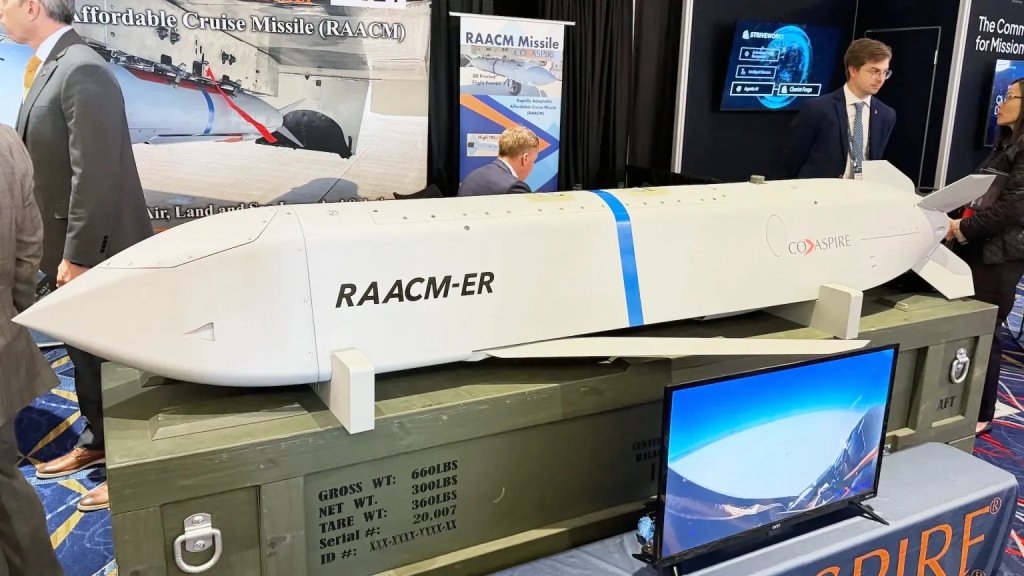
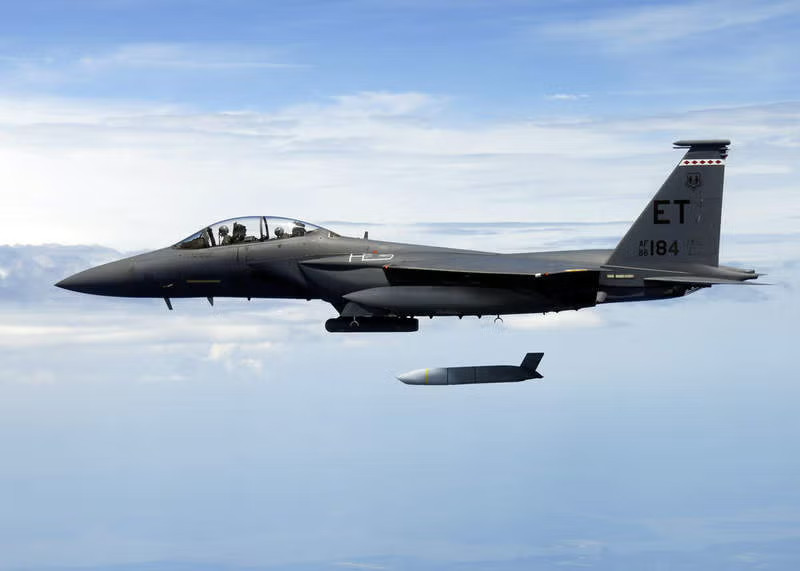
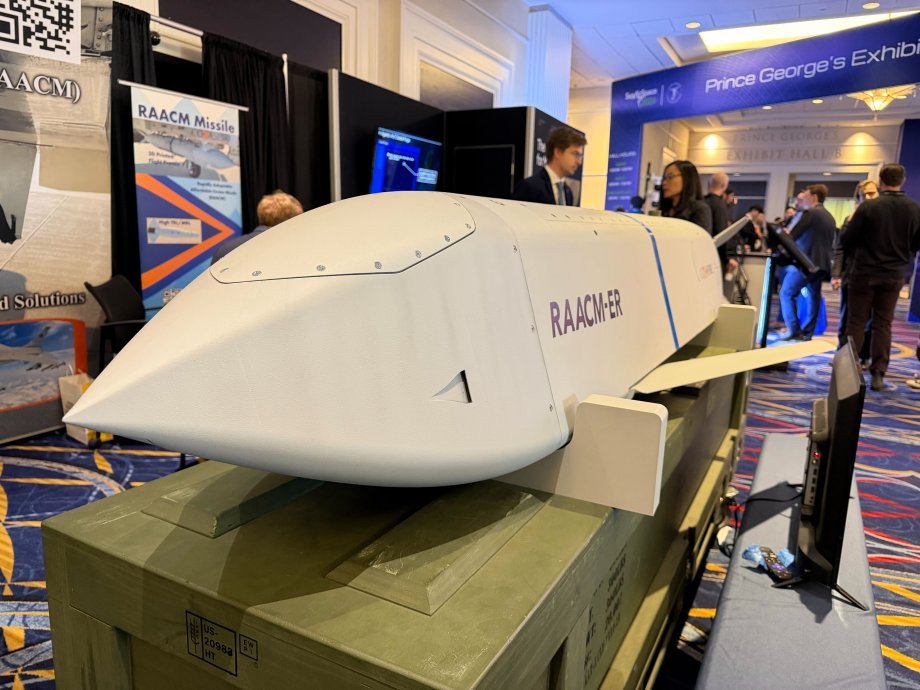
RAACM-ER is a turbojet-powered cruise missile. It has a body with a trapezoidal shape that is reminiscent, in very broad strokes, of Lockheed Martin’s stealthy AGM-158 Joint Air-to-Surface Standoff Missile (JASSM) and derivatives thereof.
“Physics is physics,” Doug Denneny, founder, CEO, and owner at CoAspire, told TWZ‘s Jamie Hunter at the Navy League’s annual Sea-Air-Space exhibition earlier this year. “When people look at shapes, they look similar, but just like an Airbus looks like a Boeing, but what they have different inside is really what matters, and that’s how we differ in many ways.”
CoAspire’s missile has a GPS-assisted navigation system and a long-wave infrared seeker in the nose. The guidance package allows for the engagement of moving targets, as well as static ones based on fixed target coordinates. Passive infrared seekers are immunte to radiofrequency countermeasures, such as jammers or decoys. They also do not pump out signals that could alert a target to the incoming danger. All of this creates advantages over active radars for terminal homing.
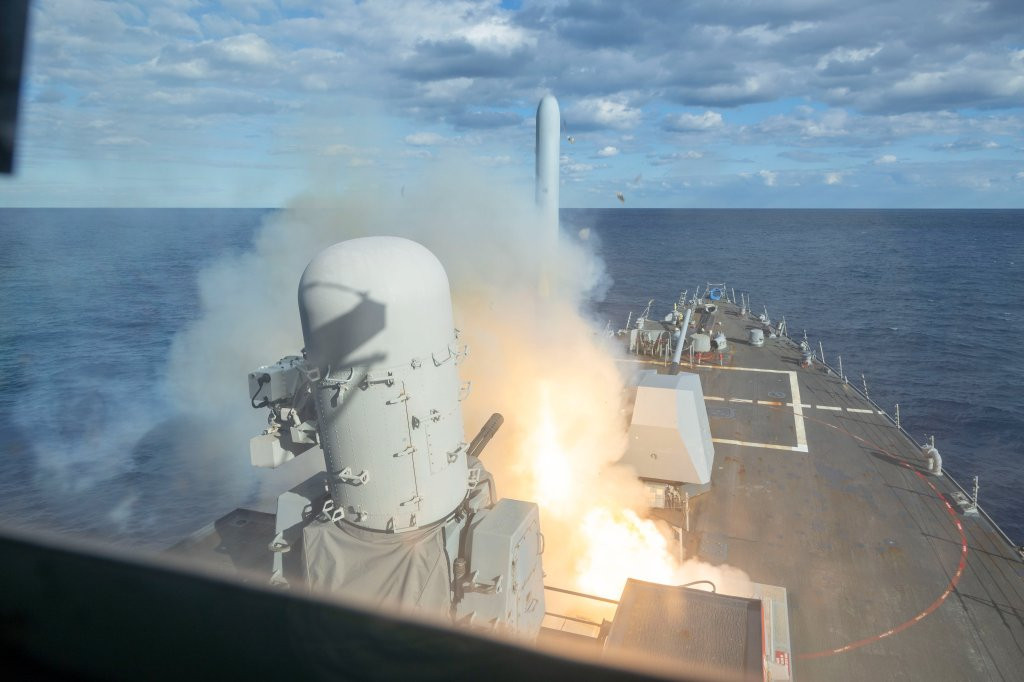
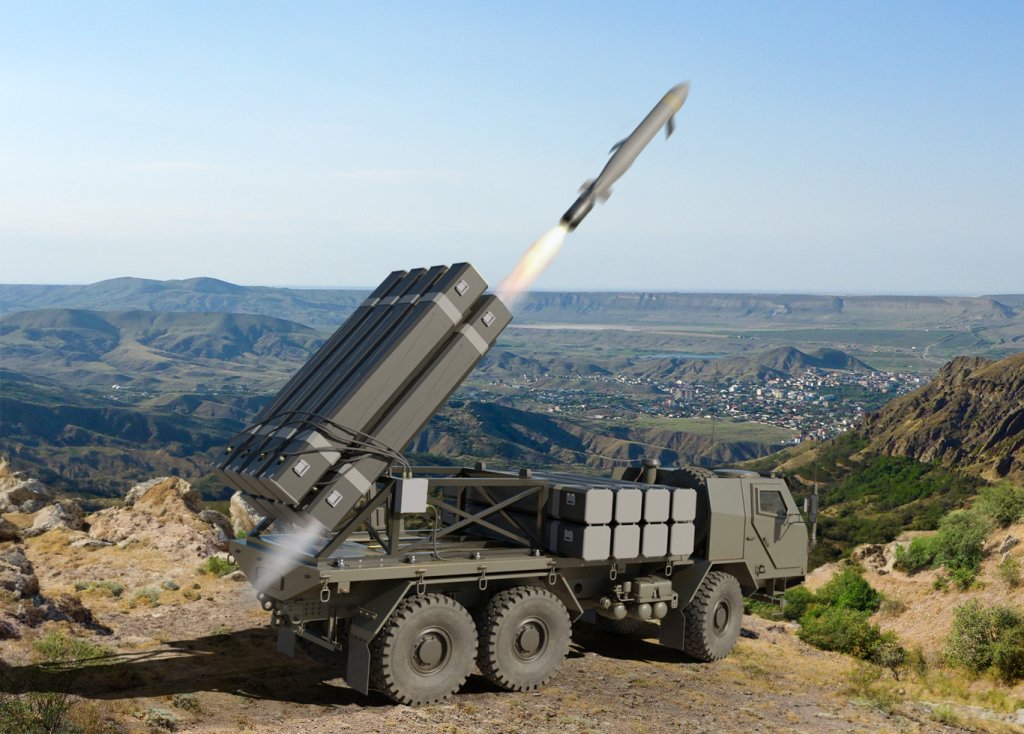
When RAACM-ER made its public debut, the company said the design could be fired from ground-based launchers or ones on ships, as well as be employed by aircraft. However, an air-launched version was the only one on display. Surface launch requires the addition of a rocket booster to the tail of the missile, as seen on the model in the picture at the top of this story. That booster falls away after launch.
As an aside, CoAspire is also now developing what it says is a separate surface-launched version of RAACM-ER, called GHOST, for the U.S. military’s Low-Cost Containerized Missiles (LCCM) program. The core RAACM-ER design also evolved conceptually from an earlier missile simply called RAACM, but they are entirely different. The original RAACM was developed under a U.S. Air Force program called the Extended Range Attack Munition (ERAM), which has also been aimed primarily at supporting allies and partners, starting first with Ukraine.
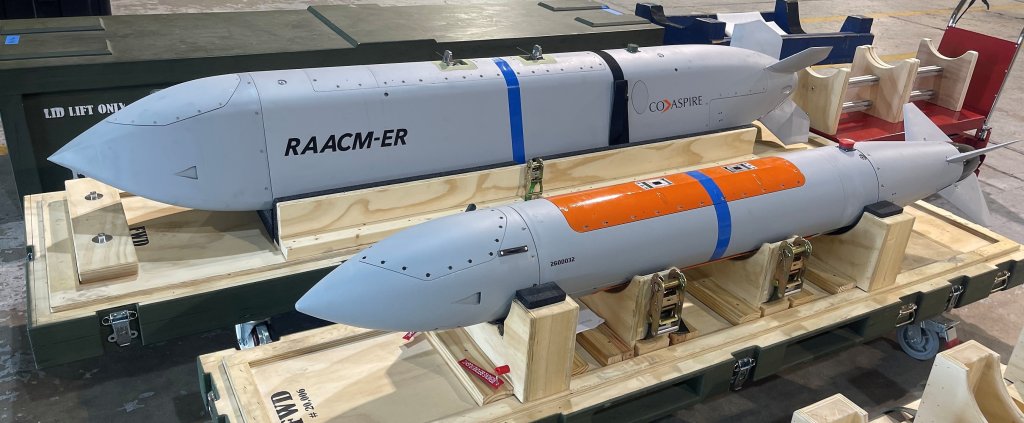
When designing RAACM-ER, “our engineers came to us and said, ‘Hey, if we’re going to make a bigger one, should we make it look just the same?’ I mentioned earlier that RAACM was made that shape just to ease integration,” Denneny also told Jamie Hunter at Sea-Air-Space. “We’re an engineering company, so we said, ‘Let’s optimize fuel volume, let’s optimize survivability features, let’s optimize physics so that this thing can go as far as possible and take the sensors needed. That’s why it’s in this slightly different shape.”
How far RAACM-ER, now described as a “mid-range” missile, can go in any of its configurations is unclear. When it was first unveiled, the missile looked to be well suited for the Family of Affordable Mass Missiles-Beyond Adversary’s Reach (FAMM-BAR) effort, which is seeking lower-cost designs with maximum ranges of 1,000 nautical miles or more. This is roughly the same reach as is offered today by variants of the surface-launched Tomahawk cruise missile.
However, at Sea-Air-Space, Denneny separately told Naval News that RAACM-ER had roughly twice the reach of the original RAACM, which would be around 485 nautical miles (900 kilometers) based on previously stated ERAM program requirements. This would put the design more in the category, at least range-wise, of the air-launched AGM-158B JASSM-Extended Range (JASSM-ER) land-attack cruise missile. An extended-range version of the JASSM’s Long-Range Anti-Ship Missile (LRASM) cousin that is now in development is expected to have similar reach.
“CoAspire hasn’t discussed range capabilities of our products, so any assumptions/estimations would be speculation,” a representative for the company told TWZ today when asked for further clarification.
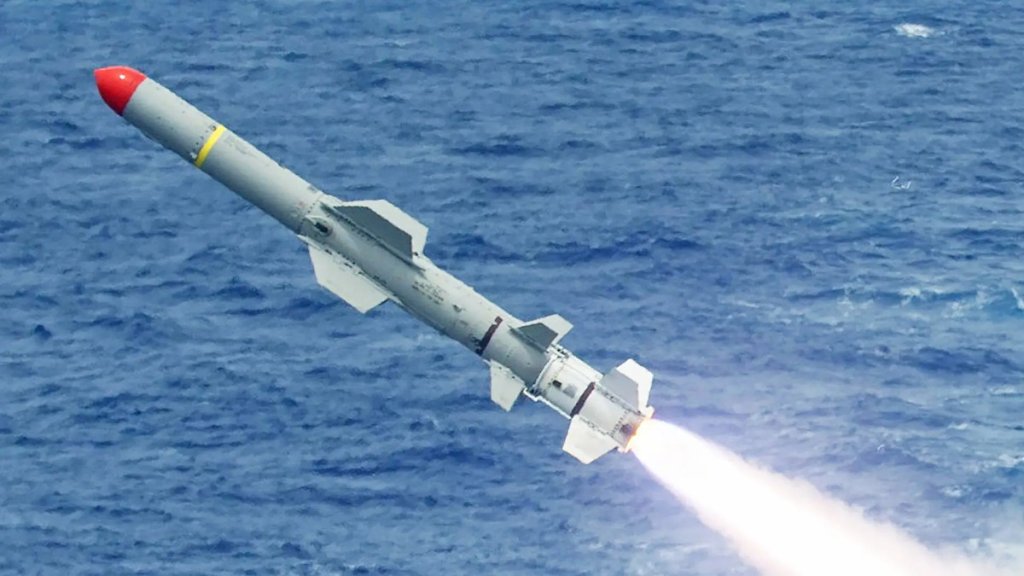
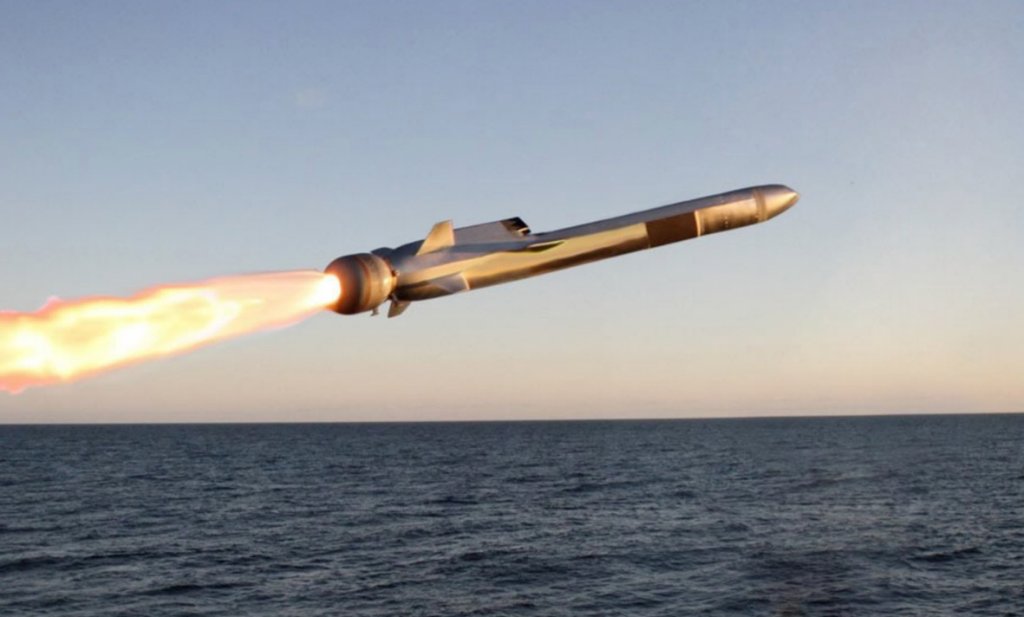
Even with a range of 485 nautical miles, RAACM-ER would offer a notable boost in capability over many other anti-ship cruise missiles in service today with U.S. allies and partners, as well as the U.S. military itself. For example, the reported maximum reach of extended-range variants of the Harpoon is in the 150-mile realm. Current-generation versions of the increasingly popular Naval Strike Missile (NSM) have a stated range of at least 162 miles.
In more general terms, extended reach expands the total area that a single launch platform can hold at risk, while also keeping it further away from potential threats. Longer-range munitions also offer additional flexibility to respond to targets that might emerge suddenly or other changing developments in the battlespace.
How large a warhead RAACM-ER carries is unclear. Trading warhead weight and bulk for fuel, as well as reducing total payload weight, would help extend range. A smaller warhead would have impacts on the missile’s effectiveness. At the same time, certain targets would also not necessarily require something like the 1,000-pound-class warheads found on many Tomahawk variants to achieve the desired effect. When it comes to ships, especially, destroying or even just severely damaging key systems on a ship can achieve a mission kill that substantially reduces the vessel’s combat effectiveness or might even force it back into port for a protected period of time.
Providing increased capability at a cheaper price point is also a key aspect of the CHAOS program. It was also top of mind for CoAspire in the development of RAACM-ER, though an estimated unit price for the missile has yet to be released. Current-generation Harpoons can range in price from $1.4 to $2.25 million, depending on variant, based on publicly available cost data. NSMs are also in the roughly $2 million price range. The latest versions of the Tomahawk are even more expensive.
“The most important thing is affordable mass. [This] means keeping the cost down, so that the nation and our allies can purchase these at scale. That’s number one,” CoAspire’s Denneny told us at Sea-Air-Space. “Number two is to use as many commercial off-the-shelf parts, so that we are not locked into a single supplier for anything. The final thing is to have something that can survive enemy countermeasures, and also hit the target, whether it’s stationary or moving. Those are the main requirements.”
“An additive approach also allows for rapid modifications and a reduction in tooling and touch labor that results in cost reductions and program improvements without breaking a production line for re-tooling,” CoAspire’s press release today also notes. “It also allows for the development of new variants in months compared to years needed by other missile manufacturing methods.”
Providing new standoff strike weapons in mass to allies and partners would have knock-on benefits for the U.S. military in future coalition operations. This would distribute an additional tier of capability across more friendly forces, helping to reduce reliance on American forces and foreign militaries that field higher-end munitions.
All of this could make the ground-launched version of RAACM-ER, and any other missiles developed under the Navy’s CHAOS program, attractive to the U.S. military, as well. As already noted, the GHOST version of RAACM-ER is already under development now as part of the LCCM program, which is a U.S. Army effort.
As TWZ regularly draws attention to, munitions expenditures in recent operations against Iran and other conflicts globally in the past few years have underscored the increasingly critical need for new designs that are both cheaper and easier to produce. This is vital for ensuring sufficient stockpiles of key munitions, including stand-off strike weapons, at the start of a conflict and making sure that the arsenal can be replenished as fighting continues. It is important to note that lower-cost types are not expected to supplant more expensive and exquisite capabilities now or in the future, but instead complement them.
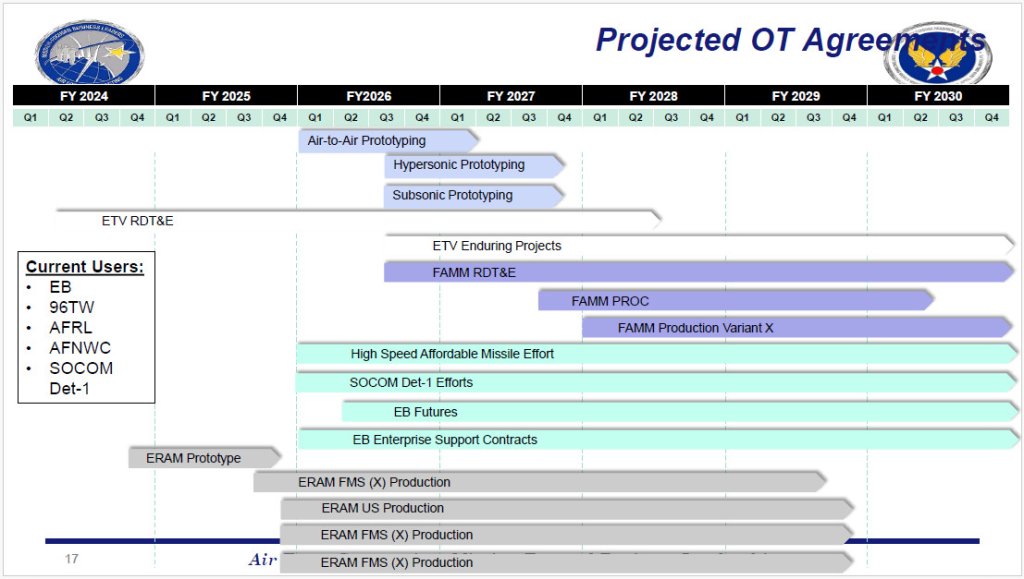
Just in the past few months, the U.S. military has moved to lay the groundwork for the acquisition of tens of thousands of new, lower-cost stand-off munitions over the next three to five years. CoAspire is one of several companies to have received framework deals as part of these efforts. These agreements cover surface and air-launched designs being developed in support of the aforementioned LCCM and FAMM programs, respectively. It’s also worth noting here that the ERAM program, which was also foreign-focused at the outset, has already been feeding into FAMM.
With all this in mind, today’s announcement regarding CHAOS is another important win for CoAspire. This also underscores U.S. military-wide efforts to reduce reliance on traditional prime contractors and do more to leverage small and non-traditional firms for new major weapon system programs.
With the new vote of confidence from the Navy, along with the previous LCCM framework deal, CoAspire’s RAACM-ER continues to emerge as a particularly notable development for the U.S. military and its allies and partners.
Update: 2:25 PM ET –
The U.S. Navy has now provided TWZ with some additional details regarding today’s announcement about the CHAOS program.
The Navy awarded an Other Transaction Authority agreement to CoAspire for Phases 1 and 2 of the Coalition Heterogenous Affordable Offensive Strike (CHAOS) prototype effort, July 17, marking PAE Munitions’ direct investment in the emerging low-cost cruise missile market,” according to a Navy spokesperson. “The award is a significant milestone in developing an affordable maritime strike capability for security assistance partners while expanding the defense industrial base through competition and accelerating a new entrant into the Navy’s precision strike portfolio.”
“The Navy has requested appropriated funds to begin integration of this low-cost maritime capability on Navy platforms as part of the FY27 budget request,” they added. “PAE Munitions expect[s] at least one more industry agreement on CHAOS as part of its competitive strategy.”
Contact the author: joe@twz.com
The post Navy Picks RAACM-ER Low-Cost Cruise Missile For Program To Help Arm Allies appeared first on TWZ.