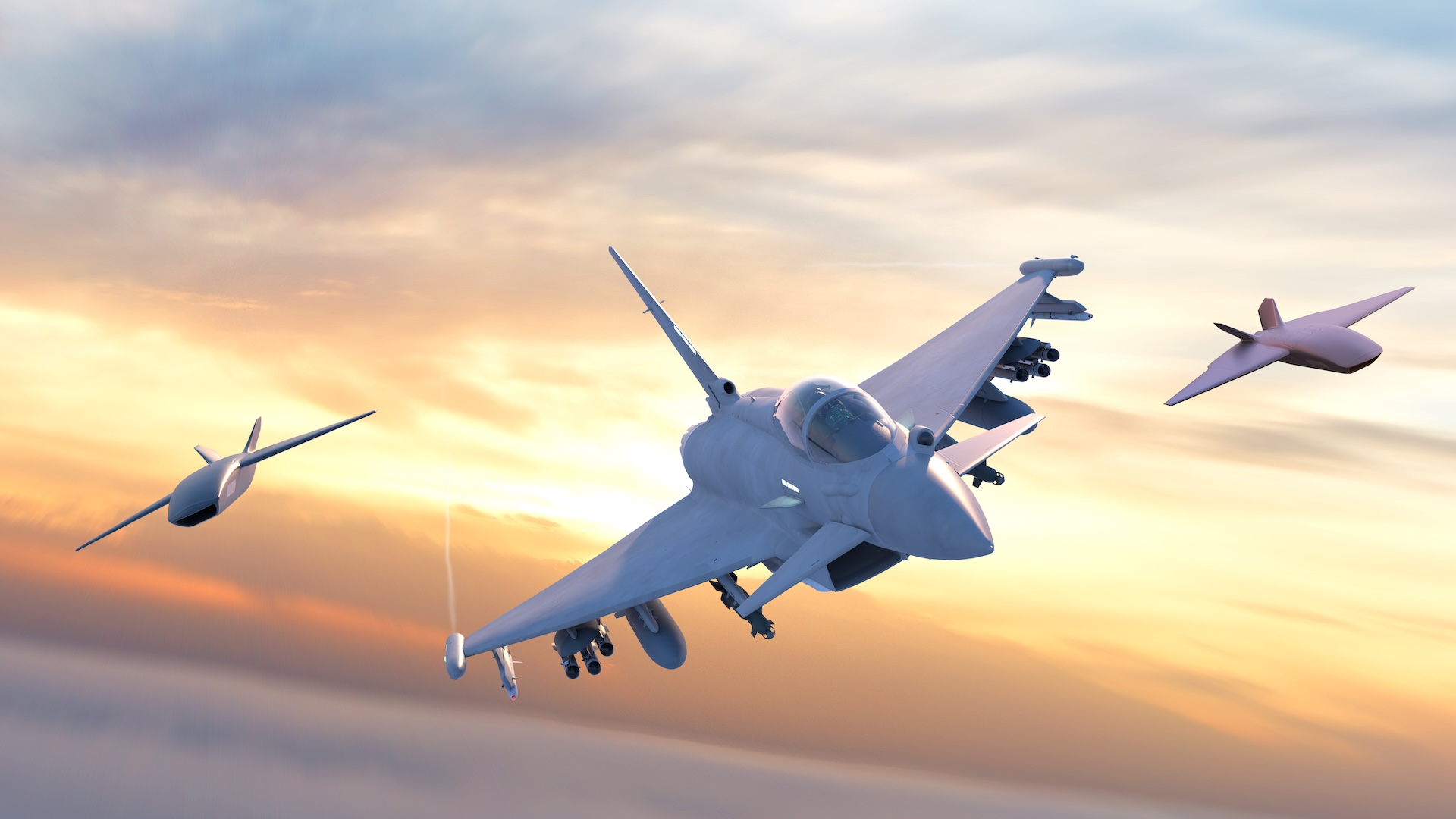
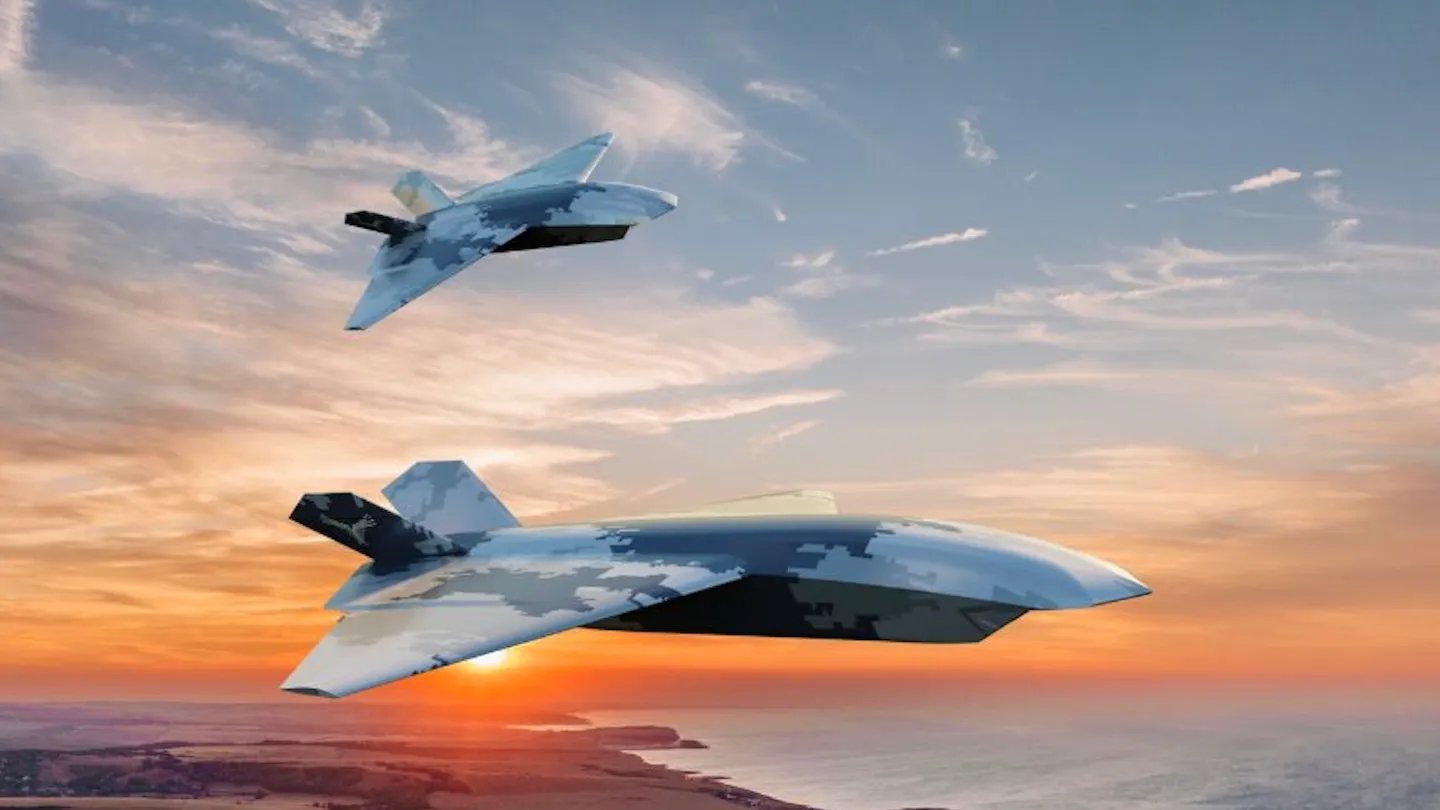
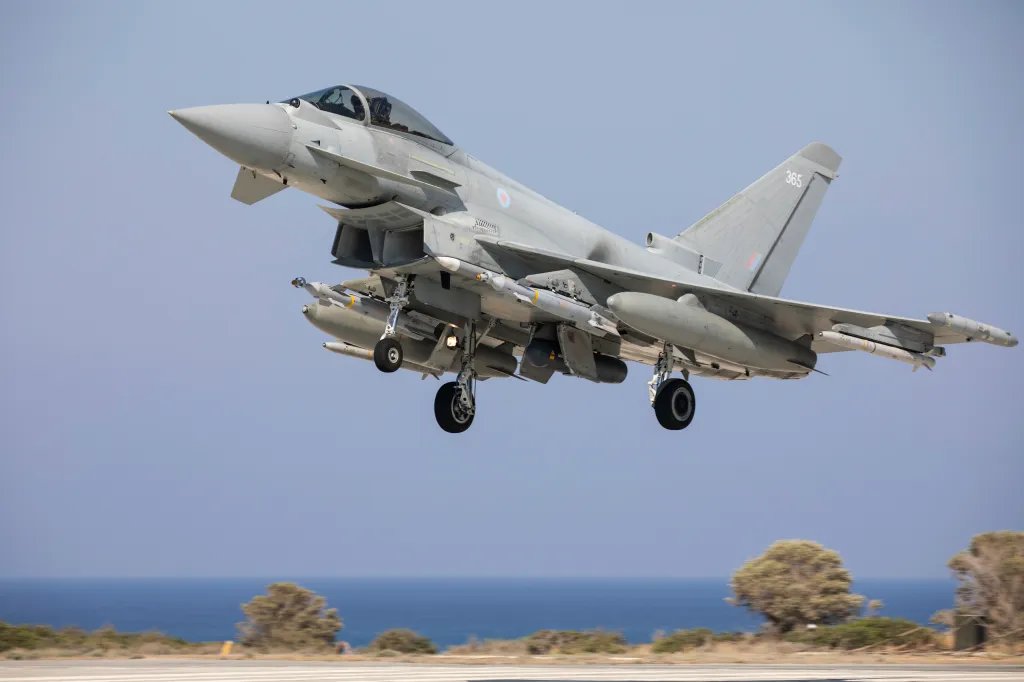
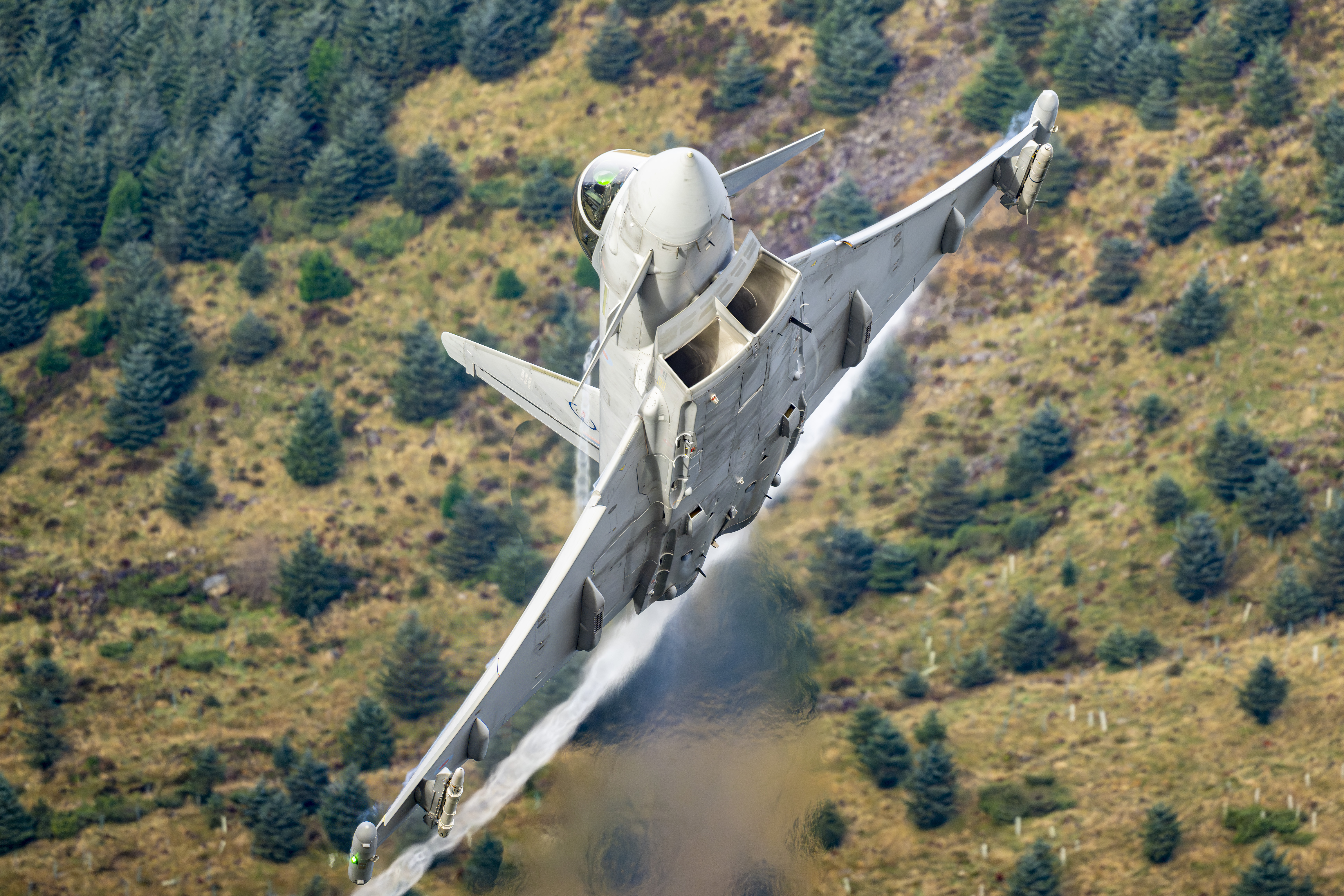
BAE Systems is exploring how the Eurofighter Typhoon could control uncrewed collaborative combat aircraft (CCA) as part of a broader effort to introduce new capabilities for the jet. The company is currently pursuing concepts to integrate CCAs with the Typhoon to expand ‘combat mass’ and better address emerging threat environments. Ultimately, however, the experience gained here will be ported over to the future Tempest combat jet — designed to work closely with drones from the outset.
At this point, BAE Systems is working on concepting how Typhoon/CCA could work and is also investing as a company in CCAs and crewed-uncrewed teaming more generally. The work involving the Typhoon and CCAs has accelerated over the previous 12 months. Officials from BAE Systems outlined the work so far in a briefing at the Farnborough Air Show today, just a week after the U.K. Royal Air Force launched a new CCA program, named Storm Fighter, which you can read more about here. That program should lead to a CCA that can fly into combat with the Typhoon, F-35, and Tempest.
Speaking at Farnborough, Chris Moon, Typhoon Future Capability Director, BAE Systems, explained:
“Unsurprisingly, what we’re finding is that in the enlarged battlespace of the future, we’re able have a Typhoon — some people use the phrase ‘quarterback,’ choose what you will — with its extensive radar capabilities at range, and speed and agility, processing, to be able to work alongside collaborative combat aircraft and increase the combat mass that is needed from our air forces into the future, and the persistence and the range at which they’re able to reach, and bring more missiles into the fight.”
The CCA capabilities are planned to be added to the Typhoon under a much wider effort known as the Long-Term Evolution (LTE) program. This is expected to roll out a number of other features that will ensure that the jet can get the most out of teaming with CCAs. These features include the large-area display (LAD) cockpit, European Common Radar System (ECRS) Mk 2, and the Striker II helmet-mounted display system.
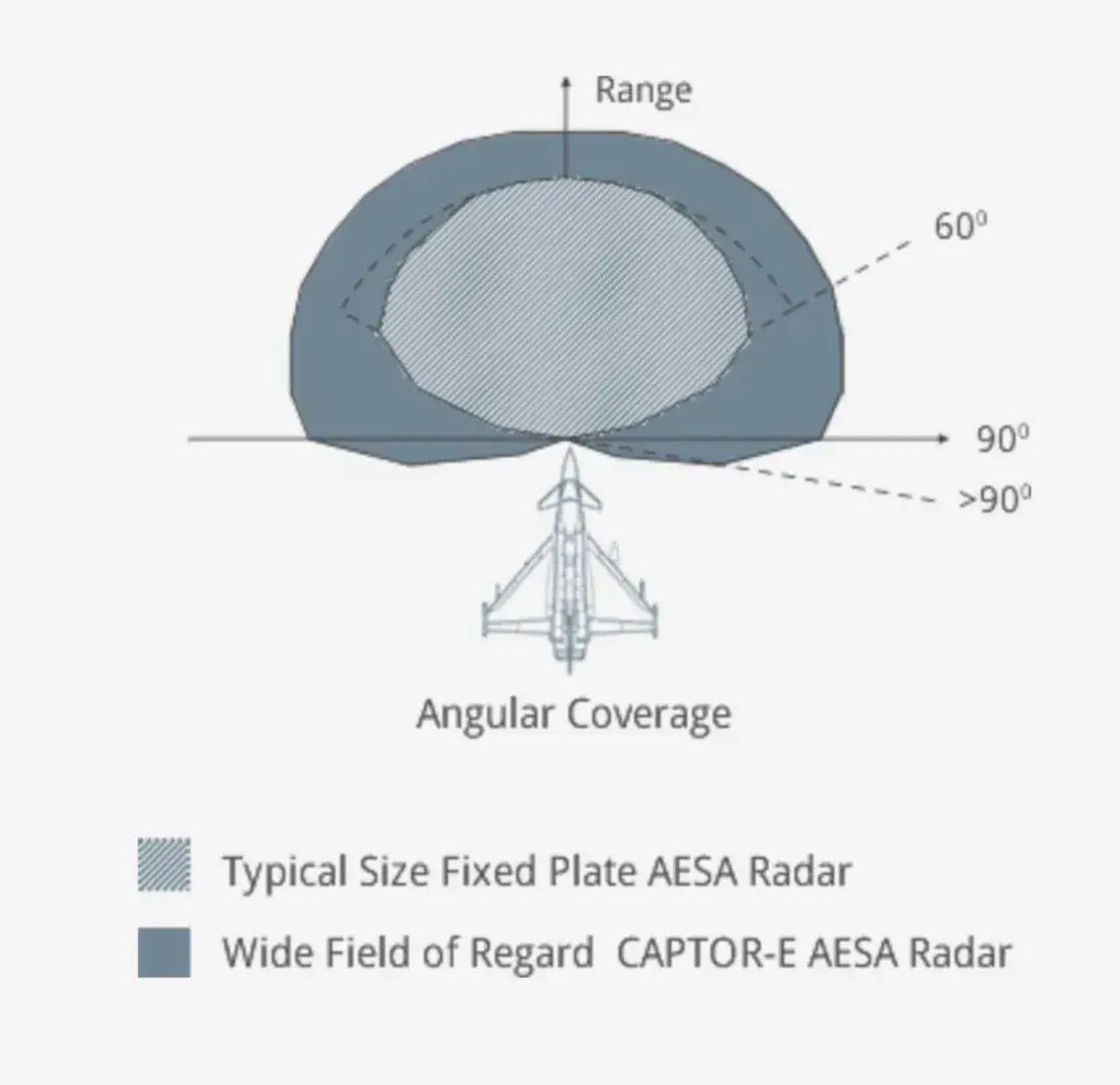
In terms of technology, the ECRS Mk 2 is especially interesting here. As well as the various advantages of an active electronically scanned array (AESA), it has a swashplate repositioner, an articulated mounting that means the antenna can be swung to face at far greater angles off the centerline. This allows a much wider field of regard, with a significant boost in angular (azimuth) coverage. It allows the Typhoon to retain missile guidance even when beaming and hiding in the Doppler notch of the enemy’s radar, which functions much like a blind spot.
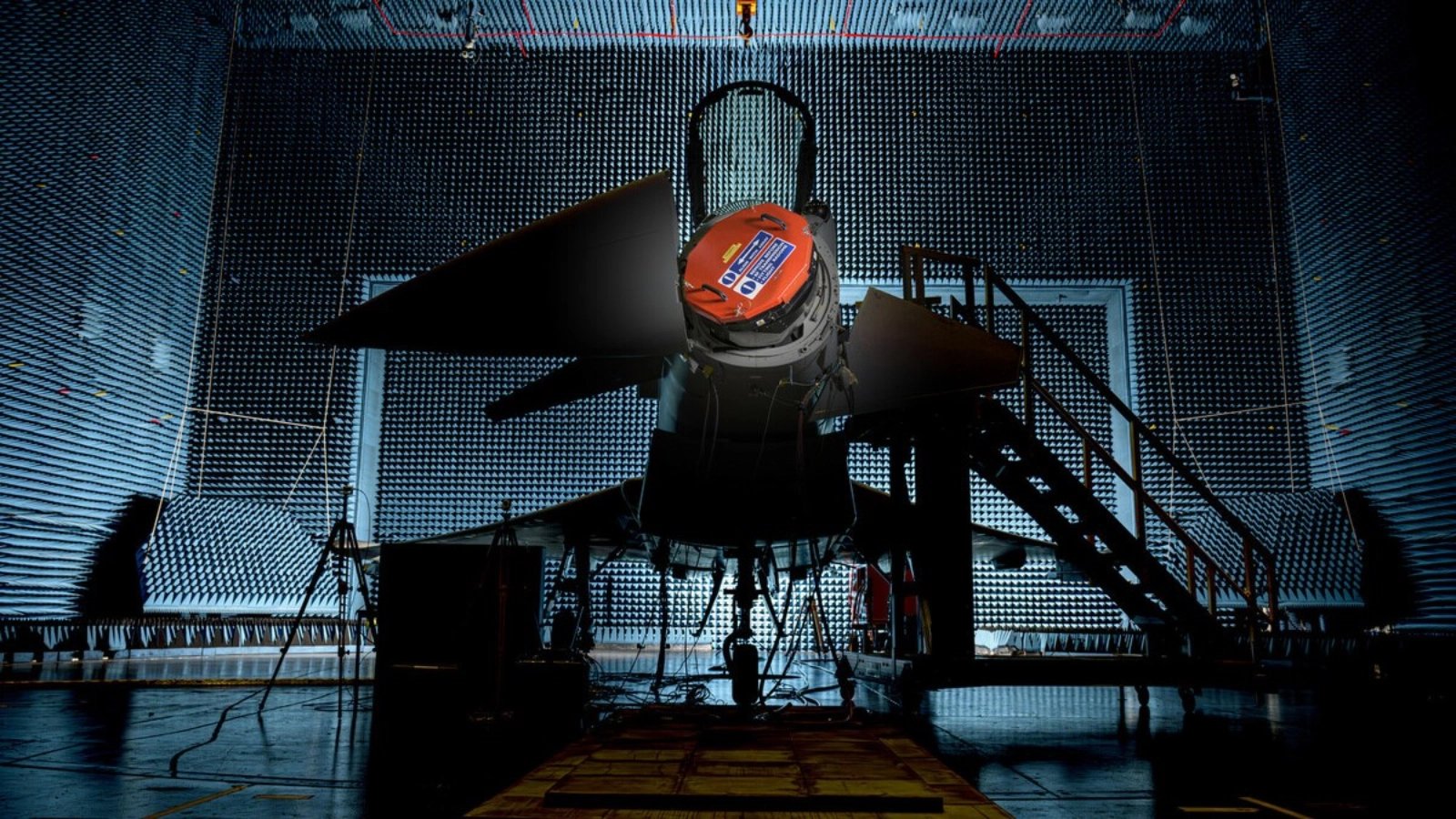
In the past, Eurofighter has claimed that the repositionable array provides a field of regard that is “some 50 percent wider than traditional fixed-plate systems.”
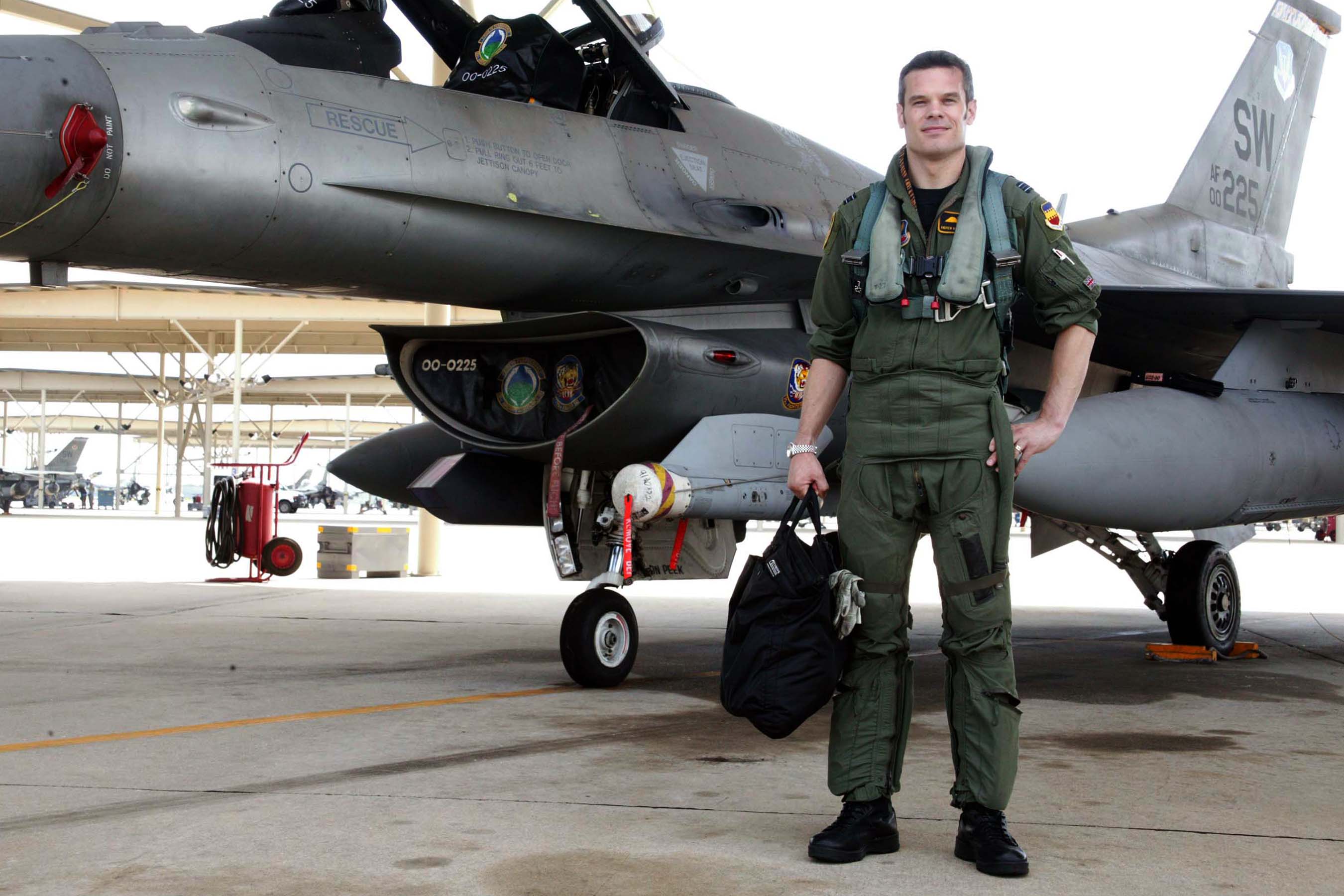
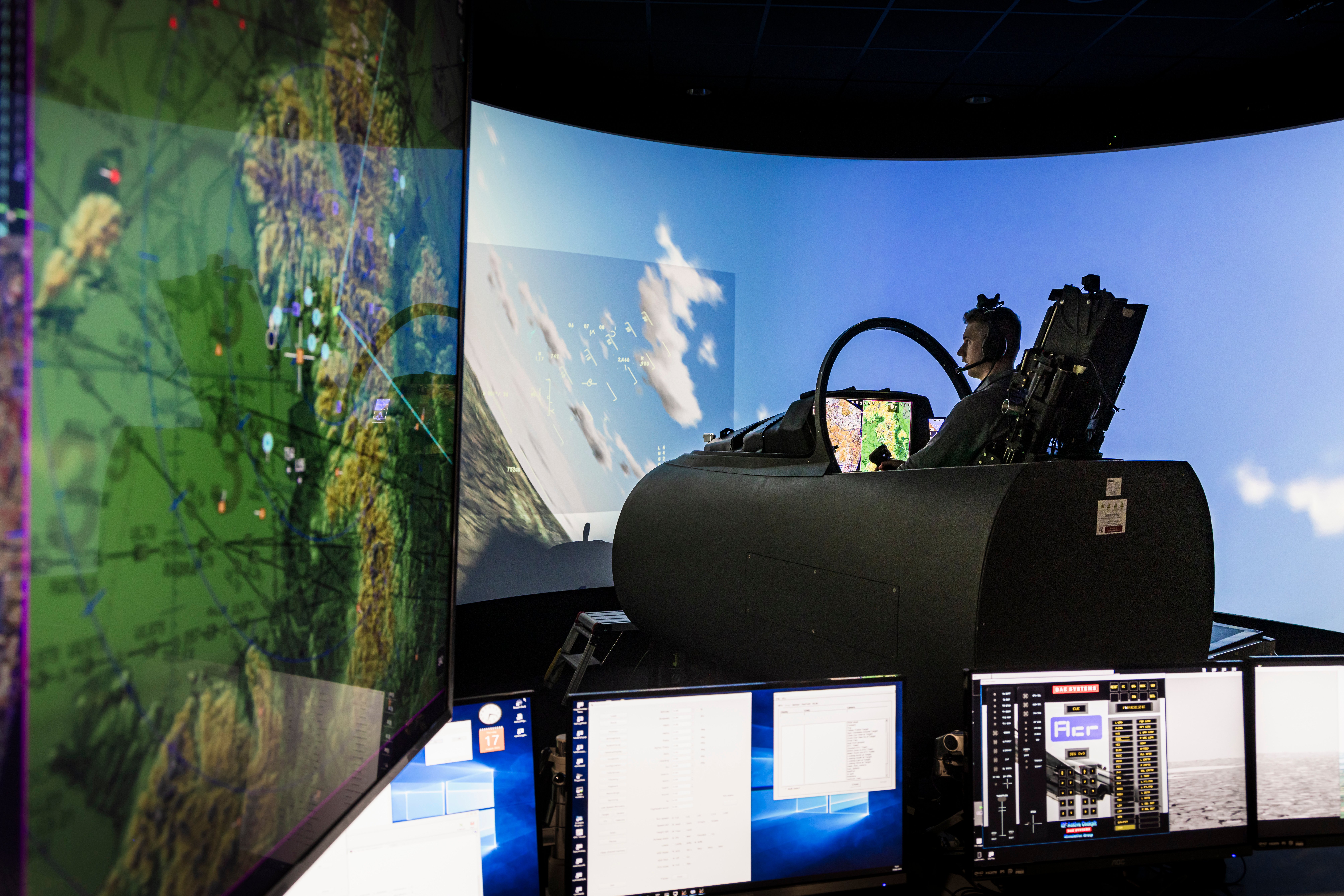
All of these components have been tested in a CCA environment in a specially equipped Typhoon simulator.
Moon highlighted one particular scenario, off the east coast of Scotland, in which a pair of Typhoons worked with a four-ship of CCAs to extend the range, coverage, and persistence of the crewed jets. The scenario can be expanded to include the entire east coast of the United Kingdom, adding more Typhoons and CCAs as well as F-35Bs.
More detail was provided by Andrew ‘Blyty’ Mallery-Blythe, Typhoon Operational Requirements Manager at BAE Systems.
A huge advantage here is the new LAD cockpit, replacing the Typhoon’s current three-multifunction display (MFD) configuration with a single unit.

Using the LAD means that “everything is available,” Blyty said. “You can see everything at the top level. You have to do very little manipulation to the display. The LAD provides a literal big picture of the combat scenario, including friendly assets, among them the various CCAs, with their heading, height, speed, and what they’re carrying in terms of sensors or stores.
“What we’re trying to take advantage of is combat mass,” Blyty added. “Obviously, combat mass I don’t really need to explain in any great detail. We’ve got four CCAs and two Typhoons. Clearly there’s an improvement and an increase in combat mass without having to have those additional very expensive, complex aircraft. We can bring more weapons to the fight through the use of the CCAs.”
In terms of attrition, the Typhoon is classed as a strategic asset in these concepts, while a CCA is more of a tactical asset.
“We certainly don’t want to put ourselves in a position where we’re going to lose one of those [CCAs], but it’s a tactical asset,” Blyty continued. “That means that we can position them far closer to the threat, potentially taking a little bit more risk with those assets. They’re also smaller, they have a lower observability, and that is also an advantage that our friendly Typhoons exploit.”
Having a better overview of the battlespace via the LAD cockpit, ECRS Mk 2 radar, Striker II helmet, and the CCAs themselves is only one part of the equation.
BAE Systems is also trying to minimize the workload on the pilots. This is especially important for the U.K. Royal Air Force, which has reduced the number of two-seat Typhoons in its fleet, scrapping all its Tranche 1 ‘T-birds.’ Other nations are meanwhile working on developing CCA concepts by relying heavily on two-seat combat aircraft, with the back-seater a ‘drone controller.’
Blyty: “We don’t want to be in a situation where the pilot is having to close-control each of those assets. There’d be far too much workload. So through our rapid prototyping, and the way that we’ve been doing this, we’ve been looking into how we minimize that workload and how we give simple commands through the extant HOTAS [‘hands on throttle and stick’ controls] to send those CCAs to carry out our task with the minimum workload that we can achieve.” It is meanwhile widely understood that drones require an advanced autonomy package to facilitate this level of ease of use by a single pilot.
Blyty went on to run through an engagement scenario, again aided by the LAD’s ‘god’s eye view’ of the battlespace. A kill box was drawn on the LAD before the hostile aircraft entered that area.
“Once that was activated — we do that through a button on the screen which is just off the top — we effectively give the CCAs the authorization or the command that they can engage anything that enters that kill box.”
With that command, the CCAs start employing weapons, including very long-range Meteor air-to-air missiles, the ramjet-powered weapon that the Typhoon also carries.
The aspiration to have CCAs armed with Meteor is a significant one, due to the very particular set of capabilities that the missile brings. The Meteor is among the longest-ranged of any Western air-to-air missile, generally considered to be able to engage certain types of targets out to around 130 miles. Critically, while CCAs are already a forward extension of the fighter, a missile of this kind would provide a major increase in engagement range when combined with the uncrewed jet, allowing the Typhoon to stay outside the engagement range of the enemy.
The missile also uses a two-way datalink, which feeds it with in-flight updates as it flies out to its target and provides the pilot in the launch aircraft with information on the Meteor’s fuel, energy, and tracking state. Adding CCAs into the mix, provided they have their own sensors, would allow them to pass data to the Typhoon and to the Meteor, regardless of which platform launched the missile.
Ultimately, of course, the CCAs might end up with different missiles entirely, including a successor to the Meteor that is now being developed. Regardless, air-to-air combat at extended ranges is very much part of the U.K.’s CCA thinking. Meanwhile, we are already seeing CCA-type aircraft firing beyond-visual-range missiles in tests in the United States and elsewhere.
In this particular scenario, Blyty said the Typhoons were at a distance of roughly 114 miles from the enemy.
“Let’s say that’s outside the range of Meteor,” Blyty continued, downplaying the likely true range of the missile, which is a closely guarded secret. “The CCAs, less than half that. Let’s say that’s within the range of Meteor. So, we’ve got a clear tactical advantage that those CCAs have over the Typhoons. They’re on a little bit more risk out there than the Typhoons are. But that’s entirely appropriate to how we manage those Typhoons with the ECRS Mk 2 as a more strategic asset, and we quarterback the CCAs as a more tactical asset.”
Blyty said that BAE Systems is working on a lot more features to minimize pilot workload, without providing more details.
Meanwhile, BAE Systems has been working alongside QinetiQ on crewed-uncrewed teaming in the air, with a synthetic trial in which a Typhoon, a swarm of QinetiQ Banshee drones, and a Malloy Aeronautics T-150 small heavy-lift uncrewed aerial system (UAS) were flown using current operational military datalinks including Link 16.
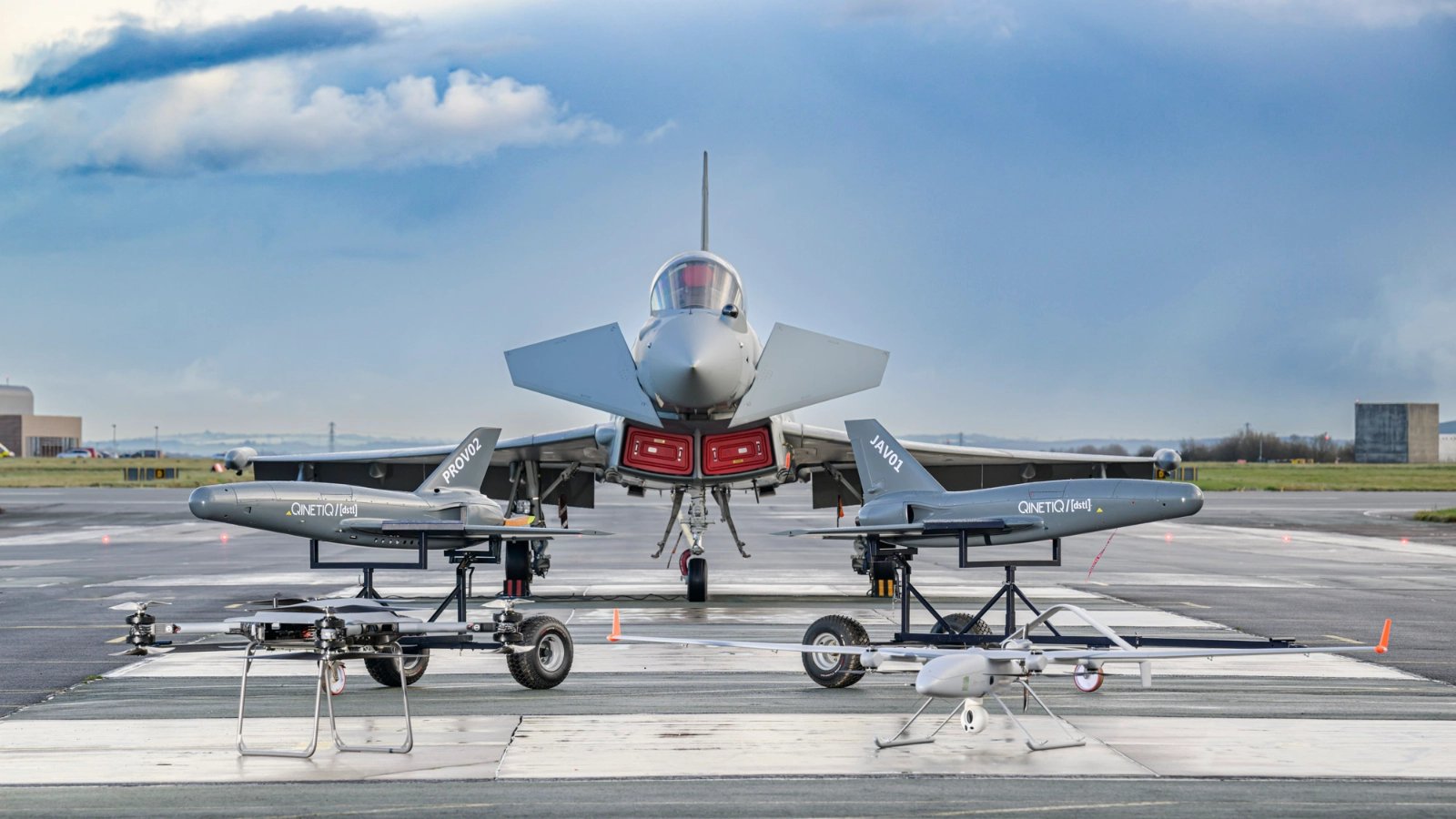
Clearly, concept demonstrations of how crewed combat aircraft could operate alongside CCAs, highlighting the role of crewed-uncrewed teaming in future air operations, are a high priority as the Typhoon continues to evolve. The United Kingdom has not exactly been quick to adopt the CAA concept, at least compared to the United States and China, but with uncrewed platforms very much at the forefront of the recent Defense Investment Plan, that looks like it is set to change.
Contact the author: thomas@thewarzone.com
The post Typhoons Paired With CCA Fighter Drones Armed With Meteor Missiles Eyed By UK appeared first on TWZ.