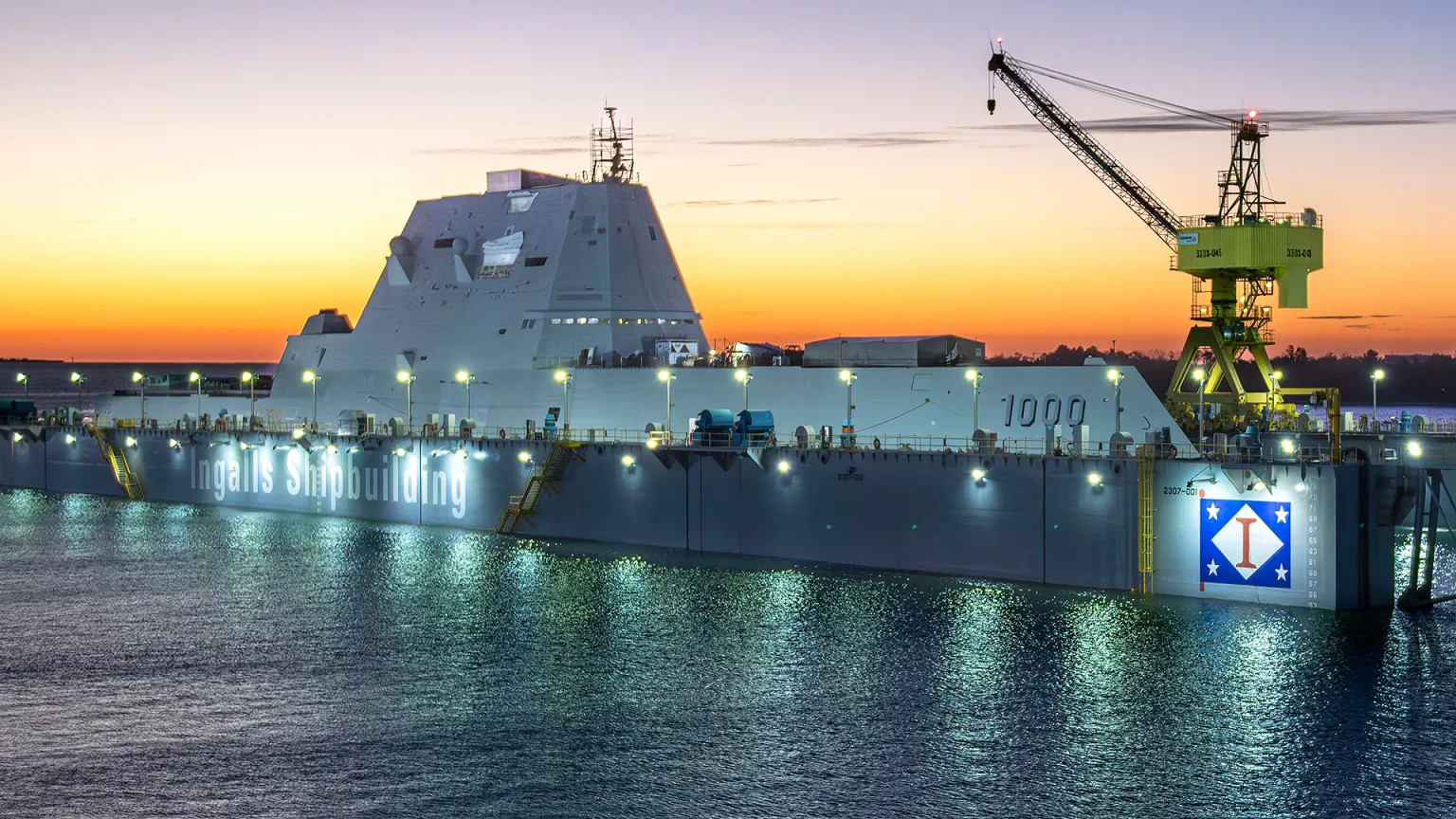
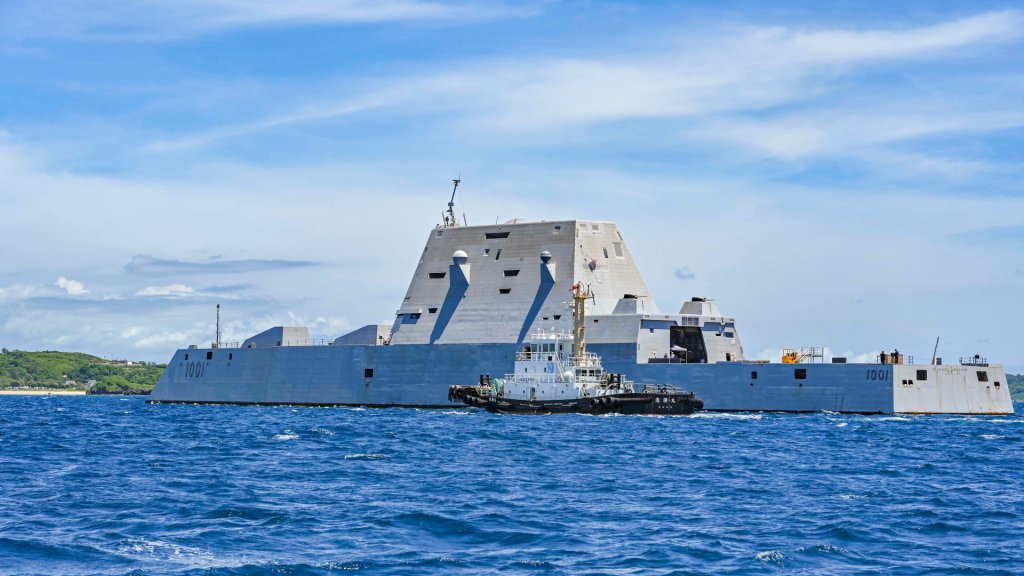
The U.S. Navy expects the stealthy destroyer USS Zumwalt, with its new launchers for Intermediate-Range Conventional Prompt Strike (IRCPS) hypersonic missiles, to be formally returned to service by September. Upgrade work on the ship, which started back in 2023, is some 10 months behind schedule. One contributing factor in the delay was the first full shutdown of the notoriously complex Integrated Power System (IPS) since the ship was delivered to the Navy six years ago. IPS is a power plant that provides massive amounts of electricity to propel the ship and run its advanced systems.
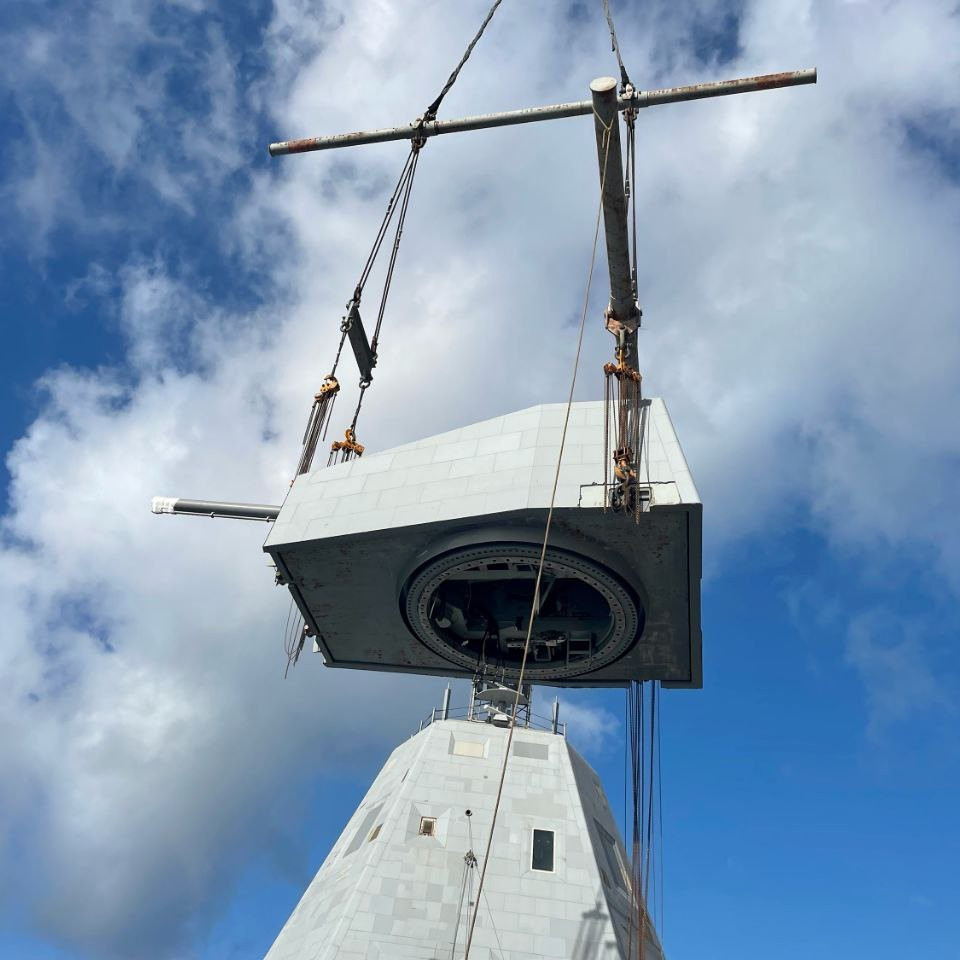
The Government Accountability Office (GAO), a congressional watchdog, provided new details on the hypersonic missile upgrades for USS Zumwalt, also known by its hull number DDG-1000, in a report released today. The four new launch tubes, each of which will be able to hold three IRCPS missiles, notably take the place of the destroyer’s original pair of 155mm Advanced Gun Systems (AGS).
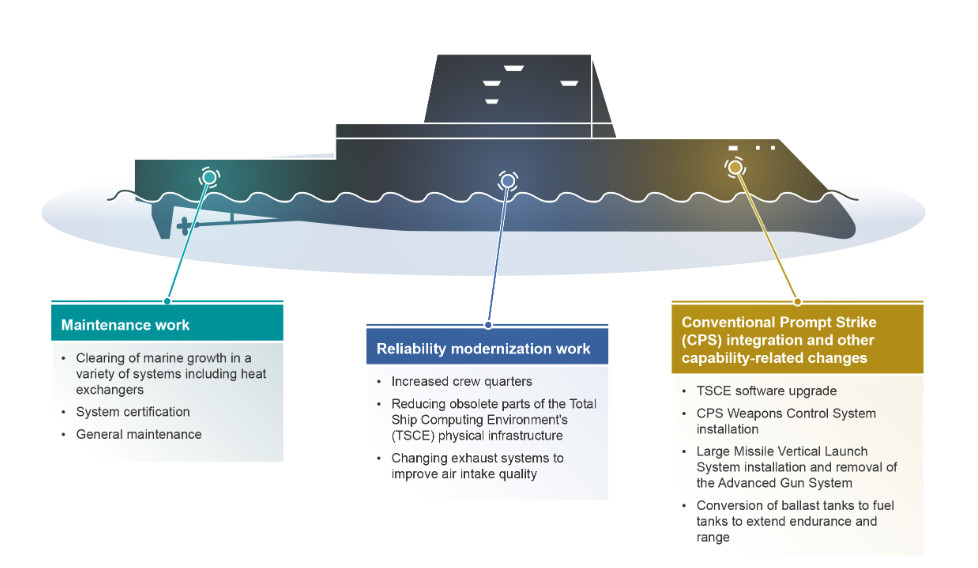
Zumwalt has also been recieving other improvements, including expanded fuel capacity allowing for increased range and endurance, as well as undergoing routine maintenance, in parallel to the IRCPS integration. The Navy refers to all of this work, collectively, as the Build Yard Modernization Period (BYMP).
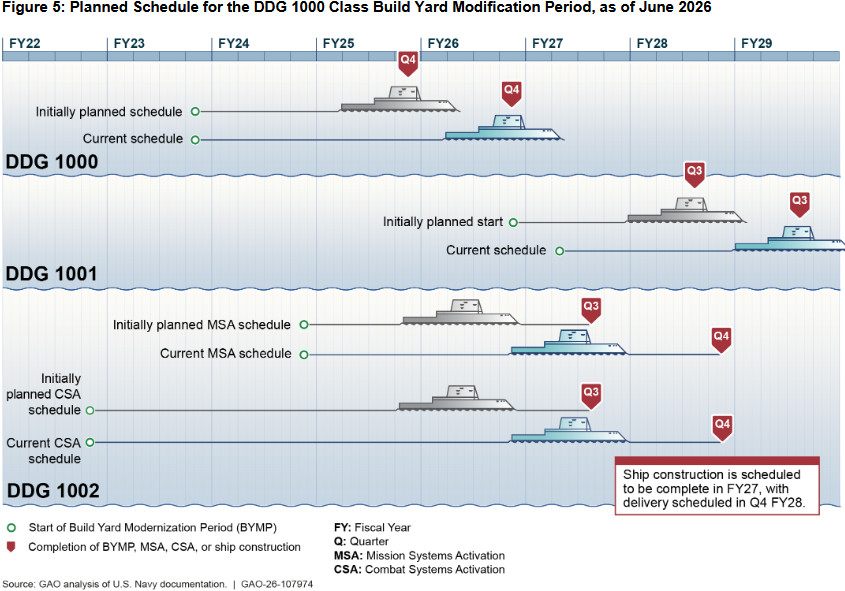
The Navy’s other two Zumwalt class destroyers – the USS Michael Monsoor (DDG-1001) and the future USS Lyndon B. Johnson (DDG-1002) – are set to receive the same complete slate of modifications. Work on the Lyndon B. Johnson is already underway as part of the larger process of delivering that ship, which is now scheduled for April 2027. The service also eventually plans to integrate IRCPS onto Block V Virginia class submarines.
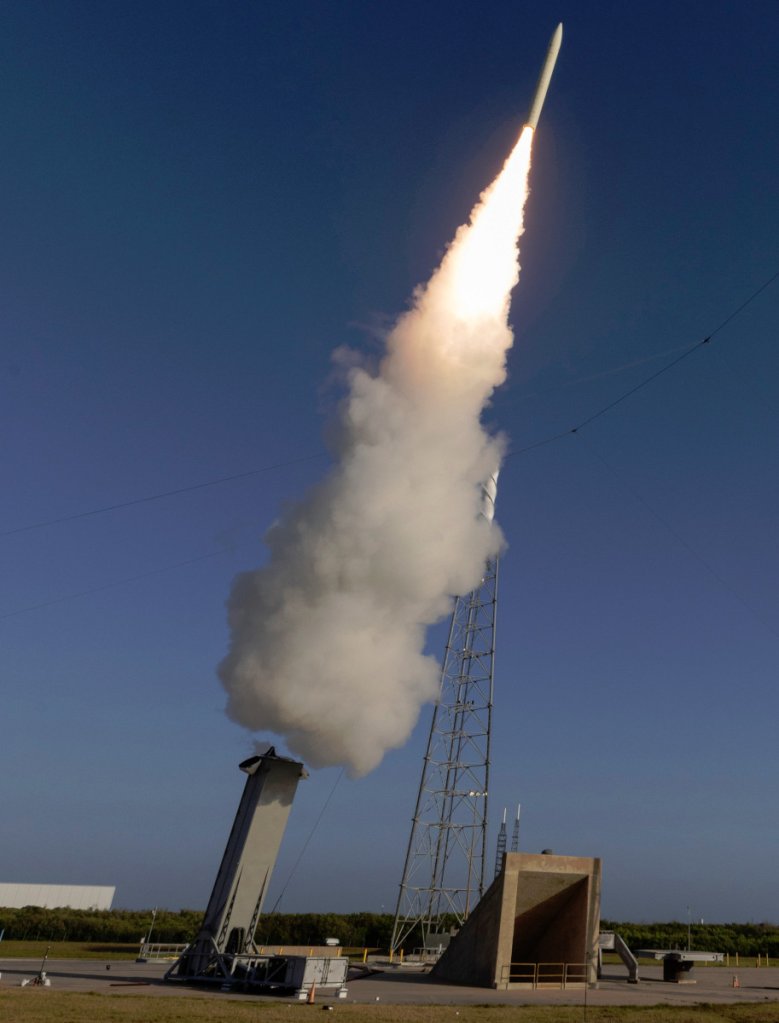
The Navy’s IRCPS program is also being run in close cooperation with the U.S. Army. The missile at the core of IRCPS is the same one the Army is working to field in ground-based configuration, which it calls Dark Eagle.
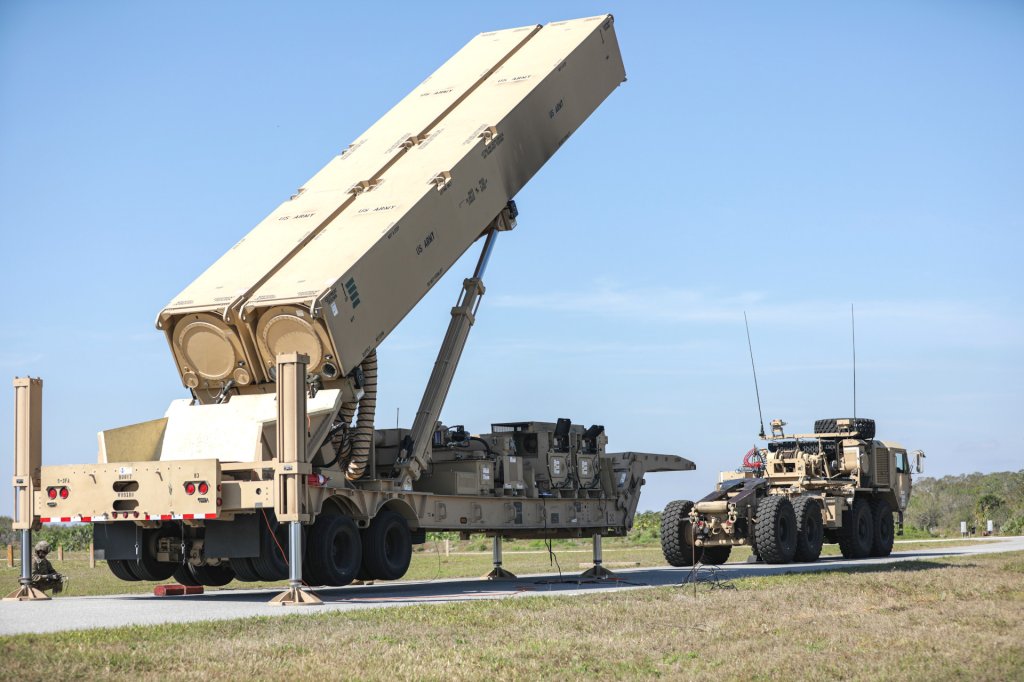
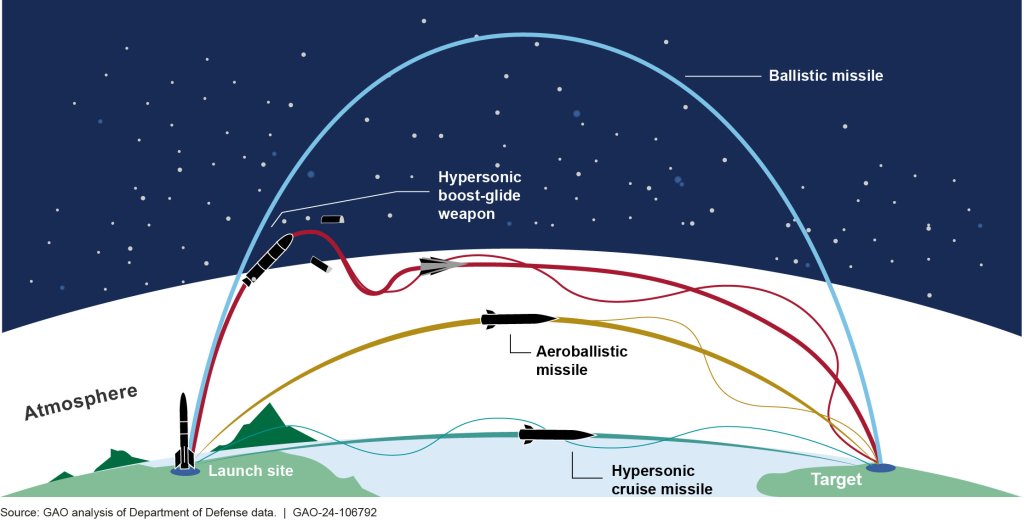
The weapon itself consists of a multi-stage ballistic missile-like rocket booster with an unpowered hypersonic boost-glide vehicle on top. The booster gets the vehicle to an optimal speed and altitude, after which it is released. After separating from the booster, the vehicle glides along a relatively shallow flight path within the Earth’s atmosphere to its target, maneuvering along the way, sometimes erratically. In general, hypersonic boost-glide vehicles offer a combination of speed, flight trajectory, and maneuverability that creates distinct challenges for enemy forces. The vehicles are difficult to spot and track, let alone intercept. Their speed limits the time an opponent has to react in other ways. The ability to pierce enemy air defenses and rapidly strike very high-value targets, even ones that may be fleeting, is what makes hypersonic weapons of this type attractive.
“Over the past year, the cost and schedule performance on the first ship to undergo this [IRCPS and other upgrade] work, the DDG 1000, has degraded,” according to GAO’s report. “Program officials reported that the primary cause of recent delays is unplanned work.”
As already noted, one “source of unplanned work and delays per program officials is that this is the first time that the Navy has shut down and restarted key DDG 1000 class ship systems,” per GAO. “For example, equipment failures in the ship’s complex electrical system, which is akin to a small power plant, contributed to delays.”
Zumwalt‘s IPS is a hybrid-electric system that combines gas turbines and electric generators. Hybrid propulsion is not unique, broadly speaking, to this class of ships, but the DDG-1000 design takes it to a completely different level. IPS can generate up to “approximately 78 megawatts of power, nearly what a nuclear-powered aircraft carrier generates,” according to the Navy. It is also said to be able to pump out 58 megawatts of reserve power even while cruising at 20 knots. This level of power generation is essential to support the ship’s array of advanced capabilities, but it also comes with complexities that have proven troublesome over the years.
In addition, “the unplanned work addresses the need for more cabling than was anticipated in the initial project design, as the contractor cut and removed more cabling than planned from the forward part of the ship for CPS missile launch tube installation,” the report adds. “The additional cabling was needed to match changes to the ship configuration since new construction cables were installed as part of the BYMP.”
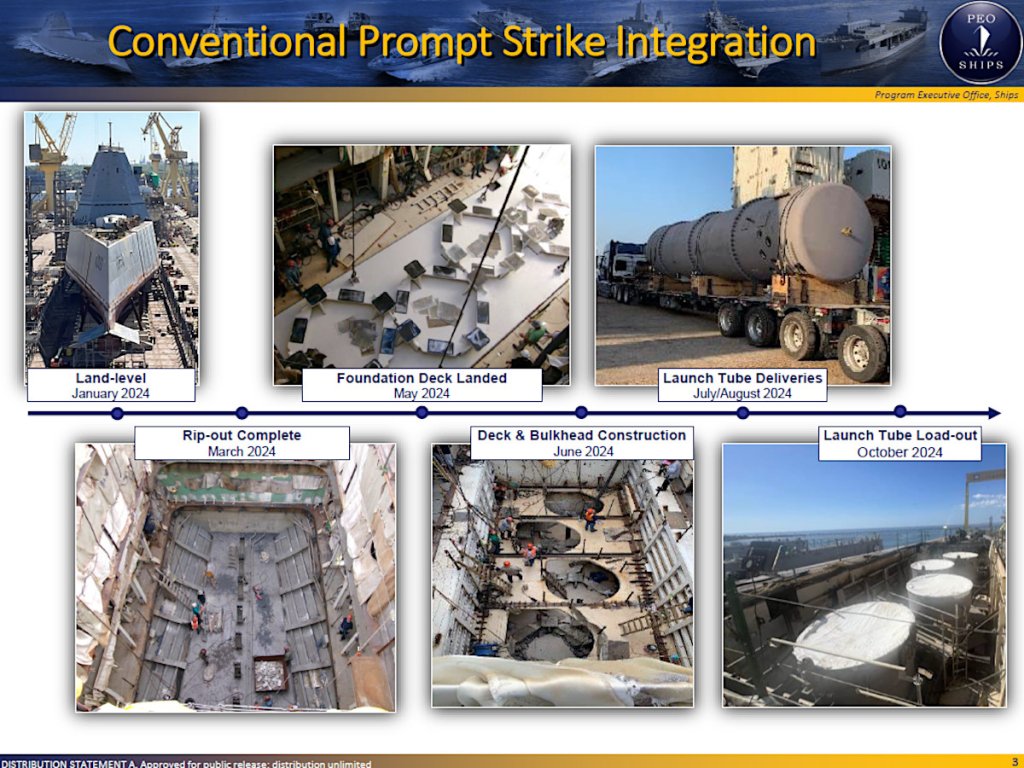
Overall, “program officials noted that the Navy modified the BYMP contract with Huntington Ingalls in August 2025 to add 230,000 hours – at a cost of $20 million – for unplanned work,” according to GAO. “The program reported increasing its estimate to upgrade all three ships from $1.8 billion to at least $2 billion.”
GAO says the Navy also stressed that this is the first time it has ever integrated a hypersonic weapon onto one of its warships, and that it has been a learning experience. The service says it is working to ensure that useful lessons are being woven into ongoing work on Lyndon B. Johnson, as well as USS Michael Monsoor‘s future BYMP availability, which is slated to begin before the end of the year.
The timeline for delivery of the Lyndon B. Johnson and the upgrade schedule for Michael Monsoor are already delayed, as can be seen in the GAO graphic below. Delays have also pushed back the target date for a first live-fire at-sea IRCPS launch, a milestone now set to come next year.
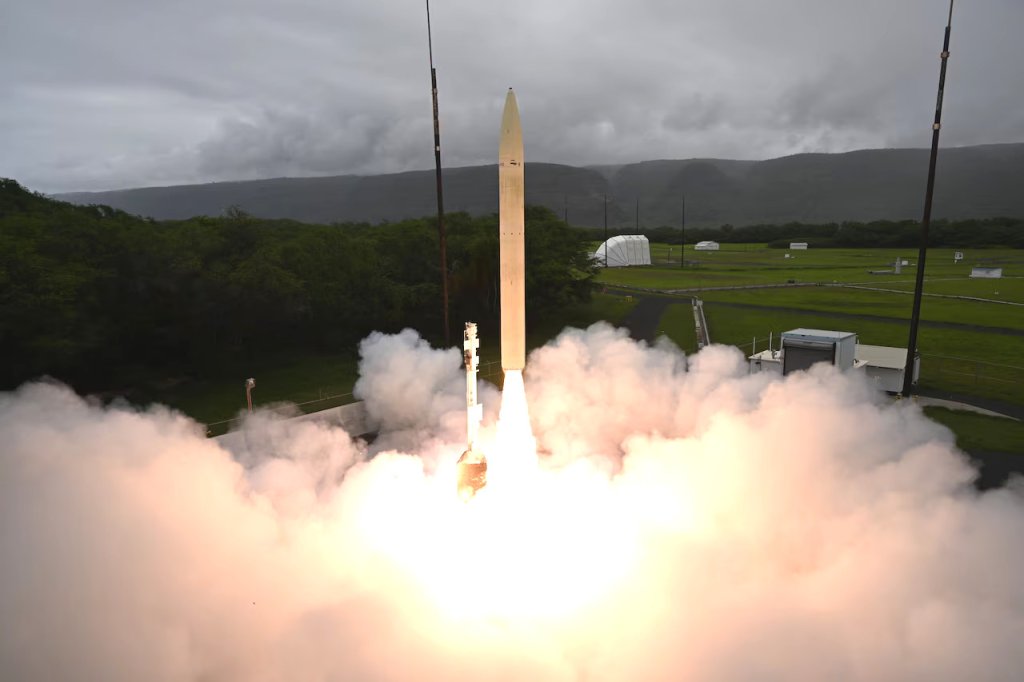
The Navy and the Army have conducted several land-based launches as part of a test plan that has suffered its own setbacks in the past.
The Zumwalt class, as a whole, has suffered various trials and tribulations over the years due to a variety of factors. This includes persistent technical difficulties with various systems, especially the main AN/SPY-3 radar. There have been signs for years now that the Navy could replace the AN/SPY-3 with a version of the newer AN/SPY-6. A growing number of other Navy ships are already sailing with or are set to receive AN/SPY-6 variants. The ships have also seen other cutting-edge capabilities watered down.
Challenges facing the Zumwalt class destroyers have been compounded by the prior decision to slash planned orders for these ships from 32 to just three. This has also made the ships extremely expensive to acquire, operate, and sustain. In a separate annual assessment of major U.S. military programs released earlier this month, GAO reported that the unit cost of each of the destroyers had risen to just over $10.6 billion (inclusive of research and development costs). The total acquisition cost of the DDG-1000 program is now nearly $32 billion. For comparison, the price tag on a new Flight III Arleigh Burke class destroyer is around $2.5 billion, according to data released last year by the Congressional Budget Office (CBO).
Broader questions have been raised about the roles and missions that the trio of Zumwalt class ships can be reasonably expected to perform. IRCPS will give the members of the Zumwalt class a new, very-long-range, high-value strategic strike role. The Navy sees this as a key capability for future high-end figuts, such as one against China in the Pacific.
At the same time, GAO’s report today also highlights the small number of missiles the Navy and the Army are in the process of acquiring now for IRCP and Dark Eagle. Prime contractor Lockheed Martin still has limited capacity to produce them, too.
“Navy data indicate that the contractor facility operations are not currently able to meet demand, making it difficult for Lockheed Martin to keep production commitments,” according to GAO. “Specifically, the facility is currently capable of producing a maximum of six to seven rounds a year out of the 12 rounds per year necessary to stabilize production.”
“Over the past 5 years, CPS costs estimates have fluctuated, driven by factors such as the Navy’s removal or addition of host platforms, revisions to total quantities, planned periodic capability insertions, and production time frames to date, among others,” per GAO’s report. “In fiscal year 2020, early in the MTA [middle tier acquisition] rapid prototyping phase, the Navy estimated it would cost about $31 billion in total lifecycle costs for a program that would deliver 262 missiles. In 2024, the Navy increased its estimate of the total cost to acquire CPS by about 30 percent while reducing the number of missiles to be procured – now $41 billion in total lifecycle costs for 224 missiles.”
“These missile quantities do not reflect a specific program requirement, according to CPS program officials, but rather modeling based on various inputs, including budget documents, analyses of industrial base capacity, and direct, ongoing collaboration with the U.S. Strategic Command and the requirements sponsor – OPNAV N97 [the Undersea Warfare Division within the Office of the Chief of Naval Operations],” the report also notes. “Additionally, the Army is planning to spend more than $10 billion to procure 48 missiles and associated ground support equipment.”
As of April 2026, the average estimated unit cost for each missile was pegged at approximately $67 million. GAO points out that “the exact unit cost will depend on the contractor’s efficiency in production, which is, in part, dependent on stable annual procurement funding for the missile.”
USS Zumwalt‘s formal return to the fleet as the Navy’s first vessel equipped to fire hypersonic missiles will be an important milestone. However, signs still very much point to IRCPS being a relatively limited and costly capability, likely to be held in reserve for very high-priority targets, at least in the near term.
Contact the author: joe@twz.com
The post USS Zumwalt Set To Return To Fleet After Long Anticipated Hypersonic Missile Upgrade appeared first on TWZ.