This is an edition of The Atlantic Daily, a newsletter that guides you through the biggest stories of the day, helps you discover new ideas, and recommends the best in culture. Sign up for it here.
Back in 2016, before he converted to the MAGA cause, J. D. Vance was deeply wary of Donald Trump. He wrote to a law-school classmate that he went “back and forth between thinking Trump is a cynical asshole like Nixon who wouldn’t be that bad (and might even prove useful) or that he’s America’s Hitler.”
For most people, “cynical asshole” would seem pejorative, but perhaps Vance meant it as something to aspire to. Late last week, the vice president visited the Richard Nixon Presidential Library and Museum, in Yorba Linda, California, and quipped, “Young senator, vice president, writes some best-selling books, is hated by the media. It kind of sounds like J.D. Vance. I’ve always liked Richard Nixon.”
Vance went on to suggest that the scandal that toppled Nixon was no big deal, and that the 37th president was a victim of nefarious forces. “If Watergate happened tomorrow, it would be, like, a 12-hour news story,” he said. “The idea that it would have taken down a presidency is crazy.”
Vance is correct about how Watergate would’ve landed today, but the lesson is not what he claims. Since 1974, Americans have become pessimistic about their leaders, deeply polarized in their partisanship, and distrustful of the media—all of which means that Watergate very well might pass quickly in today’s environment. The best evidence is that the Trump administration weathers scandals on the Watergate level routinely. As Representative Jim McGovern, a Massachusetts Democrat, wrote of Vance’s remark, “‘We do a Watergate twice a day’ is a crazy way to confess your own corruption.”
Vance, who has previously admitted to making up stories for political purposes, also offered a bogus history of what happened in Watergate: “If you look at the story of how the deep state took down Richard Nixon, it’s not all that different from what the same groups of people, the same institutions, tried to do to Donald Trump in the first Trump administration.” (As the journalist Ed Kilgore notes, the same revisionism has been peddled by the Vance-allied propagandist Christopher Rufo.)
Once again, Vance is right to draw a comparison but takes the wrong lesson. Trump’s first impeachment, for soliciting foreign interference from Ukraine in the 2020 election, and Nixon’s downfall share two important things: First, both men did what they were accused of, though both insisted that their actions had been fine. (Trump: “a perfect conversation.” Nixon: “When the president does it, that means that it is not illegal.”) Second, the most damning evidence against both of them came not from “deep state” bureaucrats but from their own appointed political aides. The question of accountability is where the stories start to differ: Nixon was forced to resign by Republicans dismayed by his behavior; today, lockstep partisanship means that many GOP members of Congress pulled their punches in Trump’s two impeachment trials. Now Trump, like Nixon before him, is using the muscle of the federal government to bully and persecute his political adversaries.
More than one year ago, my colleague Anne Applebaum described the Trump administration as the most corrupt in American history, and the headlines routinely provide attestation. Over the weekend, for example, The New York Times reported on how Trump and Commerce Secretary Howard Lutnick struck a deal with the Kazakh government to give an American company access to Kazakh tungsten deposits, and to provide $1.6 billion in financing; the sons of both Trump and Lutnick now stand to profit from business arrangements based on the deal. A week before this, the Times reported that the administration killed an investigation into how a convicted fraudster had obtained clemency from the president—only one of many cases of what look like pay-to-play commutations and pardons.
The Wall Street Journal recently delved into how the billionaire Larry Ellison’s roughly $45 million donation to a Trump-supporting nonprofit in the 2024 election helped facilitate his son David’s acquisition of Paramount, the corporate parent of CBS News, which he has moved to make a media ally of the White House, and pending acquisition of CNN. (A Paramount spokesperson told the Journal that the company had made no commitments to any government body about coverage.) The Washington Post reported earlier this month that more than half of the publicly identified donors to Trump’s intended White House ballroom have won new or larger federal contracts in recent months—totaling more than $50 billion. The president is aiming to host a major international conference at his own property—a step scandalous enough that he was forced to back down by Republicans when he tried it during his first term. No wonder the FBI has dissolved its public-corruption unit.
This is not an exhaustive list, even for the past few weeks, which is part of the point: Watergate shocked the conscience because it was so rare to have such a fetid scandal break into view. But by following Steve Bannon’s maxim to “flood the zone with shit,” Trump has avoided the monthslong drip-drip of Watergate revelations, overwhelmed the press, and desensitized the public. Hardly anyone can maintain a mental list of all the improprieties.
Ironically, Watergate paved the way for this. It was not the first instance of awful behavior by a president, but it led to a new era of close scrutiny of politicians, which turned up many scandals. This in turn numbed the public to any individual example, even as it deepened their dim impression of politicians as a whole. If it’s true that Watergate wouldn’t make a dent today, that is a reason to lament the fallen state of politics, not to conclude that Watergate was just fine.
This would be a powerful argument coming from the vice president, who has worried about what he sees as insufficient morality in American society and has said that his role is “to try to apply moral principles in ways that get the best outcomes.” Instead, Vance has concluded that his best chance at political advancement is to hitch himself to the corrupt and unethical Trump. Such cynicism would do Nixon proud.
Related:
- Sorry, Richard Nixon (From 2024)
- Why Trump gets away with it (From 2025)
Here are four new stories from The Atlantic:
- The White House considers granting 250 pardons for the nation’s birthday.
- Trump gets roasted on Bill Maher’s night.
- A long-standing theory of childbirth is a myth.
- David Brooks on the people who will thrive in the AI age
Today’s News
- In a slate of Supreme Court decisions, the justices declined to consider an appeal by President Trump regarding a civil judgment that found he had sexually abused and defamed E. Jean Carroll, meaning that he will have to pay her $5 million. They also upheld a law allowing mail-in ballots that are postmarked by Election Day to be counted; found that Lisa Cook, a Federal Reserve governor, should not be fired by the Trump administration for now; and radically expanded the president’s powers by striking down Humphrey’s Executor v. United States.
- The United States and Iran appeared to pause strikes against each other after a weekend of hostilites, and each announced that it will send delegations to Qatar this week. But Tehran has insisted that it will not negotiate the terms of the interim peace deal directly with the U.S.
- More than 1,700 people have died in Venezuela after a pair of earthquakes last week collapsed buildings and damaged infrastructure in the country.
Dispatches
- The Wonder Reader: Rafaela Jinich on the lost art of leisure—and why doing nothing can feel surprisingly difficult.
- The Weekly Planet: Thomas Chatterton Williams on the overlooked reason Europe doesn’t have AC.
Explore all of our newsletters here.
More From The Atlantic
- The Great American State Fair isn’t very great.
- The man who saw AI coming
- The “two ships” theory of American history
Evening Read
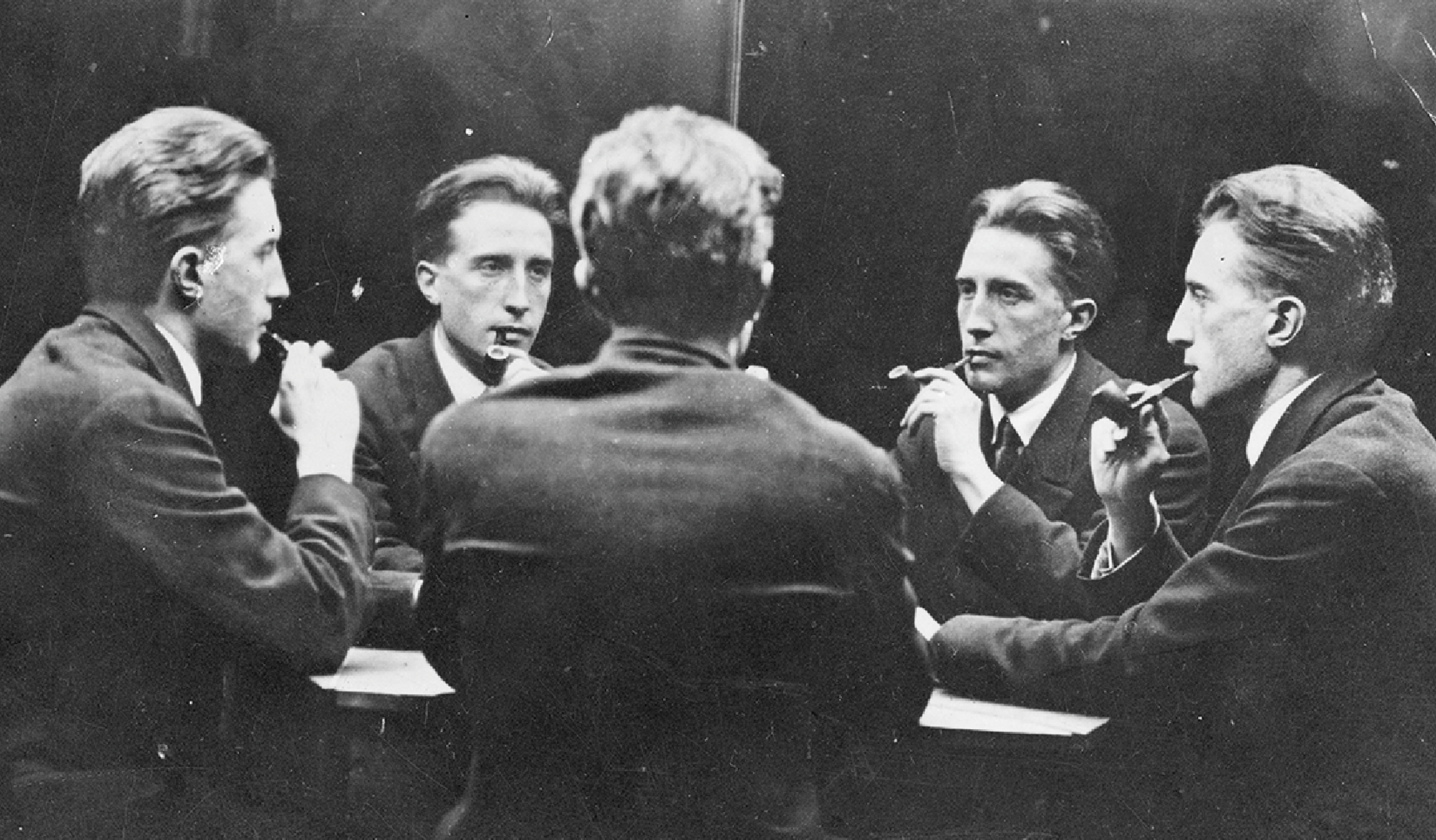
Did Marcel Duchamp Ruin Art?
By Sebastian Smee
Something about art disgusted Marcel Duchamp. Expression, taste, aesthetic intention—anything that gave off a whiff of the precious, he recoiled from. He was modern. He relished the impersonal operations of chance. He loved jokes and sex and the movements of modern machinery. “Painting is finished,” he said to the Romanian sculptor Constantin Brâncuși at an air show in Paris in 1912, when he was 25. “Who will do any better than that propeller?”
The next year, Duchamp mounted a bicycle wheel onto an upside-down fork fixed to a wooden stool.
Culture Break
Keep scrolling. Instagram Plus is a new low, Annie Joy Williams argues. “Drive yourself crazy for the low price of $3.99 a month!”
Laugh along. Mel Brooks turned 100 yesterday. Adrienne LaFrance pays homage “to the funniest man who’s ever lived.”
Stephanie Bai contributed to this newsletter.
When you buy a book using a link in this newsletter, we receive a commission. Thank you for supporting The Atlantic.