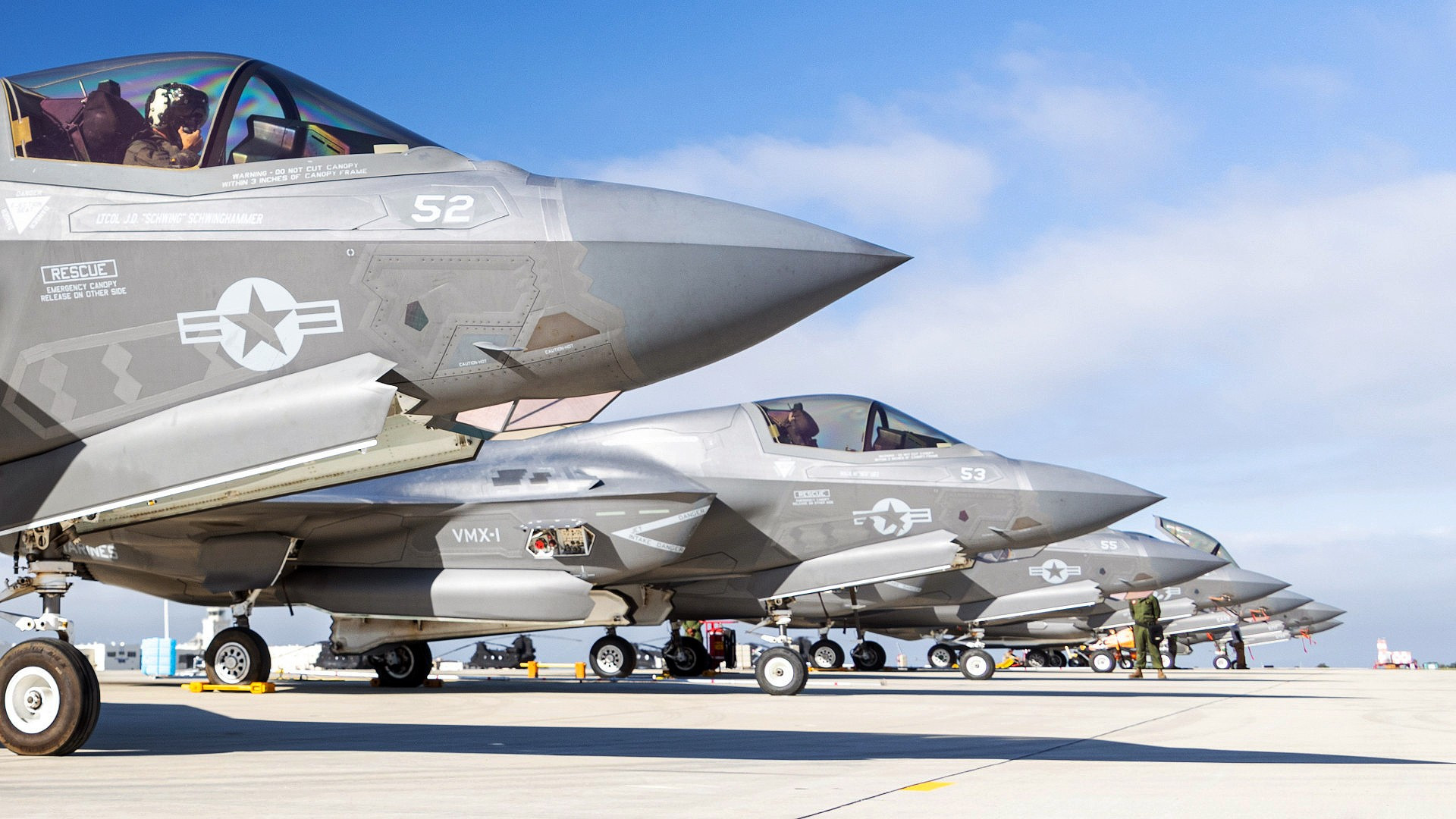
The U.S. military has now confirmed the acceptance of at least six F-35 Joint Strike Fighters for the U.S. Marine Corps without radars. This is due to issues tied to the development of the new AN/APG-85 radar, the first production lot of which is scheduled to be delivered in 2028. The prospect of radarless F-35s had first emerged publicly back in February. The AN/APG-85 is a critical component of the larger Block 4 upgrade package for all variants of the F-35, an effort that has been mired in cost growth and delays.
Marine Corps Lt. Gen. Gregory Masiello, head of the F-35 Joint Program Office (JPO), disclosed the acceptance of the six radarless F-35Bs at a hearing before members of the Senate Armed Services Committee earlier this week. This came as part of a larger back-and-forth between Masiello and Senator Mark Kelly, an Arizona Democrat and a retired naval aviator, about F-35 readiness rates across the U.S. Air Force, Marine Corps, and Navy, which have long been a point of concern.
Two weeks ago, the Government Accountability Office (GAO), a Congressional watchdog, released a report stating that the average F-35 full mission capable (FMC) rate across all variants had fallen from 38 to 25 percent between Fiscal Years 2020 and 2025. GAO defines FMC as an aircraft “that can perform all of its missions.” The F-35 JPO has not disputed GAO’s figures directly, but has openly disagreed with the methodology it uses to determine FMC.
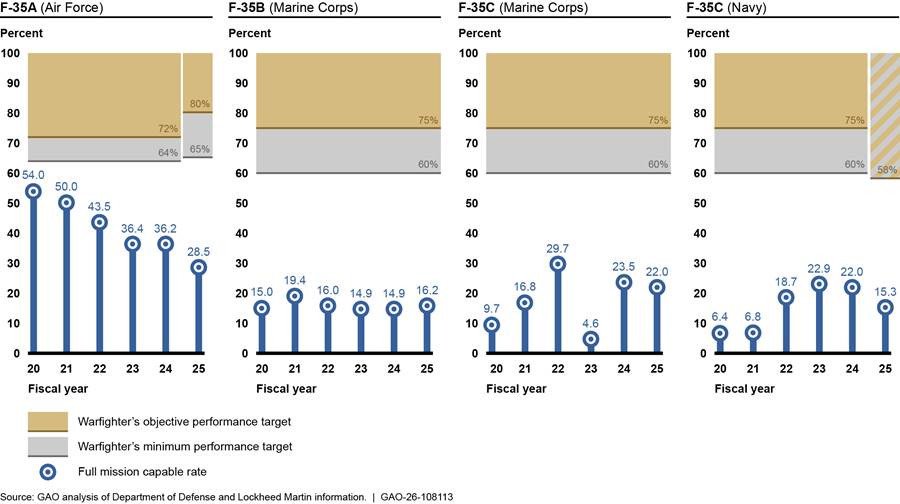
“So, the GAO FMC rate is, they said, 25 percent. Your office claims it’s 56 percent,” Kelly said, leading up to his question. “We’ll go with your number, 50 percent. So, half of the airplanes are not fully mission capable, and I think it’s the Marine Corps that has been accepting airplanes with no radar in it. Is that correct?”
“We have accepted six aircraft for the Marine Corps that do not have a radar installed. That is correct,” Masiello confirmed.
Kelly then asked if this was due to a lack of available AN/APG-85 radars, which Masiello also confirmed.
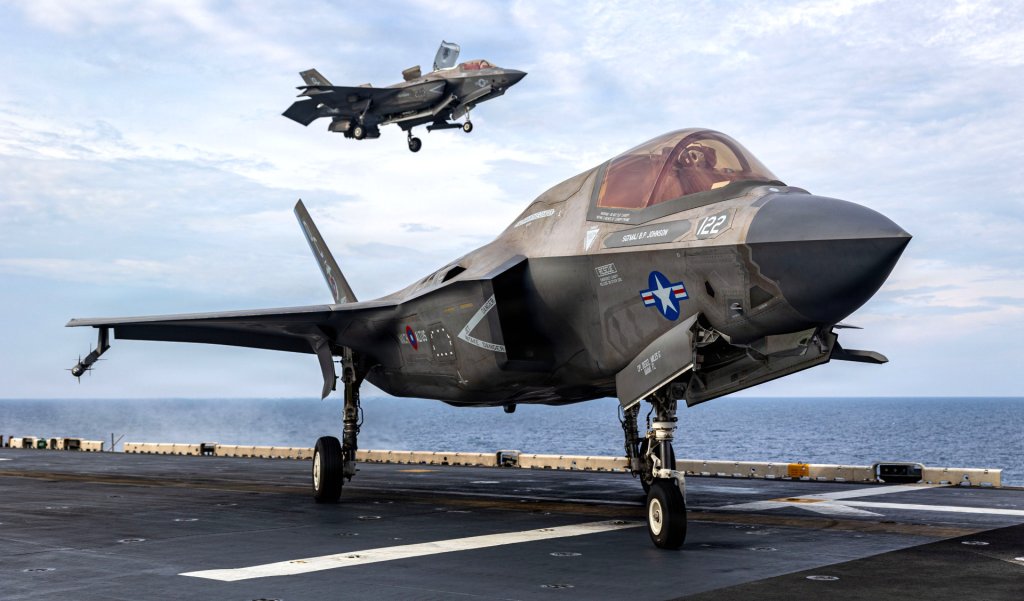
Reports circulating already say that the aircraft in question are reportedly short takeoff and vertical landing-capable F-35Bs, though Masiello does not appear to have confirmed this during the hearing. The Marines are the only U.S. operator of the B variant, but they also fly carrier-based C models.
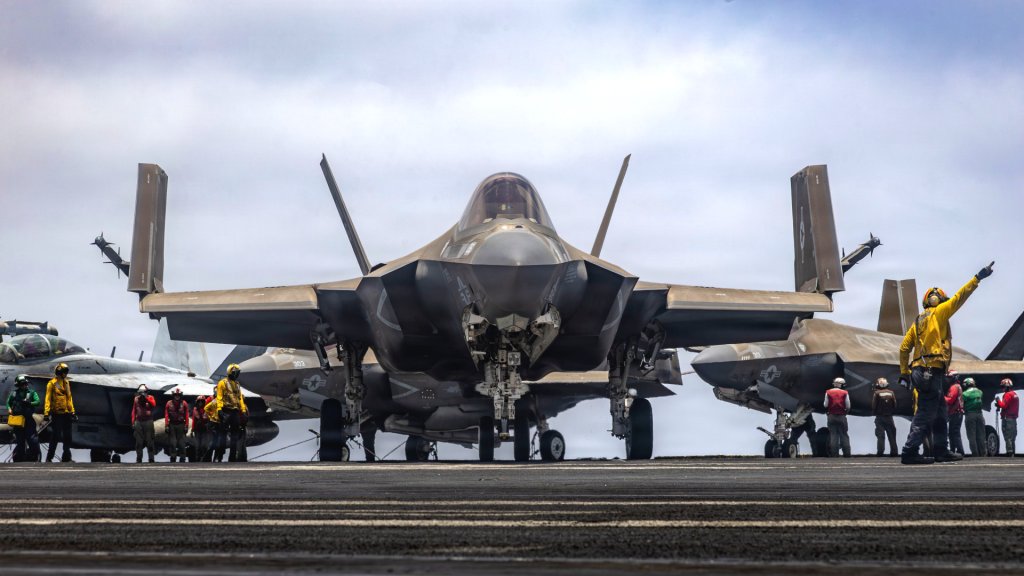
“The Block 4 modernization program is necessary to ensure that the Marine Corps and Joint Force can continue to project air superiority against future threats,” a Marine Corps spokesperson told TWZ today when asked for more information. “The Department of War deliberately undertook a highly concurrent development and production program for Block 4 capabilities (Technical Refresh 3 (TR-3), APG-85, etc.) and the largest fighter aircraft production line in the world. DoW officials made this decision with full understanding of the risk of having production aircraft ready ahead of the Block 4 capabilities. The Services’ decision ensured that production aircraft could accept Block 4 capabilities, rather than continuing to build Block 3 F-35s that would require extensive retrofit for Block 4 capabilities, thereby saving multiple years of retrofit hardware installation. ”
The Marine Corps deferred any further questions to the F-35 JPO. TWZ had already reached out to that office for more information, as well.
“F-35 Lightning II aircraft are being built to accommodate the F-35 advanced radar (APG-85) for U.S. Air Force, Navy, and Marine Corps. When delivered, the F-35 with APG-85 will provide unmatched capability against current and future threats. Initial fielding for some F-35 aircraft is planned for Lot 17,” the F-35 JPO previously told TWZ in May when asked for an update on the radar situation. “The Program in coordination with the Services deliberately undertook a highly concurrent development and production program for advanced capabilities. This decision was made with full understanding of the risk of having production aircraft ready ahead of the capabilities.”

“The program has plans to accelerate APG-85 production capacity to deliver radars that meet capability, stability, and maintainability requirements needed to meet emerging threats,” the office added at that time. “F-35s with APG-85 radars, actual modernization plans, capabilities, and schedules remain classified to maintain program security.”
The F-35 JPO had provided TWZ with a similar statement when asked about whether radarless F-35s were already being accepted back in February.
In February, the U.S. Air Force also explicitly denied receiving F-35As without radars. There is no confirmation yet that the F-35 JPO has accepted any Joint Strike Fighters for the Air Force or the Navy without radars. Previous reports have said that foreign customers are not expected to be impacted at all, at least in the near-term, since none of them are currently in line to receive AN/APG-85-equipped jets.
Today, the standard radar in use on F-35A, B, and C variants is the AN/APG-81, an active electronically scanned array (AESA) type with air-to-air and air-to-ground modes that traces its roots back to the 1990s. It also has a synthetic aperture radar (SAR) mode, which allows it to produce high-resolution map-like images. These can be used for target acquisition and identification, as well as general reconnaissance purposes.
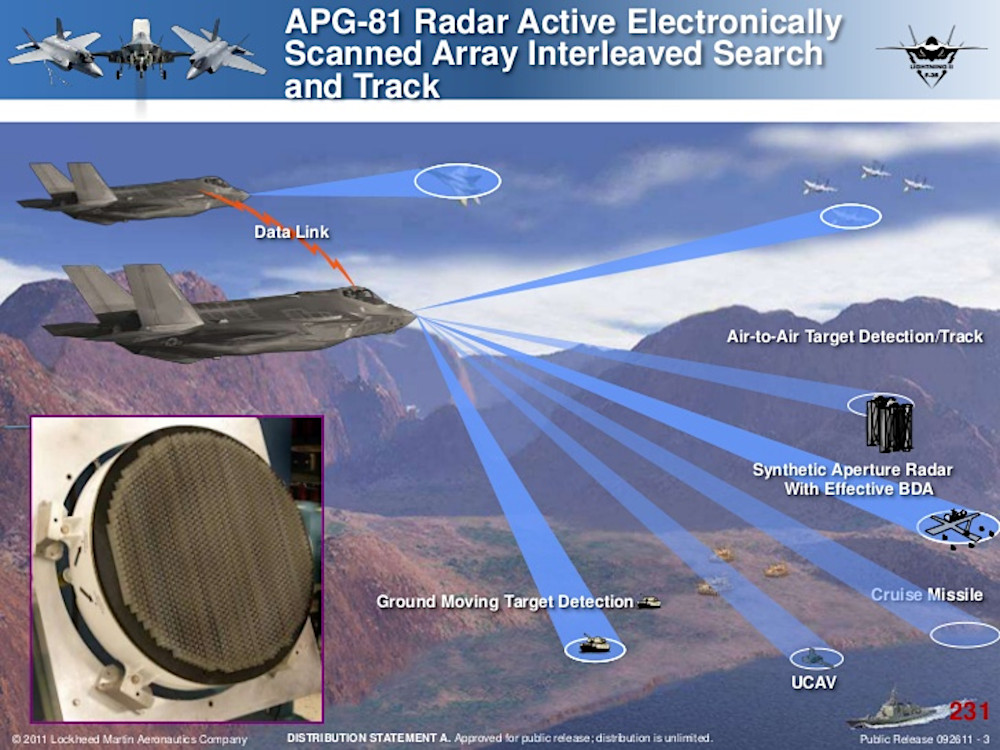
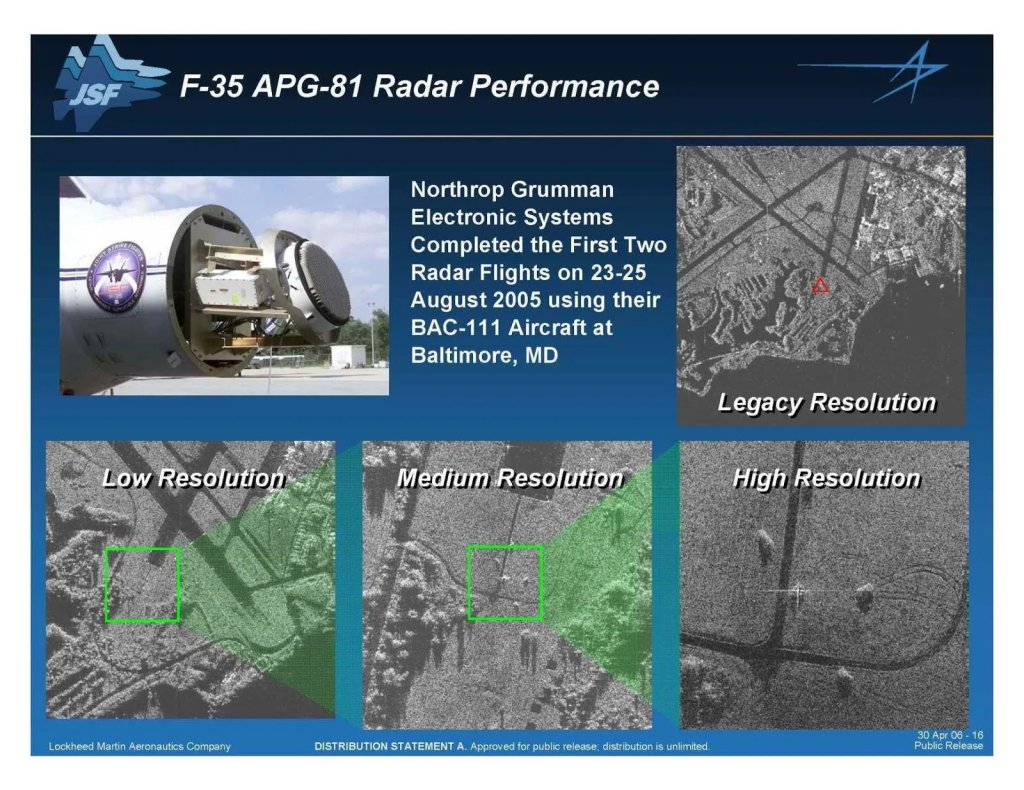
Details about the new AN/APG-85, which Northrop Grumman is developing, continue to be limited. At the hearing this week, Lt. Gen. Masiello declined to talk about its specific capabilities in an unclassified setting.
The AN/APG-85 is also an AESA design, and is expected to offer an array of new and improved functionality compared to the AN/APG-81. As TWZ has previously noted, it will also just be able to leverage decades of additional general technological advancements since its predecessor was developed. In general, the use of gallium nitride (GaN) has had a major impact on modern radar developments when it comes to physical size, weight, and power requirements.
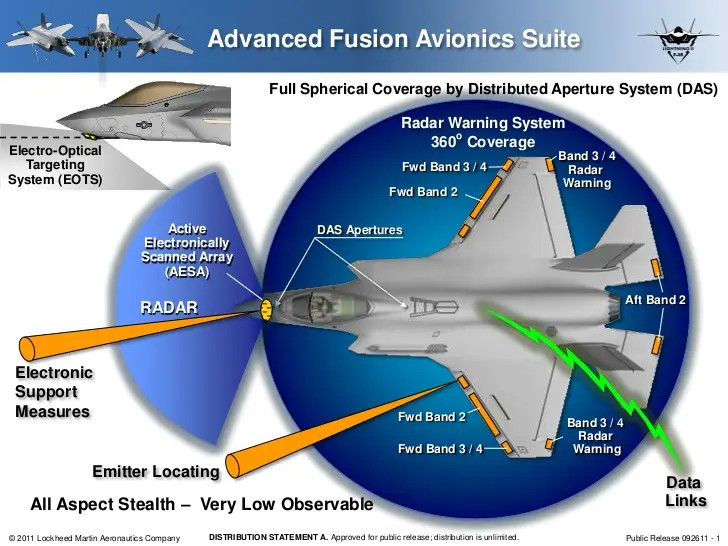
It should also be noted that the AN/APG-81 is deeply integrated with the F-35’s extensive electronic warfare capabilities, as well as other sensors and facets of the design. The AN/APG-85 is similarly expected to fuse together with other key elements of the Block 4 upgrade package, especially a planned new electronic warfare suite, which we will come back to later on.
As the F-35 JPO noted in its statement in May, the plan had been to start integrating the AN/APG-85 onto F-35s starting with production Lot 17. Deliveries of aircraft from that lot began last year. However, per official budget documents released earlier this year, the first production AN/APG-85s are not expected to be delivered before April 2028. This would actually be a nine-month improvement on the much-delayed delivery timeline for the new radars, the unit cost of which is currently pegged at nearly $9 million.
A compounding factor here is that the hardware used to mount the AN/APG-85 on the F-35 is not backwards compatible with the AN/APG-81. According to a report last year from Breaking Defense, the Joint Strike Fighter’s prime contractor, Lockheed Martin, has reportedly at least raised the possibility of developing a common mounting solution, but also said that this would not be ready before Lot 20 aircraft start being delivered. The first Lot 20 jets are not expected to arrive until sometime between 2027 and 2028.

How the Marine Corps, or any other service, might utilize its radarless F-35s in the meantime is unknown. This was among our queries to the Marines today.
“The currently fielded Block 3 (TR-2) F-35 Lightning II is the most capable fighter in the world today, having proven its capabilities in combat,” the Marine Corps spokesperson added in their statement. “Its advanced mission systems enable the F-35 to deter, and if necessary, dominate in any clime and place.”
Senator Kelly also prodded Lt. Gen. Masiello about this, indirectly, at the hearing this week.
“So, I assume that those airplanes can’t count as fully mission capable with no radar?” Kelly asked the JPO head.
“I don’t think I would count them as fully mission capable,” Masiello said in response.
“You say you don’t think. I can’t imagine a scenario where an F-35 with no radar could be an FMC airplane,” Kelly retorted, which Masiello did not push back on.
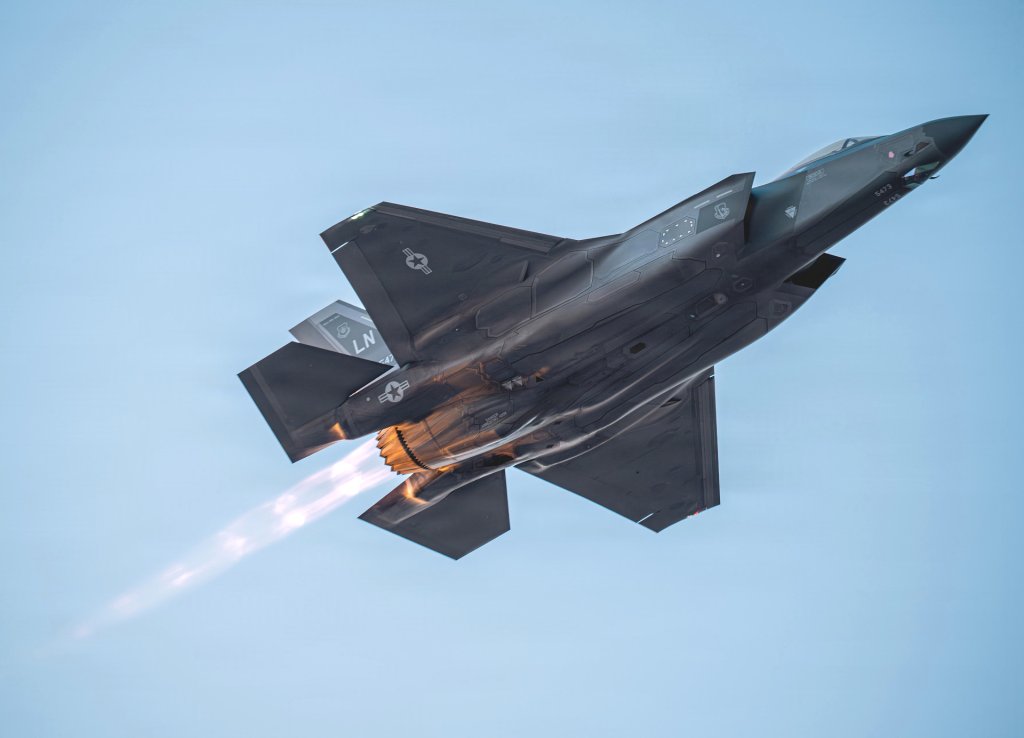
TWZ has previously noted that F-35s without radars would not be completely useless, but their capabilities and survivability would certainly be severely degraded. As we previously wrote:
“As long as one F-35 in a formation has a radar, all of the other aircraft in said group should be able to benefit from the data it provides via their Multifunction Advanced Data Links (MADL). As such, even without a radar installed, a Joint Strike Fighter would not be without F-35-derived radar data if at least one other was flying cooperatively with it within MADL’s transmission reach.“
“It is possible that radar-less jets could be sent into combat, at least in an emergency scenario, though doing so would still require accepting greater risks. It would limit tactical flexibility, as well, since remaining linked together with other radar-equipped jets would be key. Those jets would also have to rely on using their radars more heavily, which can be a vulnerability. The F-35 also has a host of passive sensors that it can rely on for battlespace information, although none are capable of replacing the radar’s functionality. Data from other platforms transmitted via Link 16 is also available to all F-35 pilots.“
“Maybe one of the biggest issues with having no radar is that it is a major part of the jet’s electronic warfare suite. Its ability to transmit narrow, extremely powerful beams of energy adds to the jet’s potent electronic attack capability. So, without the radar, its ability to defend itself and others by leveraging the electromagnetic spectrum is also curbed.“
Remarks from Lt. Gen. Masiello at the hearing this week also raise new concerns about the capabilities that the AN/APG-85 radars will offer even when they do finally start being integrated onto F-35s. This is tied to what it will take to sufficiently cool the radar and other elements of the Block 4 upgrade package. Thermal management is another long-standing issue for all variants of the F-35, which has already had major negative impacts on readiness rates and maintenance demands, as you can read about in more detail here.
“So, right now, you’re cooling, you got about 30 kilowatts [of cooling],” Senator Kelly said as part of another question posed to the head of the F-35 JPO. “Block 4 requires 32 [kilowatts of cooling], is what I have here. But to get to the cooling needed to – for the full capability of the APG-85, needs to be somewhat higher, it seems like 62 kilowatts of cooling?”
“The requirement that we have for the program going forward is 62 to 80 [kilowatts of cooling],” Masiello said in response. “The challenge I see is if the totality of Block 4, when it’s installed, and on the aircraft, it takes the complete power available, which is 32 [kilowatts].
“There’s no margin, which as you know, is not a smart way to go,” he continued. “So, we have an incremental approach to increase that. And we have an ongoing program to look at a more systemic and affordable upgrade to the power thermal management across the program.”
Masiello insisted that this Power and Thermal Management System (PTMS) upgrade would not be required for AN/APG-85 integration, but also made clear that it would be available in time, regardless.
“For the engine core upgrade that we anticipate and have asked for additional funding on that, we anticipate that being fielded in 2031, and it will come with a marginal increase in the power thermal management,” he explained. “The actual system that’s under review and looking for the forward program will come a few years later into the system, which is when we would have the additional capabilities beyond Block 4, not yet to be determined that will require that.”

At the same time, as Masiello himself acknowledged, the current plan offers no margin when it comes to cooling before the PTMS upgrade is available. In response to further questioning by Senator Kelly, he declined to speak in an unclassified setting about what that might mean for the initial fielding of the AN/APG-85 radar.
As noted, the entire Block 4 upgrade effort continues to be beset by delays and cost growth, despite efforts to reorganize and accelerate certain components thereof. As of September 2025, the schedule for delivery of a truncated portion of the upgrade package was still running five years behind, according to GAO. The original goal had been for F-35s with the full suite of Block 4 improvements to begin arriving this year.
Beyond the AN/APG-85, Block 4 is eventually supposed to include replacements for the Joint Strike Fighter’s AN/AAQ-37 Distributed Aperture System (DAS) and Electro-Optical Targeting System (EOTS), as well as a new electronic warfare suite and a host of other improved capabilities. The Air Force previously described the electronic warfare package, which directly tied in with the APG-85, as a top priority. This is all driving the aforementioned demands for more auxiliary power-generation and thermal cooling capacity, work on which is also now behind schedule.
The F-35 program as a whole continues to face growing costs and other challenges associated with operating and maintaining the jets, which are key factors in the low readiness rates of all variants in service today. Spare parts shortages have been a particularly persistent and serious problem, as you can learn more about in this past TWZ feature.
“That is now what we’re putting forth is the requirement, which is the reason why, in this generational investment of the 2027 budget will help us. So, we will fill up the available parts,” Lt. Gen. Masiello also said at the hearing this week. “It’s not a systemic issue with the system having the ability. It’s the fact that we didn’t put enough parts and pieces on the shelf. And we’ve increased the demand exponentially with the number of aircraft fielded, and we didn’t do the same thing with the spare parts and the system.”
As of last year, the total project cost of the entire program, from initial development in the 1990s through the end of the type’s expected lifecycle in the 2070s, was pegged at $2.1 trillion. The JPO has stressed in the past that this figure includes the acquisition of thousands of jets and that inflation is expected to account for roughly half of the total cost.
When it comes to the continuing saga of the AN/APG-85, F-35s are now being delivered without any radars, and it could be years still before that changes.
Contact the author: joe@twz.com
The post It’s Official: F-35s Are Now Being Delivered Without Radars appeared first on TWZ.