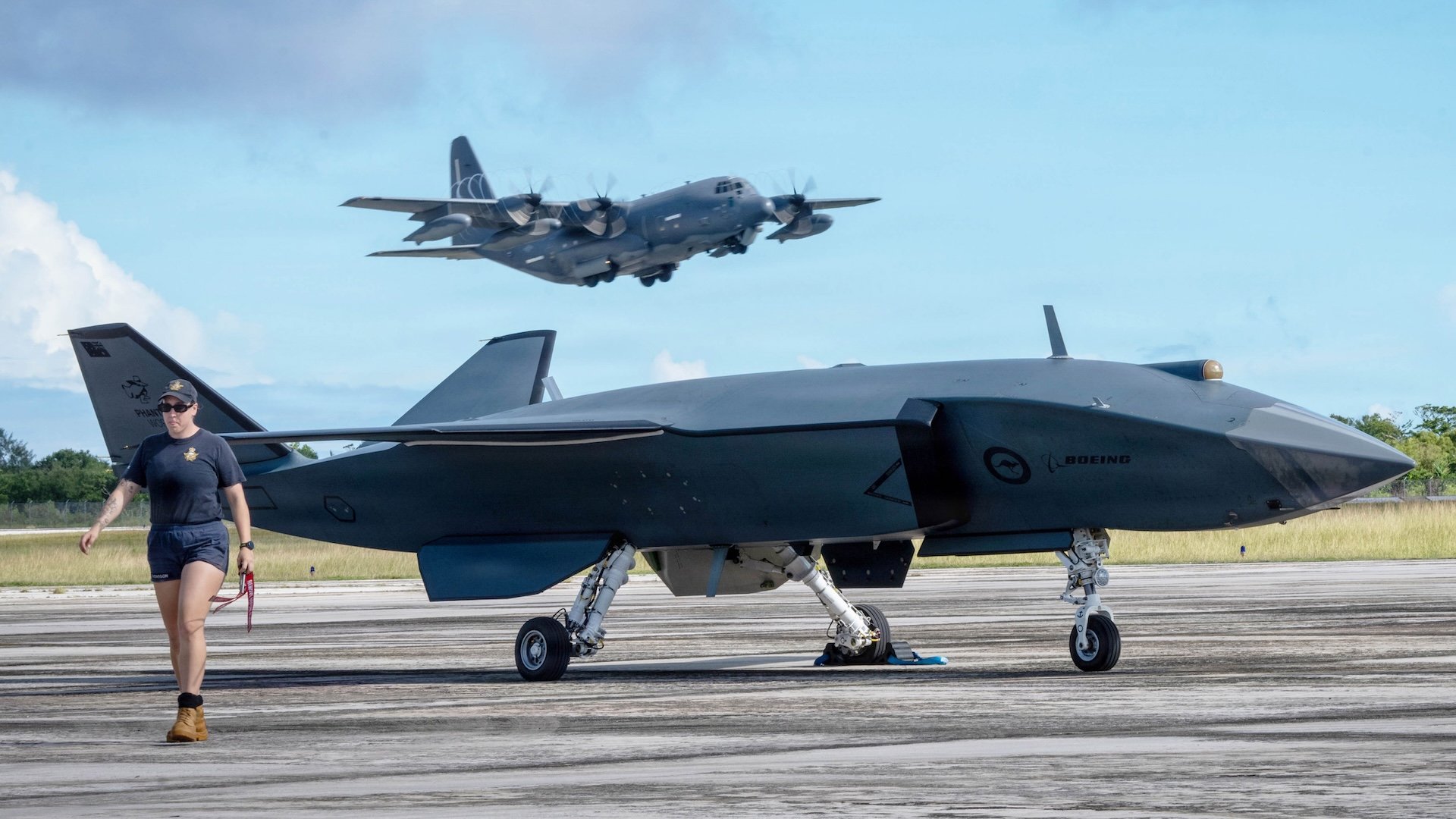
The MQ-28 Ghost Bat drone will gain a valuable opportunity to prove its relevance in a high-end coalition environment as part of Valiant Shield 26, the sprawling U.S.-led military exercise spanning Japan, Guam, Hawaii, and Australia, which began this week. It is also, as far as we know, the first time that the MQ-28 has taken part in a multinational large-force exercise of any kind. The participation of the collaborative combat aircraft (CCA) comes soon after Boeing confirmed it was conducting a separate series of test flights of the drone off the coast of southern California, part of efforts to validate autonomous operations and demonstrate rapid deployment from an allied location.
While Australia’s contribution to Valiant Shield includes a P-8A Poseidon maritime patrol aircraft and around 80 personnel, one of the more notable aspects is the involvement of Australian Defense Forces (ADF) aviator observers alongside a U.S.-led MQ-28 component. The arrangement will allow Australian personnel to work with operators and planners as the uncrewed aircraft is employed in a complex, multi-domain operational environment for the first time.
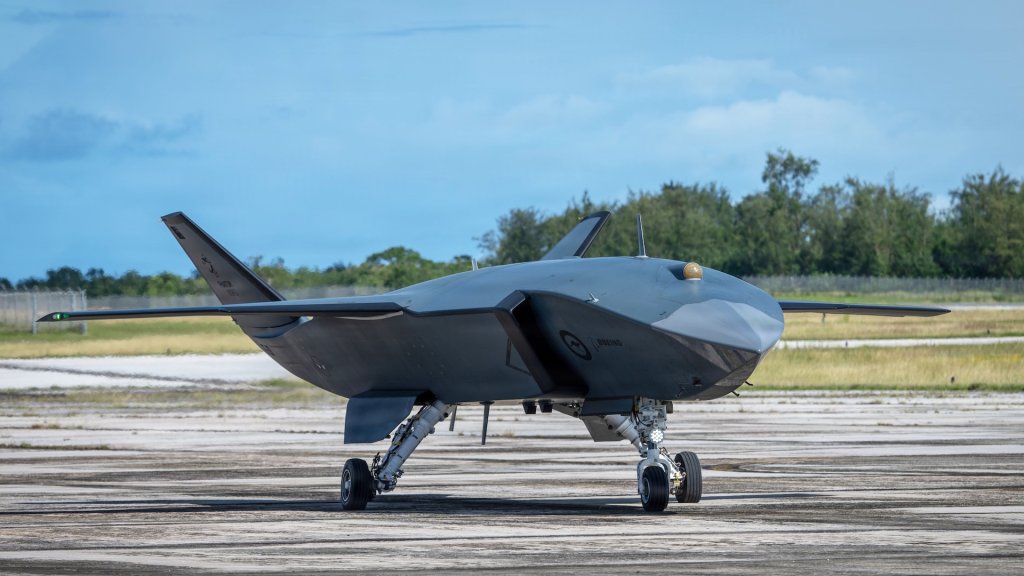
Directed by the U.S. Indo-Pacific Command, Exercise Valiant Shield 2026 kicked off on Monday and continues through July 1.
“Valiant Shield demonstrates our enduring commitment to a free and open Indo-Pacific,” Adm. Steve Koehler, commander of U.S. Pacific Fleet, said in a media release. “Exercising advanced multidomain capabilities with our allies ensures we continue to seamlessly innovate and operate together, project combat power together, and prevail over any challenge — together.”
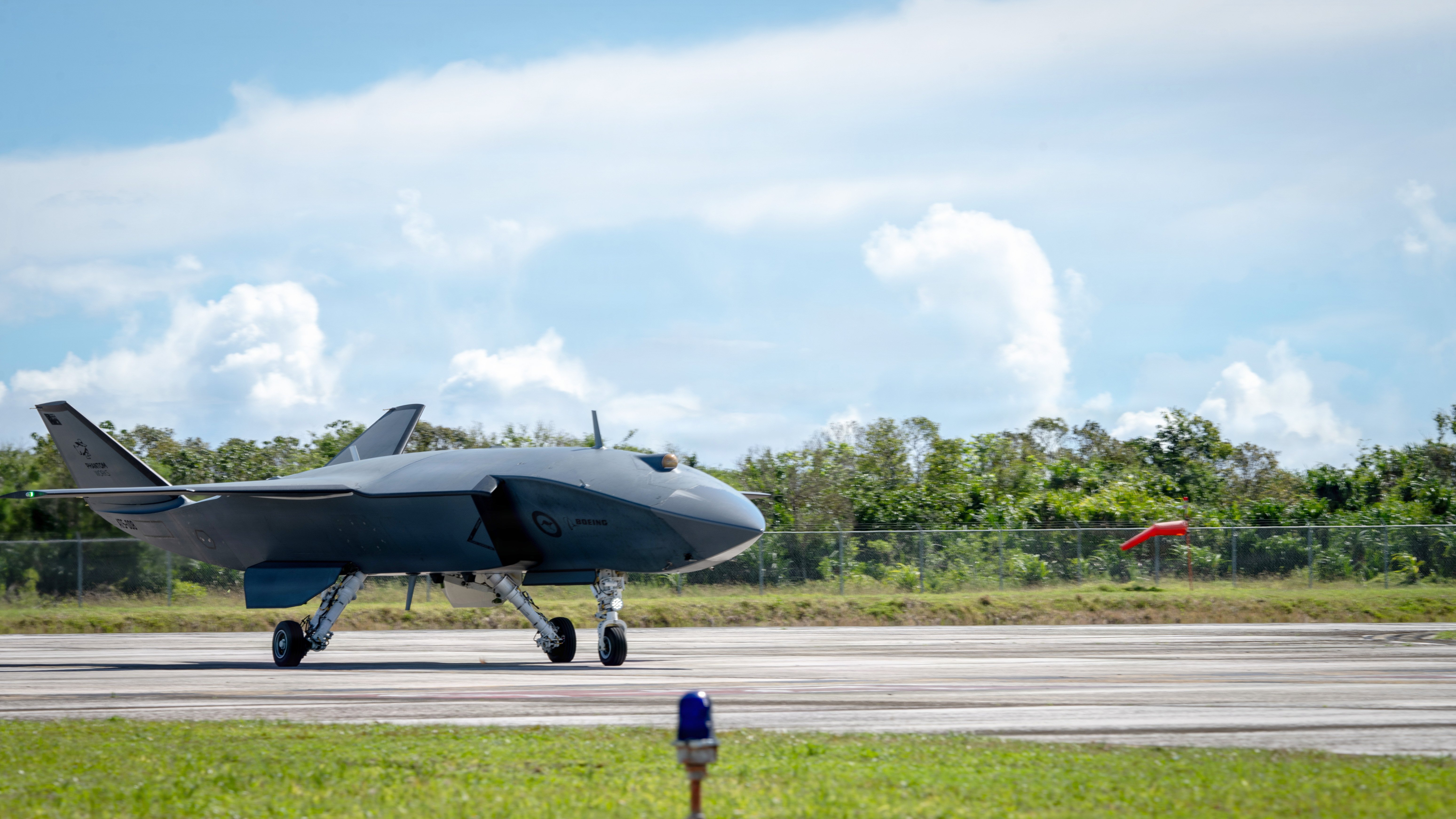
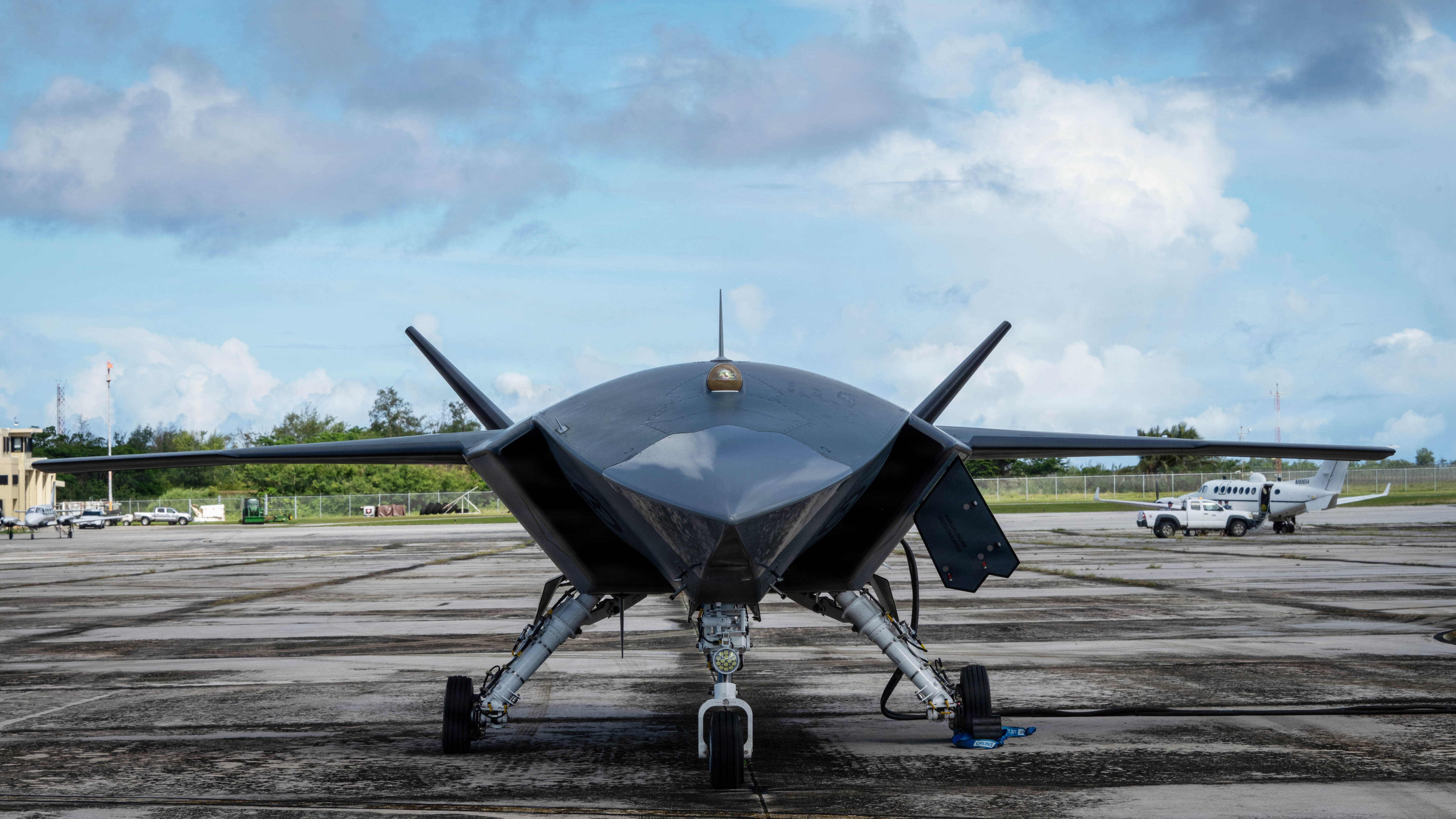
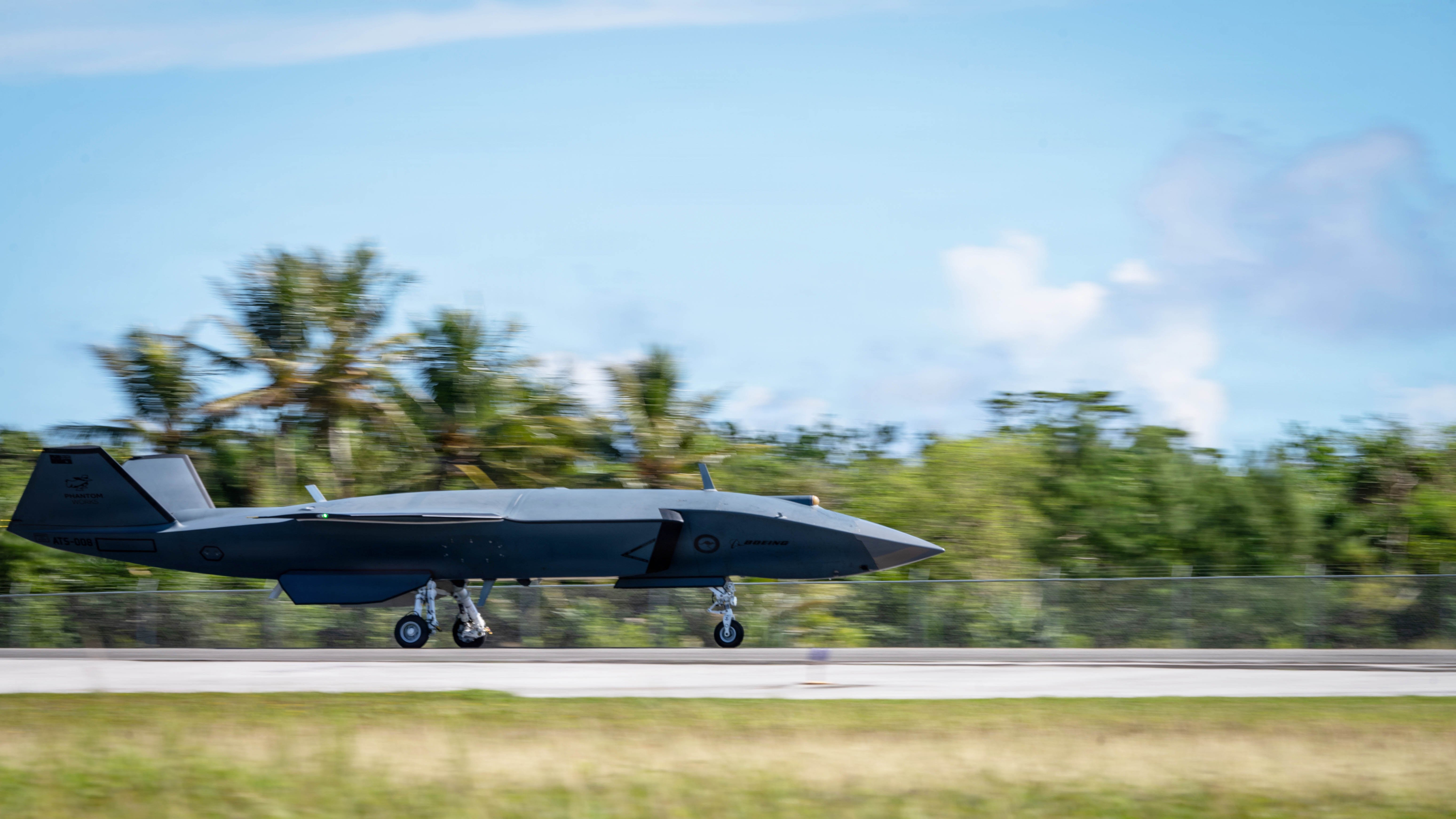
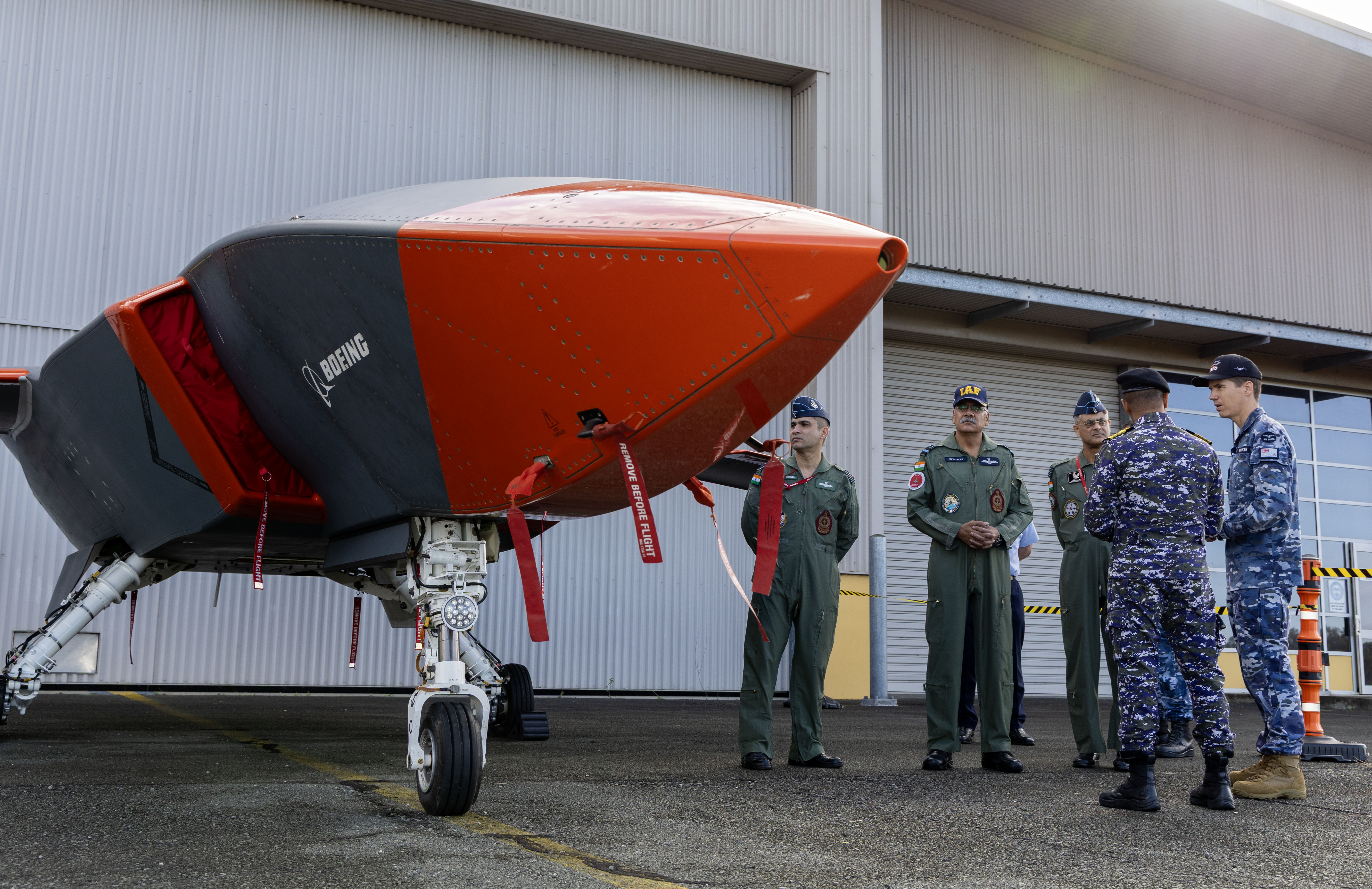
The U.S. Air Force today released a series of photos showing an MQ-28 taking part in Valiant Shield. The drone was photographed at Rota, in the Northern Mariana Islands, on June 21. Accompanying captions state that the Ghost Bat will be used to advance human-machine teaming, including flying in concert with crewed fighters.
“The Department of the Air Force and its partners will analyze the aircraft’s contribution as a force multiplier that extends the reach, awareness, and survivability of crewed platforms in contested environments,” the U.S. Air Force adds.
The MQ-28 involved in the exercise is configured with an infrared search and track (IRST) sensor system in the nose. The Ghost Bat is a highly modular design, with the nose section designed to be readily swappable.
The Ghost Bat’s participation in Valiant Shield comes as Australia continues efforts to mature collaborative combat aircraft concepts, an increasingly important component of future air warfare, with the Royal Australian Air Force (RAAF) currently very much at the forefront. Designed to operate alongside crewed fighters and other assets, like tankers and airborne early warning and control aircraft, the MQ-28 is intended to extend sensor coverage, serve as a weapons platform, and perform a variety of other missions while reducing risk to human pilots.
Valiant Shield offers a particularly relevant proving ground for the MQ-28. The exercise brings together forces from the United States, Australia, Japan, Canada, and New Zealand to train in responding to coordinated threats across the maritime, air, land, cyber, and space domains. Participants will be required to detect, track, and engage shared threats while operating across a vast geographic area and under realistic conditions.
For the Ghost Bat program, exposure to this type of coalition environment is significant. Future conflicts in the Indo-Pacific will require seamless integration between allied forces, crewed aircraft, and increasingly sophisticated autonomous systems. Observing how the MQ-28 is incorporated into a large-scale multinational exercise should provide valuable insights as Australia moves toward making its collaborative combat aircraft capabilities operational. Currently, the MQ-28 is slated to be in service with the RAAF in 2028, which would likely make it the first operational CCA anywhere in the world.
The exercise also reflects growing allied interest in integrating uncrewed systems into complex command-and-control architectures and air defense networks. As autonomous aircraft move from experimentation toward operational service, events such as Valiant Shield are becoming important venues for testing how these systems contribute to the broader fight rather than operating as standalone assets. Valiant Shield has served as a diverse test crucible in recent years, with advanced capabilities being put through their paces in a realistic, joint-force environment.
According to defense reporter Carter Johnson, the Ghost Bat’s Indo-Pacific deployment will include operations from an austere airfield led by the U.S. Air Force. This will be conducted under the Agile Combat Employment (ACE) concept, something that is seen as fundamental to survival in a future conflict with China in the Indo-Pacific region. It is also notable that the U.S. Air Force’s new CCA drones are being developed from the ground up around concepts for distributed and disaggregated operations.
The U.S. Air Force is conducting a *first-in-class* Collaborative Combat Aircraft deployment during Exercise Valiant Shield 2026, deploying Boeing Defence Australia's MQ-28 Ghost Bat to an austere ACE airfield in the Indo-Pacific.
— Carter Johnston (@__CJohnston__) June 24, 2026Rota, CNMI
More details to come. Stay tuned pic.twitter.com/f8bC5A5MGg
The exact status of the MQ-28 with the U.S. military testing community is somewhat unclear, as we have discussed before. There have been indications of Ghost Bat flight testing in the United States in the past, and the U.S. Air Force previously said it had made use of at least one MQ-28 to support advanced uncrewed aircraft and autonomy development efforts. Regardless, the Air Force, at least, has test units set up to explore exactly how to use CCAs operationally, including in an ACE-type environment. This kind of testing is now also involving the first two Air Force Increment 1 CCAs, with the YFQ-44 Fury ‘fighter drone’ prototype notably having been tested out of Edwards Air Force Base, California, helping to demonstrate how CCAs can be deployed and sustained in contested environments.
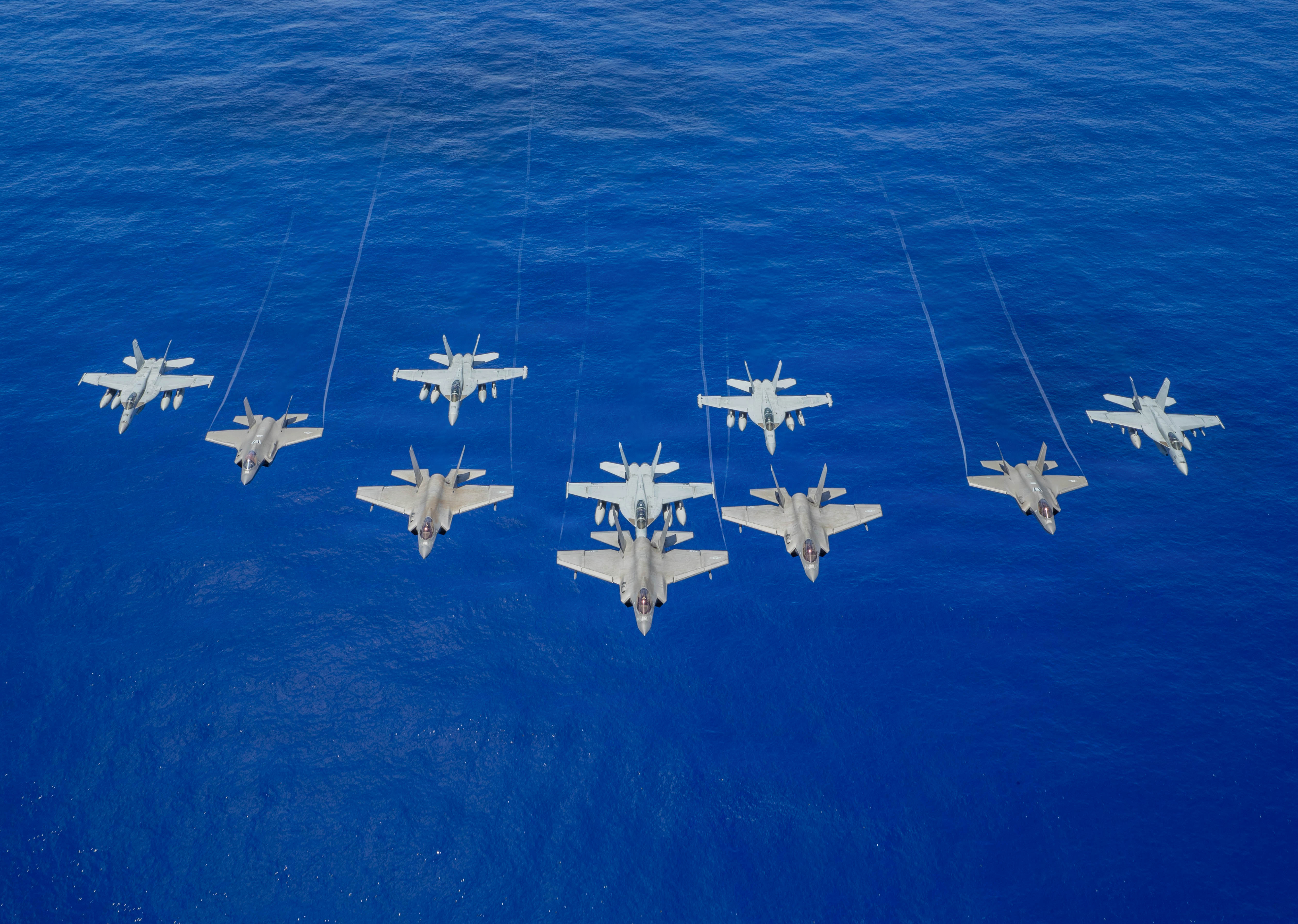
Other U.S. participants in Valiant Shield 2026 include the George Washington Carrier Strike Group, based around the aircraft carrier USS George Washington with the embarked Carrier Air Wing 5, the cruiser USS Robert Smalls, and the destroyers USS Benfold and USS Shoup.
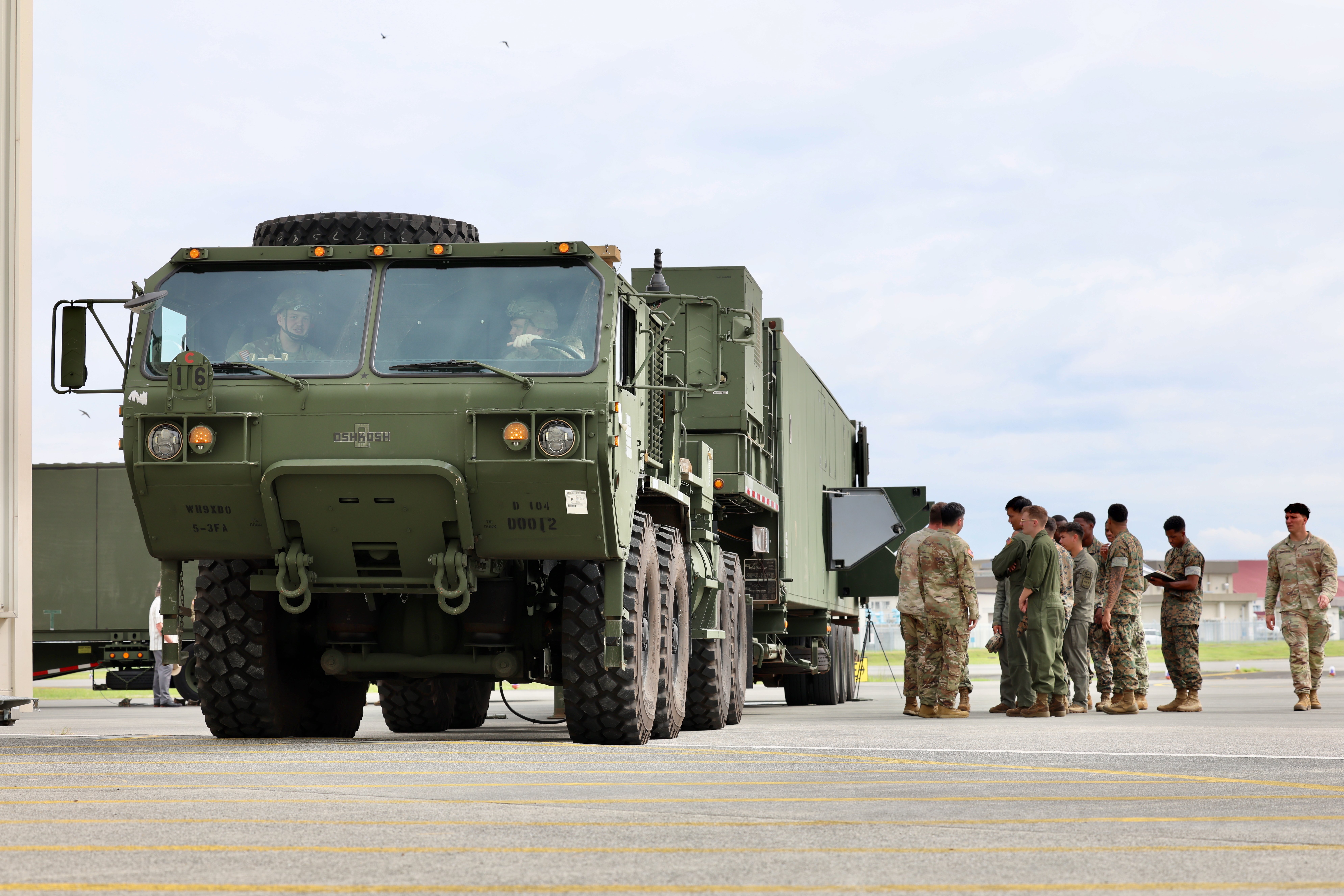
Valiant Shield 2026 will also see the deployment of the containerized Typhon missile system in Japan. According to the Japan Ministry of Defense, the Typhon and the High Mobility Artillery Rocket System (HIMARS) will participate in Joint Integrated Anti-Ship Warfare training carried out in the waters around Kanoya and Amami Oshima Island. However, no live firing is scheduled.
The U.S. Army’s Typhon was first deployed to Japan last year, as you can read about here. The system, which can fire Tomahawk cruise missiles and SM-6 multi-purpose missiles, is a growing feature of U.S. military activities in the wider Indo-Pacific region.
Returning to the Ghost Bat, it now seems that the test flights of the MQ-28 off the coast of southern California from the U.S. Navy’s base in Point Mugu, California, were an important precursor to Valiant Shield. In fact, the same drone that was flown out of Point Mugu, ATS-008, is the example now involved in Valiant Shield.
Boeing had previously said its main goals of those flights were to demonstrate the maturity of the design and promote export sales. As we noted at the time, the choice of testing location also seemed to be relevant given Boeing’s involvement in the Navy’s still-evolving carrier-based CCA plans.
As for the MQ-28’s previous test campaigns, the drone has been flying in Australia since 2021, with the RAAF having received eight Ghost Bats in the pre-production Block 1 configuration.
Boeing is now building the first of a batch of nine Block 2 drones for the RAAF, which will provide an intermediate stepping stone to the fully operational Block 3 version. The Block 3 aircraft is expected to be substantially larger and have a greater range. It will also feature an internal weapons bay that can accommodate a single AIM-120 Advanced Medium Range Air-to-Air Missile (AMRAAM), two GBU-39/B Small Diameter Bombs (SDB), or equivalently sized stores.
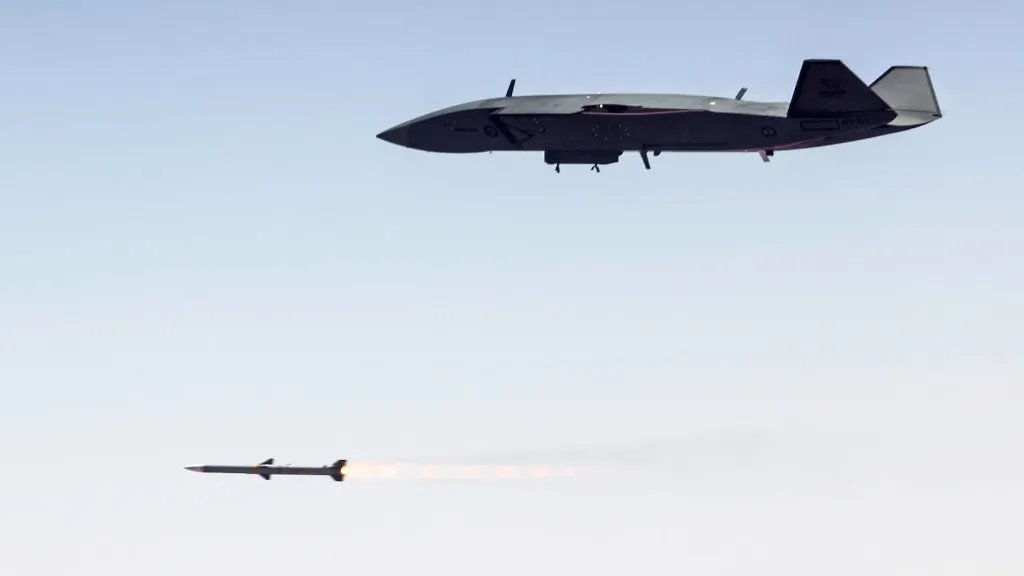
The RAAF has employed Block 1 MQ-28s to demonstrate some important capabilities in testing so far. This includes crewed-uncrewed teaming with RAAF E-7A Wedgetail airborne early warning and control aircraft and F/A-18F Super Hornet fighters.
When it comes to potential export sales, participation in Valiant Shield will give Japan, Canada, and New Zealand a closer look at the drone and its capabilities. Of these, Boeing has already publicly named Japan as a potential customer and has said it is exploring potential opportunities with other unnamed countries in the Indo-Pacific region.
Valiant Shield should offer the clearest indication yet of how the Ghost Bat can contribute to a coalition fight. As the United States and its allies increasingly embrace autonomous combat aircraft, the MQ-28’s performance in one of the Indo-Pacific’s largest and most complex military exercises will be watched closely as an indicator of how collaborative combat aircraft could be employed across the region in the future.
Contact the author: thomas@thewarzone.com
The post MQ-28 Ghost Bat Drone Debuts In Large-Force Combat Exercise In The Pacific appeared first on TWZ.